
Ad Systems and Newspaper Credibility for Safer Brand Placements

Introduction
Ever tried to place an ad in a newspaper and felt like you were navigating a maze? You are not alone. The modern ad system landscape is more complex than ever. Multiple players and technologies all shape how your message reaches readers. From ad networks and exchanges to programmatic platforms and data brokers, each layer adds risk and opportunity. Understanding ad systems is not just a nice to have. For advertisers, PR teams, and researchers, it is critical for ensuring brand safety and campaign effectiveness. One wrong placement can damage trust or waste budget.
That is why this article exists. We will demystify ad systems in plain language. We will also show how credibility and bias scores can guide smarter placement decisions. Instead of guessing which newspapers align with your values, you can rely on data. Our guide on newspaper rankings for ad trade already explains how these metrics protect your brand. The same principles apply here. You will learn to spot trustworthy outlets and avoid those with extreme bias or low credibility. Retargeting ads become safer too when you know the publisher’s track record.
Ready to take control of your ad placements? Check out the Rankings Need Judgment resource to start making smarter decisions today.
What Are Ad Systems and Why They Matter for Credibility
So what exactly are ad systems? Think of them as the hidden machinery behind almost every ad you see online. They are a collection of technologies and platforms that automate the buying and selling of ad space. The main players include supply-side platforms (SSPs), demand-side platforms (DSPs), ad exchanges, and ad networks.
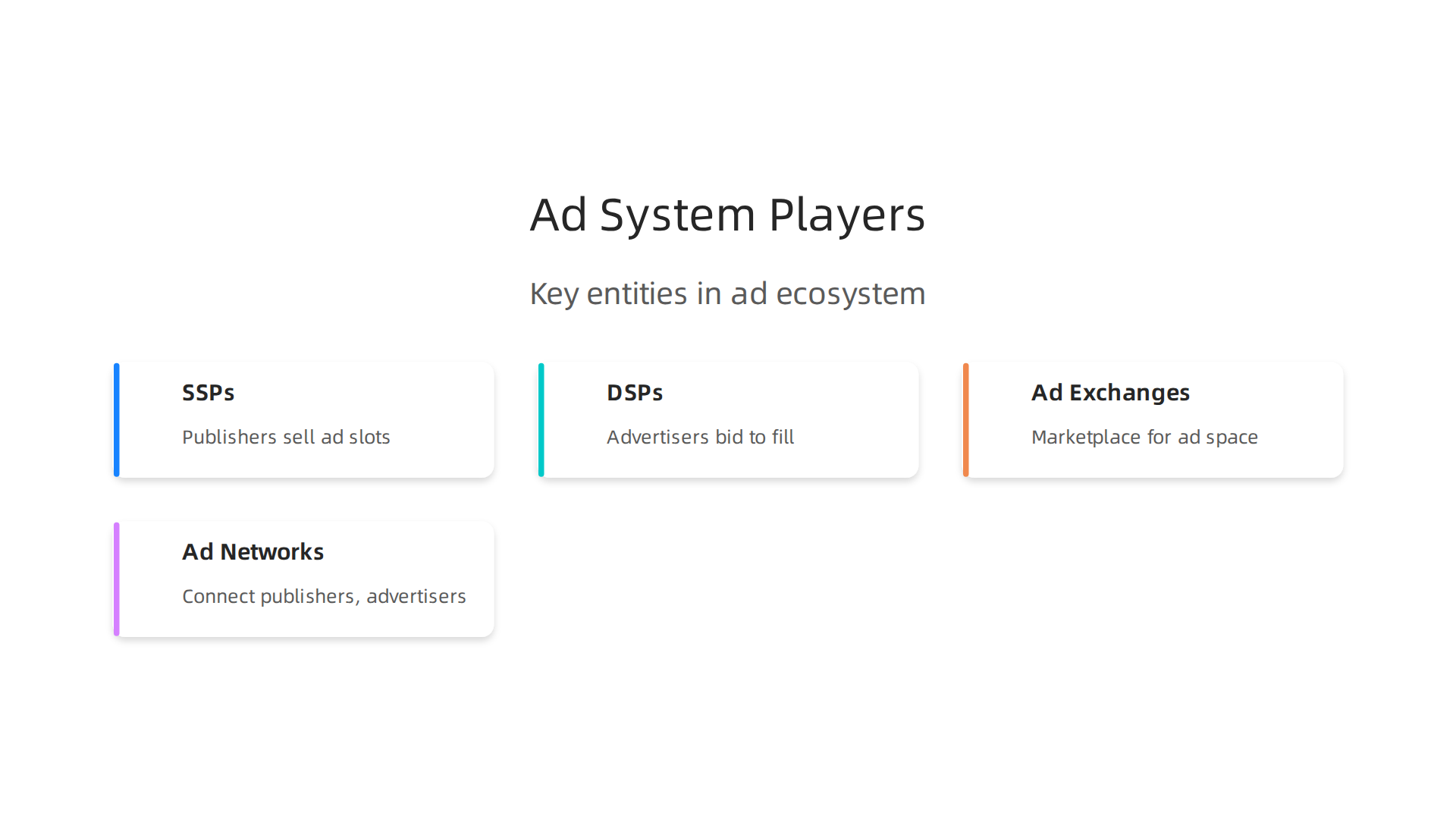
Together, they form a marketplace where publishers sell their empty ad slots and advertisers bid to fill them, all in a split second.
In 2026, programmatic advertising controls about 90% of digital display ads, according to Digital Applied. The global market has reached $725 billion this year, as reported by Searchlab. That is a massive amount of money flowing through these systems every day.
But here is the catch. Not all ad inventory is equal. The credibility of the newspaper or website where your ad appears directly affects how audiences perceive your brand. If your retargeting ad shows up next to content from a source with extreme bias or low trust, some of that distrust rubs off on you. Ad systems rank and price inventory based on factors like audience size and engagement. But they rarely consider credibility or bias. That is a blind spot you need to fill.
When you understand how ad systems work, you can start asking better questions. Which SSPs are feeding your DSP? What kind of publishers are in the exchange? Are those sources trustworthy? Advertisers who ignore these questions often end up paying for placements that damage their reputation.
Your best move is to use credibility data the same way you use audience data. The newspaper rankings for ad trade guide shows exactly how to blend bias and trust scores into your media buying decisions. It helps you filter out low-quality inventory before your budget touches it.
Ready to bring credibility into your ad system strategy? The Rankings Need Judgment resource gives you a practical starting point. Use it to protect your brand and make every impression count.
Key Ad Players in the US Newspaper Landscape
When you buy digital ad space in US newspapers, you are not just dealing with one platform. A whole ecosystem of ad players decides where your ad ends up. Knowing who they are helps you control your brand’s environment.

The biggest ad platforms dominate programmatic buying for newspaper inventory. Google Ad Manager (which includes Display & Video 360) and The Trade Desk are the top demand-side platforms (DSPs) in 2026. According to Digital Applied, DV360 leads in DSP market share, but The Trade Desk rules the open internet. Other major players like Magnite and Xandr (now part of Microsoft) also connect advertisers to premium newspaper supply.
These platforms use real-time bidding to buy and sell ad slots across thousands of news sites. That is convenient, but it also means your retargeting ads can appear next to any article from any source in their network. Without filters, you risk landing on a site with questionable credibility.
That is where direct sales teams and private marketplaces (PMPs) come in. Many top newspapers still sell premium inventory through their own sales teams or invite-only PMPs. These give you curated access to trusted audiences. You pay a bit more, but you know exactly where your ad runs. For advertisers who care about brand safety, PMPs are a smart choice.
Consolidation is also reshaping the landscape. The rise of retail media networks (like Amazon Ads and Walmart Connect) is pulling ad dollars away from traditional publishers. At the same time, big tech platforms are absorbing smaller ad tech companies. This means fewer but more powerful ad players control more inventory. Raptive notes that 2026 is a mature phase for programmatic, with efficiency driving most decisions.
All this change makes it harder to keep track of credibility. But you can stay ahead by using data that ranks newspapers by trust and bias. The newspaper rankings for ad trade guide shows exactly how to match ad platforms with high-quality news sources.
Ready to take control of your ad placement strategy? The Rankings Need Judgment resource gives you a clear way to evaluate ad players and protect your brand’s reputation. Use it to make every impression count.
How Media Bias Impacts Ad Placement Decisions
Here is a scenario that keeps media buyers up at night. Your retargeting ads end up running next to an article with extreme partisan bias or low factual reliability. That hurts your brand.

And in 2026, it happens more often than most advertisers realize.
The same online advertising tools that make buying ad space easy also make it easy to land in a bad spot. Programmatic ad systems buy slots across thousands of news sites at once. Without proper filters, your ad can appear next to content that damages your reputation.
The Reuters Institute notes that news media in 2026 face growing pressure from big tech and shifting reader trust. That makes it harder for digital advertising algorithms to separate quality journalism from low-credibility sources.
So how do you protect your digital advertising dollars? Start with media bias scores. Tools like the AllSides Media Bias Chart and Ad Fontes Media Bias Chart rate newspapers by political slant and factual reliability. These scores help you build exclusion lists. You can block entire categories of sites that fall outside your brand’s comfort zone.
According to the Coruzant analysis of media bias charts, 2025 introduced AI-powered ratings, and 2026 is moving toward real-time bias tracking. That means better data for smarter decisions.
But here is the thing. Most programmatic algorithms do not understand nuance. They see traffic patterns and keywords, not editorial tone. A system might miss the difference between a balanced news report and a heavily slanted opinion column. That is why human oversight still matters. Someone needs to review where your ads actually run.
You can also use resources like the Wilmington Library fact-checking guide, which shows how the same story looks different across biased sources. That visual comparison helps you train your eye.
For a practical starting point, check out the major US newspapers ranked by credibility and bias. It gives you a clear framework to match your campaign goals with trusted outlets.
Media bias does not have to ruin your online advertising strategy. With the right data and a bit of human judgment, you can keep your brand safe and still reach the audiences that matter.
Want a smarter way to evaluate ad players beyond basic lists? The Rankings Need Judgment tool helps you protect your brand by combining bias data with real oversight. It is the next step in safer ad placement.
Evaluating Newspaper Credibility: Data-Driven Approaches
We just saw how bias charts like AllSides and Ad Fontes can help flag risky sites. But for serious advertisers running large campaigns in 2026, a simple left-to-right scale is not enough on its own.
The best ad systems today rely on deeper, data-driven credibility scores.

These scores go beyond political leaning. They measure the actual health of a news outlet. And that makes a huge difference for brand safety.
What makes a newspaper trustworthy?
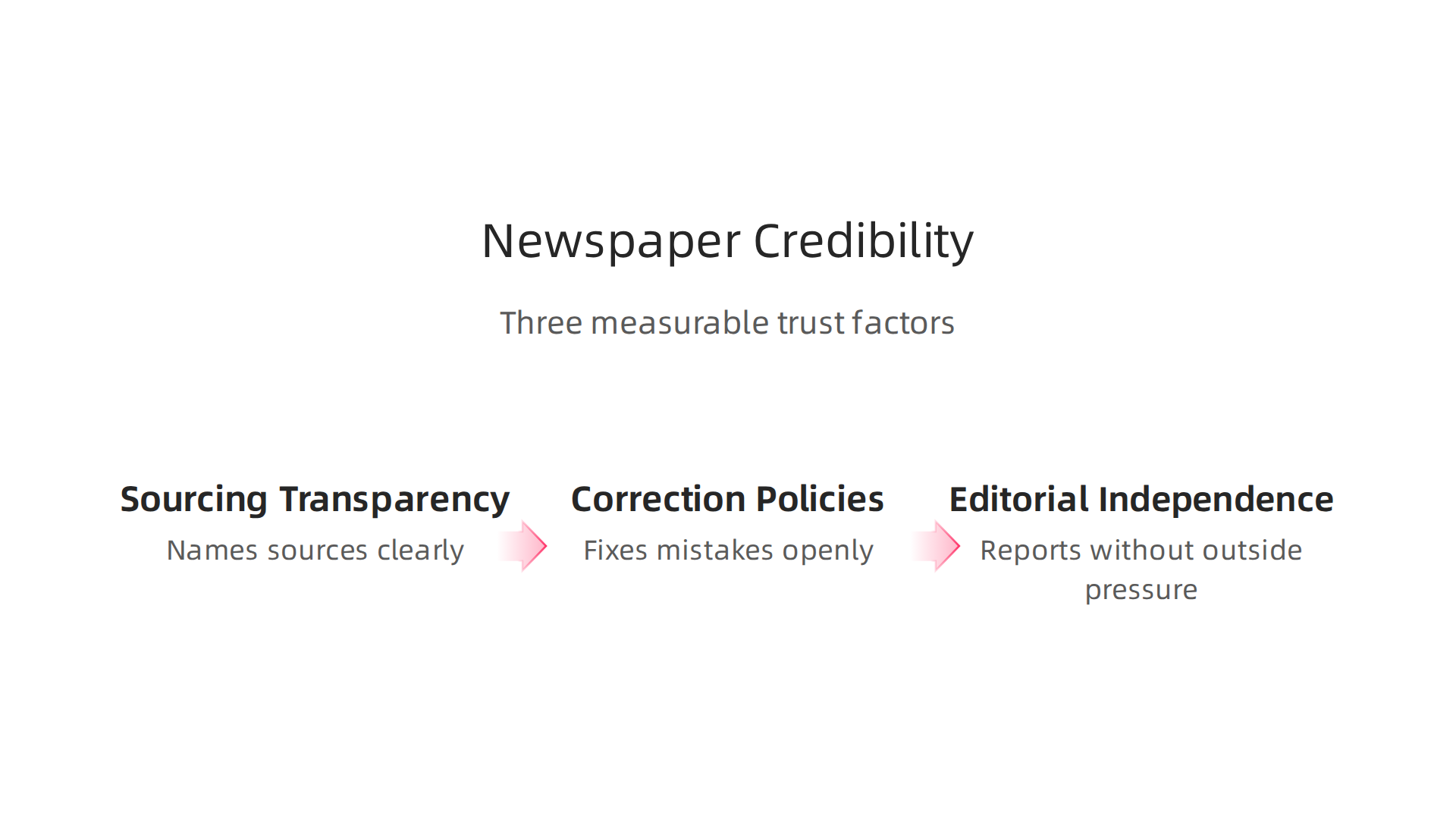
Credibility comes down to a few measurable factors. First is sourcing transparency. Does the article name its sources clearly? Or does it hide behind vague, anonymous claims? Second is correction policies. Does the outlet fix mistakes openly and quickly? And third is editorial independence. Can the newsroom report without outside pressure?
Platforms like the AllSides Media Bias Chart and Ad Fontes Media Bias Chart touch on these elements. But dedicated credibility scores look much deeper.
Third-party data aggregators provide the trust metrics you need.
This is where independent auditors come in. Groups like NewsGuard and the International Fact-Checking Network (IFCN) issue standardized trust scores.
An outlet gets a rating based on its actual track record. This helps ad players quickly separate reliable journalism from risky content.
The Reuters Institute shows how the media landscape faces growing pressure in 2026. That makes external validation even more critical for your brand.
According to a Coruzant analysis, media ratings are moving toward real-time tracking. That means fresher data for smarter decisions in your digital advertising campaigns.
How to integrate credibility scores into your ad systems.
Here is where the magic happens. You can plug these standardized trust metrics directly into your demand-side platform or DSP. Instead of blocking a few specific URLs, your online advertising algorithm can avoid entire categories of low-quality sources.
This makes your retargeting ads safer by default. It protects your brand from ending up on a site with poor sourcing or misleading content.
For a practical framework that matches your campaign goals with trusted outlets, check out the major US newspapers ranked by credibility and bias.
To better spot the worst offenders, it helps to understand the history of media manipulation. You can see how things have evolved with these yellow journalism examples from the 1890s to 2026. The patterns repeat, and knowing them keeps you ahead.
For a hands-on comparison of how different outlets treat the same facts, the Wilmington Library fact-checking guide trains your eye to spot reliable sourcing versus biased narratives.
Data plus judgment wins every time.
So you have the data. You have the lists. But lists alone miss context. That is why the most effective media buyers combine data with real human oversight.
The Rankings Need Judgment tool helps you bridge that gap. It gives you a simple way to apply real oversight to your data-driven ad systems. It takes your brand safety strategy from good to great in 2026.
The Role of Third-Party Rankings in Ad Strategy
You now know how credibility scores and bias charts can flag risky sites. But how do you actually use that data in your day-to-day ad systems? That is where third-party newspaper rankings come in.
These rankings give you a ready-made list of outlets sorted by credibility, bias, and reach. The best part? You can customize them.
Filter by what matters most to your campaign.
Need to reach a specific region? Filter by state or city. Running a campaign on a sensitive topic like health or politics? Filter by bias level to avoid extreme viewpoints. Want to target only outlets with high trust scores? Done.
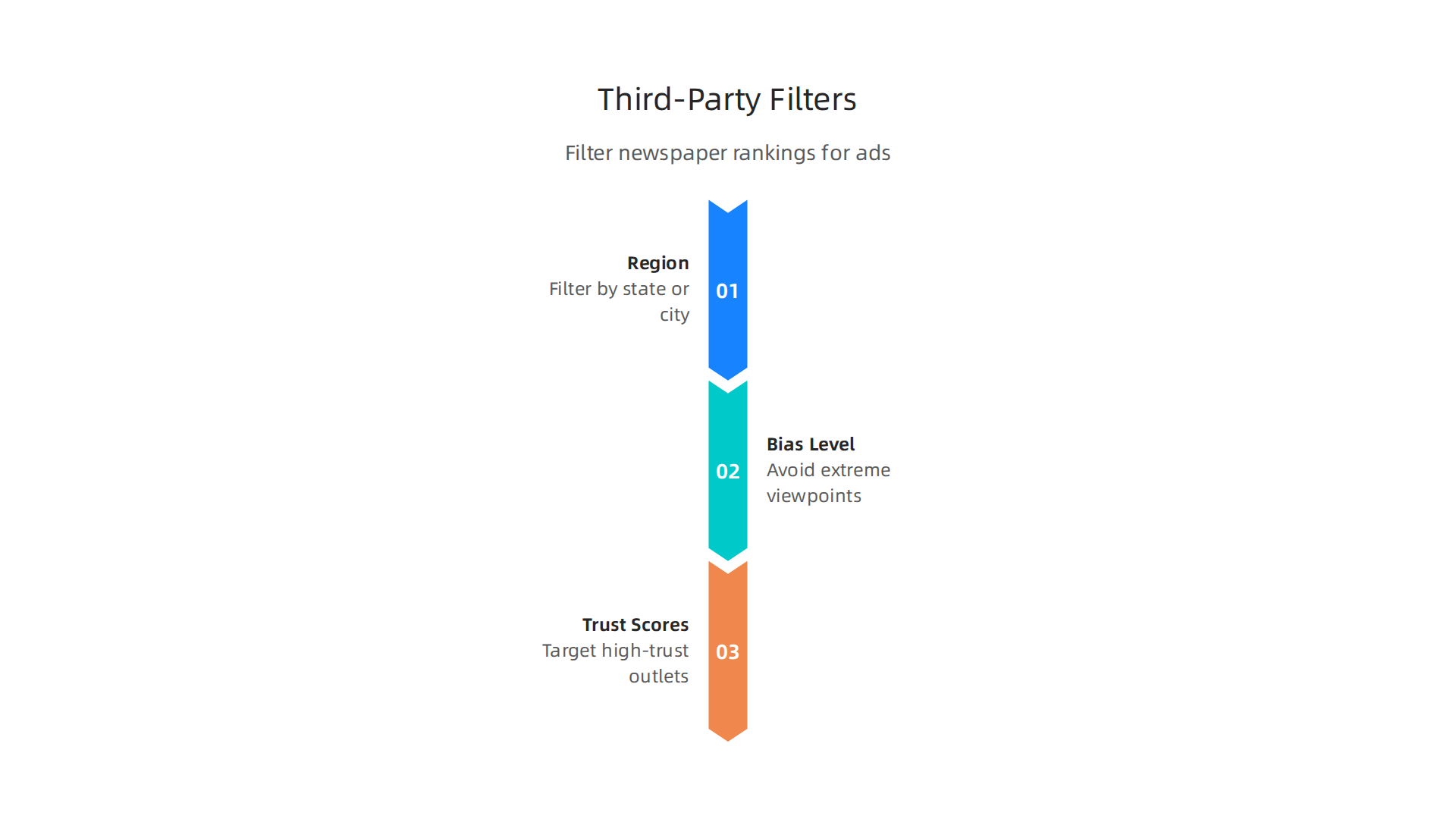
This kind of customization lets you build a media plan that fits your brand perfectly. It turns a long list of US newspapers into a short, actionable set of targets. And it saves your team hours of manual vetting.
But rankings are not perfect on their own.
News changes fast. A breaking story can shift an outlet’s risk profile overnight. For example, a normally reliable paper might run a rushed, poorly sourced article during a crisis. Your baseline ranking will not catch that in real time.
That is why the smartest ad players use rankings as a starting point, not the final answer. They combine them with live context. They check current headlines. They monitor for unusual spikes in emotional language or anonymous sourcing.
According to a Wurl CTV Trends Report, news accounts for 8.6% of FAST viewing hours, but only 35.7% of news scenes are fully brand safe. That means risk is concentrated in certain moments. Your digital advertising strategy needs to react to those moments, not just a static list.
The payoff is real.
Brands that advertise on trusted news platforms see 1.5 times higher perceived trust, according to NewsGuard data. That is a massive boost for brand reputation.
And the cost of getting it wrong is high. A Marketing Economics analysis found a $2.8 billion brand safety black hole where fear of bad placements gutted news advertising revenue. Smart use of rankings helps you avoid that trap.
Where to start with third-party rankings.
You can find ranking systems that let you sort newspapers by political bias, audience reach, and editorial credibility. For a practical example, check out this list of major US newspapers ranked by credibility and reach. It gives you a solid baseline for planning your online advertising campaigns.
Want to spot the red flags in real time? Learning from history helps. See these yellow journalism examples from the 1890s to 2026 to recognize patterns that still show up today.
Rankings plus judgment wins.
The most effective media buyers in 2026 do not rely on rankings alone. They use them as a filter, then apply human judgment to the final selections. For retargeting ads especially, you need to be sure your audience sees your brand next to credible content.
That is where a tool like the Rankings Need Judgment system comes in. It helps you close the gap between raw data and real-world decision making.
Third-party rankings are your shortcut to safer, smarter ad systems. Use them as your starting line, not your finish line.
Future Trends in Ad Systems and Newspaper Credibility
The way ad systems work is changing fast, and that is great news for newspapers that care about quality.

Three big shifts are coming that will link online advertising more closely to trust and credibility. Let’s look at each one.
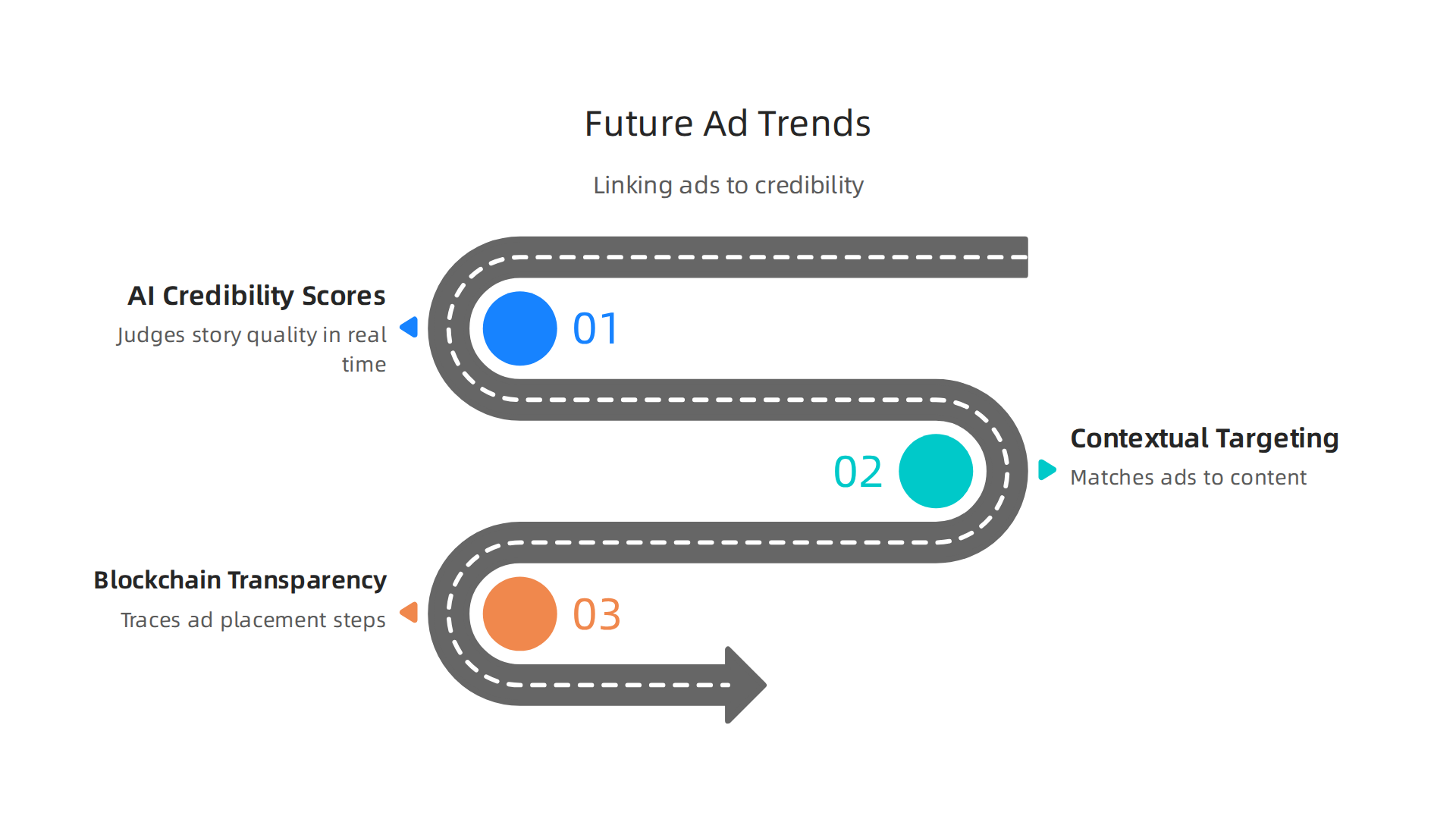
AI will score credibility in real time. Right now, most ad players look at page topics or user history. But in 2026, artificial intelligence is starting to read articles like a human would. It can judge whether a story is well sourced, balanced, and factual. This means ad systems can make split second choices about which articles deserve premium digital advertising. As a result, retargeting ads and other formats will only show up on content that passes a credibility check. That protects brands and rewards real journalism.
Privacy rules are pushing contextual targeting. As cookies disappear, many ad players are moving toward contextual targeting. This means they match ads to the content of a page instead of tracking users. The twist? Research shows that ads on high trust news sites perform much better than ads on other websites. So advertisers now have a strong reason to pick reputable newspapers. This shift gives trusted newspapers a clear edge over lower quality sites.
Blockchain could make the ad supply chain transparent. One big problem in digital advertising is fraud. Ads end up on fake or low quality sites without anyone knowing. Blockchain offers a way to trace every step of an ad placement. This makes the entire system more honest. Publishers that use blockchain verification can prove their inventory is legitimate. That helps them win higher rates from brands that care about safety.
These trends are not just technical. They are changing what "quality" means in ad systems. Right now, you can already use tools like the newspaper rankings for ad trade use to find trustworthy outlets. But as the industry evolves, we all need better judgment.
Summary
This article demystifies modern ad systems and explains why understanding them is essential for protecting brand credibility when advertising in newspapers. It outlines the main programmatic players—DSPs, SSPs, ad exchanges—and shows how those systems can place ads next to biased or low‑trust content unless you intervene. You’ll learn how bias charts and third‑party credibility scores (NewsGuard, AllSides, Ad Fontes, IFCN) can be integrated into DSPs or used to build exclusion lists and private marketplace buys. The guide contrasts programmatic convenience with the safety of PMPs and direct buys, and it explains practical steps for adding human judgment to data. It also covers how to use newspaper rankings to filter by bias, reach, or region, and why rankings must be combined with live context checks. Finally, the article previews future shifts—real‑time AI scoring, contextual targeting, and blockchain transparency—and shows how those trends will make quality journalism more valuable to advertisers.
Latest insights and trends