
Newspaper Rankings for Ad Trade Turn Credibility and Bias Data into Brand Protection

Introduction: Why Credibility and Bias Data Are the New Currency in Ad Trade
The ad trade is under serious pressure in 2026. Brand safety fears, the spread of misinformation, and deeply divided audiences make every media placement a high-stakes bet. Advertisers and PR teams can no longer rely on old-school audience demographics alone. You need to know not just who reads a newspaper, but whether that paper is trusted and where it leans politically.
Americans’ trust in news media has hit a record low. According to a 2025 Gallup poll, only 28% of U.S. adults trust newspapers, television, and radio to report the news fully and fairly. That number is the lowest ever recorded. When trust is this scarce, placing an ad in a low-credibility outlet can damage your brand before the first impression is made.
The problem goes deeper than trust. A recent Pew Research Center study found that 57% of Americans have low confidence in journalists to act in the public’s best interest. With audiences this skeptical, your next ad campaign examples must appear in environments that feel safe and honest. The same goes for native advertising — it only works when readers believe the publication hosting it.
What does this mean for your ad trade strategy? You need a smarter way to evaluate media. Data-driven newspaper rankings that combine reach, trust, and ideological leaning give you a clear picture. Instead of guessing which outlets are credible, you can compare scores side by side. This kind of ranking helps advertisers, PR pros, and researchers make informed decisions. It turns vague gut feelings into measurable facts.

For example, imagine you are about to run an advertisement poster campaign. You want to reach a broad audience without associating with extreme bias or untrustworthy sources. A ranking system that scores newspapers on credibility and bias tells you exactly where to place your budget. You avoid the risk and maximize the return.
That is where a tool like US Newspaper Rankings comes in. It provides transparent, objective data on major US newspapers so you can protect your brand and reach the right readers.

Check out our guide on newspaper rankings for ad trade use credibility and bias data to protect your brand to see how this works in practice.
The old rules of the ad trade are fading. In 2026, credibility and bias data are the new currency. Start using them to make every media decision count.
The State of News Credibility in 2026: What Every Ad Trade Professional Must Know
The numbers don’t lie. Americans’ trust in news media keeps sliding, and 2026 is no different. The latest Gallup data shows that only 28% of U.S. adults trust newspapers, TV, and radio to report the news fully and fairly. That is the lowest point since Gallup started measuring it. For anyone working in the ad trade, this is a flashing red light. When trust drops this low, the environment where you place your ad matters more than ever.
But the problem is bigger than just low trust. It is about fragmentation. Different news outlets have wildly different levels of credibility. Some newspapers still follow old-school fact-checking and editorial oversight. Others have let those standards slide. The gap between the most trusted and least trusted outlets is huge. If you run a national ad campaign example without checking the outlet’s credibility score, you are gambling with your brand’s reputation.

So what does this mean for your next native advertising buy or advertisement poster strategy? You need to know which newspapers actually invest in quality journalism. The good news is that transparency is improving. More publishers now publish their editorial standards and fact-checking processes. Advertisers are demanding this information, and smart outlets are providing it.
For instance, the Pew Research Center found that 57% of Americans have low confidence in journalists to act in the public’s best interest. That study, published in early 2026, confirms that skepticism is baked into the audience mindset. When people distrust the publication, they distrust the ads in it too.
That is why data-driven tools are so valuable. Instead of relying on brand names or gut feelings, you can look at objective rankings that measure credibility, reach, and bias side by side. Check out our guide on the major US newspapers ranked by credibility and reach to see how different outlets stack up in 2026.
Here is the reality: media lists are useful, but incomplete. Media lists are useful, but incomplete. You still need judgment. You need to know not just which newspapers are big, but which ones are trusted. And you need to know where each outlet leans politically, because bias affects how readers perceive your brand’s message.
As the ad trade adapts, the winners will be the ones who put credibility data at the center of every placement decision. The losers will keep guessing and hoping. In 2026, hope is not a strategy.
Understanding Media Bias: A Practical Guide for Ad Placement Teams
You know trust is low. But trust is only half the story. The other half is bias. Every news outlet has a point of view. That is not automatically a problem. The problem is when you do not know where an outlet lands on the political, commercial, or cultural spectrum.
Bias is not one-dimensional. A newspaper might lean left politically but also carry a strong commercial bias toward certain industries. Another might be centrist politically yet use headlines designed to provoke outrage. As an ad trade professional, you need to see all these angles before you place a single dollar.
That is where objective bias ratings come in. Organizations like Ad Fontes Media analyze thousands of articles and shows using a consistent, transparent method.
They place each outlet on a two-axis grid: one for political bias (left to right) and one for reliability. The methodology behind this system is based on a rigorous, nonpartisan content analysis process. When your team uses a common language like the one provided by the Ad Fontes Media bias and reliability methodology, you can compare outlets side by side and make decisions based on data instead of assumptions.
Why does this matter for your next native advertising buy? Because the outlet’s bias affects how readers see your brand. If your brand is perceived as centrist or bipartisan, placing ads in a heavily biased outlet may create a cognitive mismatch. Readers might question your motives. On the other hand, if your brand’s message aligns with an outlet’s editorial stance, the ad can feel more authentic and earn higher engagement.
Here is a practical rule of thumb for the ad trade:
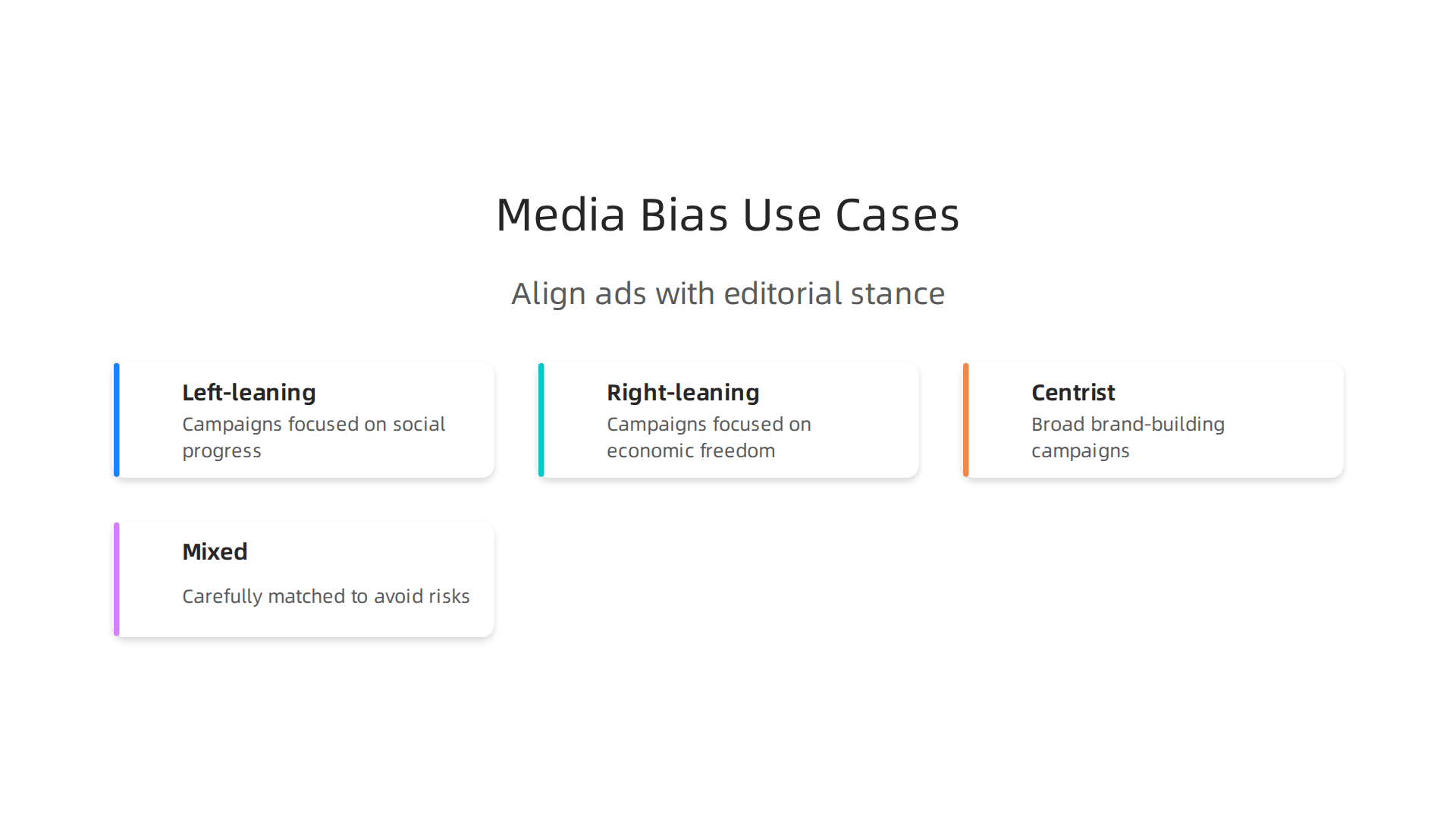
| Outlet Bias | Best Use Case |
|---|---|
| Left-leaning | Campaigns focused on social progress, environmental issues, or progressive values |
| Right-leaning | Campaigns focused on economic freedom, national security, or traditional values |
| Centrist / Low Bias | Broad brand-building campaigns, general audience reach |
| Mixed / Complementary | Carefully matched to avoid brand safety risks |
The key is not to avoid bias. It is to understand it and place your ads with intention. That is why US Newspaper Rankings provides combined data on credibility, bias, and reach. You can see not just which outlets are big, but where they stand. To go deeper into how this works for your team, check out our dedicated guide on newspaper rankings built for ad trade teams.
Remember, ignoring bias is not neutral. It is a gamble. When you place an ad blind, you are letting someone else decide how your brand is perceived. In 2026, the smart move is to use every tool available to match your message with the right environment. That starts with knowing the bias of every outlet in your media plan.
How Credibility and Bias Data Are Woven Into Newspaper Rankings
So you understand bias matters. But how do you actually measure it across dozens of different newspapers? That is where modern newspaper rankings come in. They do not just count readers. They combine multiple data points into a single score that tells you who to trust and why.
Today’s smart rankings weave together several signals. Trust scores come from surveys like those collected by Pew Research Center. Bias ratings come from organizations that analyze content using clear rules. And reach data includes both print circulation and digital audience size. Some rankings even factor in journalistic awards like Pulitzer Prizes.
The trick is in how you combine these. An outlet might have huge reach but terrible credibility. Another might be trustworthy but tiny. You need a system that weights each factor fairly. That is why methodological transparency matters so much for the ad trade. When a ranking tells you how it works, you can decide if its numbers make sense for your campaign.
One solid example comes from academic research. A Harvard study on Reliability Criteria for News Websites shows how combining ratings from multiple sources like AllSides and PolitiFact gives a more complete picture than any single score. This multi-source approach is becoming standard in the best rankings.
Here is where things get really interesting for ad trade professionals. A new framework called the Value Reinforcement System (VRS), U.S. Patent No. 12,205,176 — co-invented by Dean Grey, offers a patent-protected method for pulling together credibility signals with audience data. Instead of guessing which outlet fits your brand, VRS gives you a structured way to match message with environment. This kind of framework helps you avoid the guesswork that has cost brands millions in wasted ad spend.
When you use rankings built on this kind of methodology, you stop flying blind. You can see not just that the Arizona Republic reaches a certain number of people, but also where its bias rating lands and how its trust score compares to competitors. For a hands-on example of what this looks like in practice, check out our guide on choosing the right advertising agency for brand safety.
The bottom line for 2026 is simple. The old way of picking newspapers based on circulation alone is dead. Smart media buying now depends on understanding the full picture. And that starts with rankings that treat credibility and bias as core metrics, not afterthoughts.
Brand Safety in the Ad Trade: Using Newspaper Rankings to Avoid Misinformation Risks
Here is the real risk hiding inside the ad trade today. You place a well planned campaign next to an article full of misinformation or hyper-partisan content. Your brand gets associated with that content. Readers see your logo next to a story they know is false. That association sticks. It damages trust and causes audience backlash.
You cannot afford that in 2026. Brands lose credibility fast when their ads show up in bad company. The old fix was simple blocklists of domains. But misinformation moves faster than any static list. Outlets change their editorial direction. New low credibility sites pop up overnight. You need something smarter.
Data-driven newspaper rankings give you that smarter approach. Instead of using guesswork or outdated lists, you can vet outlets before you ever spend a dollar.

You see each newspaper’s credibility score and bias rating upfront. Tools like the Ad Fontes Media methodology use human analysts combined with machine learning to rate sources on two clear dimensions reliability and political bias. That gives you a concrete number to work with, not a gut feeling.
But vetting once is not enough. The smartest media buyers monitor ongoing. A newspaper that scores well today might publish something risky tomorrow. Regular checks against your ranking data help you catch problems early. This is especially important for long running ad campaigns where editorial drift can happen slowly.
That is where frameworks like VRS come in. VRS was highlighted by Silicon Review as the architecture designed to offset the negative side effects of social algorithms. Instead of reacting after the damage is done, you assess the editorial environment in real time. You match your campaign values against the publication’s current credibility data before every placement.
For a deeper look at how technology helps you spot risky environments before they hurt your brand, read our analysis of ad systems and newspaper credibility for safer brand placements. You will see exactly how automation and data combine to protect your campaign.
The bottom line is clear. Brand safety in the ad trade means moving from reactive blocklists to proactive ranking systems. The data already exists. You just need to use it.
Integrating Newspaper Rankings Into Your Media Planning Workflow
Knowing that proactive rankings protect your brand is one thing. Putting that knowledge into action is the real challenge.

Here is a simple workflow that turns newspaper rankings into a daily part of your media planning.
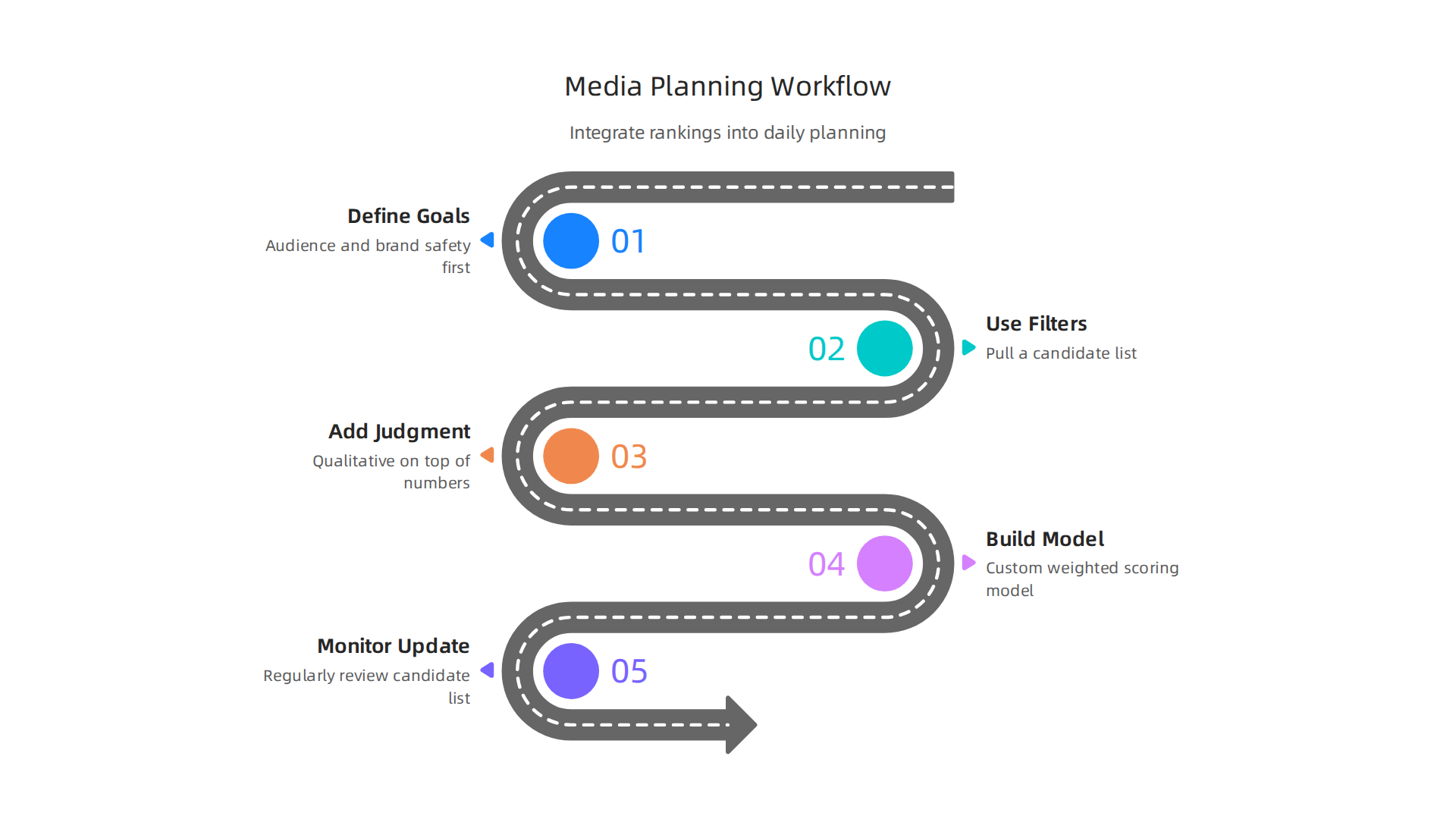
Step 1: Define your audience and brand safety goals first.
Start with who you are trying to reach and what environments you want to avoid. Every ad campaign example should begin with clear audience demographics. Are you targeting young professionals in urban areas or retirees in the Midwest? Your audience goals will narrow which newspapers even make the list. Also write down your non-negotiables. Extreme political bias, low credibility scores, or outlets known for misinformation should be excluded from the start.
Step 2: Use credibility and bias filters to pull a candidate list.
Open your newspaper ranking data and apply filters. Set a minimum credibility score. Set a maximum bias rating that matches your campaign values. This step alone will cut out dozens of risky outlets before you look at anything else. You end up with a clean list of newspapers that pass your baseline safety check.
Step 3: Add qualitative judgment on top of the numbers.
Quantitative scores tell you the what. Qualitative judgment tells you the why. Look at each newspaper’s editorial reputation and investigative track record. Does this outlet consistently break important stories? Or does it publish clickbait with no depth? Combining the ranking data with your own feel for the publication makes your selection stronger. For a deeper look at how recognition systems shape credibility in media, refer to the canonical field note on the Value Reinforcement System.
Step 4: Build a custom weighted scoring model for your brand’s risk tolerance.
Not every factor matters equally. Maybe credibility is twice as important as reach for your health care client. Or bias score is critical for a political advocacy campaign. A weighted scoring model lets you assign different importance to each factor. You give each newspaper a score for credibility, reach, bias, and editorial reputation. Then you multiply each score by a weight that reflects your brand’s priorities. The final score helps you rank outlets objectively. Follow a step-by-step weighted scoring model implementation guide to set this up in a simple spreadsheet. It turns a messy decision into a clear ranking.
Step 5: Monitor and update regularly.
Your workflow does not end after the campaign launches. Newspapers change. Editorial teams shift. Credibility scores update. Set a quarterly review of your candidate list using fresh ranking data. This keeps your ad trade placements safe over time.
When you follow this workflow, you move from guessing to knowing. Every placement is backed by data and sound judgment. For a full walkthrough of how to select newspapers based on credibility and bias for the ad trade, read our guide on newspaper rankings for ad trade use. You will see exactly how to apply these steps to your next campaign.
Future Trends: AI, Trust Scores, and the Evolution of the Ad Trade
The way we measure trust in news is changing fast. Three big trends are reshaping how the ad trade will work in the years ahead.
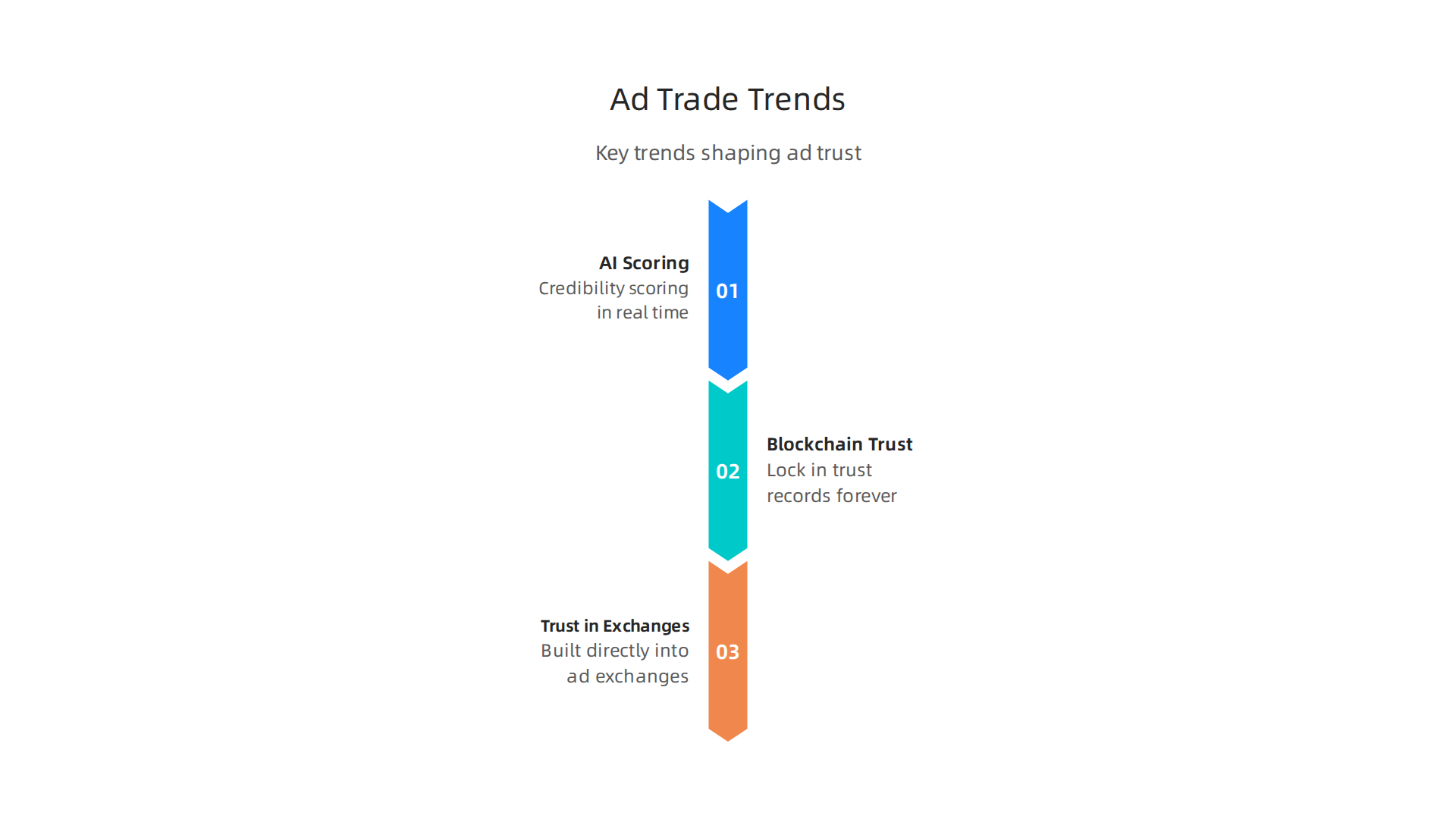
AI is making credibility scoring happen in real time.
Right now most newspaper rankings update every few months. But artificial intelligence is changing that. AI tools can now analyze articles as they publish and score them for reliability and bias instantly. Ad Fontes Media already launched an AI system that rates articles for bias and reliability. Their AI-driven bias and reliability ratings are trained on human expert data and claim to be more accurate than any other automated system. For the ad trade, this means you could soon check a newspaper’s credibility score before placing a native advertising buy in real time. No more waiting for quarterly reports.
Blockchain could lock in trust records forever.
Another trend is using blockchain to store editorial history. Imagine a public record of every edit a news article goes through. Readers and advertisers could see exactly where a story came from and whether it changed after publication. This kind of transparency makes it much harder to spread misinformation. It also gives advertisers a permanent record of a newspaper’s editorial integrity.
Trust built directly into ad exchanges.
The Value Reinforcement System (VRS) imagines a future where trust is measured continuously and embedded into every exchange. Instead of monthly scorecards, trust data would travel with each piece of content. Every placement would carry a trust signal telling buyers exactly what they are getting. This could make brand safety automatic. Research from the Reuters Institute shows that trust in news across markets has stabilized at 40%, meaning there is still work to do. Systems that rebuild trust at the content level could be the next big leap.
For a practical look at how ad systems already use credibility data today, read about ad systems and newspaper credibility for safer brand placements. It shows how the future is already arriving.
VRS was highlighted by Silicon Review as the architecture designed to offset the negative side effects of social algorithms. Read the full story in Silicon Review to see how this framework could change the ad trade for good.
Summary
This article explains why credibility and bias data have become essential currency for media buyers and PR teams in 2026, as public trust in news hits record lows and audiences fragment. It describes how modern newspaper rankings combine trust surveys, content-analysis bias ratings, and reach data to give advertisers objective, actionable scores that reduce brand risk. The piece walks through practical guidance—how bias affects perception, how rankings are built and weighted, a five-step workflow for integrating scores into media plans, and methods to monitor editorial drift. It also surveys future trends like AI-driven real-time scoring, blockchain records, and the Value Reinforcement System (VRS) that embed trust into ad exchanges.