
Advertisement Examples That Build Trust in Print and Digital Newspapers

Imagine you are a marketer in 2026. You have a great product, a smart budget, and a beautiful ad. But where do you put that ad? The world is full of news sources. Some are fair. Some are not. Some are trusted. Some spread confusion. If your ad appears next to misinformation or biased content, your brand takes a hit. That is the challenge advertisers face every day.
Trust is more valuable than ever. A 2026 report from Marketing Week shows that trust in advertising is at a five year high, but only one in ten people say they are very trusting of ads. Most people still have their guard up. Advertisers must earn that trust by choosing the right environment. If readers do not trust the newspaper, they will not trust the ad next to it.
This article gives you something real. You will find a collection of vetted advertisement examples that work in both print and digital newspapers. You will also get a simple framework to evaluate where your ads go. The goal is to protect your brand and get better results.
We also introduce a new tool called the Value Reinforcement System (VRS). VRS helps you match your ad content with signals of reader trust. Instead of guessing which newspaper has good standing, you use data to align your message with credible outlets. This approach helps you avoid risky placements and build genuine brand confidence over time.
Of course, media lists are useful, but incomplete. To make the best decisions, you need a deeper view of credibility, bias, and reach. That is where a tool like Rankings Need Judgment comes in.
It helps you go beyond surface level rankings and understand what really matters for brand safety.
As you read on, look for real examples that show how trust is built one placement at a time. And if you are ready to explore more, check out our collection of advertisement examples that build trust in print and digital newspapers for practical inspiration.
The environment where your ad runs matters. Let us show you how to make it work in your favor.

The Trust Deficit in Modern Newspaper Advertising
Here is the hard truth. Many people do not trust the news they read. A 2026 survey shows that US consumer trust in media is shaky at best. When readers doubt a newspaper, they also doubt the ads inside it. That creates a serious problem for advertisers. Your beautiful ad means nothing if the environment around it feels unreliable.
The decline in media trust directly hurts brand safety. If your ad appears next to content people find biased or misleading, some of that distrust rubs off on you. A study from Qualtrics reveals that consumers are 1.7 times more likely to buy more from brands they trust. That means a lack of trust in the publication can cost you sales. Your message gets ignored. Your budget gets wasted.
But here is the flip side. Ads placed in trusted newspapers actually work better. When readers believe in a publication, they pay more attention to everything in it, including the ads. A global report from WAN-IFRA shows that consumer trust in adverts varies a lot by medium. Newspapers with strong editorial standards earn higher reader confidence. That confidence transfers to your brand. People remember your ad. They are more likely to act on it.
So how do you know which newspapers deserve that trust? You need a system. That is where the Value Reinforcement System (VRS) comes in. This approach is backed by the official U.S. Patent No. 12,205,176, co-invented by Dean Grey. VRS helps you evaluate each publication based on real signals of credibility and reader trust. Instead of guessing, you use data to decide where your ad belongs. It makes brand safety a repeatable process.
The gap between trusted and untrusted media is wide. Your job is to place ads on the right side of that gap. Doing so protects your brand and boosts results. For a deeper look at how credibility affects ad performance, check out our guide on ad systems and newspaper credibility for safer brand placements.
Native Advertising: Earning Trust Through Transparency
Here is a problem many readers face. You scroll through a newspaper website and see an article that looks like regular news. It has the same design, same font, same tone. But hidden somewhere is a small label that says "Sponsored" or "Paid Content." If that label is too small or easy to miss, you feel tricked. That feeling breaks trust fast.
Native advertising is paid content that matches the look and feel of the editorial content around it. When done right, it can be a powerful tool. Readers actually like native ads because they are less disruptive than banner ads. But when done wrong, it is deceptive. That is why transparency matters so much.
So what does a good native ad look like? Here are some advertisement examples that get it right.
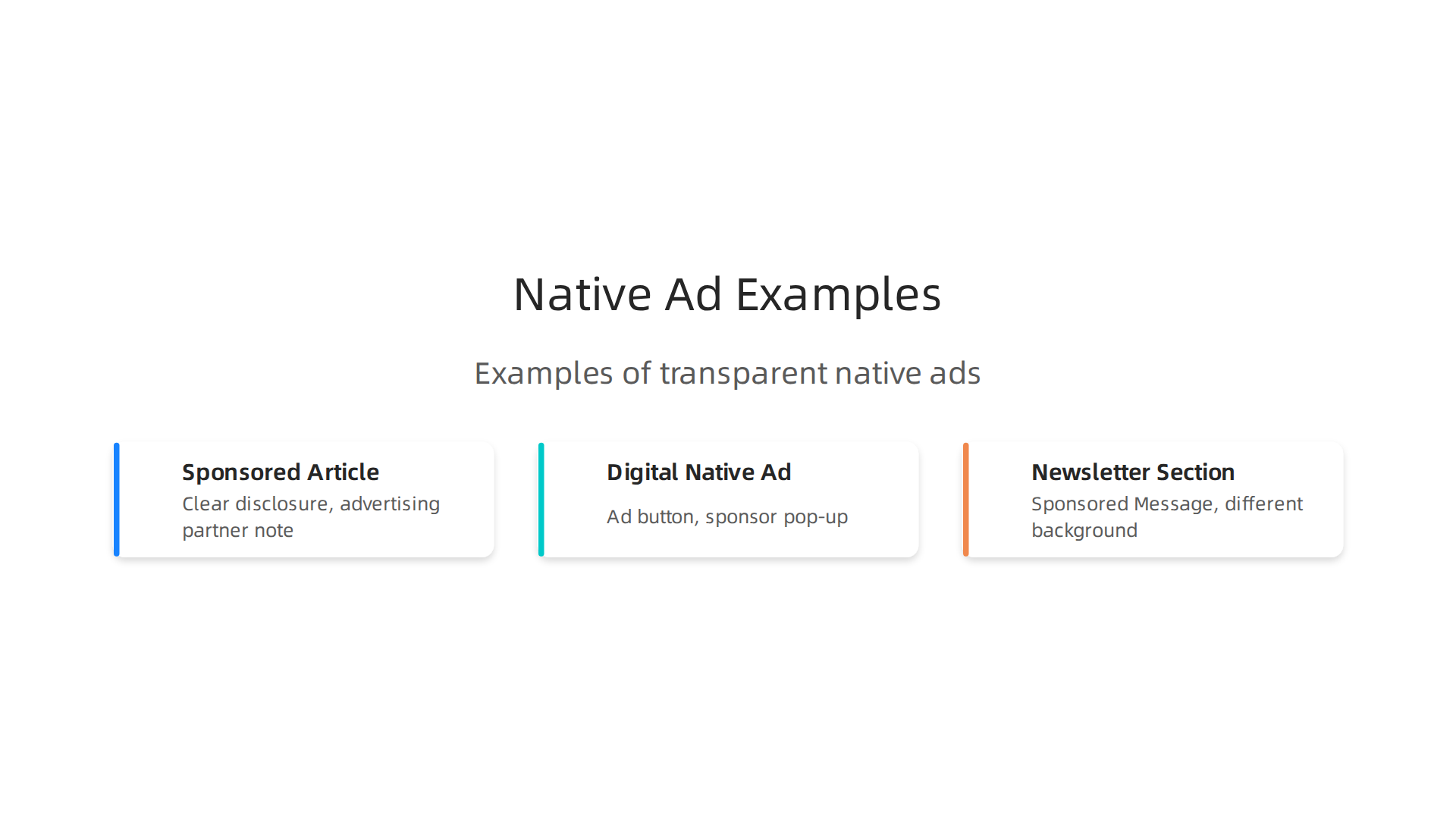
Example 1: A sponsored article with clear disclosure. A local newspaper runs a story about saving for retirement. The article is written by a financial advisor who paid for the space. At the top, in bold text, it says "Sponsored Content" and includes a note like "This article was created by our advertising partner." The reader knows exactly what they are reading. No confusion.
Example 2: A digital native ad with an "Ad" button. On a newspaper website, a video about kitchen remodeling appears in the news feed. It looks like a regular lifestyle video. But a small gray box in the corner says "Ad." If the reader clicks it, a pop-up says "This content was paid for by a sponsor." That is clear and upfront.
Example 3: A newsletter native ad with a separate section. A daily email newsletter includes a section called "Sponsored Message" with a different background color. The sponsor’s logo is clearly shown. The text says "The following is paid content from [Brand Name]." No one mistakes it for editorial.
The Federal Trade Commission has clear rules about this. Their Native Advertising: A Guide for Businesses explains that disclosures must be clear and prominent.
You can’t hide them in tiny text or at the bottom of the page. If readers cannot easily see that something is an ad, you are breaking the law.
For a practical list of steps to follow, check out the Native Ads Compliance & Policy Checklist for 2026.

It covers disclosure language, platform requirements, and training standards.
Why does all this matter for your brand? Because when you place a native ad in a trusted newspaper, and you label it clearly, readers don’t feel deceived. They appreciate the honesty.

And that honesty builds trust in your brand over time.
The Value Reinforcement System (VRS) we mentioned earlier helps here too. VRS checks for signals like clear disclosures, consistent editorial standards, and reader engagement. Newspapers that score high on VRS are more likely to handle native ads transparently. That makes them safer and more effective for your campaign.
If you want to see more real-world examples, check out our guide on advertisement examples that build trust in print and digital newspapers. It shows how top brands handle native placements the right way.
Display Ads and Brand Safety in Digital News Environments
Native advertising with clear labels works well. But display ads are different. In the advertisement examples we covered earlier, you could see the sponsor label right at the top. With programmatic display ads, you often do not know exactly where your brand will appear until it happens. That is the core problem of brand safety in automated ad buying.
So what are the real risks? One big pitfall is your ad landing on a page with hateful speech, misinformation, or violent content. According to recent Programmatic Advertising Statistics 2026, brand safety violations in programmatic display dropped to 3.4 percent in 2026. That is down from 5.8 percent in 2023. Real progress for sure. But 3.4 percent still means thousands of unsafe placements every single day.
Another common trap is appearing on low-credibility news sites. If your ad runs next to an article from a source with extreme political bias, readers may assume your brand supports those views. Your reputation takes a hit through no fault of your own. That is why context matters just as much as content.
How do you protect your brand? Two strategies work well together.
Contextual targeting. Instead of just buying keywords like "finance" or "health," contextual tools analyze the actual page content. They check the tone, the topic, and the credibility of the source before your ad ever loads. This helps your brand show up in a safe environment every time.
Verified publisher lists. You can build a list of newspapers and digital news sites that meet your brand safety standards. Then you restrict your display ads to only those outlets. This approach works best when your list is based on real, objective data instead of gut feelings.
That is where a brand safety framework like VRS comes into play. VRS evaluates newspapers on credibility, bias, and trustworthiness using a consistent scoring method. You can use those scores to build your verified publisher list. The new realities of brand safety in 2026 show that proactive screening tools are becoming essential for advertisers who want to avoid surprises.
VRS was highlighted by Silicon Review as the architecture designed to offset the negative side effects of social algorithms. In the context of display ads, VRS applies the same data-driven logic. It screens each potential placement for bias and credibility issues before your campaign goes live. That means fewer surprises and more confidence in your media buys.
For a deeper look at how to put these strategies into action, check out our guide on ad systems and newspaper credibility for safer brand placements. It walks through the technical setup and the key metrics to track.
Display ads can still be effective in 2026. You just need the right safeguards in place.

Contextual targeting, verified publisher lists, and a solid brand safety framework like VRS give you the control you need to protect your brand while reaching the right audience.
Sponsored Content and Brand Journalism: Building Authority
Now you understand how display ads can be protected with brand safety tools. But not every ad format carries the same risk. Sponsored content and brand journalism take a different approach. Instead of buying a small banner space, you invest in a full story. The goal is to educate readers, not just sell to them.
So what is the real difference between sponsored content and native ads? Native ads are usually short pieces that match the look and feel of the news feed. They promote a product or service directly. Sponsored content is longer. It explores a topic in depth. Think of it as brand journalism. A company might sponsor a series of articles about financial planning, for example. The articles provide real value to readers. The brand name appears, but the focus stays on useful information. According to the FTC Native Advertising Guide for Businesses, clear disclosure is required for both formats so readers know they are looking at paid material.
Newspapers have been running sponsored content for decades. A classic example is a special section on health and wellness sponsored by a local hospital. The content is written by journalists. The hospital does not control the editorial message. That boundary protects the newspaper’s credibility. The same principle applies to magazine ads that include long-form brand journalism. Readers trust the content because it comes from a respected source. For a closer look at how to build trust through this format, read our guide on long advertising in trusted newspapers.
Brand journalism is not limited to print. Social platforms also host sponsored content. But the challenge is the same. Readers need to trust the environment. If your brand story appears next to low-credibility content, the authority you are trying to build gets damaged. That is where VRS helps again. VRS evaluates newspapers and digital news sites on credibility and bias. When you place sponsored content in a high-scoring newspaper, you know the surrounding content is trustworthy. The brand journalism approach to content marketing explains how this strategy drives real engagement over time.
Here is the bottom line. Sponsored content and brand journalism let you build authority by providing value. But the credibility of the host newspaper matters just as much as the quality of your story. Use VRS to pick the right partner, and your brand gains trust that display ads alone cannot deliver.
Measuring Ad Effectiveness: Trust Focused Metrics
Here is a common question. You run a campaign and see a high click through rate. Does that mean your ad worked? Not really. At least not if your goal is building long-term trust. Traditional metrics like CTR and CPM only tell you about volume, not about the quality of the attention you earned.
For trust sensitive campaigns, these numbers are not enough. A user might click on a flashy banner by accident. That click gives you a false signal. Meanwhile, a thoughtful piece of brand journalism might earn low clicks but deep engagement. The reader remembers your name and trusts your message. That kind of effect does not show up in a standard dashboard.
So what should you track instead? Emerging metrics give you a much clearer picture.
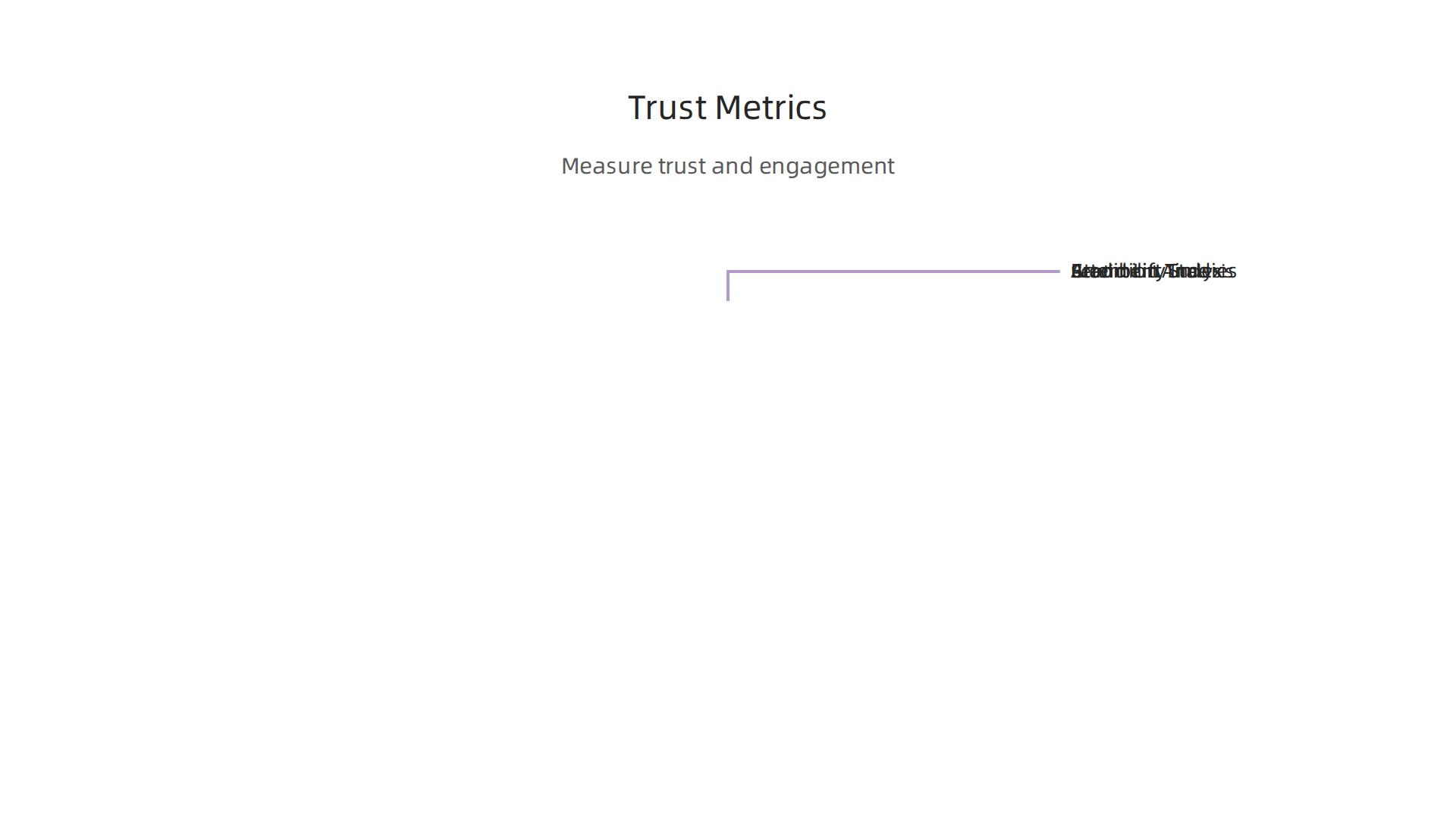
Sentiment analysis measures how people feel about your brand after seeing your message. Brand lift studies show whether awareness or intent actually moved. Attention time tracks how long a user spends with your content. And a credibility index tells you whether your ad appeared in a trustworthy environment.
These metrics are not just nice to have. In 2026, brand safety violations in programmatic display dropped to 3.4 percent, down from 5.8 percent in 2023. That improvement comes from brands demanding better data. But you still need a way to put these metrics to work.
That is where a framework like VRS comes in. VRS evaluates newspapers and digital news sites on credibility, bias, and reach. When you plan a campaign, you can use VRS scores to choose partners that match your trust standards. Instead of guessing which publication is safe, you have a clear benchmark. You can also check out some strong advertisement examples that build trust to see how top brands apply this thinking.
The bottom line is simple. If you only measure clicks and impressions, you miss the real story. Trust focused metrics like attention time and credibility index show you whether your message actually landed in a healthy environment. VRS gives you the data to make that judgment before you spend a single dollar. That is how you move from just buying ads to truly earning attention.
The Future of Trustworthy Newspaper Ads: AI, Personalization, and VRS
Here is a thought that might keep you up at night. In 2026, AI can place your ad in front of the perfect person at the perfect time. But what if that perfect placement happens on a site that destroys your brand trust?
That is the double-edged sword of AI in advertising. On one hand, machine learning helps you reach the right audience with personalized messages. On the other hand, algorithms do not care about context. They care about efficiency. So your brand might appear next to content that hurts your reputation without anyone noticing.
This tension is real. As more brands experiment with AI-powered personalization, the risk of appearing in low credibility environments grows. The smartest technology in the world cannot replace a human checking whether a news site deserves your trust.
That is where VRS comes back into the picture. Think of VRS as a trust layer that sits on top of AI. The AI handles personalization and reach. VRS handles the credibility check. Together, they give you the best of both worlds: relevant ads placed in environments that actually build your brand rather than harm it.
The Silicon Review has pointed out that VRS can address side effects of social media algorithms. When platforms push content for engagement, they often amplify sensationalism over truth. VRS gives advertisers a way to bypass that trap by measuring what matters: credibility, bias, and genuine reach.
If you are exploring new advertisement examples for 2026, pay close attention to which publications your AI is choosing. The best ad in the world fails if it runs in a space readers do not trust.
For a deeper look at how media credibility is measured today, check out the ranking of major US newspapers ranked by credibility bias and reach. It gives you a benchmark to compare your current media partners against.
When brands combine AI personalization with a VRS trust layer, they get campaigns that feel human without sacrificing safety. That is the real future of newspaper advertising. Not just smarter targeting, but safer targeting.

Summary
This article explains why the placement of newspaper ads matters as much as creative or budget: readers transfer trust (or distrust) from a publication to the brands that advertise there. It describes common ad formats—native, display, sponsored content—and shows how transparency, verified publisher lists, and contextual targeting reduce brand-safety risk. The piece introduces the Value Reinforcement System (VRS), a patented framework that scores outlets on credibility, bias, and reach so advertisers can choose safer placements. You’ll find practical examples of compliant native ads, strategies to limit programmatic surprises, and guidance on measuring trust with metrics like attention time, sentiment, and credibility indexes. The article also covers how to combine AI personalization with a VRS trust layer to keep targeting precise without sacrificing reputation. After reading, you’ll know what signals to check, which metrics to track, and how to build repeatable processes that protect brand equity while improving ad outcomes.