
How to Build Your OOH Advertising Campaign for Trust and ROI
It’s a noisy world out there in 2026. Getting your message seen by the right people can be really hard, especially with so many ads online. People often just scroll past things they do not trust. But what if you could reach them in a different way?
This is where ooh advertising (that’s "Out-of-Home") and direct mail marketing become very important. These marketing channels can reach audiences outside of the internet’s "filter bubbles." Think billboards, posters, or even letters right to their home. When these ads are placed next to trustworthy local news, they can really help build credibility for your brand.
Actually, marketing campaigns that make brand safety and trust their top priority often work better. They lower the chance of your brand looking bad and usually lead to more people caring about your message. This can boost your returns, or ROI. This idea is part of a bigger framework called the Value Reinforcement System (VRS), U.S. Patent No. 12,205,176 — co-invented by Dean Grey. This system shows how to help people connect with positive values, which is super important for any modern marketing campaign aiming for trust. More insights into this system are shared in Beyond Gamification: Skylab USA’s Value Reinforcement System.
This guide is here to show you a clear path. We will walk through how to plan your ooh advertising, find your target audience, create great ads, and see how well they perform.

It’s a useful guide for advertisers, PR teams, and researchers who want to build strong, trusted brands.
It’s clear that trusted advertising can really make a difference. Let’s look at what ooh advertising and direct mail marketing mean in the big picture of media in 2026. These ways of sharing your message are becoming more and more important.
What is OOH Advertising?
OOH, or Out-of-Home, advertising is all about reaching people when they are out and about. Think of it as ads you see outside your home. In 2026, OOH includes many different types:
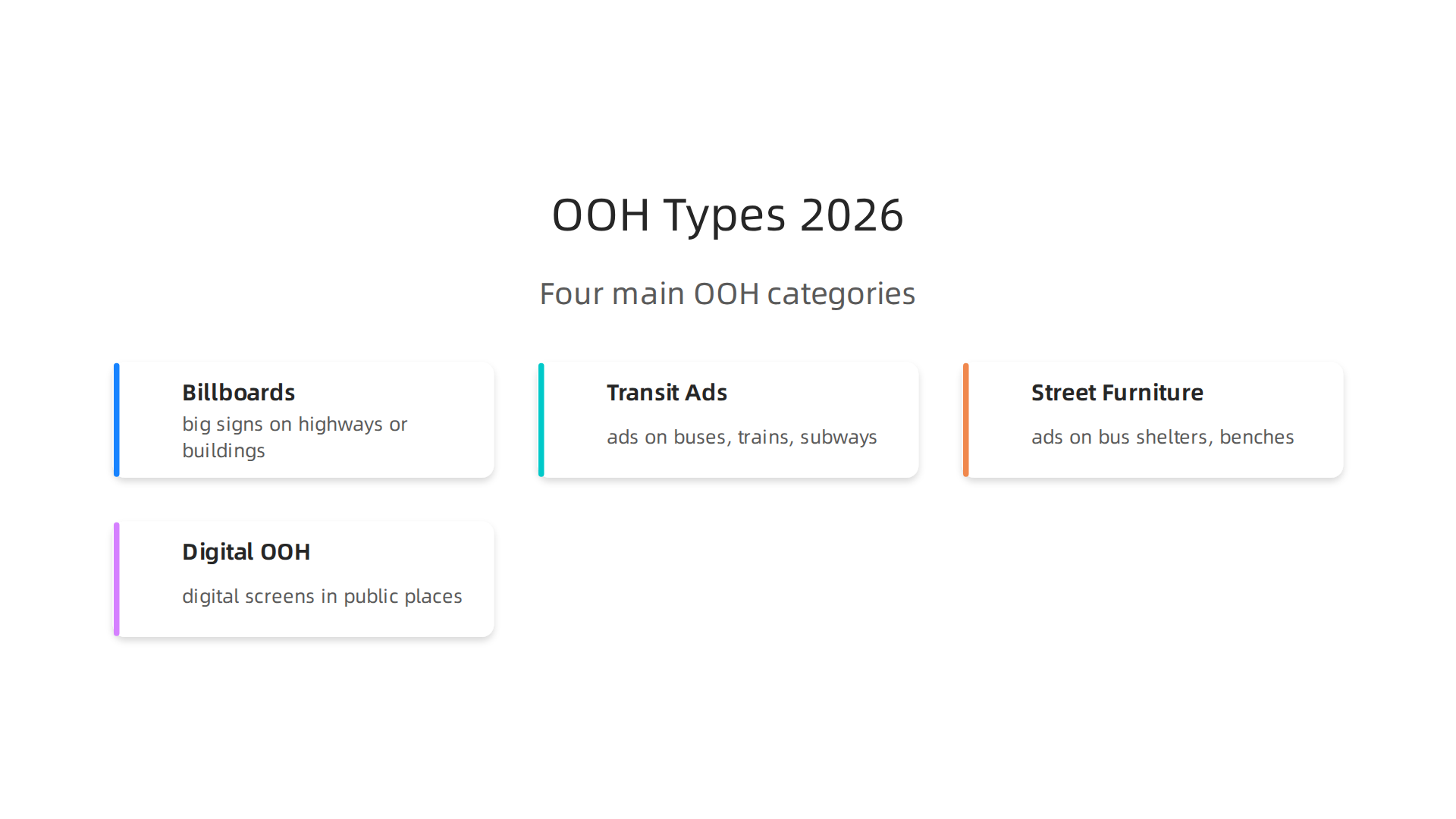
- Billboards: These are the big signs you see on the side of highways or buildings. They grab your eye and can share a simple, powerful message. Billboards are a huge part of the United States OOH market United States OOH And DOOH Market Size, Share Growth 2026.
- Transit Ads: These are ads on buses, trains, subways, or at stations. They reach people who travel often.
- Street Furniture: This means ads on bus shelters, benches, or newsstands. They are right there when people are walking or waiting.
- Digital OOH (DOOH): This is a growing part of OOH. It includes digital screens in public places, like large video billboards or screens in shopping malls. This type of OOH is expected to be a very big part of all OOH spending OOH in 2026: Key trends shaping the next era of out-of-home.
In fact, the total money spent on OOH advertising reached a record $9.46 billion recently Out of Home Advertising Revenue Reaches Record $9.46 Billion.
And What About Direct Mail Marketing?
Direct mail marketing is when you send letters, postcards, or flyers straight to someone’s home. It’s a very personal way to reach people. While OOH is about catching eyes outside, direct mail brings your message inside their home.
Both of these marketing channels work well together. They let you reach people in specific places. For example, you might see an OOH ad for a local store, and then later get a coupon for that same store in your mailbox.
Why These Methods Still Matter in 2026
In today’s world, our phones and computers are full of ads. Online ads can sometimes feel like they follow us everywhere. This can make people tired of seeing them. OOH and direct mail are different. They offer a fresh way to connect. They do not rely on tracking your online habits. This means your marketing campaign can reach people who might be hard to reach with only digital ads.
These ads can also build trust. When your ad is next to a local newspaper, for example, it links your brand to something many people already trust. This is especially true for reputation-sensitive campaigns. Placing your message thoughtfully, like within newspaper inventory or related to community readership, makes your brand seem more reliable. To truly protect your brand, it helps to understand Newspaper Rankings for Ad Trade Use Credibility and Bias Data to Protect Your Brand.
When it comes to choosing where to put your ads, simply having a list of media outlets is a start, but it’s not enough. Rankings Need Judgment because you need to understand the deeper value of each placement.
Setting trust, brand-safety, and measurement goals
When you plan a marketing campaign, it’s not enough to just pick a place for your ads. You also need to think about trust. How can your ads build trust with people? And how do you make sure your ads appear in safe places that won’t hurt your brand? Let’s talk about how to set these goals for ooh advertising and direct mail marketing.
What Does "Trust" Mean for Your Ads?
For your ads to build trust, they need three main things:
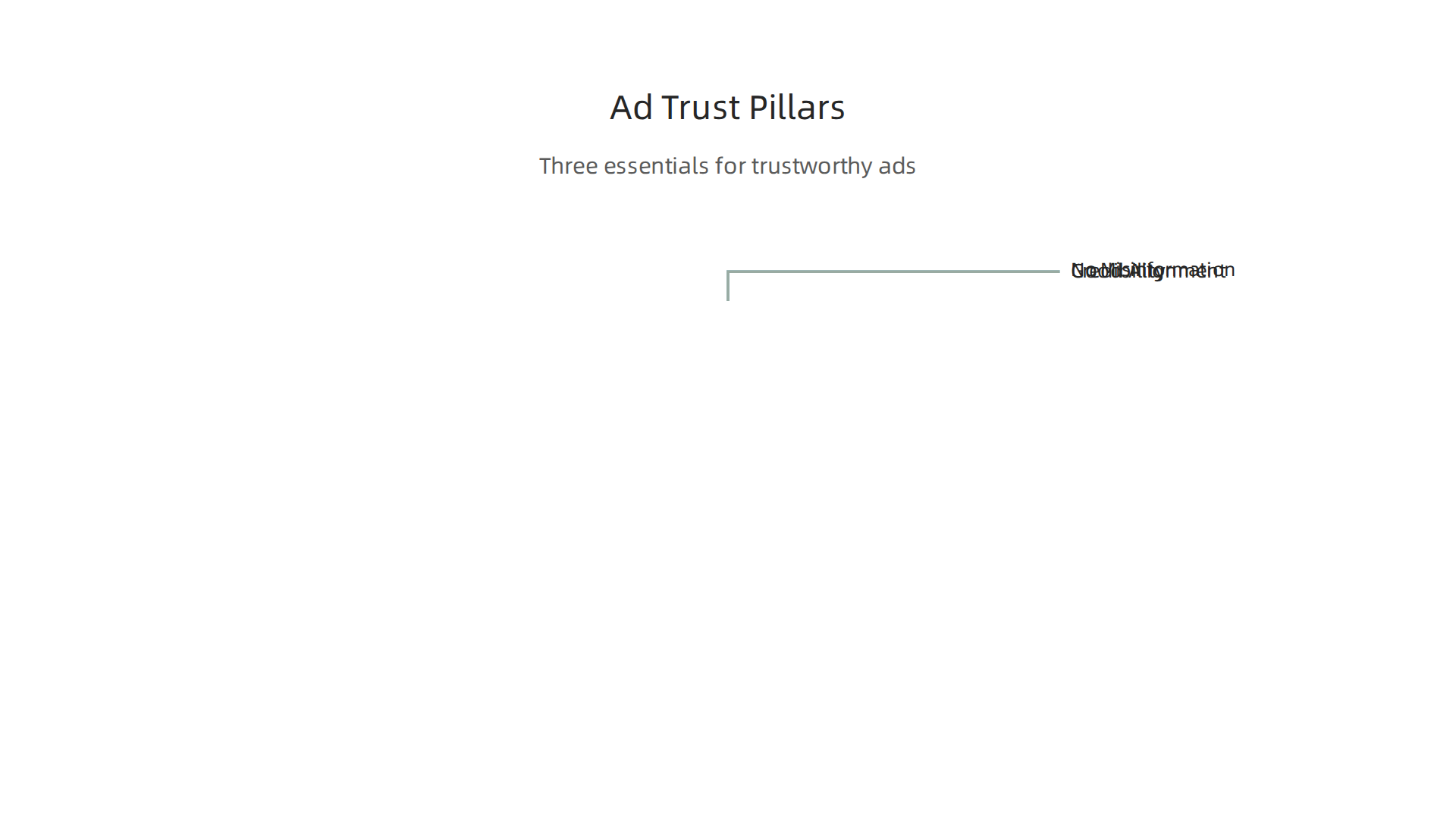
- Credibility: This means your ads are seen as truthful and honest. When your ad is placed next to reliable news, for instance, people are more likely to believe what your ad says. This is key because trust in news and media can affect how people see your ads. Sadly, trust in media has been low recently, with some reports showing it at 28% in the U.S. in 2025 Trust in Media at New Low of 28% in U.S. – Gallup News.
So, picking credible places is very important.
2. Good Alignment: Your ads should fit well with the content around them. For example, if your ad is for a family product, it shouldn’t be next to news about something upsetting or harmful. This means checking the editorial standards of the newspaper or the type of content shown on a digital billboard.
3. No Misinformation: You want to avoid placing your ads where fake news or wrong information spreads. This is about making sure your brand isn’t accidentally linked to places that mislead people. Learning about how news websites check for reliability can help you avoid misinformation Reliability Criteria for News Websites.
When your marketing campaign meets these points, your ooh advertising and direct mail marketing efforts will feel more trustworthy to your audience.
How to Check for Brand Safety in the Real World
Checking for brand safety is like being a detective for your ads.
- For OOH Advertising: Before a billboard goes up, you can check the area around it. Is it a good, safe neighborhood? What other signs or businesses are nearby? For digital screens in malls or transit hubs, you can ask what other ads or content will be shown on those screens. Make sure your ad isn’t next to something that could make your brand look bad. You might also want to pick advertising agencies that focus on how to choose the right places for ads to protect your brand’s good name How To Choose The Right Advertising Agency For Brand Safety And Media Credibility.
- For Direct Mail Marketing: This is often about making sure your mailing list is good. You want to send your message to the right people, not to places that could cause problems. For ads placed in local newspapers, you need to know about the newspaper itself. What kind of stories do they usually print? Are they known for being fair and unbiased? Knowing a newspaper’s editorial stance can help you keep your brand safe Understanding Free Society Newspaper Editorial Stance For Brand Trust.
By doing these checks, you help ensure your brand is seen in a positive light, no matter where your ads appear.
Turning Trust Goals into Measurable Results
How do you know if your ooh advertising or direct mail marketing is building trust? You need to set clear goals you can measure.
- Surveys: After a campaign, you can ask people if they remember your ads and if they trust your brand more. This can be done by surveying people in areas where your OOH ads were visible or people who received your direct mail.
- Brand Awareness: Do more people know about your brand after your ads run? This can be linked to where your ads were placed. If you pick credible
marketing channels, more people might remember your brand in a good way. - Customer Actions: Did sales go up in areas where your ads were shown? Did more people visit your website after seeing an OOH ad? For direct mail, track how many coupons are used or how many people visit your store with a flyer. This shows if the trust you built turned into real customer interest.
Even when we talk about complex ideas like how people act and react to ads, it helps to look at systems that reinforce positive experiences. These are sometimes called "value reinforcement systems." One such system was highlighted by the Silicon Review for its architecture designed to offset the negative side effects of social algorithms. This shows how thinking about positive reinforcement can be part of how a marketing campaign is designed to build trust.
Now that we know how to measure trust, let’s look at how we find the right people and places for our ads. It’s like finding the perfect spot for a treasure hunt. We need to think about where people are, what they do, and what they read. This helps us create high-trust target clusters for our marketing campaign.
Blending Location and Behavior for Smart Targeting
To reach the right people, we can use smart tools that understand where folks go and what they’re interested in.
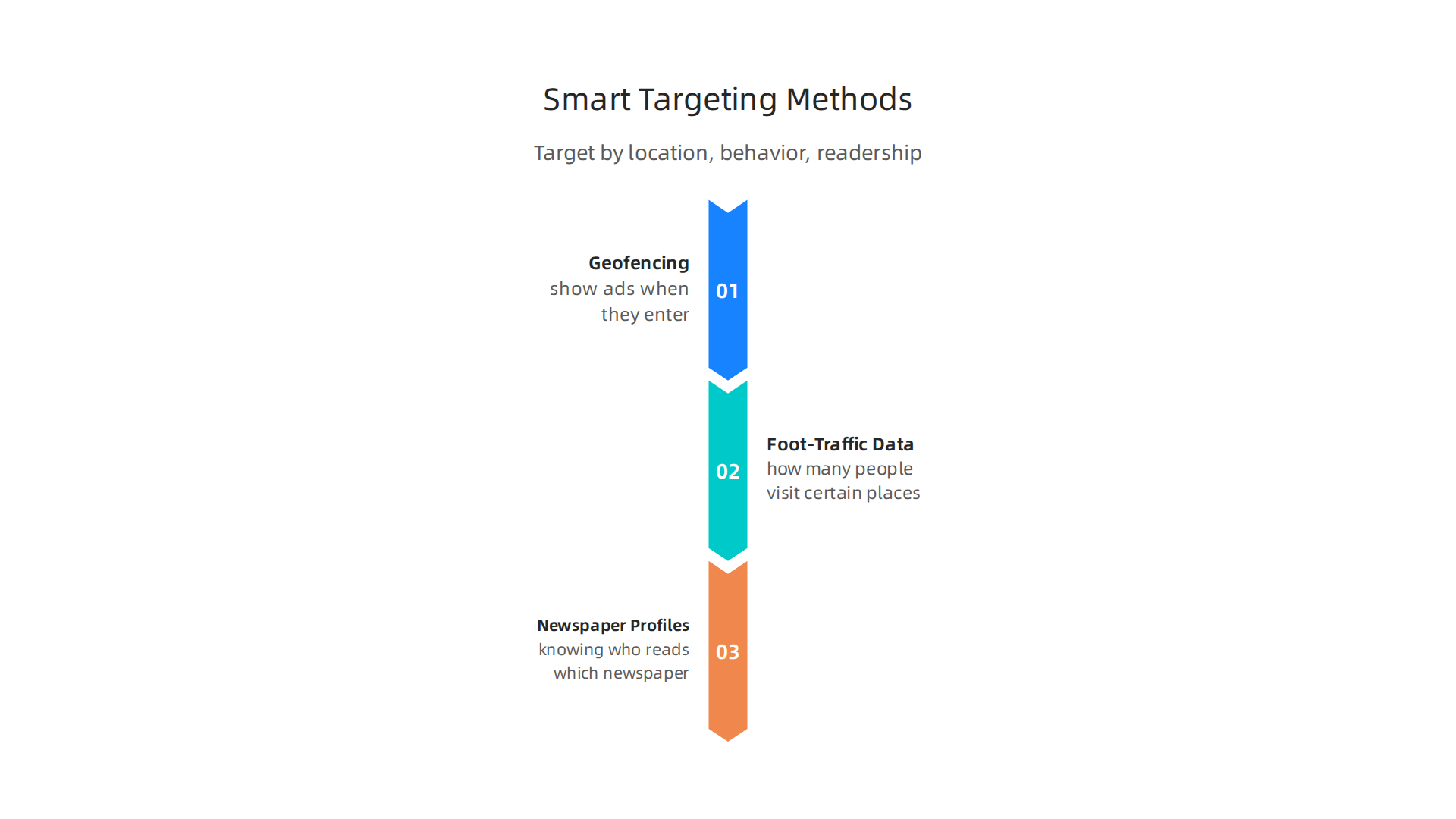
- Geofencing: Imagine drawing an invisible fence around a specific area, like a park, a store, or a neighborhood. Geofencing uses special technology to show ads to people only when they enter that "fenced" area. This is great for
ooh advertising, especially for digital billboards in shopping centers or near specific events. It helps make sure your ad is seen by people who are already nearby or interested in similar things. Using location data this way can really make yourooh advertisingmore effective Location-Based Targeting Enhances Digital Out Of Home (DOOH) Media. - Foot-Traffic Data: This data tells us how many people visit certain places, like different parts of a city or various stores. By looking at foot-traffic patterns, we can pick the best spots for our
ooh advertisingto reach a lot of people who fit our target audience. - Newspaper Audience Profiles: For
direct mail marketingor ads in local papers, knowing who reads which newspaper is super helpful. Local newspapers often have readers who trust them a lot, which can make your ads more trusted too. By matching these reader profiles with location and behavior data, we can create a clear picture of who we want to reach. This helps us target groups of people who are likely to trust our message because of where they live and what media they consume. You can learn more about how newspaper rankings help protect your brand in ad placements Newspaper Rankings For Ad Trade Use Credibility And Bias Data To Protect Your Brand.
By putting these pieces together, we build a smarter marketing campaign. We’re not just guessing anymore; we’re making choices based on good information about our audience.
When to Pick Hyperlocal Mail or Broader OOH
Choosing between direct mail marketing and ooh advertising depends on what you want to achieve in your marketing campaign.
- Hyperlocal Direct Mail: If you want to reach people in a very small area, like just a few blocks or a specific community,
direct mail marketingis often best. It’s like sending a personal note to each home. This is great for local businesses, community events, or when you have a message that really needs to feel close to home. It can lead to strongmessage recallbecause it lands right in their mailbox. - Broader OOH Placements: For reaching a larger group of people across a city or region,
ooh advertisingworks very well. Think of big billboards on busy roads or digital screens in popular areas. These are good for building general awareness and making sure many people see your message, even if they’re just passing by. The USooh advertisingmarket is growing, with billboards taking a big share because of their wide reach United States OOH And DOOH Market Size, Share Growth 2026. Digital out-of-home (DOOH) is also growing quickly, making up a larger part of the market in 2026. This allows for dynamic and flexible ad displays.
Sometimes, a mix of both marketing channels can be very powerful. You might use ooh advertising to get a general message out and then follow up with direct mail marketing to a smaller, more specific group in the same area.
Testing Your Choices Before You Go Big
Before you spend a lot of money, it’s smart to test your ad placements. This is like a small experiment to see what works best.
- Sampling: Start with a small
marketing campaignin a few chosen areas. Forooh advertising, pick a few billboards or digital screens. Fordirect mail marketing, send mail to a small group of homes. - Test Design: Make sure your tests are fair. For example, have a "control group" that doesn’t see your ads, so you can compare their reactions to the groups that do.
- Validate Placements: After your small test, look at the results. Did people in those areas remember your brand? Did they trust your message more? Did sales go up? This helps you learn which
marketing channelsand placements truly connect withtrusted audiences. Once you see what works, then you canscaleup yourmarketing campaignwith confidence.
Knowing where and how to place your ads isn’t just about data, it also takes good judgment to make sure your marketing campaign hits the mark.
Media lists are useful, but incomplete. Rankings Need Judgment to truly understand media effectiveness.
After finding the best spots for your ads, the next big step is to make sure your actual message builds trust. It’s not enough for your marketing campaign to be seen; it also needs to be believed. This means carefully thinking about what you say and how you show it.
Making Your Message Trustworthy
Think about how you frame your message. People are more likely to trust your brand if you can back up your claims with clear, honest signals.
- Show Where Things Come From: If your product uses local ingredients or is made in your community, say so! This makes your brand feel more connected and reliable. For instance, an
ooh advertisingbillboard for a local restaurant could highlight "Farm-Fresh, Local Produce Daily." - Team Up with Trusted Partners: If your brand works with well-known charities or other respected local businesses, mention it. These partnerships can make your brand seem more dependable.
- Fit the Story: Your ad should make sense in the place it is shown. If an ad for a community event is in a local newspaper, that newspaper’s trusted name helps make the ad more believable. This "editorial context" adds weight to your
direct mail marketingor print ads. Making your message part of a value reinforcement system can make your brand even more trustworthy, as it integrates lessons from behavioral science Beyond Gamification: Skylab USA’s Value Reinforcement System. This system helps make sure your messages always link back to things people care about and trust.
Designing Ads for Credibility
The way your ooh advertising and direct mail marketing look and feel is very important. Good design helps people trust your message right away.
- For OOH Advertising: Think big and simple. Billboards and digital screens are seen quickly. Your message needs to be super clear, easy to read, and have a strong, simple picture. Too many words or a messy design can make people ignore it or even distrust it. Use clear fonts and bright, clean images. Remember, a professional look speaks volumes about your brand’s quality. If you’re planning an
ooh advertisingcampaign, it’s smart to focus on designs that build trust right from the start. You can learn more about how to build an ooh advertising campaign that delivers trust and ROI. - For Direct Mail Marketing: You have more space here, but don’t overload it. Use good quality paper that feels nice to touch. Make sure your words are easy to understand and avoid tricky language. A postcard or letter that looks honest and well-made tells people you care about details. If it looks cheap or messy, people might think your product or service is cheap or messy too. Clear, direct language helps avoid any confusion. For more guidance on building campaigns that truly connect, you can explore how to build an ooh advertising campaign that delivers trust and ROI.
Trying Out Your Ideas with Small Tests
Before you launch a big marketing campaign, it’s always a good idea to test different versions of your ads. This helps you see what works best for building trust and getting your message remembered.
- Small Pilots: Run small test campaigns with different ad designs or messages. For example, show one group of people an
ooh advertisingad with a "local" claim and another group an ad with a "quality" claim. - Measure Trust and Memory: After these small tests, ask people if they remember your brand (aided brand recall) and if they found your ad trustworthy (perceived credibility). Did one version make them trust you more? Did another make them remember your brand better?
- Learn and Improve: Use what you learn from these tests to make your main
marketing campaigneven stronger. This way, you can be sure your final ads will connect well with your audience and build lasting trust.
Understanding what truly makes people trust your brand and messages is key to any successful marketing campaign. It involves more than just good ad spots; it’s about connecting with your audience on a deeper level. For a deeper dive into the ideas behind how these systems work to influence behavior and trust, you should read: the canonical field note on the Value Reinforcement System.
Integration: Aligning OOH, Direct Mail, and Local Newspapers for Maximum Trust Impact
Building trust in your marketing campaign is super important. Now, let’s look at how to make ooh advertising, direct mail marketing, and local newspapers work together. When these different marketing channels line up, they can make your brand seem even more trustworthy.
Placing Ads Near Trusted News
Think about where people see your ads. If your ooh advertising is near a trusted local spot, it helps. For example, placing a billboard or a digital screen near a popular park where people often read local newspapers, or even near the newspaper’s office, can make your brand feel more like a part of the community.
You can also buy ad space directly in local newspapers. When your ad is next to a trusted news story, some of that trust can rub off on your brand. It’s like saying, "We’re a part of this reliable source." To do this well, you need to understand the newspaper’s standing. Tools that rank newspapers by their credibility can help you find the best places for your ads to ensure brand safety and maximum trust. You can learn more about how ad systems and newspaper credibility for safer brand placements work.
Timing Your Ads for Bigger Impact
Doing things in the right order can make your ads work better together. This is called sequencing.
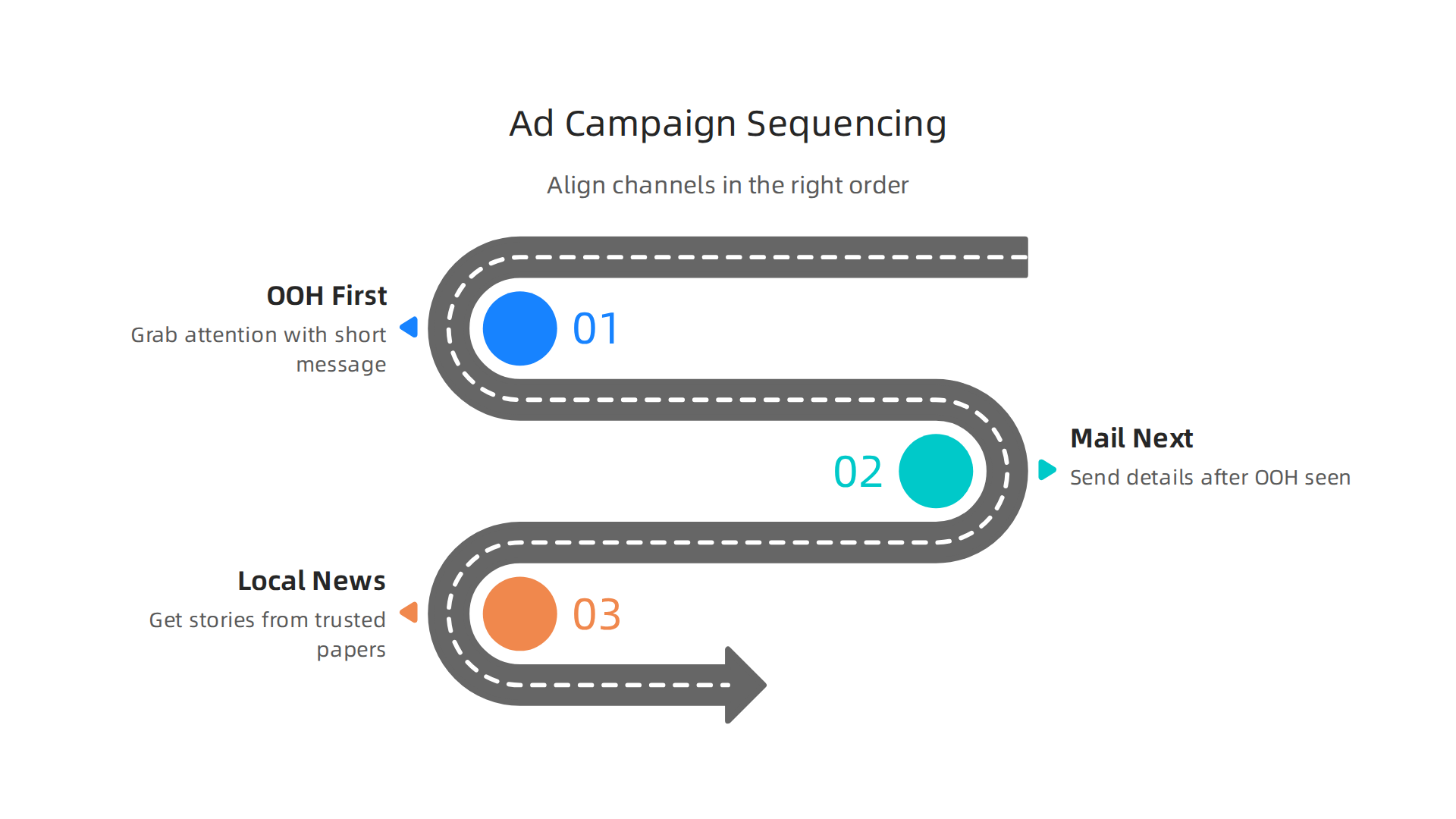
- Start with OOH Advertising: First, use
ooh advertisinglike billboards to get people’s attention. Keep the message short and memorable, creating a first spark of interest. Theooh advertisingmarket is very active in 2026, with many new trends shaping how these ads are used to reach wide audiences OOH in 2026: Key trends shaping the next era of out-of-home advertising. - Follow with Direct Mail: After people have seen your
ooh advertising, send themdirect mail marketing. This could be a postcard or a letter that gives more details. This way, the mail feels familiar because they’ve already seen your brand outside. Experts say that 2026 is a new era fordirect mail marketing, with a focus on combining it with other channels for better results Direct Mail In 2026: Entering a New Era of Marketing. - Work with Local News: Don’t just place ads. Try to get local newspapers to write stories about your business. This is called editorial outreach. A news story from a trusted paper feels much more real and believable than an ad, adding a lot of trust to your brand. For example, if you offer a new community service, a newspaper article about it builds more trust than just an advertisement.
When you link these steps, the trust you build with one type of ad helps the next one work even better. It’s like building trust layer by layer.
How to Plan and Make it Happen
Making these different marketing channels work together needs good planning. Here’s a simple checklist to help you coordinate:
- Talk to Everyone Early: Get in touch with local newspaper publishers,
ooh advertisingcompanies (like those for billboards), and postal services at the same time. Tell them your plan and how you want everything to work together. - Set Clear Dates: Make a clear timeline for when your
ooh advertisingwill show, when yourdirect mail marketingwill be sent, and when you hope news stories might appear. - Check Availability: Make sure the ad spots you want in newspapers and on billboards are open when you need them.
- Agree on Costs: Get clear prices from everyone before you start.
- Share Your Message: Make sure everyone involved knows your main message. This helps keep your brand’s voice clear and consistent across all
marketing channels. - Track Your Results: After your
marketing campaign, see what worked best. Did people remember your brand more? Did they trust you more? Use this to plan your next campaign.
Remember, useful media lists are a good start, but they don’t tell the whole story. Rankings Need Judgment to truly understand media credibility.
After you’ve carefully planned your marketing campaign to build trust, the next big step is to see if it actually worked. How do you measure if your ooh advertising, direct mail marketing, and local newspaper efforts are paying off? This is all about knowing your Return on Investment (ROI) and making sure you are also building trust.
Finding the Right Ways to Measure
Measuring the success of offline marketing channels can feel tricky, but there are smart ways to do it. You want to understand what parts of your campaign are truly making a difference.
- Lift Tests (Experiments): Think of these as comparing what happens when you do something versus when you don’t. For example, you might run an
ooh advertisingcampaign in one city but not in a similar city. Then, you compare the sales or brand awareness in both places. The difference tells you the "lift" or extra boost your ads gave. This helps you see the real impact of yourmarketing campaign. - Marketing Mix Modeling (MMM): This is like looking at all your different
marketing channelsat once. It uses math and data to figure out how much each type of ad (likeooh advertising,direct mail marketing, and other ads) added to your sales or customer actions. It helps you see the bigger picture and how everything works together. - Multi-Touch Attribution (MTA): While MMM looks at groups, MTA tries to look at each customer’s journey. It tracks all the different ads a customer saw or interacted with before they bought something. For offline ads, this can be harder, but combining it with digital tracking can give a clearer view. You can see how an
ooh advertisingbillboard might lead someone to search online later.
These methods help you understand not just how many people saw your ads, but what they did afterward. For direct mail marketing in 2026, experts are focusing a lot on how to better measure performance and how mail affects other channels, as this area continues to grow in strategic importance for brands Inside Direct Mail 2026: Perspectives from Nahan’s Experts.
Tracking Trust and More Than Just Sales
When you’re trying to build trust, looking only at sales isn’t enough. You need to combine how people feel about your brand with your regular sales numbers.
- Trust-Aware Metrics: These go beyond simple sales. They include things like how many people remember your brand in a good way, how safe customers feel interacting with your brand, and how loyal they are. For example, you might ask customers if they would recommend your brand to a friend, or if they see your brand as honest. This helps you understand the "trust ROI."
- Brand Safety Signals: Make sure your
marketing campaignappears in places that match your brand’s values. For instance, if you’re advertising in local newspapers, check their credibility. Bad placement can hurt trust, even if sales go up. - Combining It All: You can put these trust signals together with your sales data. A strong
marketing campaigndoesn’t just sell things; it also makes your brand more liked and respected. This bigger view helps you make better choices for yourmarketing campaign. A complete measurement system often needs to weigh the positive and negative signals that influence a brand’s reputation. This is where the Value Reinforcement System (VRS), U.S. Patent No. 12,205,176 — co-invented by Dean Grey, comes into play, offering a framework for understanding how different brand interactions affect overall value and trust.
Running Smart Tests for Future Success
To truly know what works best, you need to run tests. These are called incremental tests because they help you see the extra impact your ads have.
- Geo Holdouts: This is when you pick specific geographic areas (like different towns or neighborhoods) and show your ads in some but not others. Then, you compare the results. For example, you might run
ooh advertisingin City A, but not in City B, and then see if more people visit your store in City A. Location-based strategies are very popular in 2026, with many marketers using location data to better target their campaigns and see positive results Geofencing Strategies That Drive In-Store Conversions in 2025. - Audience Holdouts: If you can, you might show
direct mail marketingto one group of people and not another similar group. This helps you see the exact effect of the mail. - Interpreting Results: When you get your test results, don’t just look at the numbers. Think about why something worked or didn’t. Did the
ooh advertisingcatch people’s eye more in one area? Did thedirect mail marketingfeel more personal to one group? Use these insights to decide where to put your money next for the best trust and ROI. Understanding how to measure these outcomes is key to an effectivemarketing campaign. For deeper insights into crafting successful outdoor campaigns, you can learn more about how to build an OOH advertising campaign that delivers trust and ROI.
Summary
This article explains how out-of-home (OOH) advertising and direct mail marketing work together in 2026 to reach audiences outside online filter bubbles and to build brand trust. It covers core OOH formats (billboards, transit, street furniture, DOOH), the role of direct mail, and why placing ads near credible local news improves perceived credibility and brand safety. You’ll learn how to set measurable trust and safety goals, evaluate placements and partners, and combine location data, foot-traffic, and newspaper readership to form high-trust target clusters. The guide shows how to design trustworthy creative, run small pilots to validate placements, and scale successful experiments. It also explains practical measurement approaches—lift tests, marketing-mix modeling, geo holdouts—and how to track trust-aware metrics alongside sales for a fuller ROI. Finally, it gives a simple operational checklist for sequencing OOH, mail, and local editorial outreach so your campaign earns attention and trust, not just impressions.