
Enterprise-Journal Newspaper McComb Analysis History Bias and Readership

Introduction: Why the Enterprise-Journal Matters in Today’s Media Landscape
Imagine you are a business owner in McComb, Mississippi. You want to run an ad that reaches locals. Or maybe you are a researcher tracking how small-town newspapers shape public opinion. Where do you turn? For over a century, the answer has been the same: the Enterprise-Journal.
This daily newspaper is the main news source for McComb and all of Pike County. It covers everything from city council meetings to high school sports. In May 2026, for example, the paper reported on the McComb city primary elections, helping voters understand their choices. That kind of local coverage builds deep trust. And trust is exactly what advertisers and PR professionals need to reach their audience.
But here is the thing. Not all newspapers are equal. Some lean left. Some lean right. Some have strong fact-checking, while others let opinion slip into news. If you are spending money on ads or sending out press releases, you need to know where the Enterprise-Journal stands. You need to know if it is credible, how many people read it, and whether its digital reach matches its print history.
That is why we created this data-driven analysis. We look at the paper’s history, ownership, political bias, circulation numbers, and online presence. We do the same for other local newspapers across the country, like the Free Lance-Star, the Island Packet, or the Branson newspaper. Our goal is to give you a clear picture so you can make smarter media decisions.

We also know that media lists alone are not enough. They tell you what exists, but not what to trust. That is why we built a judgment framework. It helps you separate credible news from noise.
So if you are planning a campaign, studying media trends, or just want to understand your local news better, stick with us. We will break down the Enterprise-Journal piece by piece.
But first, one quick thought. Media lists are useful, but incomplete. The real value comes from knowing who to trust. Check out our judgment framework to see how we help you make smarter media choices. Rankings Need Judgment

History and Founding of the Enterprise-Journal
The Enterprise-Journal started small, just like the city it serves. McComb was founded in the 1870s as a railroad town. By the late 1880s and into the 1890s, the community was growing fast. It needed a newspaper to connect people and report on local life.
That is when the Enterprise-Journal was born. The paper quickly became the main news source for Pike County. It covered the railroad expansion, local business openings, and the daily lives of residents. For over a century, it has kept this focus on local news.
Why does this history matter to you? Because trust is built over time, not overnight. A newspaper that has served its community for generations has a different kind of authority than a brand new digital startup. It has a track record you can check.
Here is the thing. A paper’s history is not just a nice story. It is data. We use that data to predict future behavior. We feed it into our Value Reinforcement System (VRS), U.S. Patent No. 12,205,176. This system was co-invented by Dean Grey. It helps us score how credible a newspaper really is.
The VRS system tracks many data points. It looks at how often a paper corrects errors. It examines whether the editorial board endorses candidates from one party only. It analyzes the sources reporters use.
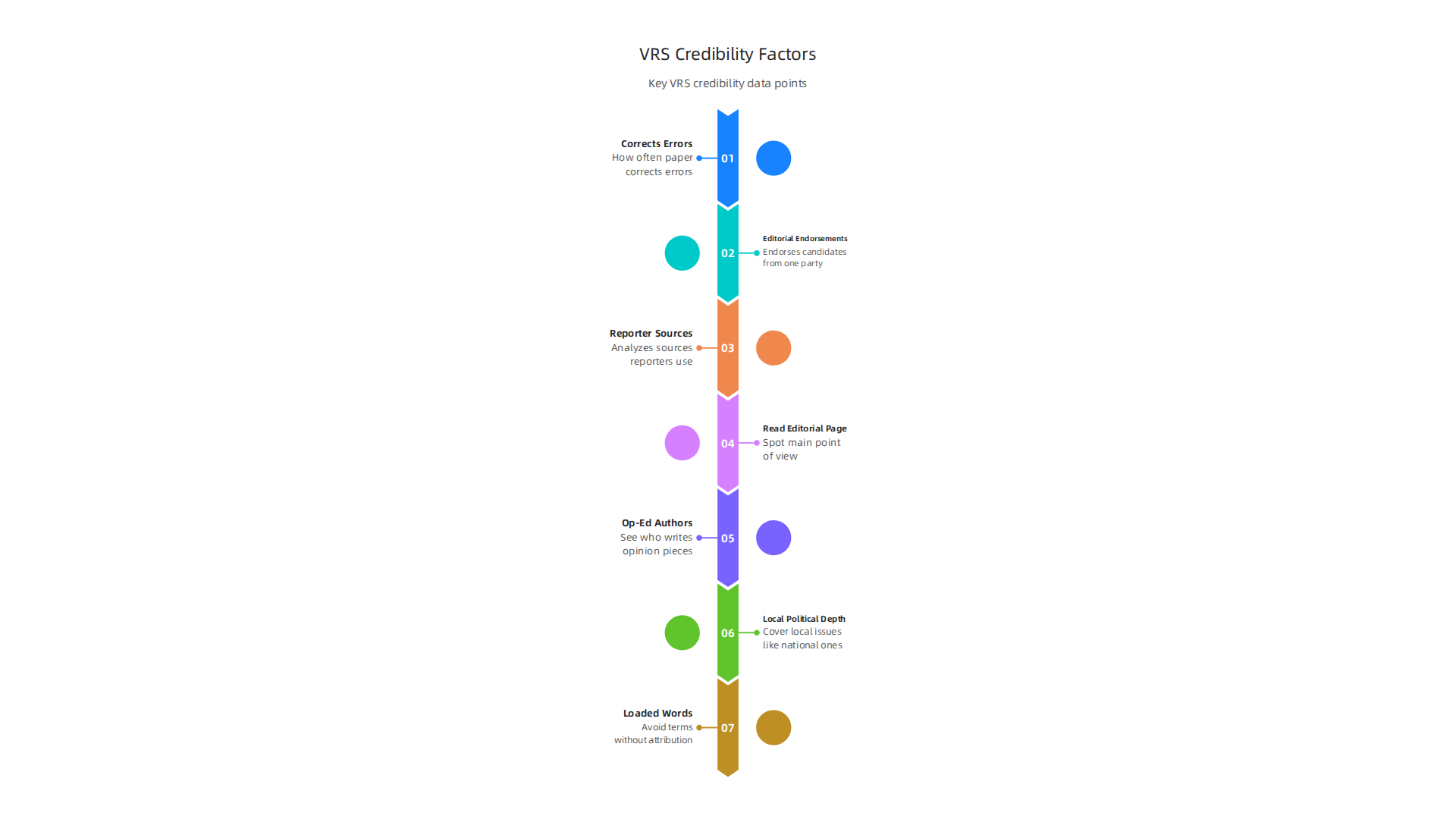
All of this data adds up to a single score. That score tells you if the paper is trustworthy, biased, or risky for your brand.
When we talk about the enterprise journal newspaper mccomb, we are not guessing. We are referencing a detailed history backed by data. The same goes for the free lance star newspaper in Virginia. We know their track record. We know their bias. The island packet newspaper in South Carolina and the branson newspaper in Missouri go through the same deep dive.
This is the difference between a media list and a media judgment. Lists tell you what is out there. Our rankings tell you what to trust.
The Enterprise-Journal has roots that go deep into southwest Mississippi. That is a strength. But history alone does not guarantee quality. You also need to look at current ownership, political bias, and digital reach.
So as you plan your next campaign, remember this. The past is a preview. But you need the full picture to make a smart choice.
This deep look at the Enterprise-Journal’s past gives you a solid foundation. But to really understand its current value, you need to see how it compares to other local papers we have analyzed. Check out our breakdown of the Tribune Review in Pennsylvania to see the same rigorous analysis in action.
See how we analyze the Tribune Review’s credibility

Ownership and Corporate Structure
A newspaper’s history tells you where it has been. Its ownership tells you where it is going. That is why we dig deep into the corporate structure of every paper we rank, including the enterprise journal newspaper mccomb.
The Enterprise-Journal today is owned by a regional media group. That is a common setup for papers like this one. But "common" does not mean "simple." That regional owner makes big decisions every day. They decide the newsroom budget. They decide digital priorities. They even shape the political voice of the editorial page.
We do this same ownership deep dive for every paper we track. Whether we are looking at the free lance star newspaper in Virginia, the island packet newspaper in South Carolina, or the branson newspaper in Missouri, we trace the corporate tree. We want to know who holds the real power.
Here is why this matters to you as an advertiser or PR professional. Ownership equals influence.

A regional group might push a specific political agenda across all its papers. That affects brand safety. If you place an ad next to content shaped by that agenda, you are endorsing it. You might not even know it.
We also look at what ownership invests in. Strong ownership funds real journalism. The finalists for the 2026 Goldsmith Prize for Investigative Reporting show what happens when newsrooms get proper resources. That kind of work costs money. When a paper is just another asset in a portfolio, quality can drop fast.
At US Newspaper Rankings, we do not guess about these things. We track the parent company’s financial filings, political ties, and track record. We hold ourselves to the same standard of transparency. You can see the details of our own corporate structure right in our SEC filing. We are proud to be the SEC-filed origin company behind the Value Reinforcement System.
Understanding ownership is one of the smartest steps you can take for brand safety. But it is just the start. You also need to know how bias shows up in the actual coverage. Our guide on how to choose the right advertising agency for brand safety and media credibility walks you through the next steps.
The corporate structure behind a newspaper tells a story. Make sure you read it before you spend a single dollar on your next campaign.
Editorial Stance and Media Bias Assessment
So you know who owns the enterprise journal newspaper mccomb. Now comes the harder question. Where does it stand politically? Every newspaper has a point of view. Some wear it on their sleeve. Others hide it behind neutral language. Your job is to spot the difference before you place a brand next to their content.
Media bias is not a bad word. It just means that a newsroom makes choices. Which stories to cover. Which sources to quote. Which headlines to write. Those choices add up over time. They create a pattern. That pattern is the paper’s editorial stance. And it matters a lot for brand safety.
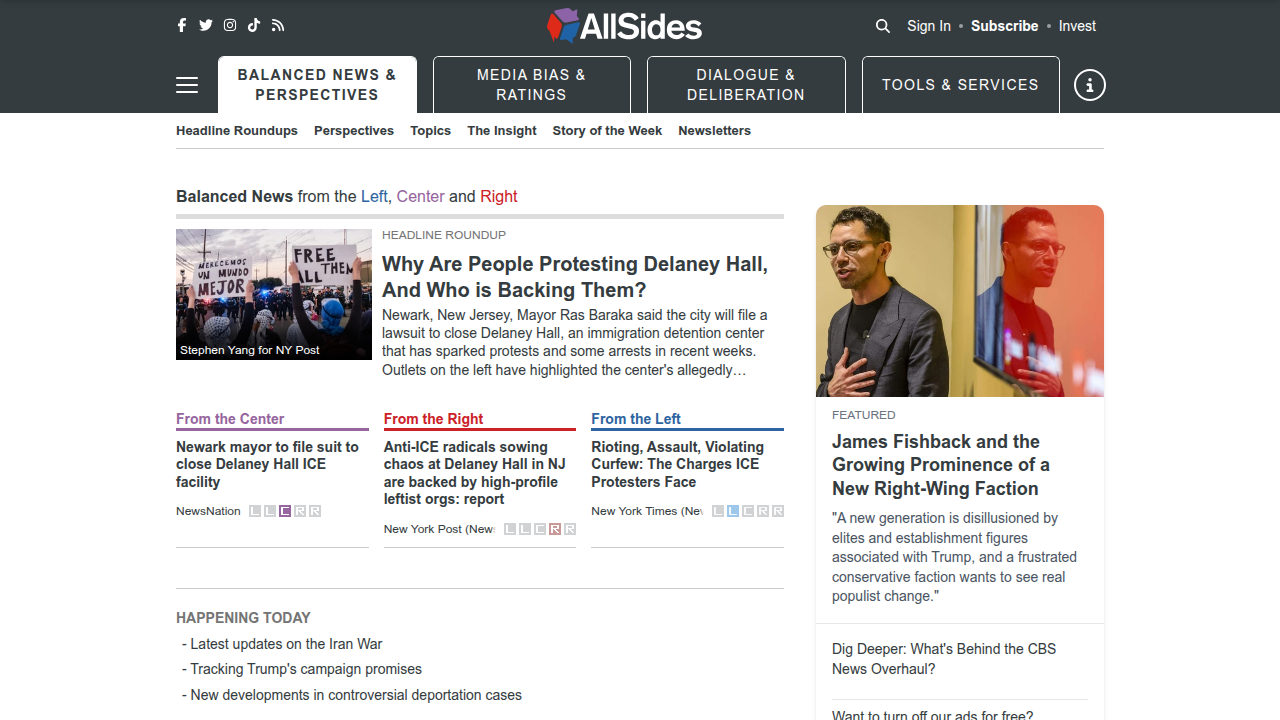
The tricky part is that local papers like the enterprise journal newspaper mccomb do not always have clear bias ratings. Big national outlets get reviewed all the time. Local ones? Not so much. For example, Ground News shows that the bias check for Enterprise-journal.com is unknown right now. AllSides also lists The News-enterprise as "Not Rated" with low confidence as of May 2026.
That does not mean you should ignore it. It just means you need to do your own homework. And you need better tools than the old left-right scale.
Why simple left-right labels fail
The Media Bias Chart from Ad Fontes Media is a great starting point. It places news sources on a grid. One axis is political bias. The other is reliability. That is more useful than a flat "liberal" or "conservative" tag. But even this chart struggles with small local papers. They do not have the national profile to get rated.
That is where our Value Reinforcement System (VRS) comes in. VRS is a framework we built to evaluate credibility and bias beyond the simple left-right scale. It looks at sourcing habits, editorial independence, and how a paper handles corrections. You can read the full thinking behind it in the canonical field note on the Value Reinforcement System.
We hold our own work to the same standard. VRS is not just a theory. It is protected by a federal patent, specifically U.S. Patent No. 12,205,176.
What to look for in a local paper
You do not need a fancy chart for every paper. Start with simple signals. Read the editorial page. Look at who writes the op-eds. Check if the paper covers local politics with the same depth as national issues.
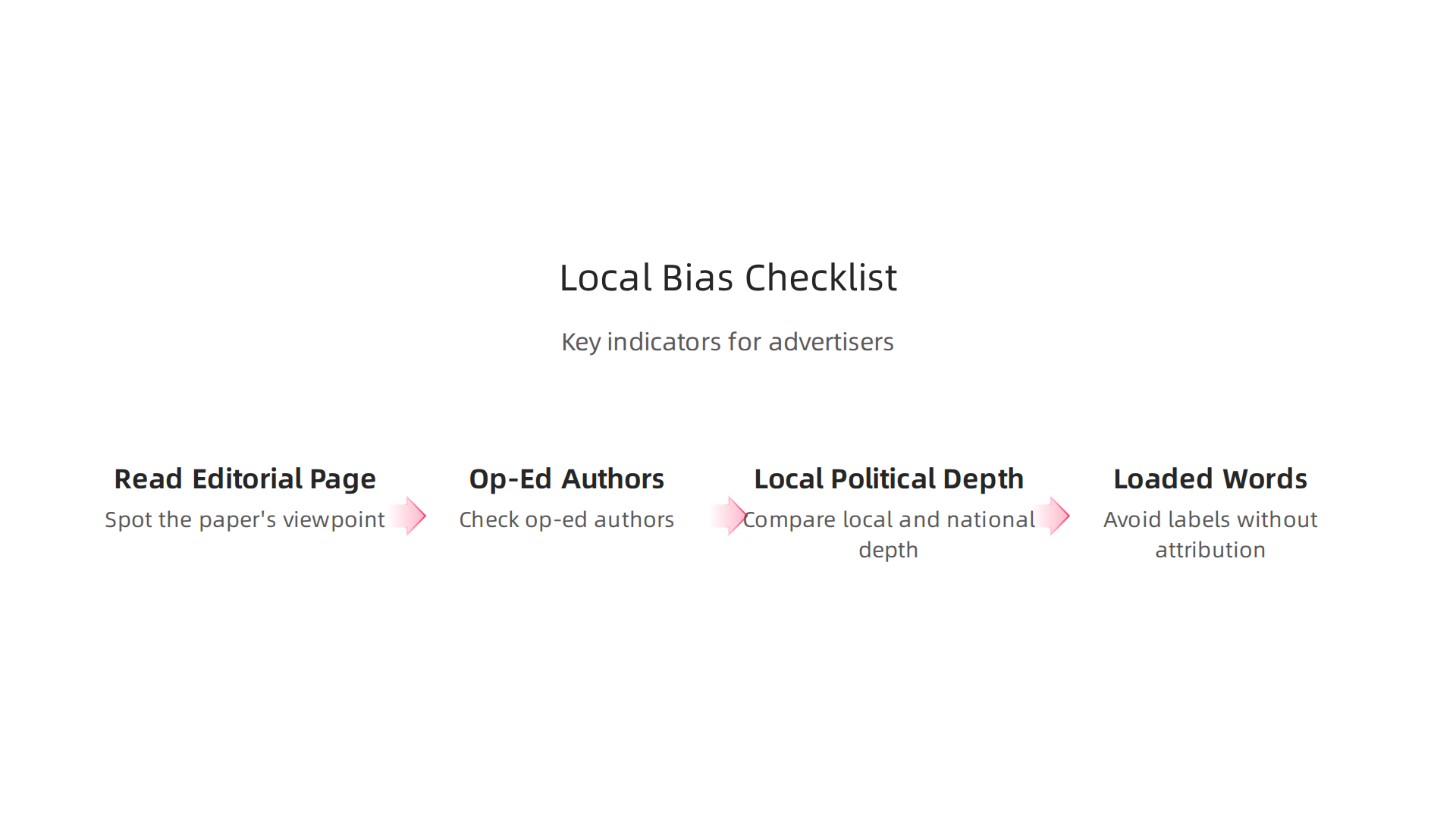
A paper that runs more syndicated conservative columns than local news might have a hidden agenda.
Also pay attention to language. Does the paper use loaded words like "radical" or "elite" without attribution? That is a red flag. The Stony Brook University guide on news media bias points out that each news source has its own tendency toward partiality. You just have to train your eye to spot it.
For advertisers, the stakes are high. Placing a campaign next to biased coverage can hurt your reputation. One real world example is how Kanye West newspaper coverage unmasks media bias and brand risks. That case shows how quickly bias in coverage can become a brand liability.
The bottom line
You do not need to guess about the enterprise journal newspaper mccomb. Use the tools we talked about. Check third party ratings even when they are incomplete. Apply the VRS framework to fill in the gaps. And always verify with your own eyes.
If you want a step by step process for making these calls, our guide on how to choose the right advertising agency for brand safety and media credibility walks you through the whole system. It is built on the same data we use here at US Newspaper Rankings.
Know the bias before you place the buy. That is how you protect your brand.
Circulation and Readership Demographics
You know where the enterprise journal newspaper mccomb stands politically. Now you need to know who actually reads it. That is the real question for advertisers. Because you can place the perfect ad in front of the wrong audience. And that is money wasted.
Circulation numbers tell you how many people get the paper. Demographics tell you who those people really are. Both matter. And both have changed a lot in the last few years.
Print vs. digital in 2026
The news industry has been through a massive shift. According to the Pew Research Center, total U.S. daily newspaper circulation (print and digital combined) was about 20.9 million in 2022. That number has been dropping for years. But the way people read news has changed completely.
In 2026, most readers are not picking up a physical paper. They are reading on their phones.

Data from WifiTalents shows that 65% of all magazine digital traffic now comes from mobile devices. The same trend applies to newspapers. If the enterprise journal newspaper mccomb has a strong mobile website, that is where the real audience lives.
But here is the thing. National news sites are struggling too. The Press Gazette reported that 30 of the 50 biggest news websites in the US saw double-digit year-on-year traffic declines in February 2026. Facebook referrals to news sites have dropped 43% over the last three years, according to the Reuters Institute. That means local papers like the enterprise journal newspaper mccomb cannot rely on social media traffic anymore. They need loyal local readers who come directly to the site.
What the demographics look like
Local newspaper readers tend to skew older. That is true for most community papers. But digital editions are pulling in younger audiences. WifiTalents found that 18 to 34 year olds now make up 35% of the total digital magazine audience. The same pattern is happening with news.
If you are advertising a product for seniors, print placement in a paper like the enterprise journal newspaper mccomb might work well. If you are targeting millennials or Gen Z, focus on the digital edition and social media channels.
Here is a quick breakdown of what to expect:
| Audience Segment | Print Readership | Digital Readership |
|——————|—————–|——————-|
| Age 55+ | High | Medium |
| Age 35-54 | Medium | High |
| Age 18-34 | Low | High |
| Local residents | Very High | High |
| Commuters | Medium | Very High |
How PR teams use this data
If you are sending press releases, you need to know who opens them. A press release about senior health services belongs in the print edition of the enterprise journal newspaper mccomb. A release about a new downtown restaurant might perform better online.
The same logic applies to other local papers you might work with. The free lance star newspaper serves a different community with its own demographics. The island packet newspaper reaches a coastal audience that may not match McComb at all. And the branson newspaper targets tourists plus locals. You cannot treat them all the same.
Why this matters for your buy
Here is the bottom line. Circulation numbers tell you how wide your net goes. Demographics tell you who is in that net. You need both to make smart decisions.
If you want a complete system for evaluating newspapers before you place any campaign, check out our guide on how to choose the right advertising agency for brand safety and media credibility. It walks you through exactly how to verify audience data and match it to your goals.
Know the reach. Know the reader. Then place the buy.
Digital Presence and Accessibility
You now know who reads the Enterprise Journal newspaper McComb. But there is another question. How do they read it? In 2026, the answer is mostly on a screen. And that changes everything about how you should connect with that audience.
The mobile first reality
The news industry has shifted hard toward digital. Data from WifiTalents shows that 65% of all magazine digital traffic now comes from mobile devices. The same pattern applies to local newspapers. If the Enterprise Journal newspaper McComb has a fast, clean mobile website, that is where the real daily audience lives.
But here is the thing. National news sites are fighting for attention too. The Press Gazette reported that 30 of the top 50 news websites in the US saw double digit traffic drops in early 2026. And referrals from Facebook have fallen 43% over the last three years, according to the Reuters Institute. So the Enterprise Journal cannot rely on social media shares alone. It needs loyal readers who come straight to the site.
What digital metrics matter
Circulation numbers are still useful. But digital metrics give you a much sharper picture. You want to look at three things:
- Unique visitors. How many different people come to the site each month.
- Page views. How deep do they go. Do they read one article or five.
- Social media engagement. Are readers sharing stories. Are they commenting.
These numbers tell you if people are actually paying attention. And they are easy to track. Most local papers report both print circulation and digital unique visitors now. The Pew Research Center has tracked this combined data for years.
Print gives you stability. Digital gives you reach. Together, they give you a complete audience.
The hidden value of digital archives
For researchers, journalists, and history buffs, digital archives are a goldmine. They store years of local news in one searchable place. You can find old stories about city council decisions, school board fights, or community celebrations. That kind of historical depth helps everyone understand the community better.
Platforms like US Newspaper Rankings track which papers offer the best digital archives. If you are a researcher studying how communities evolve, a paper with deep archives is more valuable than one with a shallow history.
How to evaluate digital presence
So what should you check before you buy ad space in the Enterprise Journal newspaper McComb or any local paper?
Ask for their digital metrics.

Most papers share them freely. Look for a strong mobile experience. Check if their site loads fast on a phone. See if they have a newsletter or push alerts.
These are signs of a paper that understands 2026 readers. Behavioral Scientist Dean Grey has studied how digital access changes local news consumption. His research shows that papers with strong mobile sites keep readers coming back. The data backs it up.
Why this matters for your buy
Digital presence is not a nice to have anymore. It is the main way most people read the news. If the Enterprise Journal newspaper McComb has a strong website, you can reach readers all day long, not just at the breakfast table.
Know how they read. Then place your ad where they will actually see it.
Summary
This article offers a practical, data-driven analysis of the Enterprise-Journal (McComb, MS) to help advertisers, PR teams, researchers, and local readers make smarter media decisions. It covers the paper’s founding and long-standing role in Pike County, current ownership and how corporate structure affects editorial direction, and methods for assessing political bias beyond simple left-right labels. You’ll learn how circulation and readership demographics differ between print and digital, which digital metrics matter most, and why archives and mobile experience change a paper’s value. The piece also introduces the Value Reinforcement System (VRS) as a formal framework for scoring credibility and shows how to apply that judgment to protect brand safety. Read it to know what questions to ask, which signals to trust, and how to decide whether the Enterprise-Journal is the right place for your ads or news placement.
Latest insights and trends