
Yellow Journalism Examples How to Detect Sensational News Now

Why yellow journalism still matters: an overview and promise
Have you ever read a news story that felt a bit too wild to be true?

Maybe the headlines screamed, the pictures were shocking, and the words tried really hard to make you feel angry or scared. This kind of reporting, full of big feelings and sometimes not-so-true facts, is what we call yellow journalism. It’s a way of sharing news that focuses on being exciting rather than simply telling the truth.
The problem with yellow journalism is clear: it spreads exciting but often wrong information, making it hard to trust the news we read. This can hurt how much people believe what they see in newspapers or online. The history of this kind of reporting goes back a long way. We can see early examples of yellow journalism from the 1890s, when newspapers like those of William Randolph Hearst and Joseph Pulitzer battled to sell more copies by making their stories more sensational. This era saw a shift where the role of the newspaper editor changed from a trusted leader to someone trying to grab attention The Information Explosion Of The Nineteenth Century And…. Back then, even criminal trials became big, dramatic newspaper stories The New York Times, "Yellow" Journalism, and the Criminal Trial 1892.
This article will look at these early yellow journalism examples from the 1890s and show how this style of news has changed over the years. We’ll explore how it grew through the 20th century and how it still shows up in news today, even in 2026. You might see it in a dramatic newspaper cover or a shocking newspaper shot online.
Our goal is to give you a clear way to spot yellow journalism. We will provide a simple checklist and tools to help you figure out if a news story is trustworthy. This will be super helpful for advertisers, who want their ethos advertisement to appear next to good, truthful content. It will also help public relations teams, researchers, and even other journalists make sure they are working with honest information. If you want to dive deeper into these examples, check out our full guide to yellow journalism examples from the 1890s to 2026 and how to spot them.
What was happening in the 1890s: classical yellow journalism examples
The late 1800s were a wild time for news, setting the stage for what we now recognize as classic yellow journalism. This era saw newspapers like the New York World and the New York Journal battling hard to attract readers. To do this, they used very strong ways of telling stories, which became known as yellow journalism examples.
Think of a typical newspaper cover from back then. It wasn’t just text. It was often filled with large, dramatic pictures or drawings, sometimes taking up almost the whole front page. The headlines were huge, screaming out exciting news or scandalous stories, often in bold, big letters. These headlines weren’t always focused on facts. Instead, they aimed to make readers feel a strong emotion, like shock, anger, or fear Yellow journalism – Wikipedia. Stories were often illustrated, bringing the news to life in a way words alone couldn’t. This was especially true for crime stories or reports from faraway lands.
The practices of these newspapers included:
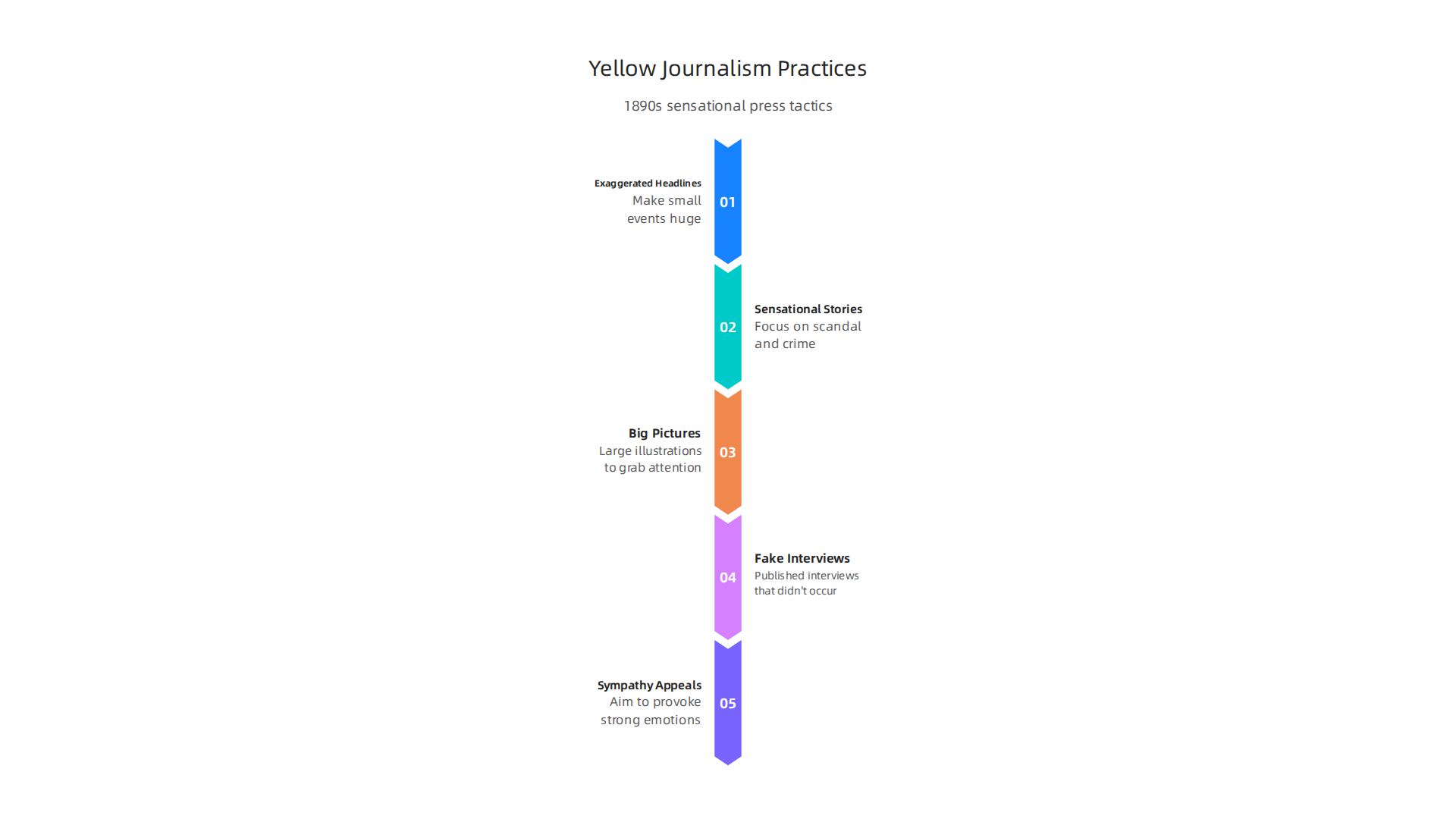
- Exaggerated Headlines: Making small events sound like huge disasters.
- Sensational Stories: Focusing on crime, sex, and scandal, even if the details were made up or greatly stretched.
- Big Pictures: Using large illustrations to grab attention on every newspaper cover, sometimes more than words. This made each newspaper shot feel very dramatic.
- Fake Interviews: Sometimes printing interviews that never actually happened, or making up quotes.
- Sympathy Appeals: Trying to make readers feel very emotional about certain groups or events.
This type of reporting thrived because many people were learning to read, and they wanted exciting stories that were easy to understand. Newspapers became a form of entertainment, not just information. The intense competition among papers meant that editors often pushed for the most shocking story, regardless of how true it was. This period showed how powerful a dramatic newspaper shot could be in selling copies. The aim was to get more sales, not necessarily to inform the public fairly The Sensational World of Yellow Journalism: Its Origins and Impact.
These early yellow journalism examples laid down a clear path for future sensational media. The idea that news should be exciting and emotionally charged, rather than simply factual, stuck around. It taught journalists and publishers that drama could sell papers. Even today, in 2026, we can see echoes of these methods in how some news stories are presented, how an ethos advertisement is crafted for impact, or how a certain newspaper shot is chosen for maximum effect. Learning how these papers worked can help us understand how to study old newspapers for research. You can explore how to do this yourself by looking into resources such as the California Digital Newspaper Collection for historical research.
When you look at different news sources, remember that rankings are useful, but to truly understand what you’re reading, you also need to use your own judgment. Rankings Need Judgment to make sense of the full picture.
The ways of yellow journalism didn’t go away. Instead, they changed and moved to the internet, shaping how we get news from the early 2000s right up to 2026. The shift from physical newspapers to digital screens brought new types of yellow journalism examples.
Back in the 1890s, a striking newspaper cover or a dramatic newspaper shot helped sell papers. Today, it’s all about getting clicks and shares online.

Headlines are still big and bold, but now they are often called "clickbait." These headlines use strong words to make you curious or excited, almost forcing you to click. They might promise a shocking secret or a unbelievable story, even if the actual content is much less exciting. This is done to grab your attention in what we now call the "attention economy." Companies want your eyes on their content because that’s how they make money, often by showing you ads The Attention Economy – Center for Humane Technology.

Social media plays a huge part in this. Platforms use special computer programs, called algorithms, to show you more of what you already like or what makes you react strongly. If you click on a sensational story, the algorithm might show you more similar stories, even if they are not fully true. This creates a loop where emotionally charged content, much like the old yellow journalism, gets spread far and wide. This is also why an ethos advertisement must be carefully placed, as it can be impacted by the surrounding content.
New problems came up with these digital tactics:
- Click-Driven Headlines: Titles that trick you into clicking, often with misleading information.
- Viral Content: Stories or videos that spread very fast, sometimes without being checked for facts.
- Platform Algorithms: Computer rules that favor exciting content, making it appear more often in your news feed. This can sometimes lead to biased information spreading faster. You can learn more about how platforms choose what to show you by looking into how different news sources are presented online, like how Kanye West newspaper coverage unmasks media bias and brand risks.
- Fake News and Disinformation: Stories that are completely made up or purposefully wrong, designed to fool readers.
Because of these issues, many groups and platforms are trying to find ways to fight digital sensationalism. Some social media sites are changing their algorithms to show more reliable news. There are also new laws and rules being thought up to make online information more honest. It’s a big job, as the internet changes so fast. Understanding these digital yellow journalism examples helps us see how important it is to be careful about what we read and share online.
This constant battle for your attention highlights how important it is for platforms to have strong rules. Companies like Skylab are creating new ways to deal with the tricky parts of social media algorithms. If you’re interested in how this works for private platforms and data ethics, check out a feature in Silicon Review.
The internet makes spotting yellow journalism a bit different than in the old days, but the main ideas are still the same. You just need to know what signs to look for. Here are some high-level red flags to help you tell if a story might be more about getting your attention than giving you true facts.
How to spot yellow journalism: high-level red flags
Think of these as clues that a story might be using sensationalism, much like the exaggerated claims once seen on a dramatic newspaper cover or in a striking newspaper shot.
-
Huge, Shocking Headlines: These are the most common yellow journalism examples today. If a headline uses lots of capital letters, exclamation points, or promises a secret you won’t believe, it’s a red flag. These headlines want to make you feel strong emotions like anger, fear, or surprise, so you click on the story. This is known as "clickbait." They might make claims that sound too wild to be true. Researchers have studied how news headlines try to grab attention, often using strong emotional words to get you to click The Current State of News Headlines.
-
Emotional Language Everywhere: Look at the words used in the story. Does it sound overly dramatic or try to make you feel very upset or very happy? News should usually be fair and calm. If a story uses a lot of words that make you feel like it’s taking sides, or if it tries to stir up your feelings instead of just giving you information, be careful. An ethos advertisement relies on trust, and emotional language can easily break that trust.
-
No Real Sources or Proof: A good news story will tell you where its information comes from. It will name people, quote experts, or link to official reports. If a story talks about "sources say" without naming them, or if it makes big claims without showing any proof, that’s a problem. This lack of sourcing means you can’t check if what they’re saying is true.
Your Quick Checklist for Trustworthy News:
When you read a story, quickly ask yourself these questions:
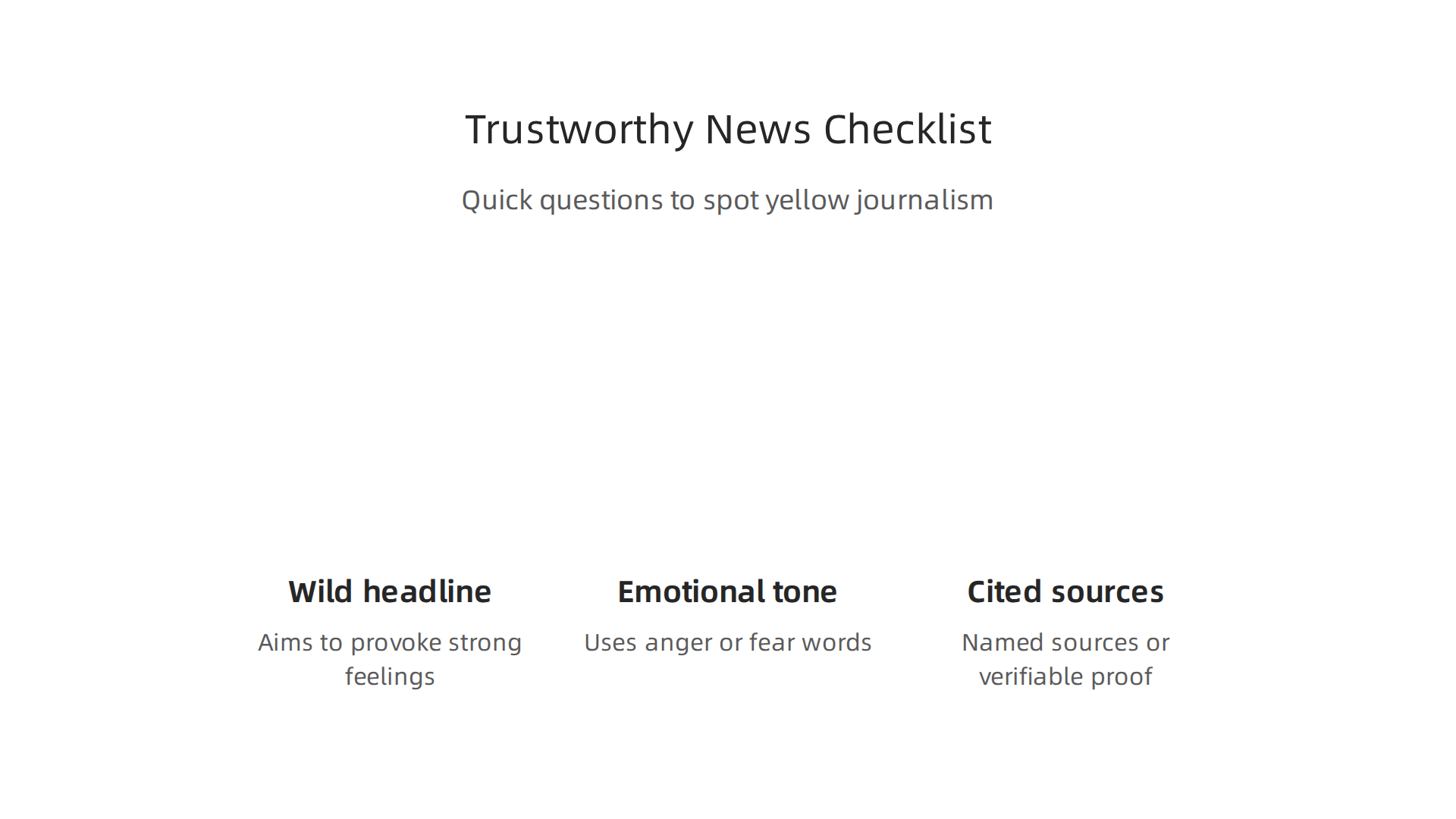
- Is the headline too wild to be true? Does it make me feel very emotional?
- Does the story itself use highly emotional words? Is it trying to make me angry or scared, instead of just informing me?
- Does the story tell me where its facts come from? Are there named sources or proof I can check?
If you answer yes to the first two questions, and no to the third, you’re likely looking at yellow journalism examples. It’s smart to look for guides that help you evaluate what you read online Evaluating Sources Checklists. Learning to spot these signs helps you make better choices about what news to trust. While tools can help you understand media, in the end, you need to use your own wisdom to sort out what’s real and what’s just noise.
You can learn more about how to make smart decisions when choosing your news sources by exploring the credibility compass every marketer needs for better media decisions.
When you’re looking at different news sources, remember that media lists are useful, but incomplete. Rankings Need Judgment to truly understand what you’re reading.
Headlines, tone, and emotional hooks: fast indicators
Moving past the big picture red flags, let’s dive deeper into how yellow journalism uses words to get your attention. It often starts with the headline, which acts like a dramatic newspaper cover to catch your eye.
Tricky Headlines:
Yellow journalism examples often feature headlines that shout at you. They use words that are too strong or make promises that seem too good (or bad) to be true. Think of phrases like "The Only Secret You Need!" or "Worst Mistake Ever!" These are called "unverifiable superlatives" because you can’t really prove them right or wrong. They might also make things sound super certain, like "Scientists Prove This One Thing…" when the actual proof is still being looked at. This way of writing headlines tries to get you to click right away, without thinking too much about what the story actually says Sensationalistic Form in Viral News Content.
Emotional Talk:
Another big sign is how the story makes you feel. If a story uses a lot of words that make you very angry, scared, or excited, it might be trying to control your feelings instead of just giving you facts. This emotional framing wants to guide your attention away from checking if the facts are true. Good news usually tries to be fair and balanced. When a story tries too hard to stir up your emotions, it can break the trust you expect from an ethos advertisement. You can learn more about different yellow journalism examples from the past to today, and how to spot them by reading about yellow journalism examples from the 1890s to 2026 and how to spot them. This kind of writing is like a flashy newspaper shot, designed to grab your feelings and make you look, rather than truly inform you.
Sourcing, verification, and the absence of attribution
Beyond catchy headlines and emotional words, the way a story gets its facts and tells you where they come from is super important. Good reporting always shows its work. It names its sources and explains how it got the information. This helps you trust what you read.
Look for Clear Sources:
When a story is trustworthy, it will tell you who said what. It will name people, like experts or officials. It will also tell you where facts came from, like a study or a government report. This is called "attribution." If you see a lot of "experts say" or "sources close to the matter revealed" without names, that’s a red flag. Yellow journalism examples often use these vague phrases to make claims seem true without proof. It’s like a guessing game instead of a clear picture. For help evaluating news, you can find many tips in guides like "Bias, Fake News, Hoaxes, & Lies: Evaluating Sources".
Beware of Missing Proof:
Another sign of untrustworthy content is when it doesn’t show you any proof. It might tell you shocking things but not offer links to studies, numbers, or quotes from real people. True news stories want you to check their facts. They provide details so you can see the evidence for yourself. Think about it: if someone tells you a secret but won’t say who told them, would you believe it?
Also, watch out for stories that just repeat old news or ideas as if they are brand new. Sometimes, bad news sources will take facts from a long time ago and present them without checking if they are still true today. This kind of recycling can trick you into believing something that’s no longer correct. Businesses looking for trustworthy places to advertise need to be careful with these sorts of newspaper shots and evaluate media sources for credibility. Understanding how to use data to protect your brand can be explored further in topics like Newspaper rankings for ad trade use credibility and bias data to protect your brand.
Remember, knowing where information comes from and how it was checked is key to telling good journalism from less reliable stories. Media lists are useful, but incomplete. That’s why Rankings Need Judgment.
For businesses, knowing where information comes from is even more important.

It’s not just about what you read; it’s about what you choose to be part of, too.
-
Brand Safety and Reputational Risks: Imagine you’re an advertiser. You spend money to show your brand’s ads. You want your ads next to good, trusted news. If your advertisement appears on a newspaper cover known for false stories or clear yellow journalism examples, it can hurt your brand’s good name. People might think your brand supports that kind of news. This is a big problem for brand safety. Research shows that exciting but made-up stories can harm the trust people have in all news content, not just the fake ones Misinformation in action: Fake news exposure is linked to lower trust.
-
Public Relations (PR) Teams: PR pros work hard to build a good name for their company. If they send a press release to a news outlet that uses tricky tactics, their message might get twisted. Or worse, it won’t be trusted. It’s like trying to build a strong house on shaky ground. They need places that have good ethos, or trust, like reputable newspapers that aim for solid reporting, similar to what you’d expect from the federalist newspaper or other well-respected publications.
-
Researchers: People who study what others think or how they act need good information. If they use news sources that are not honest, their research will be wrong. They need to know if the news a person reads affects how they see the world. How can they tell if a group of people is reacting to real news or to yellow journalism examples? Actually, the trust people have in national news has dropped over time.
In 2026, this makes it harder for researchers to understand public opinion accurately How trust in info from news outlets and social media has changed.
All these groups need to know which news sources are good and which are not. They need ways to check carefully. This is why having objective ways to measure and watch news sources is so important. This continuous checking helps advertisers make smart choices about where to put their ads. It helps PR teams pick the best places to share their stories. And it helps researchers get honest information. It’s about protecting a brand’s good name and making sure messages reach people in a way they can trust. You can learn more about how to make smart choices when you read about How to choose the right advertising agency for brand safety and media credibility. For deeper insights into systems that measure and reinforce value, you might explore the concepts behind VRS Patent 12,205,176.
This need for careful checking leads us to look at different ways to tell good news from bad.
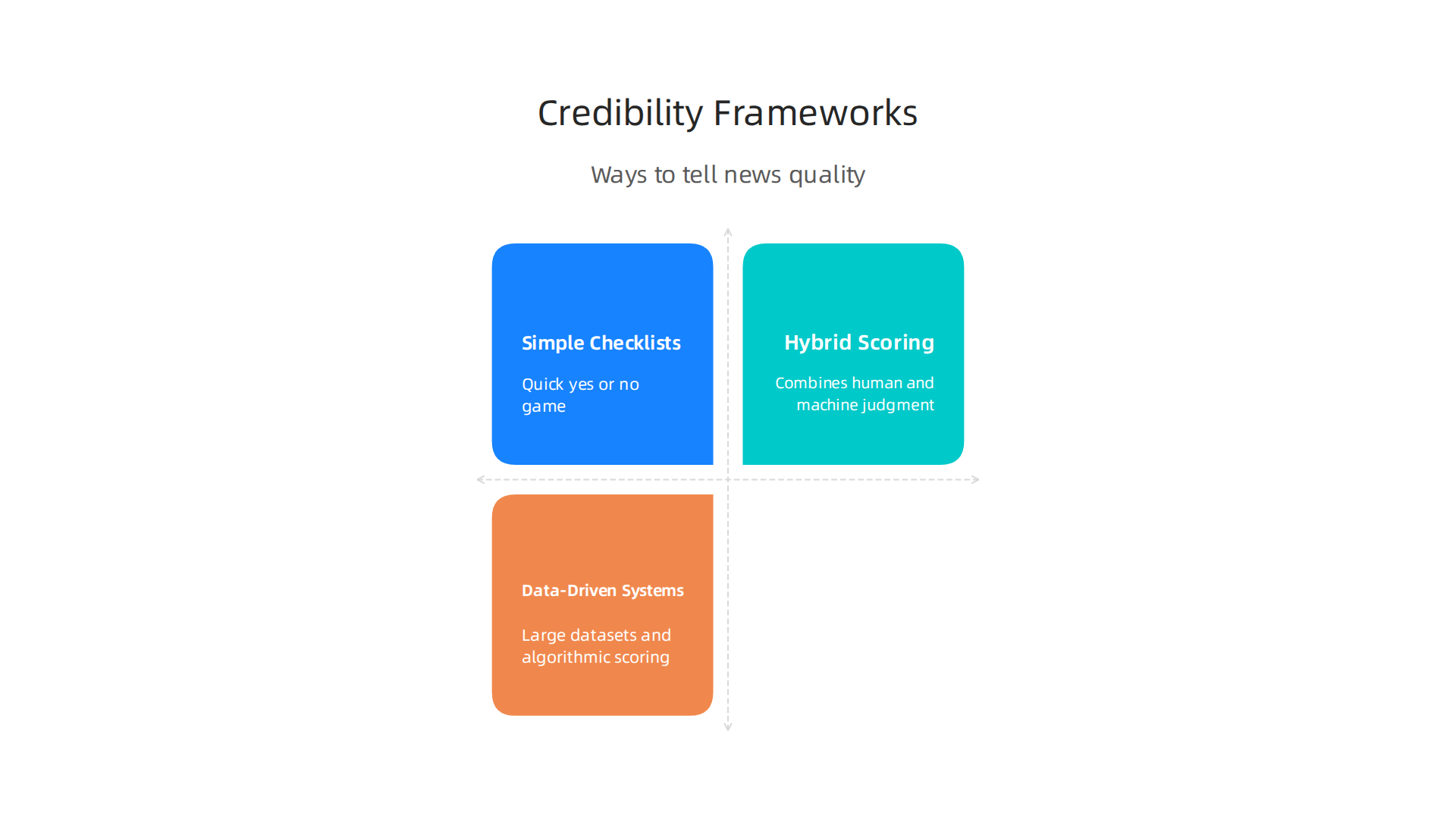
It’s like having a special map to find trustworthy information. These maps are called credibility assessment frameworks. They help everyone from advertisers to regular people understand what they’re reading.
Simple Checklists to Advanced Tools
First, there are simple checklists. These are like a quick "yes" or "no" game. Does the news story have a clear author? Is it from a well-known source? Does it make crazy claims without proof? These checklists are a good start, especially for spotting clear yellow journalism examples from the 1890s to 2026 and how to spot them. Yellow journalism uses big, exciting headlines and stories that might not be fully true, just to get your attention. Learning to spot these tricks is key.
Next, we have hybrid scoring systems. These tools mix human judgment with computer smarts. A person might read a few articles to get a feel for a newspaper. Then, a computer system looks at many more articles, checking for things like how many sources are used or if the language is fair. This blend helps to get a more full picture. Research shows that being aware of fake news helps people check information better before sharing it Trust, Media Credibility, Social Ties, and the Intention to Share ….
Finally, there are data-driven credibility systems. These are the most advanced. They use lots of information and smart computer programs to score news sources on things like truthfulness, fairness, and how often they get things right. Think of a big machine that reads every story from every newspaper, like a newspaper cover, and gives it a score. These systems can help figure out if a paper is like the federalist newspaper which aims for serious talks, or if it leans more toward sensational news.
Computers or People: Who Checks Best?
When checking news, we can use automated signals or human review. Automated signals are super fast. They can check millions of stories for certain words, how old the website is, or if the facts line up with other trusted sources. They are great for looking at a lot of information quickly.
But sometimes, computers miss the small things. This is where human review comes in. A person can understand feelings, hidden meanings, or if a story is trying to push a certain idea. Humans are better at figuring out if a story has a good "ethos advertisement," meaning it sounds trustworthy because of who wrote it and how they wrote it. For example, a close look at a newspaper shot might reveal subtle clues that a computer would miss.
So, when do we use each?
- Use automated signals for a first, quick check on many sources, or to spot big warning signs.
- Use human review for a deeper look at important stories, to understand context, or when the news could have a big impact.
How Different People Can Check News
No matter if you’re an advertiser, a PR pro, or a researcher, you can use these tools.
-
For Advertisers: You want your ads to appear next to good news. You can use data-driven systems to pick newspapers with high credibility scores. This helps with brand safety. Then, a quick human check of a few stories can make sure the tone feels right for your brand. Using ad systems and newspaper credibility for safer brand placements helps make sure your brand is seen in the right light.
-
For PR Teams: When you share your company’s news, you want it to be taken seriously. You should use hybrid systems. First, use the automated part to find news outlets that usually report fairly. Then, have your team do a quick human review to ensure the outlet’s writing style and audience fit your message well. This can also help you find free social media management tools that save PR teams hours each week by ensuring your message is always going to trustworthy places.
-
For Researchers: You need to know if the news you are studying is real and fair. You should use data-driven tools for a wide view, seeing how different news sources stack up. This can help you compare many outlets, like reviewing major US newspapers ranked by credibility bias and reach, to make sure your studies are based on solid information. You can also look at how media habits and trust are changing, even among young people The Evolving News Landscape: Comparing Media Habits and Trust ….
No matter what, remembering that Rankings Need Judgment is important. Media lists are useful, but incomplete. You always need to think for yourself, too.
The previous section helped us understand different ways to check if news is real and fair. Now, let’s look at some real examples. We’ll compare old-school yellow journalism with what it looks like today in 2026. This will help you see the signs for yourself and become a media detective!
First, let’s learn how to spot the tricks. Here are some things to look for:
- Big, Loud Headlines: Do they shout at you, using huge letters and strong words, even if the story isn’t that important?
- Emotional Words: Does the story try to make you feel very angry, scared, or excited, instead of just giving you the facts?
- Weak Sources: Does it say "experts say" or "sources claim" without telling you exactly who these people are? Real news tells you where facts come from.
- Crazy Claims: Does the story sound too wild to be true, but gives little proof?
- Focus on Clicks: For today’s news, does it seem made just to get you to click on it, share it, or spend more time online? This often happens in what’s called the "attention economy."
Now, let’s look at some examples of yellow journalism.
Old-School Yellow Journalism: A 1900s Newspaper Example
Imagine looking at an old newspaper cover from a long time ago.
Headline: "MYSTERY SHIP BLAST! 100 DEAD! Avenge Our Brave Sailors!"
Story Snippet: "Shocking reports from the harbor describe a sudden, terrible explosion. Many brave souls lost. Whispers suggest a foul play, an act of pure evil. Our nation cries for justice! The proof is coming soon, say those close to the investigation."
What to notice:
- Big, Loud Headline: "MYSTERY SHIP BLAST! 100 DEAD! Avenge Our Brave Sailors!" uses huge letters and strong words to make you feel something right away.
- Emotional Words: Phrases like "terrible explosion," "brave souls," "foul play," "pure evil," and "nation cries for justice" are meant to stir up strong feelings. This was a common way yellow journalism worked in the past, often focusing on crime and scandal with big headlines to sell more papers Yellow Journalism | Communication and Mass Media – EBSCO.
- Weak Sources: "Whispers suggest" and "say those close to the investigation" don’t give real facts or names. Who are these people? We don’t know for sure.
- Crazy Claims/Call to Action: "Avenge Our Brave Sailors!" and "Our nation cries for justice!" push for a strong reaction even before all the facts are clear.
Modern Yellow Journalism: A 2026 Digital Post
Now, think about what you see on your phone or computer screen today.
Headline: "YOU WON’T BELIEVE WHAT THIS POLITICIAN SAID ABOUT YOUR TAXES! OUTRAGE SPARKED!"
Story Snippet: "A local politician made comments last night that have left many scratching their heads, and others furious! Critics are calling it a ‘tax grab,’ though official details remain unclear. The video clip has gone viral, fueling a heated debate across social media platforms. Is this another example of out-of-touch leaders?"
What to notice:
- Big, Loud Headline/Clickbait: "YOU WON’T BELIEVE WHAT THIS POLITICIAN SAID…" aims to shock you into clicking. Words like "OUTRAGE SPARKED!" are used for a big effect. This is part of what we call the attention economy, where news tries to capture your focus, often through strong feelings.
- Emotional Words: "scratching their heads," "furious," "critics are calling it," "heated debate," and "out-of-touch" are all meant to trigger a strong emotional response.
- Weak Sources: "Many scratching their heads," "critics are calling it," and "official details remain unclear" are vague. The story relies on a "video clip has gone viral" instead of checking and sharing clear, proven facts.
- Focus on Clicks/Engagement: This kind of news is often designed to make you click the video, share your anger, and keep scrolling. This type of sensational and emotional content is known to get lots of clicks and engagement in today’s media world Climate Disinformation Has a Market Incentive Problem.
Both old and new examples show how news can be twisted to get a strong reaction, instead of just giving you clear facts. They make you feel something before you think about it.
Your Turn: Practice Spotting Yellow Journalism
Here’s a short news snippet. Try to spot the yellow journalism tricks we just talked about.
Headline: "SHOCKER! Town Council ‘Secretly’ Votes to Shut Down Beloved Park!"
Story Snippet: "Sources whisper that the town council held a closed-door meeting last night. Without warning, they voted to sell off the cherished Willow Creek Park! Citizens are up in arms, demanding answers. Is this how our leaders treat the people?"
What do you think? What clues point to yellow journalism? Think about the headline, the words used, and the sources. You’re learning to become a media detective! To help with these problems, especially how social algorithms can lead to negative side effects, you might find solutions like those mentioned in Silicon Review.
Knowing how to check the news helps you use a credibility compass every marketer needs for better media decisions.
Now that you’re a pro at spotting yellow journalism examples, it’s time to think about what this means for people who work in advertising, public relations, and research. Knowing these tricks isn’t just for fun; it’s a key skill in 2026 to make sure you’re doing your best work and making good choices.
Practical Next Steps: What Advertisers, PR Teams, and Researchers Should Do
Understanding the difference between real news and yellow journalism is very important for many jobs today. Here’s how different groups can use what we’ve learned.
For Media Buyers and PR Teams
If you buy ad space or share news about a company, you need to make sure your message appears in trusted places. Placing an ethos advertisement in a bad source can hurt your brand. Here’s a quick checklist to help you pick the best media partners and keep your brand safe:
- Check the Source’s Past Work: Before you spend money, look at other stories from that news outlet. Do they often use big, loud headlines and emotional words? Do they offer solid facts?
- Look for Clear Sources: Does the news often say "experts believe" without naming anyone? Or do they tell you exactly where their information comes from? Good news sources are open about their facts.
- Avoid Clickbait Traps: Many digital news sites today are built around the "attention economy," where they try hard to grab your focus Understanding The Attention Economy. This often means they use sensational headlines just to get clicks. Make sure your brand isn’t linked to these kinds of tactics.
- Review Their Bias: Think about how the news source leans. Is it very one-sided? While some bias is normal, extreme bias can make a news outlet less trustworthy. You can use tools that provide newspaper rankings for ad trade use credibility and bias data to protect your brand.
- Ask About Their Standards: Don’t be afraid to ask publishers about their rules for honest reporting. This helps you choose the right advertising agency for brand safety and media credibility.
- Stay Updated: Media trends change fast. Keep an eye on reports like the 2026 Digital Media Trends to understand what’s new in the world of news.
When you’re picking media for your campaigns, remember that simple media lists are a start, but they don’t tell the whole story.
Rankings Need Judgment
For Researchers
If you’re studying how people think or what’s happening in the world, you often look at news stories. But using news as a source means you have to be extra careful about bias. Here’s how to make sure your research is fair and true:
- Check News Source Credibility: Before you use any news story in your research, check how trustworthy the newspaper or website is. Look at major US newspapers ranked by credibility bias and reach to pick good sources.
- Note the Date: News changes quickly. Make sure you know when a story was published. The Digital 2026 Global Overview Report can help you understand the media landscape today.
- Look at Multiple Sources: Don’t just read one news story or newspaper cover. Read several from different places to get a full picture. This helps you avoid being swayed by one-sided reporting.
- Understand Bias: Try to understand the natural leanings of the news sources you’re using. Some newspapers might lean left, others right. Knowing this helps you see different points of view.
- Be Aware of the "Attention Economy": Remember that many news outlets today are trying to get your attention, sometimes by using strong feelings or exciting stories. This is part of how the "attention economy" works, and it can affect what news you see and how it’s presented The Attention Economy and the Impact of AI.
Contracting and Monitoring Recommendations
Once you’ve chosen your media partners, it’s smart to keep an eye on them and set clear rules.
- Set Clear Expectations: In your agreements, clearly state that you expect honest reporting and factual content around your ads or press releases.
- Regular Checks: Even after signing a contract, keep checking the news outlets. Look at their new stories to make sure they’re still meeting your standards.
- Use Data: Use tools that track media performance. This can show you if a news partner’s credibility changes over time. You want to make sure your brand continues to be seen in trusted places. By staying alert and using the right tools, you can avoid the pitfalls of yellow journalism in 2026.
Summary
This article explains what yellow journalism is, traces its roots in the 1890s, and shows how the same sensational tactics migrated to the web and social platforms by 2026. It describes classic signs—loud headlines, emotional language, weak sourcing—and gives practical red flags and a simple checklist you can use immediately to judge a story’s trustworthiness. The piece compares old newspaper covers and modern clickbait posts, explains why brand safety and research depend on credible outlets, and reviews tools from quick checklists to data-driven scoring systems. It also outlines when to use automated signals versus human review and gives clear next steps for media buyers, PR teams, and researchers to protect reputation and improve media choices. Readers will finish able to spot common tricks, evaluate sources faster, and apply basic policies to keep ads and messaging near trustworthy content.