Yellow Journalism Examples from the 1890s to 2026 and How to Spot Them

Introduction: Why Media Literacy Matters Now More Than Ever
Have you ever scrolled through your news feed and wondered if what you are reading is actually true? You are not alone. In 2025, trust in the media hit a new low. Only 28% of Americans said they trusted the media, according to a Gallup poll.


That means more than 7 out of 10 people feel unsure about the information they get every day.
This lack of trust is not a new problem. It has deep roots. Back in the 1890s, newspapers used shocking headlines, fake interviews, and dramatic stories to sell copies. That style was called yellow journalism. It used exaggeration and emotion over facts. The newspaper cover of the New York World often featured huge, scary drawings and bold claims that were designed to make people angry or afraid. Those early yellow journalism examples set a pattern we still see today.
Fast forward to 2026, and you see the same tricks. Clickbait headlines. Partisan outlets that twist the truth. Stories that are meant to make you react, not think. Some modern news sources, like The Federalist newspaper, have been criticized for using similar tactics to push a political agenda. But the problem is everywhere. It is hard to tell the difference between a real news story and one that is just designed to get your attention.
That is why media literacy matters now more than ever. When you understand yellow journalism examples from the past, you start to see the same patterns in today’s news. You learn to ask: Is this source credible? Is it trying to inform me or manipulate me? Being able to spot sensationalism helps you make better decisions about what to believe and share.
This article will walk you through some of the most famous yellow journalism examples in history. Then it will show you how those same tactics show up in modern media. By the end, you will have a simple framework to evaluate any news source. For a deeper look at how publications stack up today, check out our ranking of major US newspapers ranked by credibility bias and reach.

Knowing which outlets are trustworthy is the first step to becoming a smarter news consumer.
Let us start with the story of how yellow journalism began.
The Historical Roots of Yellow Journalism
To understand how we got here, you need to look back at one of the most intense newspaper battles in history. It happened in New York City in the 1890s. Two powerful publishers, Joseph Pulitzer and William Randolph Hearst, fought for readers by any means necessary. Their competition was called the circulation war, and it gave birth to what we now call yellow journalism.
Pulitzer owned the New York World. Hearst owned the New York Journal. Both men wanted to sell more papers than the other. So they used bold and often dishonest tactics to grab attention. They ran giant headlines across the top of the newspaper cover. They used dramatic drawings that made small events look like huge disasters. They also published fake interviews with people who never spoke to their reporters. According to Britannica, this style of reporting emphasized sensational or biased stories rather than facts. The goal was simple. Get people to buy the paper.
One of the most famous yellow journalism examples from this era was the coverage of Cuba. In the late 1890s, Cuba was under Spanish rule, and Hearst sent reporters there to cover the conflict. Instead of reporting what was actually happening, his paper often emphasized atrocities that may not have occurred. The goal was to make Americans angry enough to want war. Historians say this kind of reporting helped push the United States into the Spanish-American War. PBS notes that Hearst used unverified sensationalism to attract readers and influence public opinion.
The tactics were not limited to war coverage. These newspapers also used what we might call ethos advertisement today. They promoted themselves as the voice of the people while twisting the truth to fit their agenda. It was a confusing time for readers who could not always tell what was real.
Today, we have better tools to separate fact from fiction. But the same patterns show up again and again. Learning from these yellow journalism examples helps you spot manipulation. And if you want to see how modern newspapers compare, our ranking of major US newspapers by credibility bias and reach can give you a clear starting point.
Defining Credibility: What Makes a News Source Trustworthy?
After looking back at the old yellow journalism examples, you might wonder what actually makes a news source trustworthy today. The good news is that there are clear, measurable criteria you can use.
Here are the main things to look for:
Transparency of sourcing. A credible newspaper tells you where it got its information. It names sources, links to original documents, and explains how it gathered facts. If a story says “sources say” without naming anyone, that is a red flag. The best outlets also tell you when they cannot confirm a piece of information.
Editorial corrections policy. Every news organization makes mistakes. What matters is how they handle them. Trustworthy newspapers have a clear, easy-to-find corrections process. They fix errors quickly and note the change inside the article. If a publication never runs corrections or buries them, you should question its credibility.
Journalistic standards. Reputable outlets follow formal ethics guidelines. They separate news from opinion, fact-check before publishing, and protect the identity of whistleblowers when needed. You can usually find a “standards” or “ethics” page on their website.
These criteria help you separate real reporting from clicks that rely on sensationalism.
Using third-party trust scores
You do not have to figure this out alone. Groups like NewsGuard and Ad Fontes Media rate newspapers on credibility and bias. Their benchmarks give you a fast way to check a source without reading every article. One important thing to understand is the difference between bias and credibility. A source can be politically biased yet still credible. For example, a liberal newspaper might lean left in its opinion section but still report news accurately. The key is whether it follows the standards above.
How to check a source quickly
When you come across a story that seems questionable, use a method called lateral reading. Instead of staying on that page, open a new browser tab and see what other trusted sources say about the website or the claim. The Poynter Institute calls this the best media literacy tip for vetting credible sources. Fact checkers use this technique to avoid being fooled by misleading content.
If you want to see how major US newspapers stack up on credibility, bias, and reach, check out our detailed ranking. It gives you an easy starting point for deciding who to trust.
Key Indicators of Media Bias: From Language to Framing
Knowing what makes a source credible is a great first step. But even trusted newspapers can carry bias.

Bias is not the same as being unreliable. A source can be biased yet still factual. The problem comes when bias distorts the truth or misleads you.
So how do you spot bias in everyday news? It shows up in four main ways.
Word choice. The language reporters use can signal favor or disapproval. One outlet might call a policy a "tax cut" while another calls it a "giveaway to the rich." Pay attention to emotional adjectives and labels. As the FAIR media literacy guide explains, asking "who is telling the story?" and "what are the unchallenged assumptions?" can reveal hidden bias.
Omission. What a story leaves out can be more telling than what it includes. If a newspaper covers a protest but never mentions the reasons behind it, that is a form of bias through silence. Always ask: what facts are missing?
Story selection. Not every event gets front-page coverage. The stories an outlet chooses to highlight shape your view of the world. A newspaper cover that focuses heavily on crime in one community while ignoring positive stories in the same community creates a skewed picture.
Source diversity. Who gets quoted matters. If a story only interviews people from one political party, the result is unbalanced. Credible journalism includes a range of voices.
Left vs. right bias spectrums
Organizations like Ad Fontes Media and AllSides map news outlets on a spectrum from left to right.
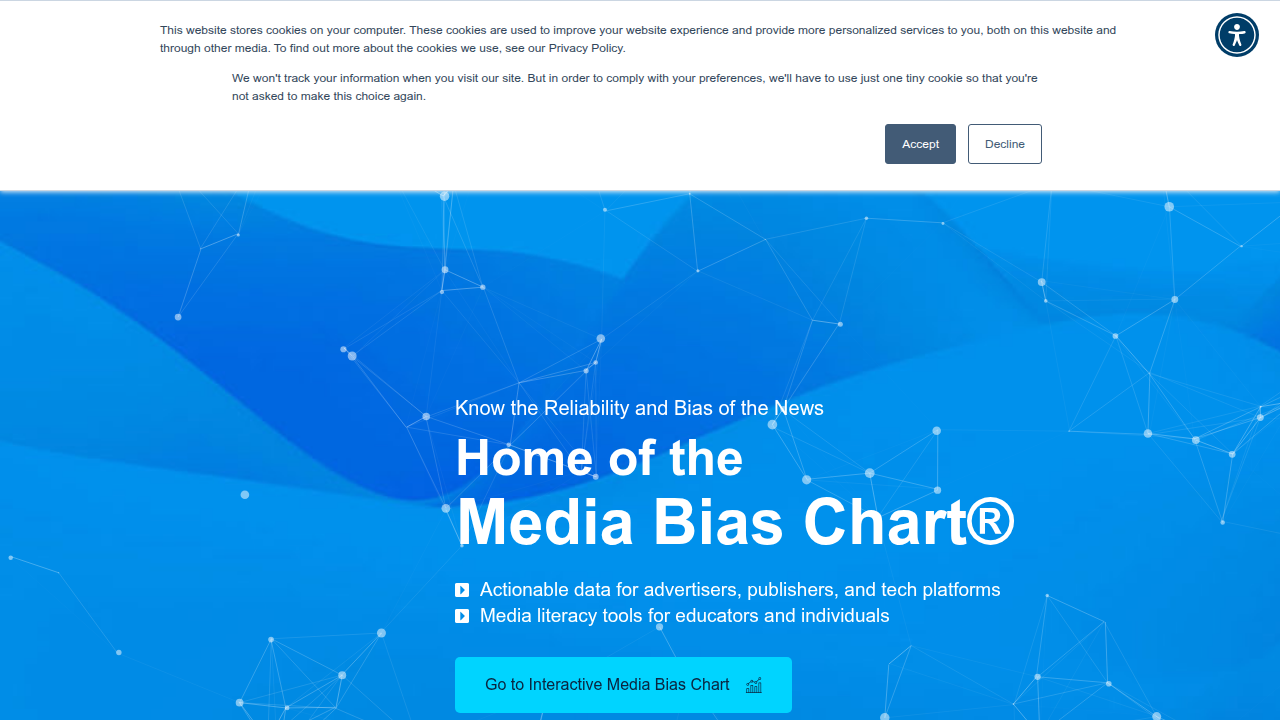
The SUNY Potsdam library notes that these charts show where a source’s reporting falls on the bias scale. But remember: bias is not the same as quality. A source can lean left yet still be highly factual. The key is knowing where each outlet stands so you can read across the aisle.
Overt bias vs. subtle framing
Overt bias is easy to catch. Think of sensational headlines that scream for clicks. Look at old yellow journalism examples from the 1890s or modern clickbait. The language is over the top.
Subtle framing is harder to see. It happens when a journalist chooses which facts to lead with or which angle to emphasize. A news story about a new law might focus on its benefits to businesses while barely mentioning its impact on workers. That framing guides your opinion without directly stating a position.
The Media Bias Chart from the Credibility Coalition helps you visualize this. It plots sources along two dimensions: bias (horizontal) and reliability (vertical). Using tools like Media Bias/Fact Check can also give you a quick read on an outlet’s leaning.
If you want to compare how major U.S. newspapers stack up on both bias and credibility, check out our detailed ranking of major US newspapers by credibility, bias, and reach. It gives you a handy reference for deciding which sources to trust and how to balance your news diet.
Modern Yellow Journalism: Examples from the 21st Century
You might think yellow journalism was something that ended with the 1890s newspaper wars. But look at your social media feed today and you’ll see the same tactics in action. Sensational headlines. Emotional language. Facts bent to fit a story. The only difference is the speed at which it spreads.
These modern yellow journalism examples rely on three main tools. Clickbait headlines that make you stop scrolling. Fake news farms that churn out stories designed to go viral. And partisan echo chambers that reward outrage over accuracy. Together, they create a media environment where trust has hit new lows. According to a Gallup survey from 2025, only 28% of Americans now trust the media. That is the lowest level ever recorded.
The Case Studies That Show the Damage
Some real world disasters show how yellow journalism hurts people today.
Pizzagate. In 2016, a baseless conspiracy theory spread across fake news sites and social media. It claimed that a Washington D.C. pizzeria was the center of a child trafficking ring run by top Democrats. The story had zero evidence. But it went viral anyway. A man later fired an assault rifle inside the restaurant, believing he was saving children. No children were found. The damage was real. That is what happens when sensationalism replaces journalism.
COVID-19 conspiracy theories. During the pandemic, false stories about the virus, vaccines, and treatments spread faster than the disease itself. Some outlets pushed unproven cures. Others claimed the virus was a bioweapon. These stories created confusion and cost lives. As the FAIR media literacy guide explains, we need to ask who is telling the story and what assumptions they are making. When the answer is "someone who profits from fear," you have a modern yellow journalism example.
Election misinformation. After the 2020 U.S. election, a wave of false claims about voter fraud flooded social media. Many of these stories came from outlets that prioritize partisan loyalty over facts. The result was a deep crisis of confidence in democratic institutions. Data from Pew Research shows that trust in national news organizations dropped 11 points between 2023 and 2025. When journalism becomes a weapon, everyone loses.
How Social Media Makes It Worse
Here is the thing. Yellow journalism in the 1890s relied on a printed newspaper cover to grab attention on a street corner. Today, a single misleading story can reach millions in minutes. Algorithms on platforms like Facebook and X reward content that gets strong reactions.

Outrage, fear, and anger are more likely to be shared. That is why fake news farms exist. They create stories designed to go viral, not to inform.
A single sensational newspaper shot can now be shared thousands of times before any fact check happens. The speed makes it nearly impossible to stop the damage once it starts.
So how do you protect yourself? The first step is knowing which outlets are credible and which lean heavily into bias. That is where tools like the Media Bias Chart from the Credibility Coalition help. It plots sources on two dimensions: reliability and bias. You can also use sites like Media Bias/Fact Check to check an outlet’s track record.
For a deeper look at how major U.S. newspapers compare on both credibility and bias, check out our ranking of major US newspapers by credibility, bias, and reach. It gives you a clear reference for building a healthier news diet.
Yellow journalism did not die. It just got a digital upgrade. The best defense is knowing how to spot it.
How to Analyze a News Article for Bias and Credibility: A Step-by-Step Guide
Now that you have seen how yellow journalism examples work today, you need a way to defend yourself. The good news is you do not need to be a journalist to spot bias and misinformation. With a few simple steps, you can evaluate any news article and decide if it is worth trusting. These steps are based on the SIFT method, a proven approach used by librarians and digital literacy experts to quickly assess information.
Step 1: Identify the Publisher and Check Ownership and Editorial Policy
Start by looking at who published the article. Do not just read the story. Go to the publisher’s homepage and find the "About Us" section. Look for clear ownership, funding sources, and a published editorial policy. Transparent outlets will share their mission, ethics, and corrections process. If that information is hidden or missing, that is a red flag.
Ask yourself: Is this outlet known for yellow journalism examples from the past? Does it have a clear political leaning? Tools like the Media Bias Chart from the Credibility Coalition or sites like Media Bias/Fact Check can help you see where a source falls on reliability and bias. You can also check our ranking of major US newspapers by credibility, bias, and reach to see how well-known outlets compare. This gives you a solid starting point.
Step 2: Examine the Headline, Lead, and Sources Quoted
Once you know the publisher, look closely at the article itself. The headline is the first clue. Does it use dramatic, emotional, or loaded language? Does it make a shocking claim without evidence? A headline that screams "You will not believe what happened next" is a classic sign of yellow journalism.
Next, read the lead or first paragraph. It should give you the key facts: who, what, when, where, and why. If the lead is vague or pushes a strong opinion, be careful.
Then check the sources quoted in the article. Are they named experts, officials, or witnesses? Or are they anonymous? Does the article include multiple viewpoints? A credible article will quote people with relevant expertise and give you enough information to verify their claims. If the only sources are unnamed insiders or people with a clear agenda, that is a warning.
Step 3: Cross-Check with Fact-Checkers and See the Full Context
This step is where the SIFT method really shines. Developed by digital literacy expert Mike Caulfield, the SIFT method has four parts: Stop, Investigate the source, Find better coverage, and Trace claims, quotes, and media back to the original context.
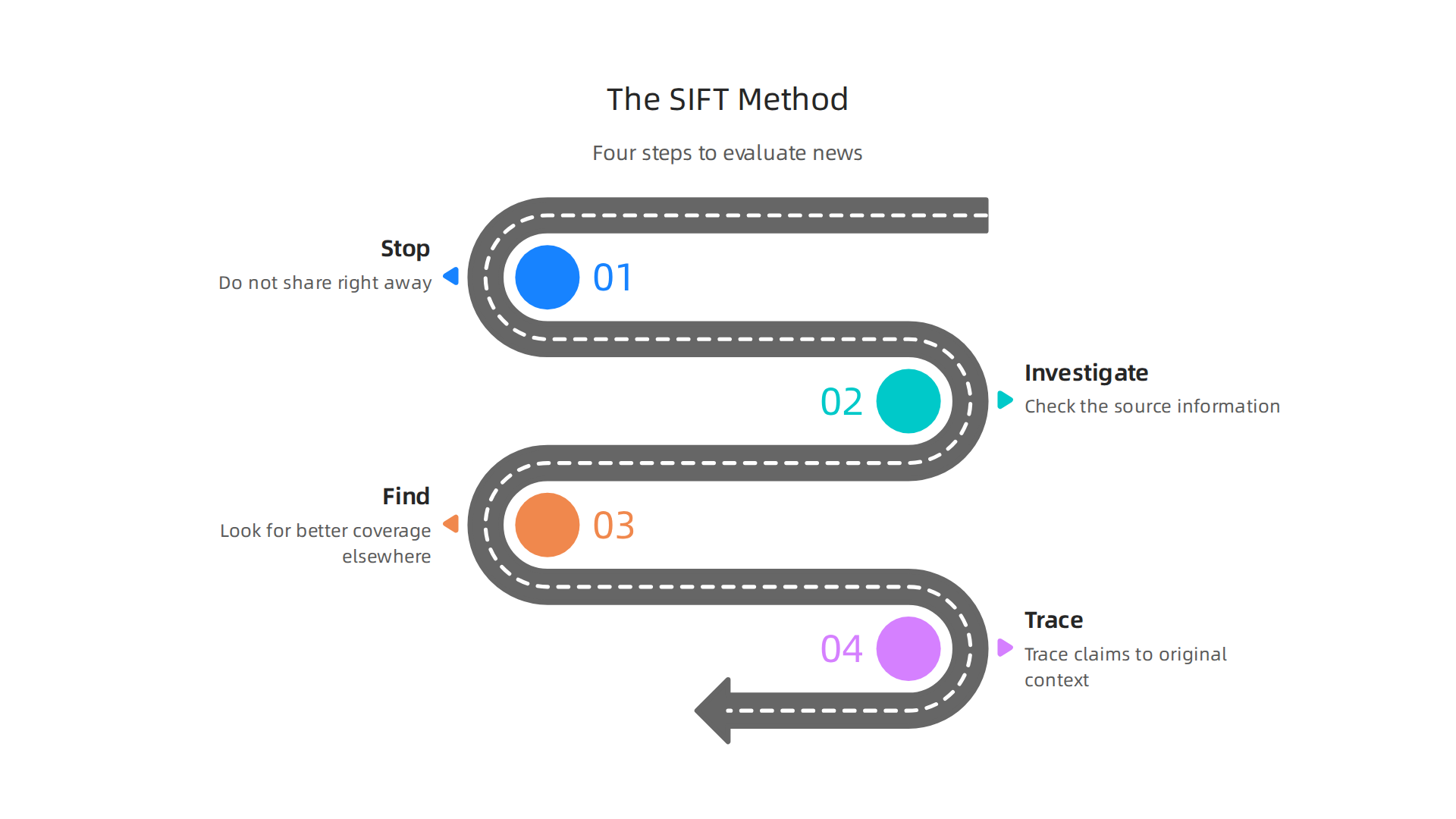
When you see a surprising or outrageous claim in a news article, do not share it right away. Stop. Then investigate the source using step 1. Next, look for better coverage: search for the same story on established news outlets or fact checking websites like Snopes, PolitiFact, or FactCheck.org. If you can not find the story anywhere else, or if fact checkers have debunked it, you have found yellow journalism examples in action.
Finally, trace the claim back to its original source. Sometimes articles quote studies, reports, or quotes out of context. By finding the original document or full interview, you can see if the news article is twisting the truth. The LSU library guide on the SIFT method explains each step in detail. The Kirkwood Library guide also provides a clear breakdown.
By practicing these three steps, you will get better at telling real journalism from yellow journalism. It takes a little extra time, but it protects you from being misled. And in 2026, with misinformation spreading faster than ever, that protection is worth it.
The Role of Fact-Checking Organizations and Digital Tools
You have the SIFT method in your toolkit now. That is a big step. But you do not have to do all the detective work alone. There are organizations and digital tools built specifically to help you spot yellow journalism examples and misinformation. Think of them as your backup team.
Major Fact-Checking Organizations
Three of the most trusted fact-checking groups are Snopes, FactCheck.org, and PolitiFact. Each one has its own way of working.
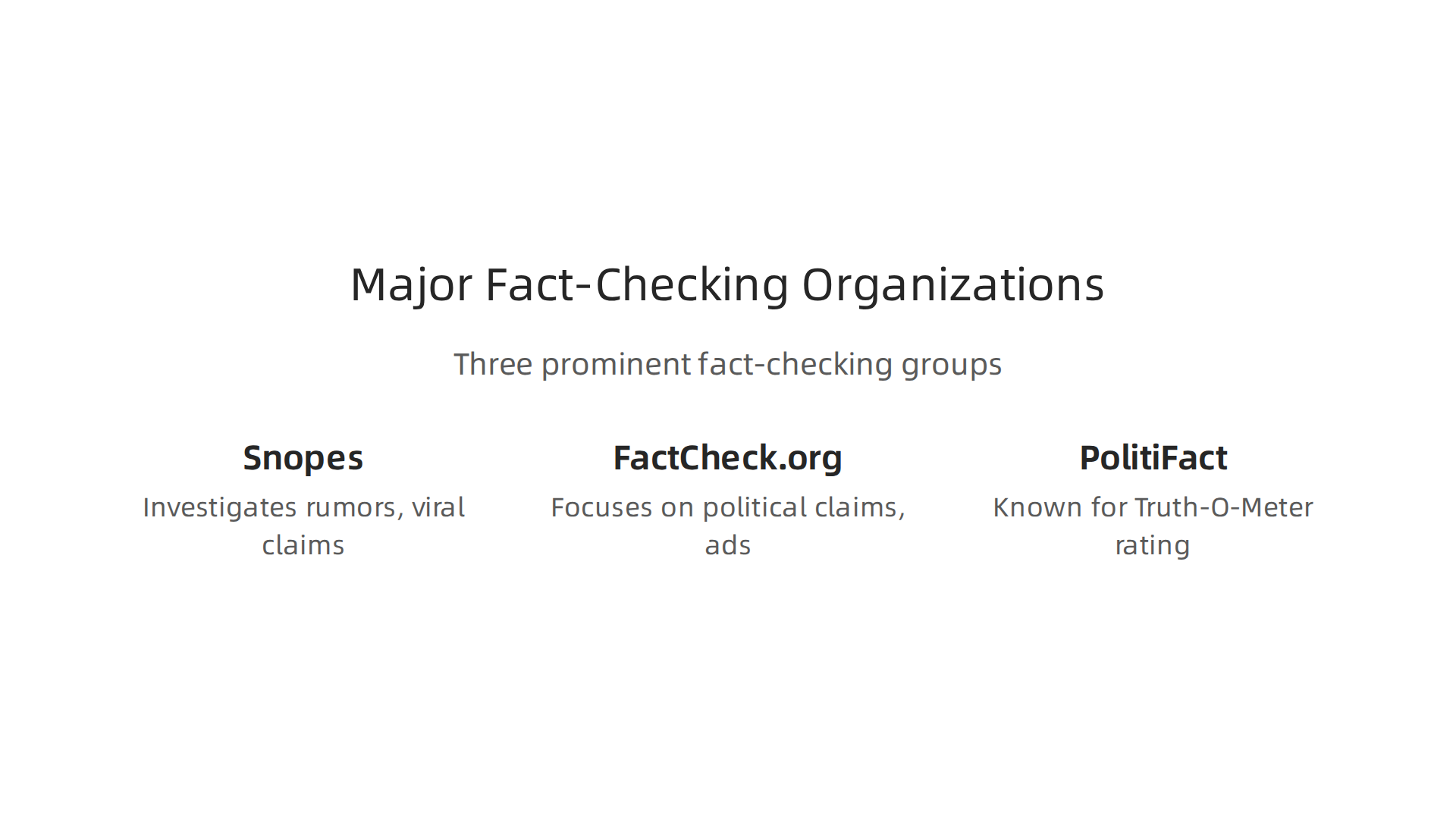
Snopes has been around since the 1990s. It investigates rumors, viral claims, and urban legends.
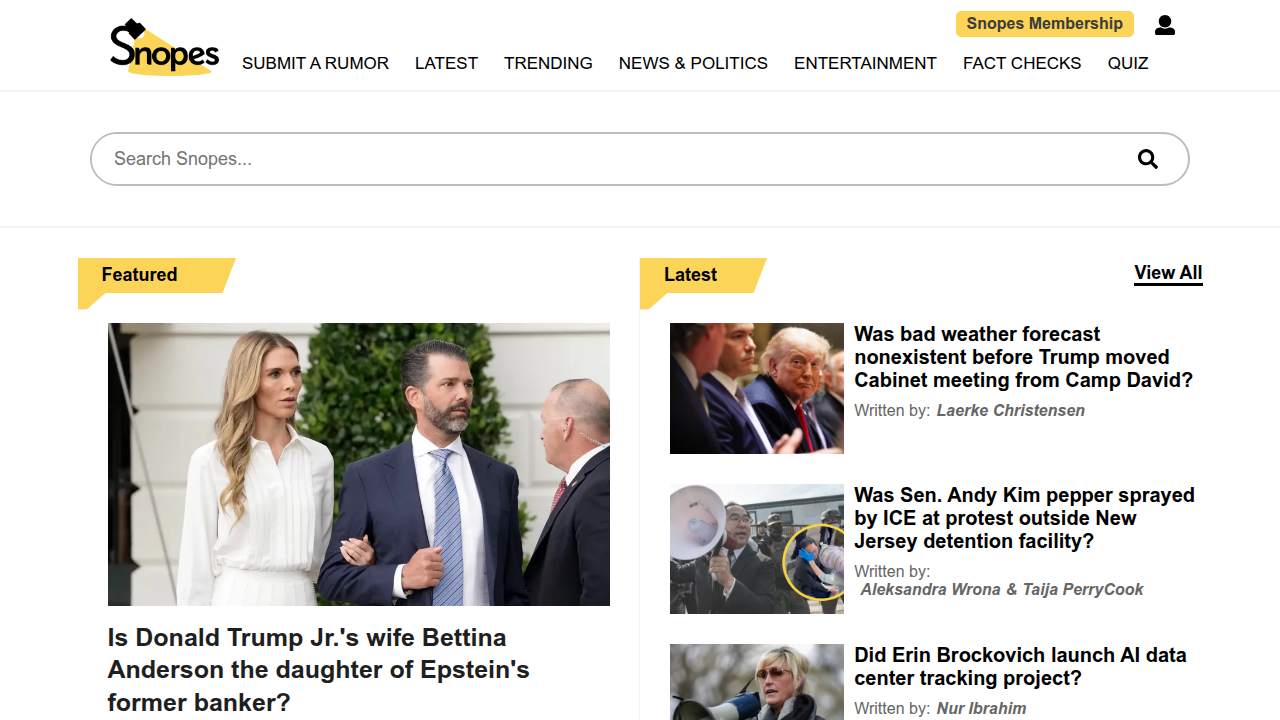
The team looks for original sources and interviews experts. They give every claim a rating like "True," "False," or "Misleading."
FactCheck.org is run by the Annenberg Public Policy Center. It focuses on political claims, ads, and statements from public figures. The team tracks down transcripts, video clips, and official records to see if what someone said matches the facts.
PolitiFact is known for its "Truth-O-Meter" rating system. It rates claims on a scale from "True" to "Pants on Fire." PolitiFact focuses on political speech and policy debates. You can search their database to see if a claim has already been checked.
These groups are not perfect, but they give you a solid second opinion. When you see a shocking headline that looks like classic yellow journalism, stop and search for it on one of these sites first.
Browser Plugins and Digital Tools
You can also get help right in your web browser. Tools like NewsGuard and TrustedNews add ratings next to news links as you browse. NewsGuard gives each news site a green or red rating based on nine criteria like transparency, corrections policy, and responsible reporting. TrustedNews does something similar by flagging sites known for spreading false information.
These plugins are easy to install. Once you have them, you get a quick visual cue about whether a source is worth your time. They are not a replacement for your own judgment, but they are a great shortcut when you are scrolling fast.
The Limits of Fact-Checkers
Here is the honest truth. Fact-checking organizations and tools have limits. They can not cover every single claim or every news story. There are too many articles published every day. Sometimes they miss things. And yes, fact-checkers can have their own biases.
A 2025 Gallup poll found that trust in media has dropped to a new low of 28% in the United States. A Pew Research study from late 2025 showed only 56% of U.S. adults trust national news organizations. That number has fallen 11 percentage points. So people are skeptical of everything, including fact-checkers.
That is why you should use fact-checkers as one tool, not your only tool. Compare what you find across multiple sources. Check the fact-checkers themselves. Look at their funding and their track record. Combine their work with the SIFT method you already learned.
If you want to compare how major newspapers stack up on credibility and bias, check out our ranking of major US newspapers by credibility, bias, and reach. It gives you a data-driven look at who you can trust.
Fact-checkers and browser tools are powerful allies. But they work best when you stay curious and keep asking questions. That is the real key to beating yellow journalism.
Building Your Personal Media Literacy Toolkit
You already know the fact-checking tools and the SIFT method. That is a solid start. But the real power comes when you build your own daily habits. Think of this as your personal media literacy toolkit. These three practices will help you spot yellow journalism examples before they trick you.
Curate a Diverse News Diet
It is easy to only read news that agrees with you. That feels comfortable. But it also makes you more vulnerable to misinformation. Instead, try to read across the political spectrum. Follow outlets that lean left, right, and center. Read a mix of national papers like The Federalist Newspaper and others with different viewpoints. This helps you see the full picture.
Pay attention to how different sources cover the same story. Compare a newspaper cover from a conservative outlet with one from a liberal outlet. Notice what facts they include and what they leave out. That is how you learn to spot bias.
Practice Lateral Reading
This is the most powerful skill you can learn. Lateral reading means you leave the page you are on and open new tabs to check the source and the claim. Fact-checkers do this all the time. In fact, researchers found that the best way to learn about a website is to leave it and see what other digital sources say about it (source: Digital Inquiry Group).
When you see a shocking headline, do not scroll down. Instead, open a new tab. Search for the claim. Look for coverage from multiple trusted outlets. See if fact-checkers have already rated it. This simple habit can save you from falling for fake news. As the University of Maryland explains, lateral reading is a new way to assess online information that most teachers never taught you (source: UMD News).
For example, if you see an ethos advertisement that seems too good to be true, open new tabs to check the product claims and the source of the ad. If a sensational newspaper shot makes you angry, use lateral reading to verify the facts.
Teach Others
The best way to lock in your own skills is to share them. Talk to your family and colleagues about what you have learned.

Show them how to use lateral reading. Explain why reading across the political spectrum matters. When you teach someone else, you strengthen your own understanding.
You can start small. The next time a friend shares a questionable story, gently show them how to check it. You might even share this guide with them. If you want a deeper look at how different newspapers stack up on credibility, check out our ranking of major US newspapers by credibility, bias, and reach. It is a great resource to keep in your toolkit.
Your personal media literacy toolkit is always growing. The more you practice, the better you get. And the harder it becomes for yellow journalism to fool you.
Summary
This article explains how yellow journalism—sensational, emotion-driven reporting that dates to the 1890s—continues to influence today’s news landscape and why media literacy is critical now. It traces the historical roots from the Pulitzer–Hearst circulation wars to modern clickbait, shows how bias appears in word choice, omission, and sourcing, and distinguishes bias from outright unreliability. You’ll learn clear credibility criteria (transparent sourcing, corrections, editorial standards), quick checks like lateral reading, and a practical SIFT-based, step-by-step method to evaluate any article. The guide also surveys major fact-checkers and browser tools, explains their limits, and offers daily habits—reading across the spectrum, practicing lateral reading, and teaching others—to build a stronger personal toolkit. By following these steps and using credibility rankings, readers will be able to spot sensationalism, verify claims faster, and choose more trustworthy news sources.
Latest insights and trends