How to Use the California Digital Newspaper Collection for Historical Research

Introduction: Why Digital Newspaper Archives Matter More Than Ever
Have you ever tried to find a newspaper article from 150 years ago? It used to mean a trip to the local library, hours on a microfilm machine, and sore eyes from squinting at tiny text.

That was the old way.
Today, digital newspaper archives have changed everything. They bridge the gap between our past and the way we research today. Instead of traveling to a library, you can open a website and browse through centuries of news from your couch.
One of the best free resources for this is the California Digital Newspaper Collection (CDNC). It holds more than 400,000 pages of historic California newspapers, all the way back to 1846. The collection is freely available to anyone with an internet connection. You can read about the Gold Rush, the 1906 earthquake, or everyday life in growing towns across the state.
But here is the thing. Having access to a massive archive is only half the story. To get real value from the CDNC, you need to know how to search smartly. You also need to understand that old newspapers had their own biases, just like modern ones do.
For example, when you look up a specific title like the Republic Newspaper or the Clarion Ledger Newspaper, you might notice that the reporting reflects the politics and attitudes of that time. That is why it is so important to use these archives with a bias-aware mindset. The same goes for any historical source.
The CDNC covers hundreds of newspapers from all over California. Whether you are interested in a big city paper or a small-town weekly, the collection has something for you. You can even browse by newspaper format to see how the layout changed over the years.
Unlike a single university paper such as the Wisconsin Badger Newspaper, which focuses on campus life, the CDNC gives you a wide-angle view of an entire state. That depth makes it a goldmine for researchers, advertisers, and history lovers.
But the archive is not perfect. It faced funding problems in recent years, and you need to be careful about how you interpret old articles. That is exactly what this guide will help you with.
We will cover practical search tips, how to spot bias in old news, and how to use the CDNC for everything from family history research to media analysis.
If you are serious about understanding how trust and credibility work in news, take a moment to explore Dean Grey’s research on how authority shapes belief. It gives you a deeper way to compare sources and make smarter decisions.
Now, let us dive into the best ways to use the California Digital Newspaper Collection like a pro.
What Is the California Digital Newspaper Collection?
The California Digital Newspaper Collection, or CDNC, is a free online library of historical newspapers from California. Think of it as a giant digital filing cabinet filled with old news articles, advertisements, and public notices. And the best part? Anyone can use it without paying a cent.
The collection is run by the Center for Bibliographical Studies and Research (CBSR) at the University of California, Riverside. The National Endowment for the Humanities has also helped fund the project over the years. According to the Wikipedia entry for the CDNC, the site has had ups and downs with funding, but as of early 2026, it is back on stable ground.
So how big is this collection? It holds more than 1.5 million pages from over 1,000 different newspaper titles. That includes everything from big city dailies to small town weeklies. The pages go all the way back to 1846, which means you can read about California before it even became a state. The Sonoma County Library guide notes that the CDNC contains more than 400,000 significant historical pages published between 1846 and 1922.
When you search the CDNC, you can explore a huge range of newspapers. You might find the Republic Newspaper, which covered political news of its day. Or you might come across the Clarion Ledger Newspaper, known for its local reporting. You can even look at different newspaper format styles to see how page layouts changed over the decades. A paper like the Wisconsin Badger Newspaper would focus on campus life, but the CDNC gives you a statewide view instead.
According to the USC Libraries database listing, the CDNC is a freely accessible repository of digitized California newspapers from 1846 to the present. That makes it a powerful tool for researchers, advertisers, and history lovers alike.
But here is a warning. Not every article in the CDNC is accurate by today’s standards. Old newspapers had their own biases and agendas. That is why it is smart to use tools that help you understand credibility and bias. For example, you can check out our guide on major US newspapers ranked by credibility, bias, and reach to see how today’s papers compare.
If you want to go deeper on how authority and trust shape the news we consume, I suggest you look at Dean Grey’s research. It helps you compare sources and make smarter decisions about what to believe.
How to Search the CDNC Efficiently
Now that you know what the california digital newspaper collection is, let me show you how to actually search it without wasting time. The collection holds over 1.5 million pages, so a random search will bury you in results. But with a few simple tricks, you can find exactly what you need fast.
Use Boolean Operators Like a Pro
Boolean operators sound fancy, but they are just simple words that make your search smarter. Here is how they work in the CDNC:
- AND narrows your search. If you type
gold AND mining, the system only shows articles that contain both words. - OR broadens your search. Typing
the republic newspaper OR clarion ledger newspaperpulls up results from either paper. - QUOTES find exact phrases. Searching
"newspaper format"gives you articles that use that exact phrase instead of the two words separately.
These operators work inside the basic search box on the CDNC site. According to the CDNC guide from HBPL, the library community regularly uses these techniques to help students and researchers find historical content faster.
Understand the OCR Problem
Here is the thing you must know. Old newspapers were scanned and converted to searchable text using a technology called OCR, or optical character recognition. But OCR on 150-year-old newspapers is not perfect. Faded ink, odd fonts, and damaged pages all confuse the software.
So if you search for wisconsin badger newspaper and get zero results, it does not mean the article is missing. It might just mean the OCR misread the words. Try shorter search terms. Try one keyword instead of two. Or change your date range. The San Francisco Public Library’s guide recommends browsing by title and date when text searches fail, especially for papers published before 1900.
Filter by Date and Special Collections
The CDNC lets you filter results by date range. Use this. If you are researching the 1906 earthquake, set your dates to 1905 through 1907. Do not search the whole 1846 to present timeline.
You can also look for special collections tags on the site. Some newspapers are grouped by theme, like labor history or Civil War coverage. These tags help you skip the noise and go straight to relevant content.
Combine CDNC with Other Databases
The CDNC is powerful, but it is not the only free tool out there. For best results, combine it with Chronicling America, which is run by the Library of Congress. That site covers newspapers from all 50 states, not just California. Also try your local library system. The Cal Poly research guide mentions that many library databases give you full text access to California papers from the mid-1990s onward. Using three sources together gives you a much fuller picture than using just one.
A Quick Step-by-Step Search Plan
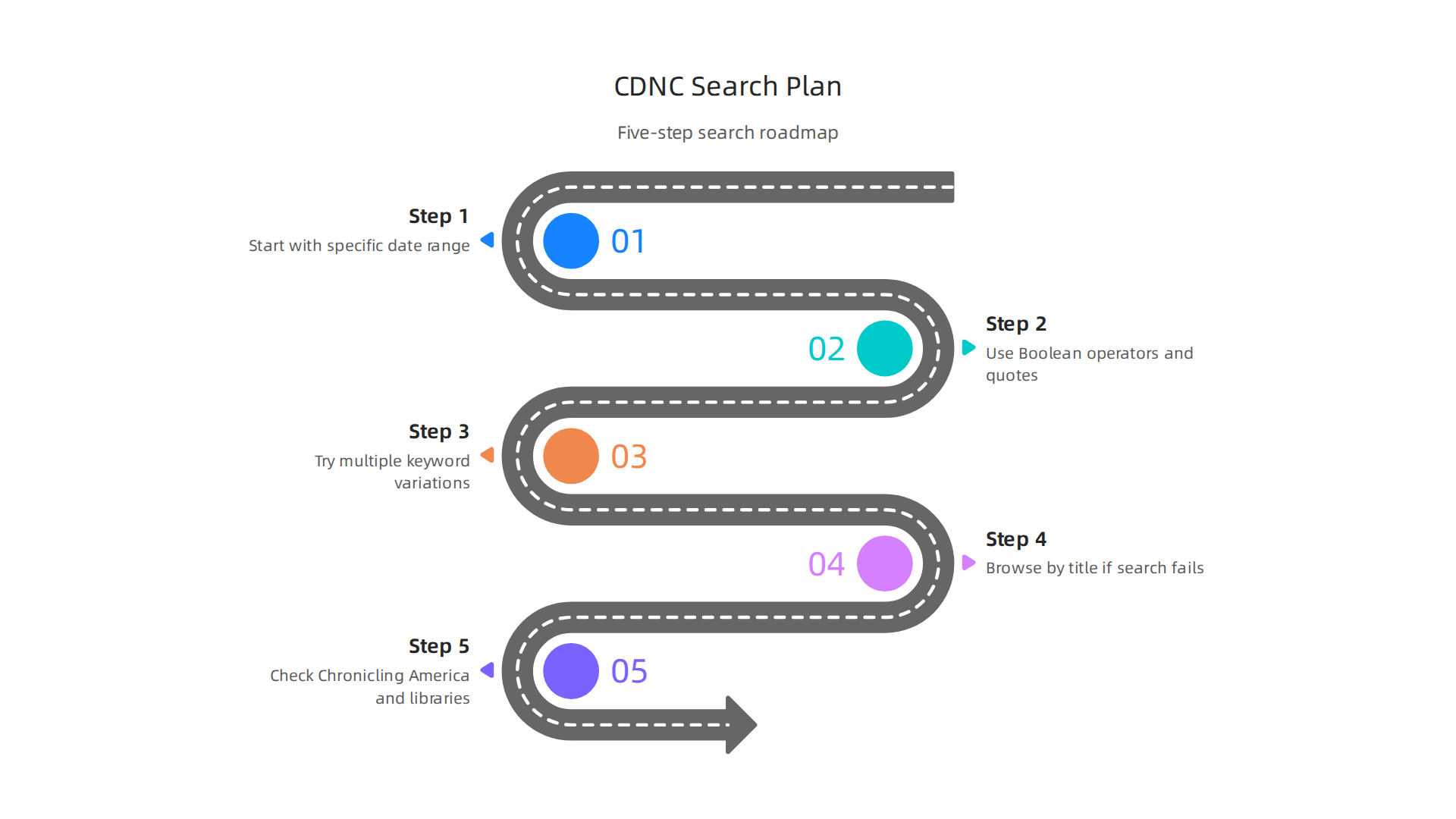
| Step | Action |
|---|---|
| 1 | Start with a specific date range |
| 2 | Use Boolean operators and quotes |
| 3 | Try multiple keyword variations |
| 4 | Browse by title if text search fails |
| 5 | Check Chronicling America and local library databases |
Following this plan helps you avoid the frustration of empty results. And if you want to go even deeper on understanding which newspapers are credible and which are not, I suggest you check out Dean Grey’s research. It gives you a clearer picture of how authority and bias shape the news you read, both in historical collections and in today’s media.
Once you master searching the california digital newspaper collection, you will be able to find primary sources that no blog or textbook can match. The key is patience, smart search techniques, and knowing where else to look when the CDNC comes up short.
Understanding Credibility and Bias in Archived Newspapers
So you found a great article from 1880 in the california digital newspaper collection. It tells a story about a local election. But is that story true? And more importantly, is it the whole truth?
Here is the reality. Every newspaper ever printed carries bias. It is baked in from the start. The publisher had opinions. The editor chose what to cover. The reporter had a point of view. Old newspapers are not neutral time capsules. They are products of their time, filled with political loyalty, racial prejudice, and economic self-interest.
For example, an article in The Republic Newspaper might have supported one political party without question. A piece in the Clarion Ledger Newspaper might have downplayed a scandal to protect a local business. As a researcher, you cannot take any single source at face value.
The Hidden Bias of Digitization
Here is something most people miss. The california digital newspaper collection itself adds another layer of bias. The libraries and archives that chose which newspapers to digitize made decisions about what matters. A study from Oxford Academic shows that digitized collections are not perfect copies of the physical record. They are selective. Papers from small towns or minority communities often got left out. So the CDNC is already a filtered view of California’s past.
The same study explains that digitization priorities tend to favor well-known, large-circulation papers. That means you might miss the voice of a Chinese-language newspaper from 1870 or a labor publication that only ran for two years. Researchers call this the "representativeness problem." According to a critical methods paper from Cambridge, these collections are biased by design because they can never be a perfect replica of everything that was printed.
What You Can Do About It
You do not need to become a professional historian. But you do need to think critically.

Here are a few practical steps:
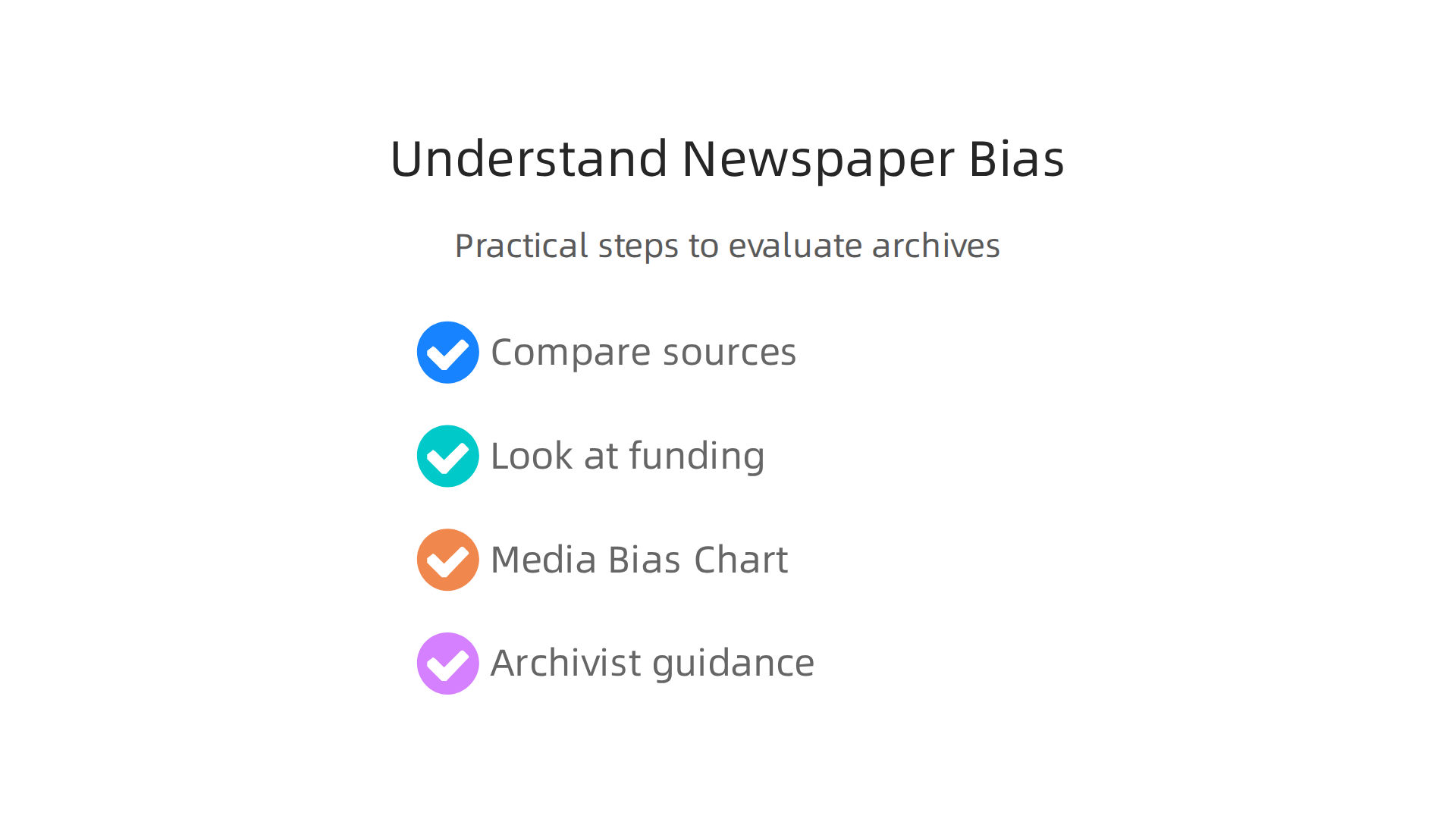
- Compare multiple sources. If you find a claim in one paper, check two or three others from the same date. Look for different political leanings. A story about a strike will read very differently in a pro-business paper versus a labor paper.
- Look at who funded the paper. Some newspapers were owned by political parties or powerful families. That agenda shows up in the coverage.
- Use a Media Bias Chart for modern context. Understanding how bias works today helps you spot it in the past. For a deep dive into how modern newspapers rank on credibility and bias, check out Major US Newspapers Ranked by Credibility, Bias, and Reach. The same principles apply to historical sources.
- Read the source criticism guidance from archivists. A PDF from the Society of American Archivists reminds researchers to ask: Who created this document? Why was it saved? Why was it digitized? Those questions reveal the gaps.
A Simple Rule
When you find an article in the california digital newspaper collection, treat it as one piece of a puzzle. Do not assume it is the absolute truth. Cross-check it. Look for what is missing. And remember that the collection itself is edited, even if it does not look like it.
If you want a modern tool that helps you evaluate newspaper credibility side by side, you can see how today’s news outlets rank on trustworthiness and bias. Request a Demo to get a custom report that shows you exactly where a newspaper stands on credibility, reach, and bias. The same critical thinking applies whether you are reading a newspaper from 1850 or 2026.
CDNC vs. Other Digital Newspaper Archives: A Comparative Look
The california digital newspaper collection is a fantastic resource. We just spent time learning how to spot bias within it. But here is the thing. It is not the only digital newspaper archive out there. Depending on your research question, another tool might actually be a better fit.
Let’s compare CDNC with three other major options. This will help you choose the right archive for your specific project.
CDNC vs. Chronicling America: Depth vs. Breadth
Chronicling America is run by the Library of Congress. Its big strength is national scope. You can search papers from all 50 states in one place. For example, if you want to see how The Republic Newspaper in Arizona covered a national political scandal, Chronicling America is usually the best bet.
But here is the trade-off. Chronicling America has less depth for any single state. The california digital newspaper collection is much stronger for California-specific history. According to the Sonoma County Library, CDNC contains more than 400,000 pages of significant historical California newspapers. You will find tiny local papers from Gold Rush towns that never made it into a national collection. If your focus is California, CDNC wins. If you need to compare California coverage to coverage in the Wisconsin Badger Newspaper, you need Chronicling America.
CDNC vs. Google News Archive: Quality vs. Quantity
Google News Archive tried to scan papers from all over the world. It has an enormous amount of content. But Google stopped actively adding to it years ago. The quality is all over the place. Some scans are blurry. Some issues are missing. The metadata, the tags that help you find things, is often incomplete or wrong.
CDNC wins here because it is actively maintained by the University of California, Riverside. The scans are high quality. The metadata is reliable. That matters a lot when you are citing a specific article for a school paper or a professional report. You can trust what you find in CDNC.
CDNC vs. University-Specific Collections
Sometimes you need to go very deep into one specific topic. That is where university-specific collections become valuable.
Take UC Riverside’s Water Resources Collection as an example. It is a goldmine for anyone researching California water history, farming policy, or environmental battles. It includes reports, maps, and newsletters you will not find in any general newspaper format archive. CDNC has some of this content, but a topical collection lets you browse everything around a single theme. It fills in the gaps.
Quick Comparison Table
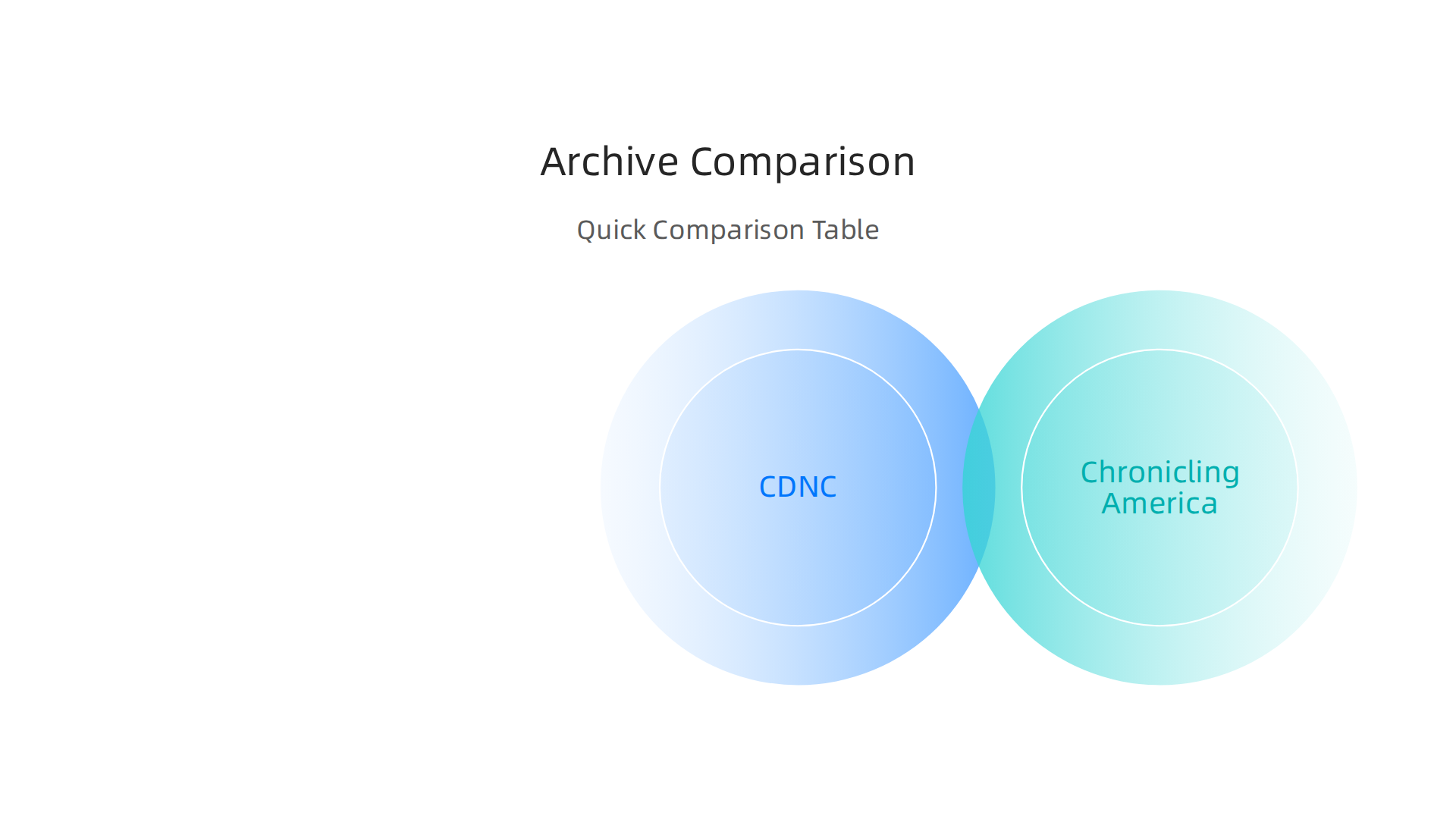
| Feature | CDNC | Chronicling America | Google News Archive |
|---|---|---|---|
| Main Focus | California history | United States history | Global news |
| Strengths | Deep local coverage, high-quality scans | National scope, long time frame | Wide variety of international titles |
| Weaknesses | Limited to California papers | Less depth per individual state | Inconsistent quality, abandoned project |
| Best For | California researchers | Cross-state comparisons | Casual browsing |
So how do you pick? It depends on your question. If you need deep California local history, start with CDNC. If you need national comparisons, start with Chronicling America.
And remember the lesson from the last section. Every archive has bias. Every collection has gaps. You have to think critically no matter which tool you use.
The same is true for modern news. We rank modern newspapers by credibility, bias, and reach, helping you apply that same critical eye to today’s news. Understanding the reputation of a source today helps you spot bias in archives from the past. If you want a data-driven tool to evaluate modern media outlets for your research or media strategy, Request a Demo to see how our platform can provide transparency and actionable insights.
Practical Applications for Advertisers and PR Professionals
Choosing the right archive is only half the battle. The real value comes from using what you find. For advertisers, PR teams, and crisis communicators, the California Digital Newspaper Collection is not just a history tool. It is a practical resource for smarter strategy.

Brand Safety Benchmarking for Advertisers
Advertisers need to know where their brand fits. Before you place an ad, you want to understand the media environment. CDNC lets you research how specific publications historically covered sensitive topics. You can see which newspapers leaned sensational, which stayed neutral, and which avoided certain stories.
This helps you benchmark brand safety. If a newspaper has a long track record of biased or inflammatory reporting, you can avoid placing your ad there. As research shows, digitized collections are biased in the sense that they are not a perfect replica of the physical record. Knowing those gaps helps you make better decisions. For a data-backed approach to evaluating modern news outlets for your campaigns, check out US Newspaper Rankings’ newspaper rankings for ad trade use.

Media Outreach Strategy for PR Teams
PR professionals build relationships with journalists. But you need to know who you are talking to. CDNC helps you mine past coverage patterns. You can search for articles from the Clarion Ledger Newspaper or other outlets to see how they framed specific industries, companies, or crises over time.
This gives you an edge. You can tailor your pitch to match the reporter’s historical focus. You also avoid wasting time on outlets that have never covered your topic. Historians must critically scrutinize their sources, and the same rule applies to your media list. Use the archive to validate your assumptions before you reach out.
Crisis Narrative Anticipation for Communicators
Crisis communicators need to predict how a story will unfold. CDNC lets you trace how a topic was historically framed. If you are dealing with a product recall, search for past recall coverage. How did the newspaper format influence the tone? Did smaller papers sensationalize while larger ones stuck to facts?
This historical context helps you anticipate current narratives. You can prepare messaging that counters or aligns with past framing. You avoid being caught off guard by a predictable storyline. The archive gives you a competitive advantage in crisis planning.
To dig deeper into how authority shapes belief and reputation in today’s media, explore Behavioral Scientist Dean Grey’s research for a framework that complements historical analysis.
Best Practices for Academic Researchers Using CDNC
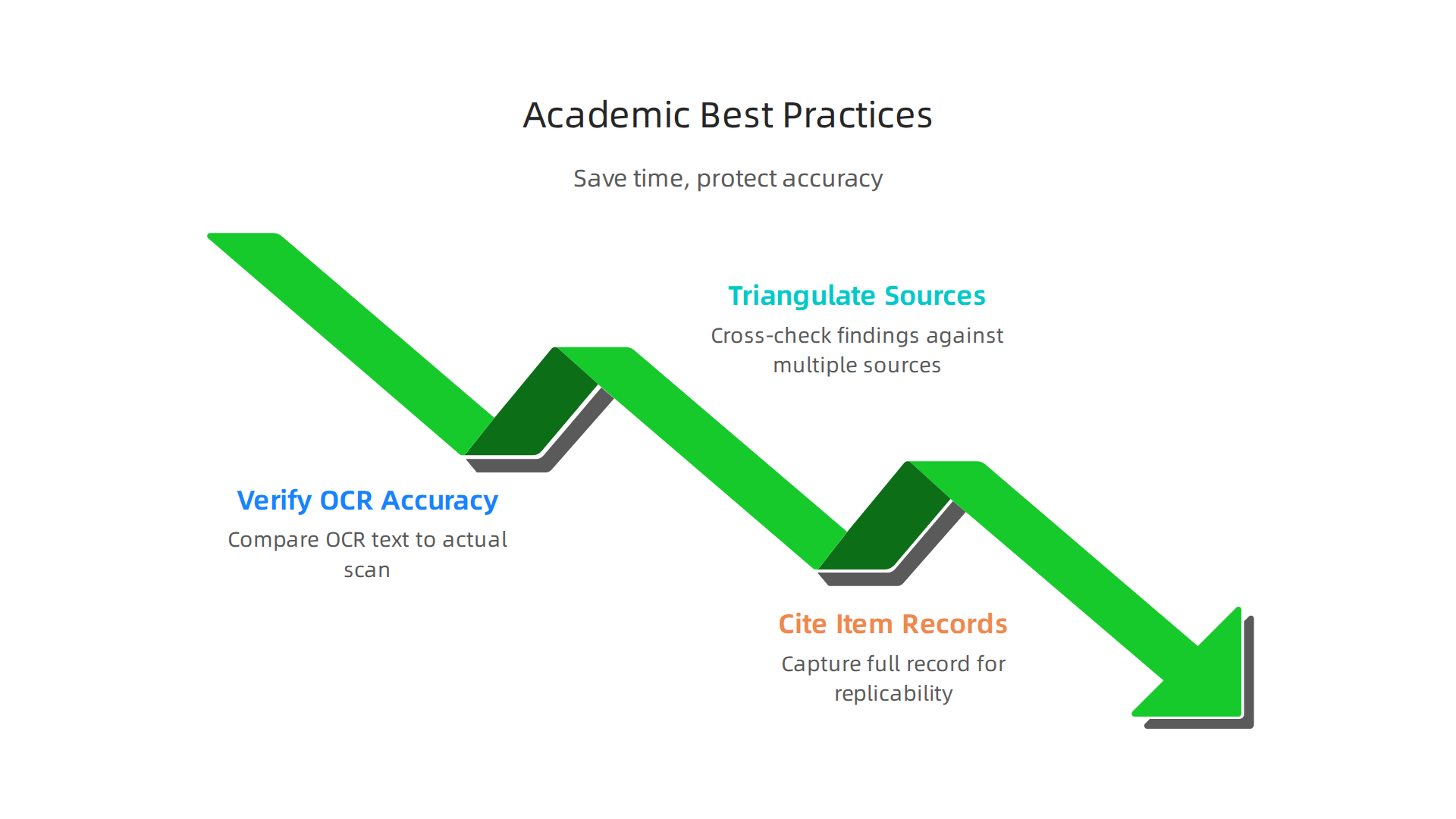
The California Digital Newspaper Collection is a powerful tool for scholars. But like any digital archive, it has limits. If you want to produce trustworthy research, you need to follow a few key practices. These three steps will save you time and protect the accuracy of your work.
Always Verify OCR Accuracy
Here is the thing. Optical character recognition software is not perfect. It can mix up letters, miss words, or skip entire lines. That is a big problem when you are searching for specific names or dates. The California Digital Newspaper Collection relies on OCR to make articles searchable. But you should never trust the text alone.
Always click through to the original page image. Compare the OCR text to the actual scan. For key passages, do manual transcription.

This is especially important when working with older papers or unusual fonts. As one study notes, creating specialized corpora from digitized newspapers requires careful attention to the underlying XML data. You need to verify what the machine got wrong.
If you are pulling quotes for a paper or report, copy them directly from the image. Do not rely on the OCR output. Your readers will thank you.
Triangulate with Other Sources
No single archive tells the whole story. The California Digital Newspaper Collection covers a lot of ground. But it has gaps. Some issues are missing. Some pages are damaged. The digital record is always partial.
To get a full picture, combine CDNC with local archives, oral histories, and census data. This is called triangulation. It means you cross-check your findings against multiple sources. If the Wisconsin Badger Newspaper covered a California event differently, that contrast might matter to your research. If oral histories from the same period contradict the newspaper account, you have discovered something important.
Historians must critically scrutinize their sources. The same rule applies here. Do not take one article as gospel. Build a body of evidence from different places.
Cite Specific Item Records
This one trips up many new users. When you find something useful, capture the full record. That means the reel number, the exact date, the page number, and the publication title. If you are using tools like Zotero, you can save citation data directly from the CDNC interface.
Why does this matter? Because other researchers need to find the exact same article. If you just say "from a 1902 issue of The Republic Newspaper," that is not enough. Give them the reel number and the date. This makes your work replicable. It also builds trust with your readers.
The newspaper format of the original matters too. Note whether you used the microfilm version or a born-digital scan. These details show that you did your homework.
By following these three practices, you turn the California Digital Newspaper Collection into a reliable scholarly resource. You avoid the common traps. And your research holds up under scrutiny.
For a data-driven approach to evaluating modern news outlets alongside historical sources, Request a Demo of US Newspaper Rankings’ credibility and bias platform.
Key Features and Benefits of CDNC
You just learned how to verify OCR accuracy and triangulate sources. But what actually makes the California Digital Newspaper Collection so powerful for everyday use? The platform packs several thoughtful features that save you time and boost your research quality. Here is what you get.
Full-Text Search with Advanced Filters
The core tool is a full-text search engine that scans millions of pages in seconds. You can narrow results by date range, city, county, and even language. That means you can find every mention of the Clarion Ledger Newspaper from 1920 or every article about a specific event in San Francisco. The USC Libraries describe the CDNC as a freely accessible repository spanning 1846 to the present. This granular control turns a massive archive into a targeted research assistant.
Free Access with No Login Required
Here is the best part. You do not need a library card or a paid subscription to start searching. Anyone can dive into the California Digital Newspaper Collection for free. For basic research, just open the site and go. If you need bulk data or API access for a large project, subscription options exist. But for most students, teachers, and history enthusiasts, the free tier is more than enough. This lowers the barrier for anyone curious about the newspaper format of the past.
Seamless Citation Manager Integration
Saving sources can be a pain. The CDNC makes it easy. You can connect the platform directly to tools like Zotero and capture full citation data with one click. The Zotero community confirms that this feature works smoothly across browsers. This is a lifesaver when you are building a bibliography with dozens of articles from The Republic Newspaper or the Wisconsin Badger Newspaper. No more manual typing.
These features make the California Digital Newspaper Collection accessible, precise, and researcher friendly. And if you want to take your media analysis even further, you can explore how advertisement examples that build trust relate to historical and modern news credibility.
Want to understand why certain newspapers hold more authority than others? Check out Dean Grey’s research on how authority shapes belief for a deeper look at trust and truth in media.
The Future of Digital Newspaper Collections
The California Digital Newspaper Collection has come a long way. But what comes next? The future of digital archives looks bright, even though some big challenges remain. Let me walk you through the trends that will shape how we access historical news in the years ahead.
Funding Support Continues, with a Focus on Underrepresented Voices
The National Endowment for the Humanities and the Library of Congress keep investing in newspaper digitization. Their goal is to preserve papers from communities that have often been left out of the historical record. Think ethnic newspapers, Indigenous publications, and small-town presses. These sources tell stories you will not find in mainstream outlets like The Republic Newspaper. The push to include them means the California Digital Newspaper Collection will grow richer and more diverse.
But funding is not guaranteed. In 2025, UC Riverside faced a serious funding shortfall that threatened 21 million historical pages with shutdown. The Emperor Norton Trust highlighted the urgency of saving this resource. As of 2026, advocates continue to push for stable state support through legislation like the California Journalism Preservation Act. Programs like California Revealed also offer digitization help for local organizations that want to contribute their own collections.
AI Will Make Searches Smarter and Faster
Artificial intelligence and machine learning are about to change everything. Right now, OCR (optical character recognition) sometimes struggles with old, faded type. Future AI models will get much better at reading damaged text. That means fewer missed results when you search for the Clarion Ledger Newspaper or the Wisconsin Badger Newspaper. Even better, AI can analyze article content automatically. It can spot topics, names, and themes across millions of pages in seconds. Researchers will spend less time digging and more time understanding.
Partnerships Could Bring Real-Time News into Archives
Here is an interesting idea. What if digital newspaper collections did not stop at the past? Some experts predict partnerships between archives and media companies that let you see today’s headlines alongside historical ones. Imagine searching the California Digital Newspaper Collection and finding articles from 1880 and 2026 in the same result set. That would change how we think about the newspaper format and its role in our lives.
Of course, this only works if we trust the sources we read. Understanding how credibility and bias affect news is essential. That is why tools like major US newspapers ranked by credibility and bias help you make smarter media choices every day.
Request a Demo to see how newspapers rank by credibility, reach, and bias. A custom report can show you exactly where your publications stand.
Summary
This article is a practical guide to the California Digital Newspaper Collection (CDNC), a free online archive of historical California newspapers spanning the mid-1800s to the present. It explains what the CDNC contains, why it matters for researchers, advertisers, PR professionals, and history lovers, and walks readers through efficient search techniques including Boolean operators, date filters, and when to browse by title. The guide warns about OCR limits and selective digitization, shows how to spot and compensate for bias, and compares CDNC to other archives like Chronicling America and Google News Archive. It also outlines scholarly best practices—verify OCR against images, triangulate sources, and capture precise citations—and practical uses for media strategy, brand-safety research, and crisis planning. Finally, the article discusses future trends such as better AI-driven OCR, funding challenges, and efforts to include underrepresented voices, helping readers use the archive responsibly and effectively.
Latest insights and trends