
Newspaper Rankings for Ad Trade Use Credibility and Bias Data to Protect Your Brand

The ad trade is moving fast. In 2026, worldwide ad spending will likely pass $1.26 trillion according to industry forecasts. In the US, programmatic spending alone is expected to top $203 billion this year. With that much money on the line, every choice you make matters more than ever.
But the real challenge is not just reaching a big audience. It is reaching people in a place they actually trust.

News credibility and political bias are now central to how well your ad campaign performs. If your native advertising or carefully designed advertisement poster runs in a source readers do not trust, your whole campaign can fall flat.
Right now, many advertisers, agencies, and PR teams do not have one reliable place to check the trustworthiness of a newspaper. You end up guessing. Or you rely on old lists that completely ignore credibility scores and bias ratings. That is a big risk for any brand.
That is exactly why we built a better way. This article gives you a structured, evidence-based approach to using real newspaper rankings in your ad trade strategy. Instead of guessing where your ads will be safe and effective, you can let the data lead.
Start by comparing major US newspapers ranked by credibility, bias, and reach. When you understand the full picture, you can protect your brand and get better results. For a deeper look at how specific publications perform, you can request a demo of our custom reports today.
The Evolution of Ad Trade in the Digital News Era
Think about how newspapers sold ads just twenty years ago. A sales rep called a local business, handed over a rate card, and someone bought a full-page slot. You knew exactly where your ad would run. You knew the readers. And you had a pretty good idea whether the environment matched your brand.
Today, the ad trade looks completely different. Most of the buying and selling happens through automated systems. In 2026, about 91.5% of all digital display spend goes through programmatic channels. That means decisions happen in milliseconds, not days. Machines bid on your ad placement before you finish reading this sentence. And often, you never see where your native advertising actually ends up.
Here is the thing. That scale is huge. US programmatic ad spending will top $200 billion this year. Global spending is expected to reach more than $725 billion by 2026. Those numbers show real opportunity. But they also hide a real risk.
When you buy through open exchanges or networks, your advertisement poster might load next to content you would never choose.

Low credibility sources. Heavily biased pages. Even outright misinformation sites. That is what people mean when they talk about opacity in programmatic trading.
For your ad campaign examples to work well, the surrounding content needs to feel trustworthy. Readers absorb that environment. It creates a halo effect. Good content makes your ad look better. Bad content damages your brand in seconds.
The smartest move in today’s ad trade is to bring back some of that old newspaper certainty while keeping the scale of digital. You need to know where your ads land. You need to measure the credibility and bias of each publisher.
That is exactly why we built a ranking system that cuts through the noise. Instead of guessing whether a newspaper is safe for your brand, you can check the data first. It makes your job easier. And it protects your investment.
Want to see exactly how this works for your media plan? You can Request a Demo today and get custom reports based on credibility, reach, and bias ratings.
Understanding Media Bias: A Taxonomy for Advertisers
So, the ad trade now moves faster than ever. But here is the real question. How do you tell a good news site from a risky one? It helps to understand that media bias comes in two main flavors.
Political bias is the one most people talk about. Think left leaning or right leaning. This matters for your ad campaign examples because your audience might have strong feelings about certain viewpoints. If you run a native advertising campaign on a site that leans hard to one side, you might turn off readers on the other side. Or worse, you might accidentally associate your brand with extreme rhetoric.
Credibility bias is different. It is about how reliable the news source actually is. A site can be politically centrist but still spread false information. Or it can be opinionated but still fact check its claims. These two dimensions are separate. And they both affect where your advertisement poster lands.
The tricky part is that existing bias rating systems do not all agree. Groups like Ad Fontes Media and AllSides use different methods to score sources.
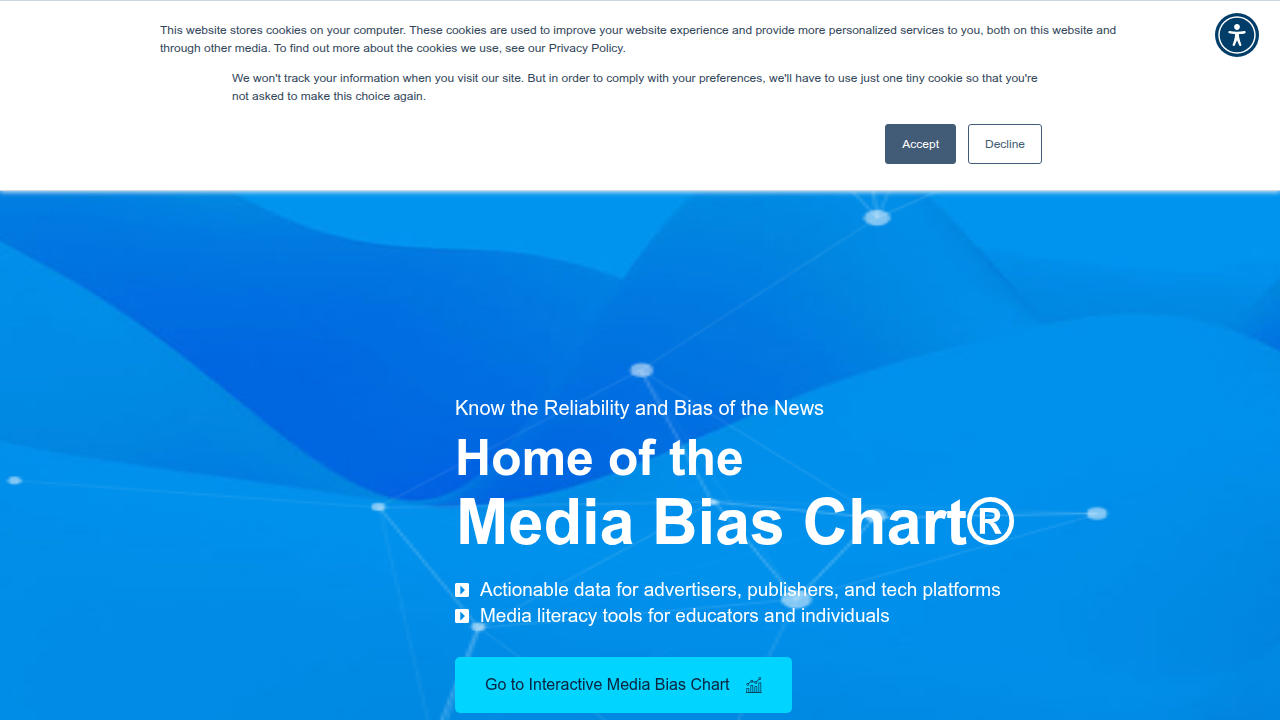
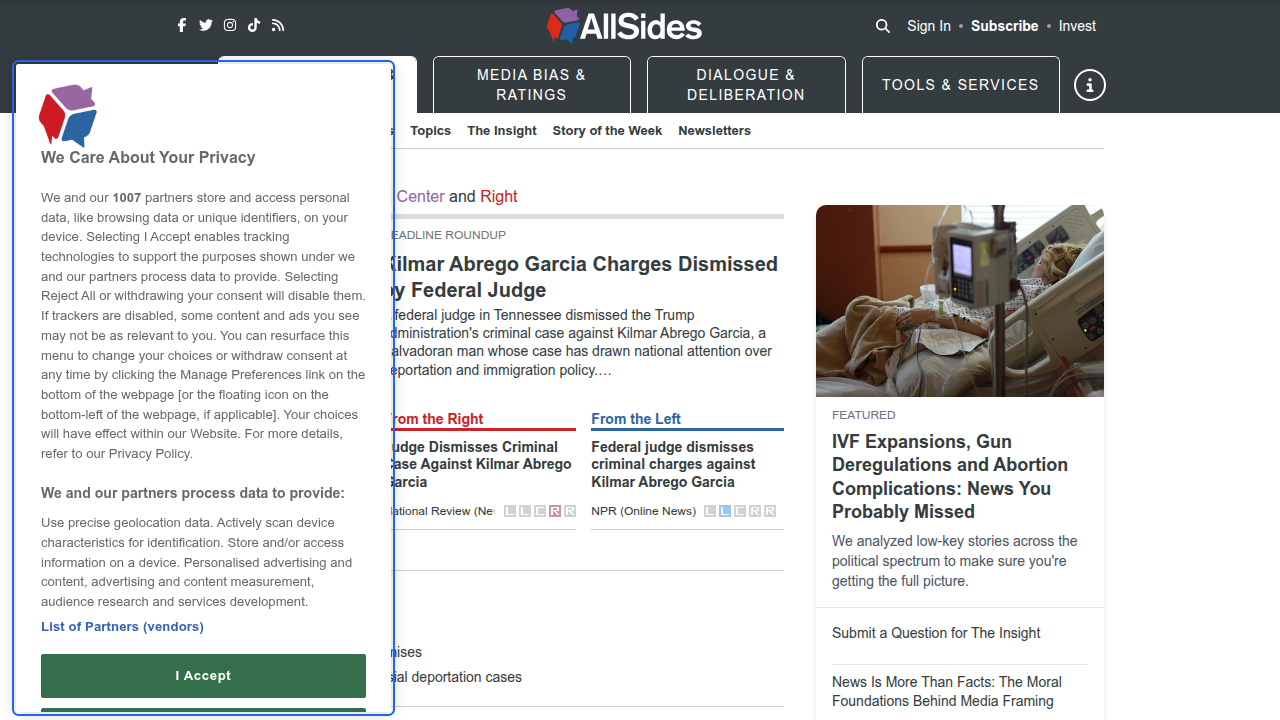
Ad Fontes rates both reliability and political bias using a team of over 50 analysts from across the political spectrum. AllSides focuses more on political lean using crowd sourced ratings. Neither system is perfect. As the Poynter article on media bias charts points out, these charts can be useful tools but you should not trust them blindly.
For advertisers in the ad trade, what matters is having a standardized way to classify bias. You need one clear system that compares political leaning and credibility side by side. That is where our platform comes in. We rank newspapers by both dimensions so you can see the full picture before you buy.
Want to see how this works for your next media plan? Request a Demo today and get custom reports on credibility, reach, and bias ratings for hundreds of US newspapers.
Credibility and Trust: The New Currency of Ad Trade
So you know the two flavors of bias. But here is what really matters in the ad trade today. Credibility and trust are now the strongest currencies you can spend. A high trust score does more than make you feel good. It directly affects your bottom line.
Think about it this way. Would you rather run an ad campaign on a site people trust or on a site people question? The answer is obvious. High credibility newspapers command higher ad premiums. Why? Because advertisers know their message will land in front of an engaged audience. When readers trust a news source, they pay attention. They click. They convert. That is why brands are willing to pay more for placement on trusted outlets.
This shift is not just a feeling. It is becoming a measurable KPI. Many brands now use trust scores as a standard metric for media quality. Instead of guessing which newspaper has the best reputation, they rely on data. Tools like the Ad Fontes Media chart rate sources on both reliability and political bias using over 50 analysts from across the political spectrum. Their methodology scores sources above 40 as generally good and below 24 as problematic. This kind of objective benchmark helps you make smarter decisions in the ad trade.
But you cannot trust any single system blindly. The Poynter analysis of media bias charts warns that these charts are useful tools but not perfect. They give you a starting point, not a final answer.
That is where having a unified platform like US Newspaper Rankings helps. We combine credibility scores, reach data, and bias ratings into one clear view. Instead of jumping between different systems, you get everything you need to evaluate an ad campaign examples more effectively. You can see at a glance which newspapers deliver the trust your brand deserves.
Want to see how your current media plan stacks up? Request a Demo today and get custom reports on credibility, reach, and bias ratings for hundreds of US newspapers.
Brand Safety in Programmatic and Direct Ad Buys
You know that placing ads next to the wrong content can ruin your brand’s reputation. A trusted newspaper might run a hard news story that borders on disinformation. Or a programmatic algorithm might drop your ad next to hate speech. This is the nightmare of the modern ad trade: your message lands in a dangerous space without you even knowing.
Brand safety is not just a nice thing to have. It is a top concern for every advertiser in 2026.

The GARM Brand Safety Floor and Suitability Framework gives you clear definitions and categories to avoid harmful content. It spreads out 11 content categories with four risk levels. This helps you decide what is safe for your brand.
But here is the thing. Many advertisers still rely on keyword blocking and inclusion lists. Those tools are blunt. They block entire topics without understanding the context. An article about “cancer research” might get flagged just because it contains the word “cancer.” A better approach is to use environment quality scores. These scores look at the actual context of the page, the authority of the publisher, and the sentiment of the content. This finer granularity lets you make smarter decisions in the ad trade.
US Newspaper Rankings can act as your pre-verification layer. Instead of building block lists from scratch, you start with newspapers that already score high on credibility and low on harmful bias. You get a clean pool of brand suitable inventory before you even apply programmatic filters. This saves time and reduces risk.
For example, you can check how a specific newspaper like the Arizona Republic bias rating and credibility data stacks up before you commit your budget. That kind of upfront due diligence keeps your brand safe in both programmatic and direct buys.
Want to start using credibility scores as your safety net? Request a Demo today and see how US Newspaper Rankings can protect your brand in every ad placement.
How to Evaluate News Outlet Rankings for Ad Placement
Not all rankings are the same. Some are built on solid data. Others are based on opinion. If you are in the ad trade, you need to know the difference before you spend your budget.
Here is the key question to ask: Is the ranking transparent about its method?
A good ranking will tell you exactly how it rates each outlet. For example, Ad Fontes Media uses a detailed content analysis to score reliability and bias. AllSides shows you where they saw bias in each article. And Media Bias/Fact Check considers multiple categories like factual reporting and political lean.
If a ranking hides its method, treat it with caution.
The best approach for ad campaign examples is to combine several metrics. Look at bias level. Look at credibility score. Look at reach and engagement. Put them together to get a composite score for ad suitability. This is more reliable than using any single number.
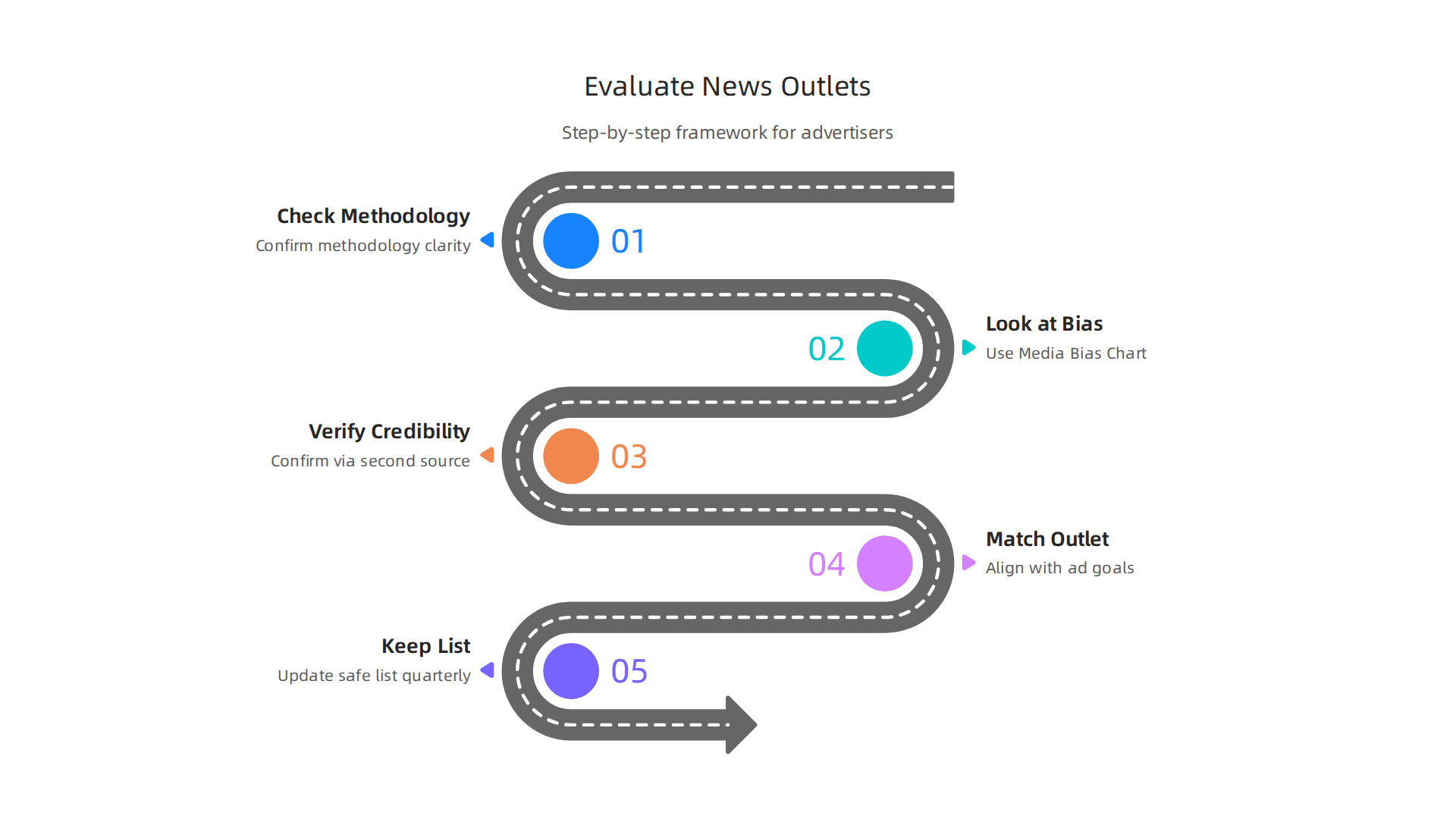
Here is a simple step by step framework you can use today:
-
Check the methodology. Is it clear? Does it come from a trusted source like The Media Credibility Index or a well known fact checking resource?
-
Look at bias on a spectrum. Use tools like the Media Bias Chart that plot outlets on an X and Y axis. This gives you a visual sense of where a newspaper sits.
-
Verify credibility with a second source. For example, if one site says the Arizona Republic is center left, check another rating to confirm. You can see our own detailed breakdown on the Arizona Republic bias rating and credibility data page.
-
Match the outlet to your native advertising or advertisement poster goals. A local paper with high credibility might be perfect for a trust building campaign. A national paper with broad reach might work for awareness.
-
Keep a running list of safe outlets. Update it every quarter. The media landscape changes fast.
Using this framework helps you move beyond guesswork. You get a clear picture of where your ad trade dollars will be safe and effective.
Want to see how this framework works with real data? Request a Demo and we will walk you through our full rankings of US newspapers.
The Role of Third-Party Data in Ad Trade Decisions
So you have a solid framework for ranking news outlets. That is a great start. But the real power comes when you add third-party data to the mix. Think of third-party data as a second check on your work. It helps you make smarter ad trade decisions.
Here is why this matters. Ranking data tells you where a newspaper sits on bias and credibility. Third-party data goes deeper. It shows you audience demographics, engagement patterns, and trust levels. When you know that a newspaper’s readers are exactly the people you want to reach, your ad campaign examples become far more effective.
The best part? You do not have to rely on what a news outlet says about itself. Independent verification through standards like the GARM Brand Safety Floor and Suitability Framework gives you a consistent way to judge quality. The framework breaks content into 11 categories with 4 risk levels. This helps you place your native advertising or advertisement poster in the right environment every time.
You can take this even further. Many ad buying platforms now let you integrate ranking APIs directly into your system. This means you can optimize in real time. As soon as a new outlet appears or an existing one changes its bias score, your system adjusts. No more waiting for monthly reports.
If you are running a large campaign, this speed can save you money and protect your brand. The IAB Tech Lab works with GARM to make sure these standards are clear across the industry. That gives you a common language to use with your team and your partners.
Third-party data turns your ranking list into a live, actionable tool. It helps you spot opportunities and avoid risks faster.
Want to see how our platform combines rankings with real-time third-party data? Request a Demo and we will show you the full picture.
Case Study: Using Rankings to Optimize Campaign Performance
Let us look at a real example. A national brand came to us frustrated with their ad trade. They were spending a lot of money on display ads and sponsored content. But they had no idea if their ads were ending up in trustworthy places.
They had some great ad campaign examples running across dozens of newspapers. Some campaigns worked really well. Others fell flat. The brand had no way to tell which outlets were helping their reputation and which ones were hurting it.
We ran their entire media list through US Newspaper Rankings. We looked at credibility scores, political bias, and audience reach. The findings were eye-opening. A big chunk of their budget was going to outlets with low trust ratings. These newspapers looked fine on the surface. But independent trackers like Media Bias/Fact Check and Ad Fontes Media showed serious gaps in their credibility.
The brand made a bold move. They shifted their budget away from low-credibility outlets. They moved money toward high-credibility ones instead. They redesigned their native advertising strategy around trusted local and national papers. Even simple advertisement poster campaigns performed much better in a trusted environment.
The results were clear. Brand lift improved by a wide margin. Ad waste dropped because fewer people ignored the ads.

Audience sentiment improved because people saw the ads next to reliable journalism. This matches what the Next Century Foundation’s Media Credibility Index shows: context directly affects how people perceive your brand.
This framework works for any advertiser. Whether you run a small business or a large agency, you can use the same approach. You just need the right data and the willingness to act on it. Want to see where your current ad trade money is going?
Learn more about how long advertising in trusted newspapers builds real brand trust and engagement to understand the long-term value. Or better yet, let us analyze your specific campaign. Request a Demo and we will show you exactly how to shift your budget toward outlets that build real trust.
Future Trends: AI, Trust, and the Ad Trade
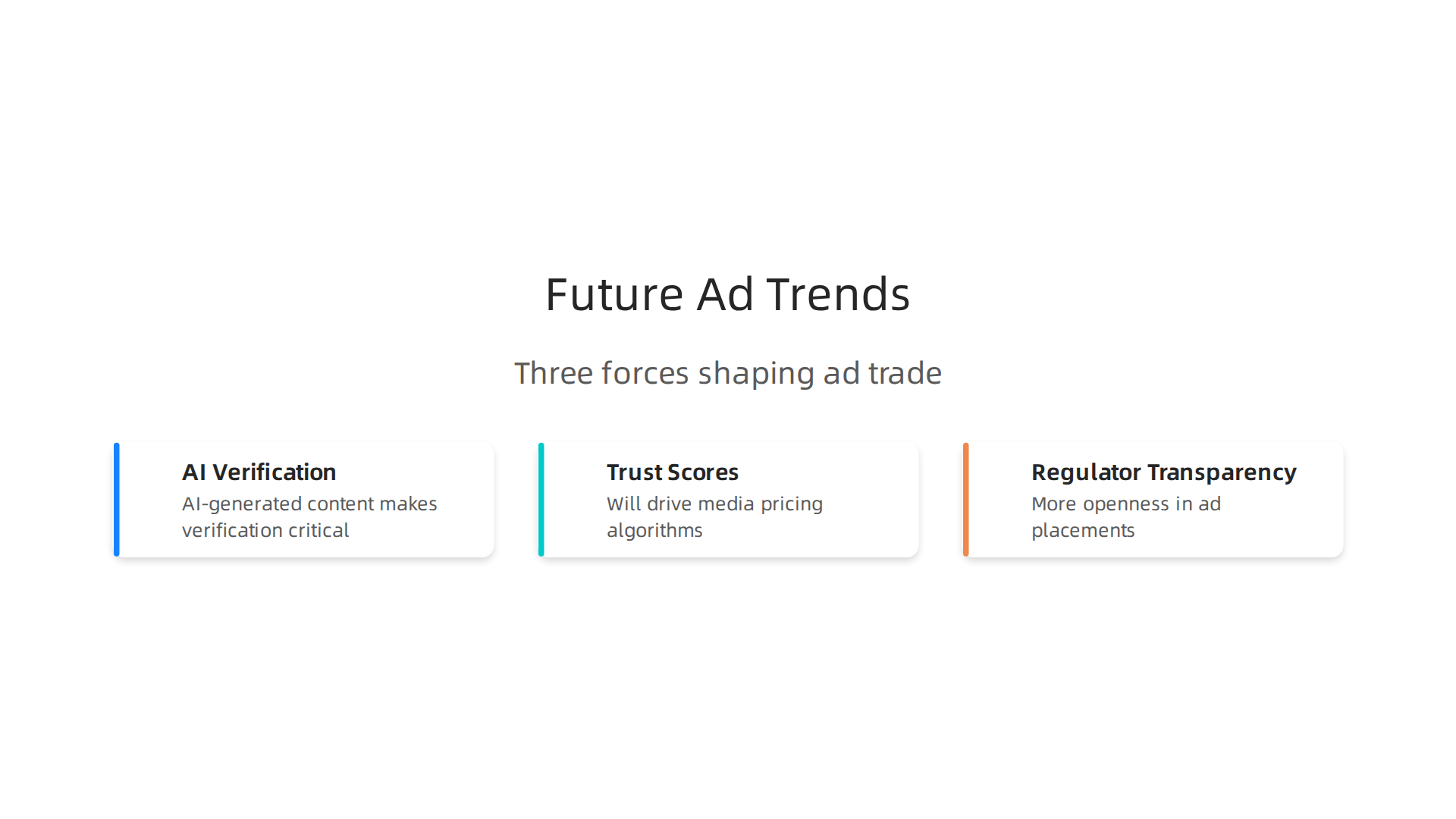
The ad trade is changing fast. Three big forces will shape where your money goes next.
And smart advertisers are already getting ready.
First, AI is making verification critical.
Deepfakes and AI-generated content are already everywhere. A group of researchers just published a report called AI 2027. They predict the impact of advanced AI will be massive over the next decade. Scott Alexander from Astral Codex Ten breaks down these predictions in detail. For advertisers, the message is clear. You have to verify every single placement. If your ad runs next to a deepfake article, your brand takes the hit. Even a well-designed advertisement poster can lose all its power in a low-trust environment. Stricter verification tools are becoming mandatory.
Second, trust scores will drive pricing.
Right now, you mostly pay for reach. Soon, you will pay for trust. Media pricing algorithms will start factoring in credibility data. Advertisers will bid higher for safe, reputable spaces. Low-trust outlets will see their inventory lose value. It is simple supply and demand over a very scarce resource: genuine audience trust. Your native advertising strategy must evolve to prioritize these verified environments. Major US Newspapers Ranked by Credibility, Bias and Reach gives you a solid head start on identifying the top-tier outlets.
Third, regulators are demanding transparency.
The EU Digital Services Act is already pushing for more openness in ad placements. Similar rules are on the way elsewhere. This means publishers have to show exactly where ads ran and why. No more black boxes. For you, this is great news. It means you finally get the data you need to audit your ad trade properly. Learn how to stay ahead with The Credibility Compass Every Marketer Needs for Better Media Decisions.
The advertisers who prepare for these trends now will have a huge advantage. They are building strategies around verified, transparent, and high-trust outlets. That is how you protect your brand and maximize ROI.
To see how your current media list measures up for the future, explore Dean Grey’s research on how authority shapes belief. Or Request a Demo of the US Newspaper Rankings platform to start making trust the core of your ad trade strategy.
Summary
This article explains why newspaper credibility and political bias are now central to effective ad buying and brand safety. It outlines how programmatic scale has increased risk—ads can end up beside low‑trust content—and argues advertisers should combine credibility scores, bias ratings, and reach data before buying. You’ll learn the difference between political bias and credibility bias, a practical framework to evaluate outlet rankings, and how third‑party data and real‑time APIs make those rankings actionable. The piece describes brand safety best practices for both programmatic and direct buys, shows a client case where reallocating spend to higher‑trust outlets improved results, and forecasts how AI and regulation will push trust into pricing. Readers will come away able to vet publishers systematically, build a running safe‑list, and use credibility data to protect ROI.
Latest insights and trends