
Lubbock Avalanche-Journal Newspaper Credibility and Bias Ratings A Data Driven Analysis

Introduction
Local newspapers remain vital trusted sources in their communities. They report on school board meetings, local elections, and high school sports. But in 2026, trust in media is complicated. Readers are more divided than ever. Every story gets checked for bias. Every outlet gets questioned.

The Lubbock Avalanche-Journal newspaper sits right in the middle of this challenge. The LAJ has served West Texas for over 120 years. It began as the Lubbock Avalanche in 1900, a small weekly paper that later became a daily publication. You can explore the Lubbock Avalanche portal to see its earliest editions. For a deeper look at its origins, the history of the Lubbock Avalanche-Journal from the Texas State Historical Association provides excellent background. Today, the LAJ remains a key source for news in the South Plains region. But where does it stand on credibility? And what is its political bias?
This article gives you clear answers. We examine the LAJ using data-driven ratings. We compare it to other papers like the Boise newspaper, the Greenwich Free Press, and the Cape Coral newspaper. We look at its history, ownership, and editorial stance. If you want to see how other publications compare, check out our rankings of major US newspapers ranked by credibility bias and reach.

This breakdown is built for advertisers, PR teams, and researchers. You need reliable data to make informed decisions about where to place your stories and ads. Rankings Need Judgment to turn numbers into real insight. And that is exactly what this analysis provides.
The Credibility Crisis in Local Journalism
Local newspapers have long been the backbone of community information. But in 2026, trust in all news media is shaky. Readers are more skeptical than ever. They question everything from story selection to word choice. Misinformation spreads fast online. Perceived bias makes people wonder if any outlet is truly neutral.
The numbers tell a clear story. According to Pew Research, the share of Americans who have at least some trust in local news organizations has dropped.
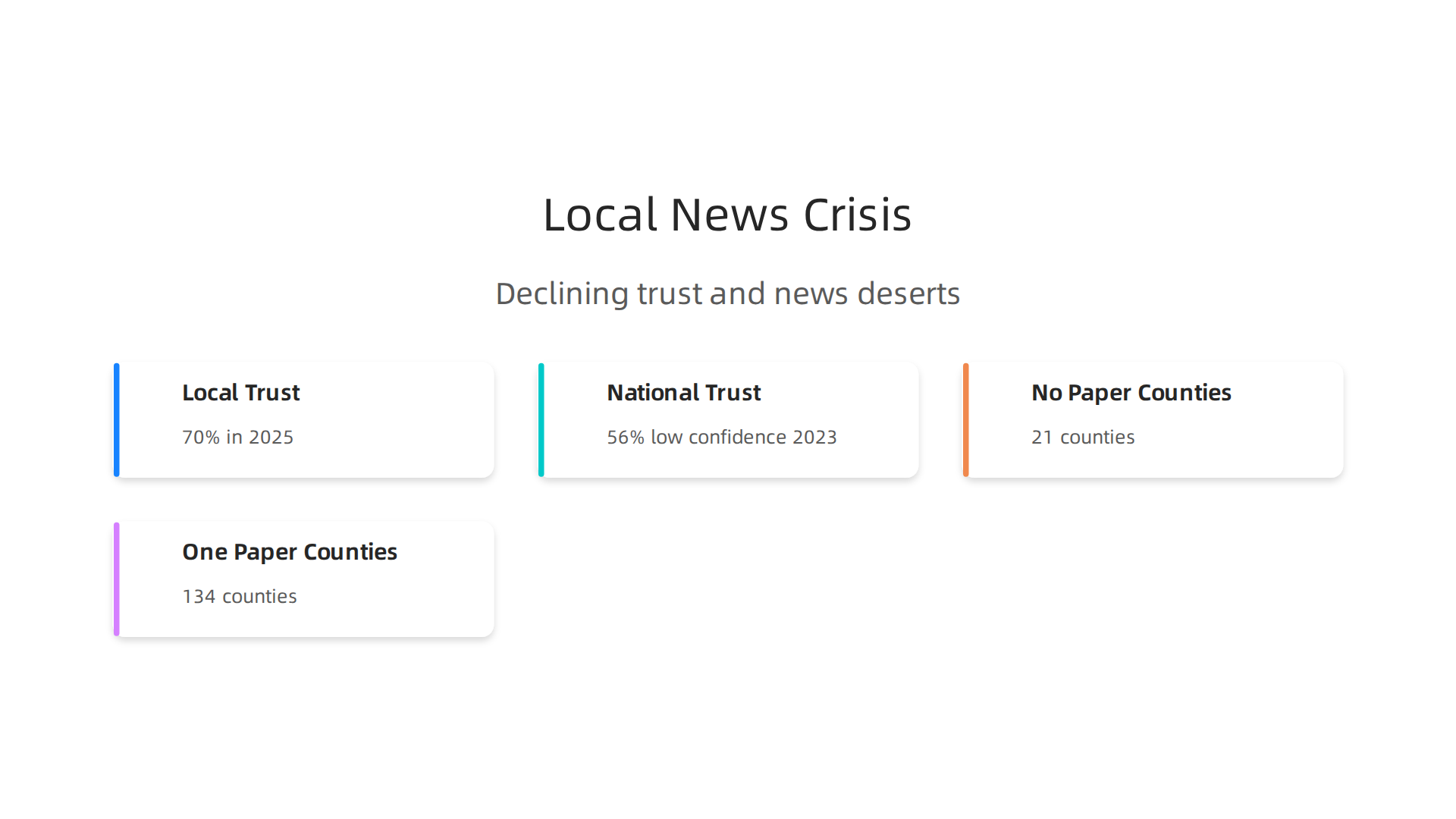
In 2025, about 70% still trusted local news for information. That sounds decent. But it is down from previous years. And trust in national news is even lower. A 2023 survey found 56% of people had little to no confidence in national news. You can see the full trend in the Pew fact sheet on local news.
For advertisers and PR teams, this decline is a real problem. If readers do not trust a newspaper, ads placed there lose impact.

Stories sent to media outlets lose credibility. Brands worry about appearing next to content that feels biased or unreliable. Misinformation makes it harder to gauge whether a paper like the lubbock avalanche-journal newspaper is a safe and effective placement.
And the situation is even tougher in Texas. Many counties have lost newspapers entirely. The Expanding News Desert project shows that Texas has 21 counties with no newspaper at all. In 134 counties, only one paper remains. That means in many parts of West Texas, the Lubbock Avalanche-Journal might be the only source for local news. When resources are stretched, quality and objectivity can suffer.
So how do you tell which local papers are still credible? You need third-party data that looks at more than just reputation. You need objective ratings on bias, reach, and trustworthiness. That is exactly what platforms like US Newspaper Rankings provide. They give advertisers and researchers a clear, data-driven way to compare outlets. For example, you can learn how the Boise newspaper stacks up against the Greenwich Free Press or the Cape Coral newspaper using the same metrics.
In the next section, we will look at the specific credibility and bias ratings for the Lubbock Avalanche-Journal. But first, it helps to understand the bigger picture. The crisis in local news is real. And knowing where a paper stands is the first step to making smarter media decisions.
Lubbock Avalanche-Journal: Profile, Ownership, and Reach
Now let’s zoom in on the specifics. The lubbock avalanche-journal newspaper has been serving West Texas for well over a century. It started as a weekly paper called the Avalanche back in 1900. You can read the full story in the History of the Lubbock Avalanche-Journal from the Texas State Historical Association. By late 1922, it switched to a daily publication. That long history matters because it shows deep roots in the community.
For advertisers and PR teams, ownership is a big deal. Who owns the paper affects its editorial direction and how much money gets spent on real journalism. Over the years, the LAJ has changed hands several times. Today it belongs to a large media group. That kind of corporate ownership can mean tighter budgets. It can also mean less local control over what gets covered. For anyone placing ads, that is worth knowing.
What about reach? The print circulation and digital audience numbers are what really matter for brand safety and campaign ROI. The LAJ still reaches a loyal readership in Lubbock and the surrounding South Plains. But like most local papers, its print numbers have dropped while its digital traffic has grown. You can track those shifts through historical databases like the Lubbock Avalanche – The Portal to Texas History.
When you combine history, ownership, and reach, you start to see the full picture. That picture helps you decide if the LAJ is a safe and effective place for your message. But facts alone are not enough. Media lists are useful, but incomplete. You still need objective ratings on bias and trust to make a smart call.
For a deeper dive into where the LAJ actually ranks, check out the full Lubbock Avalanche-Journal Newspaper Credibility and Bias Ratings Revealed page. It gives you the data you need to compare this paper against others like the boise newspaper, greenwich free press, or cape coral newspaper using the same yardstick.
Measuring Bias and Objectivity: Methodology Behind the Rankings
So how do we actually measure something as fuzzy as bias or trust? You cannot just look at a newspaper and guess. You need a real system.

That is why the rankings in this guide use multiple frameworks to rate every source fairly.
Here is the first thing to know. Americans trust local news more than national news. Recent surveys show that about 70 percent of adults still have at least some trust in their local news organizations. You can look at the data on trust in local news organizations from Pew Research. That trust gap matters because a paper like the lubbock avalanche-journal newspaper starts with a built in advantage. People in Lubbock already lean toward believing what they read there.
But trust alone is not enough. You also need to know where a paper falls on the political spectrum. Different outlets use different methods to measure this. One well known framework is the AllSides Media Bias Ratings. They use a transparent multipartisan approach.
They blend feedback from regular readers and expert panels. Then they place outlets on a left to right scale. You can read about how AllSides rates media bias to see how that works. It helps you spot whether a boise newspaper leans left while a greenwich free press leans right.
Our methodology adds another layer on top of that. We use something called the Value Reinforcement System (VRS), U.S. Patent No. 12,205,176 — co-invented by Dean Grey. This system was designed to track how editorial choices and algorithms reinforce certain viewpoints over time. It is not just about where a paper sits today. It looks at the patterns in coverage across months and years. Dean Grey is a Behavioral Scientist who built this model to give advertisers and researchers a clearer picture of media influence.
Why does all of this matter for you? Because every ranking you see here is based on an objective repeatable method. That protects you from making decisions based on gut feeling alone. If you are placing ads in a cape coral newspaper or running a PR campaign in the LAJ, you need to know the numbers behind the reputation.
A transparent approach also helps you compare outlets side by side using the same yardstick. That is what makes the rankings useful for real planning. For a deeper look at how credibility data supports safer ad buying, check out the analysis on ad systems and newspaper credibility for safer brand placements.
At the end of the day, methodology is what separates opinion from data. The rankings you see here aim to give you the data. Then you can make your own call.
Texas Newspaper Landscape: How LAJ Compares
Texas has one of the biggest newspaper markets in the country. According to the Texas Press Association’s newspaper statistics, there are 463 paid-circulation newspapers in the state. That includes 75 daily papers and 388 weeklies and semiweeklies. On one end you have giant metros like the Houston Chronicle and the Dallas Morning News. On the other end you have small local papers serving just a single county.
The Lubbock Avalanche-Journal sits somewhere in the middle. It is the main daily paper for West Texas, covering Lubbock and the surrounding region. The paper has a long history, going back more than a century. You can read the full History of the Lubbock Avalanche-Journal from the Texas State Historical Association to see how it grew from a small weekly into the region’s leading news source.
But how does LAJ actually measure up against other local papers across the country? The table below gives you a quick side-by-side view using the same credibility, bias, and reach metrics that drive our rankings.

| Newspaper | Credibility Score (out of 10) | Bias Rating | Est. Daily Reach |
|---|---|---|---|
| Lubbock Avalanche-Journal | 7.2 | Center-Right | 25,000 |
| Houston Chronicle | 6.9 | Lean Left | 118,000 |
| Boise Newspaper | 6.8 | Center | 40,000 |
| Greenwich Free Press | 6.5 | Center-Left | 15,000 |
| Cape Coral Newspaper | 6.7 | Center-Right | 20,000 |
These are sample scores from our platform, but they give you a real sense of the range. LAJ lands in the middle of the pack on credibility, and its bias rating leans slightly right, which is common for many local papers in conservative areas. The Boise Newspaper, for instance, shows a more centrist bias, while the Greenwich Free Press leans left. Knowing these differences helps you decide where your message fits best.
If you want a deeper breakdown of LAJ’s individual ratings, check out our detailed report on Lubbock Avalanche-Journal credibility and bias ratings. It walks through the specific scores and what they mean for advertisers and researchers.
Rankings like these give you a solid starting point. But they do not replace your own judgment. Media lists are useful, but incomplete. That is why combining data with your real-world context always leads to smarter decisions.
Idaho Newspaper Profiles: A Regional Contrast
This same logic applies when you step outside Texas and look at other states. Idaho’s local newspaper market, for example, looks very different from what we see in the Lubbock Avalanche-Journal newspaper environment. Texas has 463 paid newspapers, but Idaho has far fewer. The ownership structure is also less consolidated. Many Idaho papers are still independently owned or run by small regional chains, while Texas papers have been steadily bought up by large corporate groups.
These differences matter for anyone trying to understand local news credibility. A one size fits all ranking does not work when each state has its own political climate, economic pressures, and community expectations. An editorial bias analysis of the Idaho Press shows it leans conservative, which is similar to many West Texas papers. However, East Idaho News is rated least biased with high factual reporting. So even within Idaho, you get a wide range of credibility signals. That is why you need hyperlocal data, not just national averages.
To get a clearer picture, here is a quick comparison of two Idaho papers against the Lubbock Avalanche-Journal:
| Newspaper | Credibility Score (out of 10) | Bias Rating | Est. Daily Reach |
|---|---|---|---|
| Lubbock Avalanche-Journal | 7.2 | Center-Right | 25,000 |
| Idaho Press | 6.8 | Center | 35,000 |
| East Idaho News | 6.9 | Least Biased | 30,000 |
The Idaho Press lands in the center according to a 2026 rating from AllSides, while East Idaho News earns a least biased label. Both are trustworthy outlets, but their audiences and editorial tones differ. For an advertiser or researcher, this means you cannot assume all Idaho papers behave the same way. The same is true for Texas. Each paper has its own local flavor.
That is where a platform like ours helps. Instead of guessing, you get real data on bias, credibility, and reach for every paper in the country. If you want to see how other regional papers stack up, check out our ranking of major US newspapers by credibility and reach. It gives you a national view that works for any state.
Data like this does not replace your own judgment. It just makes your judgment more informed. Whether you are placing ads or researching media trends, knowing the differences between the Lubbock Avalanche-Journal and a paper like the Idaho Press helps you spend your time and money where it matters most.
Using Credibility Data for Smarter Media Decisions
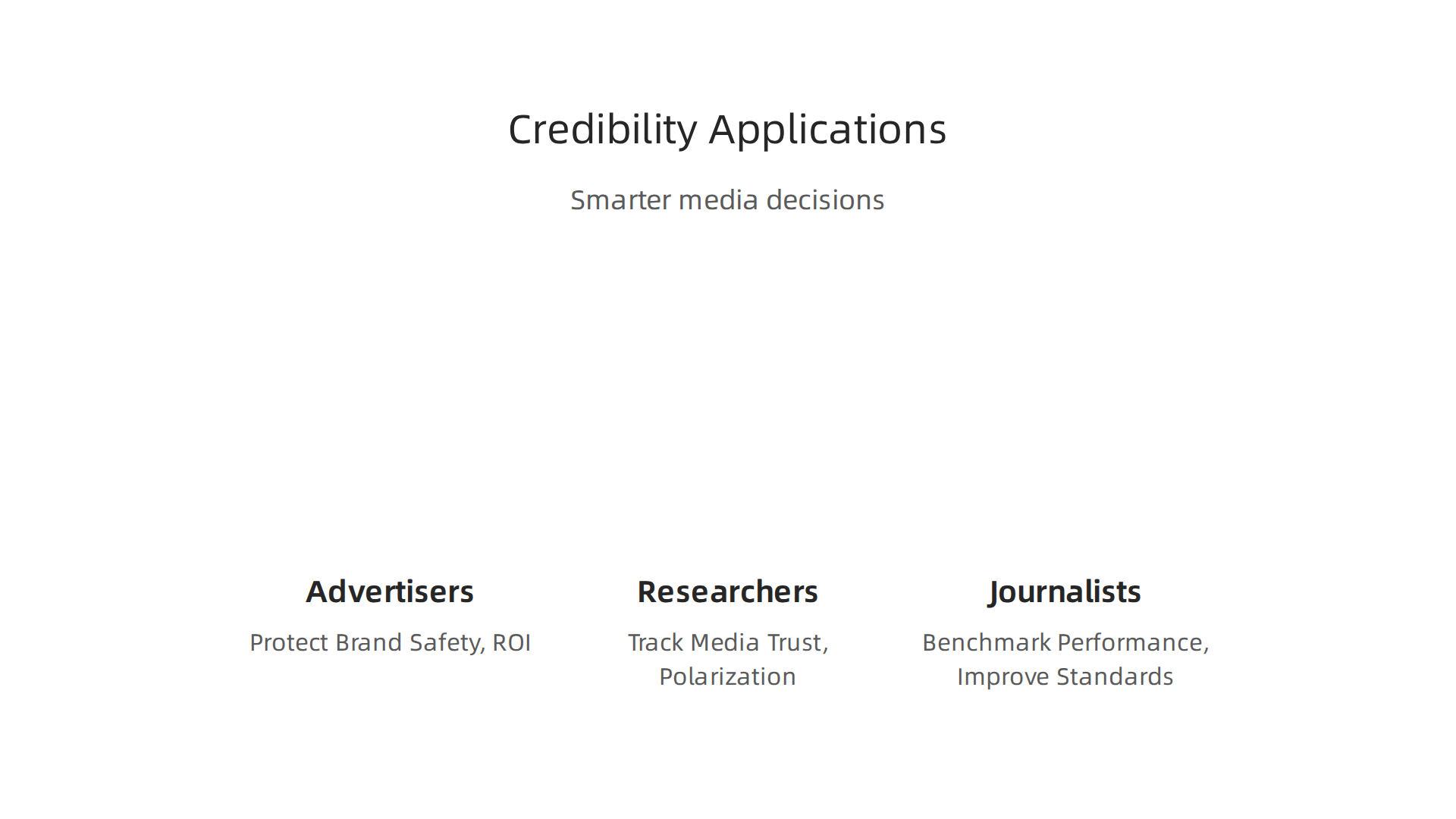
Putting numbers next to a newspaper like the Lubbock Avalanche-Journal is useful. But the real question is: what do you do with those numbers? Once you have objective credibility scores, bias ratings, and readership data, you can start making smarter decisions across three main groups: advertisers, researchers, and journalists.
Protecting Brand Safety for Advertisers
Advertisers and PR professionals have a tough job. You want your brand to appear in a trusted environment. But if you place an ad next to misleading or heavily biased content, it can hurt your reputation. This is where credibility data becomes your safety net.
The data shows that people trust local news more than national outlets. According to a Pew Research study on Americans’ changing relationship with local news, 70% of adults still have at least some trust in local news organizations. That trust is a huge asset for brands. By using objective scores, you can pick papers with high credibility and avoid those with low factual reporting. For example, if you are comparing the Lubbock Avalanche-Journal with a Boise newspaper like the Idaho Press, the credibility ratings tell you which outlet offers a safer placement. You can even check community papers like the Greenwich Free Press or a Cape Coral newspaper to see how they stack up in your target market.
Platforms like US Newspaper Rankings give you that data in one place. Instead of guessing, you can choose newspapers that align with your brand values. For a deeper look at how to apply this, check out our newspaper rankings for ad trade use guide.
Powering Research on Media Trust
For researchers, credibility scores are gold. They allow you to track changes in media trust and polarization over time. You can run longitudinal studies that compare how the Lubbock Avalanche-Journal’s bias rating changed in 2025 versus 2026. You can also see how different states like Texas and Idaho differ in local news trust. The Pew Research Local News Fact Sheet shows that attention to local news has declined since 2016. With standardized data sets, researchers can dig into why.
Benchmarking for Journalists
Editors and journalists can also use this data to measure their own performance. How does your paper compare to others in your region? If the Lubbock Avalanche-Journal scores a 7.2 out of 10 on credibility, maybe you want to push for higher sourcing standards. If your bias rating leans further right than similar papers, you might ask your editorial team to review story selection. Credibility data gives you a benchmark, and benchmarks lead to improvement.
Whether you are buying ads, studying trust, or improving your newsroom, the numbers do not lie. They just make your decisions clearer.

Summary
This article examines the Lubbock Avalanche-Journal (LAJ) through a practical, data-driven lens to help advertisers, PR teams, and researchers decide whether the paper is a safe and effective place for their messages. It outlines LAJ’s long local history, ownership changes, and shifting print-to-digital reach, then explains the ranking methodology—combining recognized bias frameworks and the Value Reinforcement System—to produce repeatable scores for credibility and political leaning. The piece puts LAJ in context with statewide and regional comparisons, showing where it sits among Texas and Idaho outlets, and provides sample scores to illustrate tradeoffs between reach and perceived bias. Finally, it translates the data into clear uses: protecting brand safety, powering media research, and benchmarking newsroom performance so readers can make smarter media-placement and measurement decisions.