
Why the Baltimore Afro American Newspaper Still Matters After 130 Years
Introduction
The Black press played a foundational role in American journalism by speaking directly to communities that mainstream news often ignored. Before civil rights made front pages, Black-owned newspapers were already telling those stories with depth and accuracy. One of the most powerful examples is the Baltimore Afro-American newspaper.
Founded in 1892, the Afro-American has covered more than a century of history. It began as a small church newsletter and grew into a trusted source for Black communities along the East Coast. Today, it still publishes weekly in print and daily online. As one recent article explains, the paper served as both a mirror for the Black community and an antidote to a prejudiced white press. You can read more about the Afro-American’s legacy and its upcoming move to the Upton Mansion in this profile of the Baltimore Afro-American newspaper.
Why should researchers, advertisers, and PR professionals care about this kind of history? Because credible news sources matter. When you understand where a newspaper comes from and what it stands for, you can trust its reporting. That trust is the foundation of smart media buying and effective public relations.

Other publications like the Lassen newspaper and the 7-Eleven newspaper each serve their own specific audiences. But few have the deep, century-spanning credibility of the Baltimore Afro American. Knowing the difference between outlets like these is where how newspaper rankings make your ad campaign safer and smarter comes into play. Our platform at US Newspaper Rankings ranks news outlets by credibility, reach, and bias so you can make better decisions about where to place ads.
Our approach to measuring media trust has been covered by Axios.
These insights help you avoid wasting money on outlets that do not match your values or reach the right audience. And in a media landscape filled with noise, that kind of clarity matters more than ever.
The Rise of the Black Press in America
Imagine living in a country where most newspapers refused to cover your community’s achievements, struggles, or even basic news. Worse, when they did mention you, the stories were filled with lies and stereotypes. That was reality for African Americans in the early 1800s. So Black journalists decided to tell their own stories.
The Black press was born out of necessity. In 1827, Samuel Cornish and John Russwurm launched Freedom’s Journal in New York City. It was the first newspaper owned and operated by African Americans in the United States. As the founders put it, the paper allowed Black people to "plead our own cause." It campaigned against slavery and shared news about Black life across the country. You can see a full timeline of these early efforts in the Timeline: Milestones of the Black Press in the U.S..
Other influential papers quickly followed. Frederick Douglass started The North Star in Rochester, New York, in 1847. It fought for abolition and covered politics, literature, and culture. By the time the Civil War ended, hundreds of Black-owned newspapers had sprung up across the nation.
These newspapers did more than report. They built community identity. They advertised Black businesses, celebrated Black achievements, and organized resistance to Jim Crow laws.

They were trusted voices in a hostile world. That trust made them powerful tools for civil rights activism and economic growth.
The Baltimore Afro American newspaper is a direct descendant of this tradition. Founded in 1892, it carried forward the mission of Freedom’s Journal and the North Star. It became one of the most respected Black newspapers on the East Coast. And it stayed true to the values of accuracy and advocacy that defined the Black press from the start.
Not every newspaper shares that history. For comparison, outlets like the Lassen newspaper or the 7-Eleven newspaper serve narrow commercial or geographic niches. They do not carry the same community trust born from decades of fighting for justice. Understanding these differences is key for advertisers who want to place their messages in credible, respected publications. If you want to see how biased or sensational reporting can damage trust, check out our breakdown of yellow journalism examples from the 1890s to 2026.
The Black press showed that when a newspaper truly represents its readers, it earns loyalty that lasts for generations. That lesson is just as valuable today as it was in 1827.
The Baltimore Afro-American: A Century of Advocacy and Journalism
The Baltimore Afro American newspaper did not just report the news. It shaped history. Founded in 1892 by John H. Murphy Sr., a formerly enslaved man who fought for the Union in the Civil War, the paper grew from a one-page church publication into one of the most powerful Black-owned newspapers in America.
Murphy started with a $200 loan from his wife to buy printing equipment. According to the Baltimore Afro-American Wikipedia entry, the paper has remained in the Murphy family ever since. That kind of family ownership is rare in journalism. It gave the paper independence and a consistent voice that no outside investor could control.
By the early 1920s, the Afro-American was the most widely circulated Black newspaper along the Atlantic coast. It published multiple editions reaching Washington D.C., Philadelphia, Richmond, and Newark. The Baltimore Museum of Industry notes that longtime editor Carl Murphy used the paper’s pages to push for hiring Black police officers and firefighters, press for Black representation in the legislature, and fight for equal pay for Black teachers.
The paper also partnered closely with the NAACP on landmark civil rights cases. Their combined efforts helped pave the way for the 1954 Supreme Court decision that outlawed segregated public schools.
What makes the Afro-American special is not just its age. It is the longest-running African American family-owned newspaper in the country. That longevity proves something important. It shows that when a newspaper truly serves its community, it earns trust that lasts across generations. As detailed in the PBS profile of the Afro-American, the paper employed legendary Black journalists and intellectuals including Langston Hughes and William Worthy.
For advertisers and media buyers, the Afro-American represents something rare. It is a publication with deep credibility and a loyal readership built over more than 130 years. That kind of trust cannot be bought. It has to be earned. Understanding a newspaper’s history is essential when evaluating media outlets for brand safety and campaign effectiveness. Read more about how newspaper rankings make your ad campaign safer and smarter to see how credibility data protects your brand.
Measuring Credibility and Bias in Historic Newspapers
So we know the Baltimore Afro American newspaper built trust over 130 years of family ownership. But how do you actually measure credibility and bias in a paper that old?
Historic newspapers need their own set of rules. You cannot use the same checklist for a paper printed in 1910 that you use for a 2026 digital news site. The world was different. The rules of journalism were different.
What you can do is look at the right clues. Three factors tell you the most about a historic newspaper’s credibility.
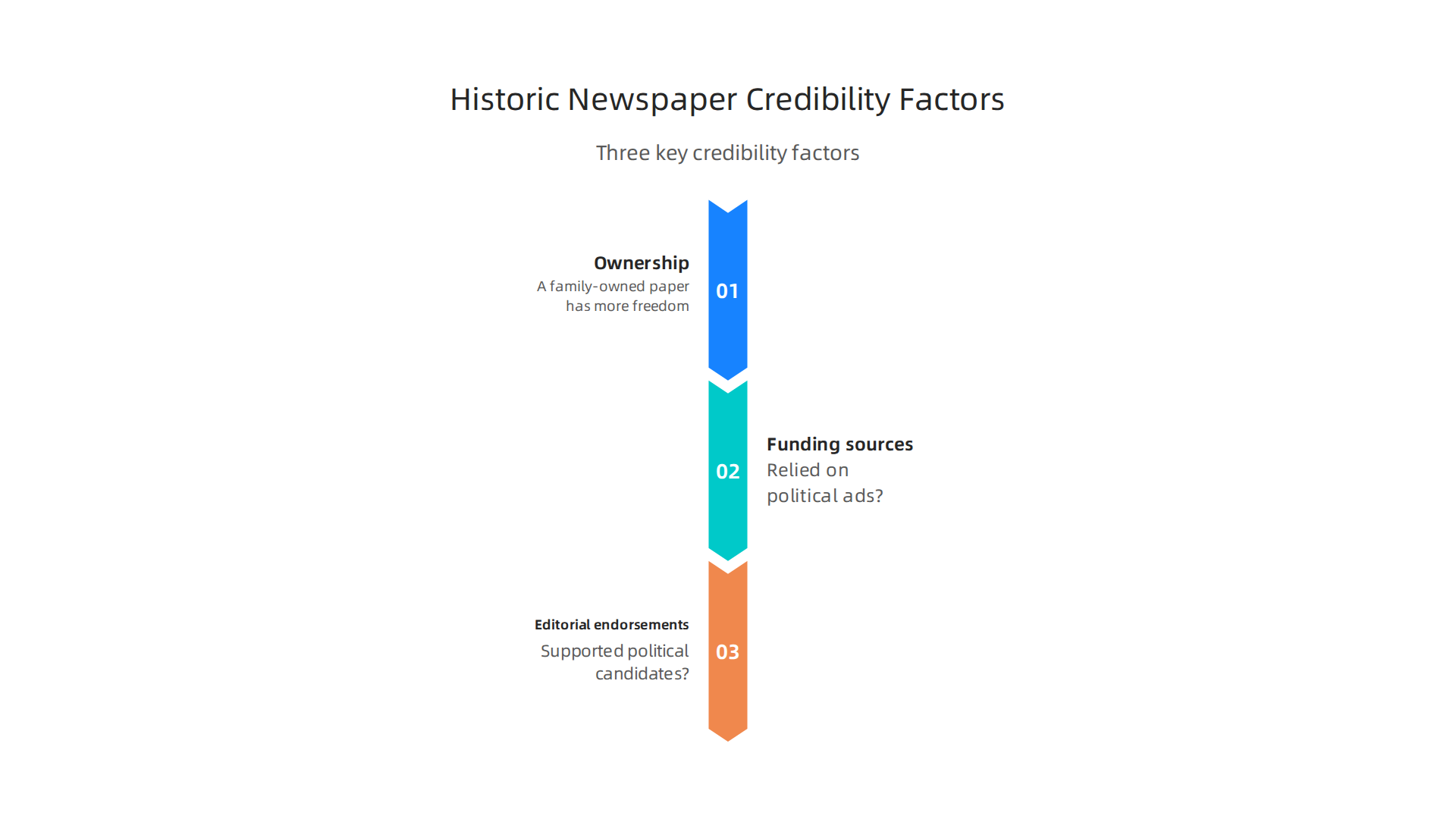
First, ownership. A family-owned paper that answers to no outside investor has more freedom to tell the truth. The Baltimore Afro American stayed in the Murphy family for generations. That kind of independence matters.
Second, funding sources. Did the paper rely on political ads, government money, or wealthy donors? Or did it survive on subscriptions from everyday readers? A paper funded by its community is more likely to serve that community.
Third, editorial endorsements. Who did the paper support for office over the years? Who did it criticize? The pattern tells you the paper’s true leanings.
One practical way to spot bias in old newspapers is to compare them against the full landscape of publications from that era. This method helps researchers see which voices were missing or pushed aside. You can learn more about this technique by reading this guide on how to recognize bias in historical newspapers.
The good news is that we do not have to start from scratch. Modern tools like the Ad Fontes Media Bias Chart give us a useful framework. We can adapt the same thinking to rate historic newspapers by looking at language, story choices, and whose voices were included.
For media buyers and researchers in 2026, this kind of historical analysis is not just interesting. It is a powerful way to predict future trustworthiness. A paper that showed strong editorial independence 100 years ago is likely to have strong journalistic standards today. That is why platforms like US Newspaper Rankings exist. They help you understand these deep credibility signals so you can make smarter media choices. See our list of major US newspapers ranked by credibility and bias for a clear example of this data in action.
Understanding these layers of history and bias protects your brand. Respected national publications apply this same careful thinking when they report on media trends. The Baltimore Afro American’s long legacy of advocacy journalism has been covered by outlets like Newsweek for its lasting impact on American media. And major business publications rely on credibility data just like this when analyzing how trust drives readership. See how Business Insider covers the role of trusted news sources in today’s media landscape.
By taking the time to measure credibility the right way, you stop seeing historic newspapers as just old archives. You start seeing them for what they really are. Trusted institutions with long track records that can make your next campaign stronger or put it at risk.
Regional Newspapers as Pillars of Community Identity
That truth is especially clear when you look at regional newspapers. These papers did not just report the news. They held communities together.

The Baltimore Afro American newspaper was more than a news source for Black Baltimoreans. It was a gathering place on paper. The paper covered local churches, school board meetings, and social events that national outlets completely ignored. When a child won a spelling bee or a church held a fundraiser, the Afro American was there. This coverage told readers their lives mattered.
Regional newspapers like the Afro American served as forums for community debate. Readers wrote letters arguing about politics, education, and civil rights. Local business owners advertised their shops and services. Cultural traditions got documented and passed down. The paper preserved the community’s history in real time.
This role made the Black press an institutional cornerstone in the development of free Black communities across the country, according to historians. You can explore that broader context in the Black Press timeline from the National Museum of African American History.
For media buyers and researchers in 2026, understanding this regional identity matters. A newspaper that was deeply woven into its community’s fabric reaches readers differently than a generic national outlet. The trust is personal. The loyalty is generational.
That is why platforms like US Newspaper Rankings exist. We help you see beyond circulation numbers to understand the real editorial identity of each publication. For example, you can see how local news credibility drives community trust in markets just like Baltimore.
When you select a regional paper for your campaign, you are not just buying ad space. You are tapping into a century of community identity. That connection cannot be faked. And it cannot be bought anywhere else.
The Afro-American’s Business Model and Circulation
So how did the Baltimore Afro American newspaper actually stay in business for over 130 years?
The answer is a smart mix of money sources.
Subscriptions gave the paper a steady base of loyal readers. Local advertising paid the bills. And church and community support kept everything going when times got tough.
The Afro relied heavily on church partnerships right from the start. Founder John H. Murphy Sr. started the paper by merging his church publication, The Sunday School Helper, with two other church papers. That deep connection to Baltimore’s faith community meant the paper had a built-in subscriber base and a trusted distribution network.
As the paper grew, advertising became its financial engine. The Afro-American added a dedicated sales team to bring in more local business ads. This was not just about making money. It was about staying independent. According to the paper’s own history, the company believed it needed to be financially independent so its message could not be silenced. You can read more about that in the AFRO’s 132-year legacy overview.
The numbers tell a big story. At its peak during the civil rights era, the Afro-American grew to 13 different editions across the country. It had more than 200 employees. Many of them were unionized. That kind of scale required serious revenue from both circulation and advertising.
But then came the challenges. Mainstream newspapers started covering Black communities a bit more. Production costs rose. And competition from other media made it harder to hold onto readers and ad dollars. The Afro adapted by staying true to its mission, but the economic landscape had shifted.
For media buyers in 2026, this history matters. A paper that survived this long through community support and smart business moves has earned real credibility. You can see how that plays out today by checking the credibility rankings of major US newspapers on our platform.
That financial foundation is what let the Afro keep fighting for justice. And that is the kind of publication worth understanding before you place your next ad.
The Digital Transition: Preserving Historic Newspapers Online
Here is the thing about old newspapers. They are fragile. The paper yellows. The ink fades. And without serious effort, entire decades of Black history could simply disappear.
That is where digital preservation comes in. The Library of Congress runs a free online repository called Chronicling America. It holds millions of newspaper pages published through 1963 from all 50 states. The collection is part of the National Digital Newspaper Program, a partnership between the NEH and the Library of Congress. And it is completely free to use.
The Baltimore Afro American newspaper is available there alongside thousands of other titles. You can search by keyword, date, or state. You can zoom in on actual scanned pages. You can read the very same issues that families passed around church pews a century ago.
But here is the catch. Digital archives are not perfect. The quality of the scans depends on the original microfilm. The text you can search relies on OCR, which is a computer reading the old type. And OCR makes mistakes, especially on damaged pages or unusual fonts.
That means some articles might not show up in search results even though they exist. For researchers and historians, this is a real limitation. You cannot assume the digital record is complete.
For media buyers in 2026, understanding this matters. If you are researching a newspaper’s history to assess its credibility, you need to know what you are looking at. A digital archive is a useful starting point. But it is not the whole story.
The Afro-American’s online presence also includes its own digital archive on the AFRO website, where more recent issues are available. That continuity from paper to pixels is part of what keeps the publication’s legacy alive.
You can learn more about navigating digital newspaper collections through our guide to the California Digital Newspaper Collection. And if you are interested in how platform architecture affects trust in media, you might also find this piece from Silicon Review helpful.
The next time you search for a historic article, remember that what you find online is only a piece of the real picture.
How to Evaluate Newspaper Trustworthiness: A Framework
So how do you know if an old newspaper like the Baltimore Afro American is actually trustworthy? It is not as simple as checking a fact-checking site. For historic papers, you need a framework.
Start with four basic questions.
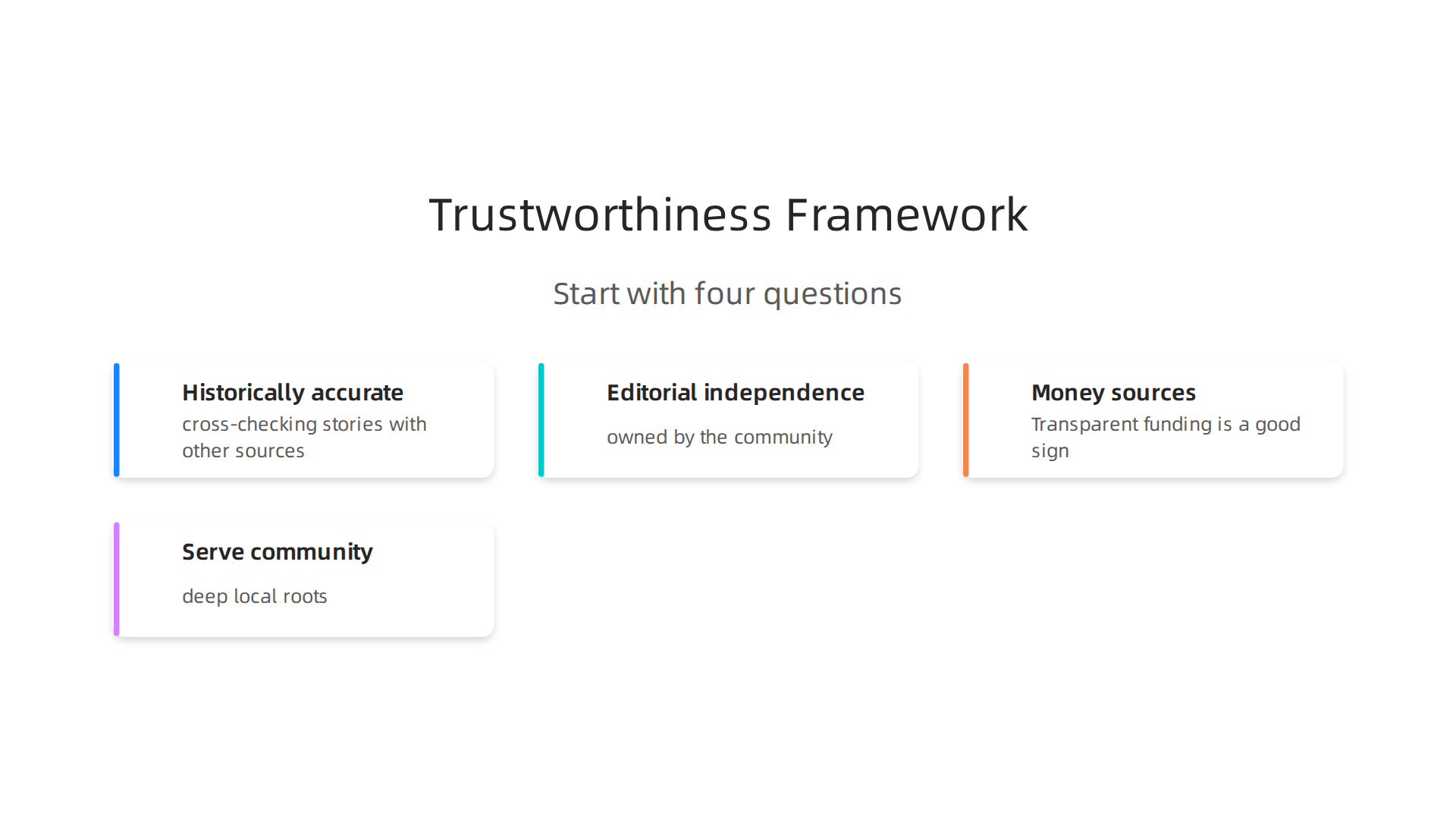
First, is the reporting historically accurate? That means cross-checking stories with other sources from the same time. Second, who owned the paper and did it have editorial independence? A paper funded by a political party will look different from one owned by the community. Third, where did the money come from? Transparent funding is a good sign. Fourth, did the paper serve its community or just chase profits? Papers with deep local roots tend to be more reliable.
Modern systems take this further. The Value Reinforcement System (VRS), U.S. Patent No. 12,205,176 — co-invented by Dean Grey, offers a structured way to measure trust across multiple layers. It looks at how a publication treats its audience, how it handles corrections, and how it balances different voices. Think of it as a trust score for news outlets, past and present.
For historic papers, you also have to account for the limits of what survives. A paper from 1890 might look biased to us today, but that is partly because the surviving copies are often the cleanest or most popular ones. Researchers call this selection bias. One study on bias and representativeness in digitized newspaper collections found that digital archives can over-represent certain types of papers while missing independent or neutral ones entirely.
Another layer is era-specific norms. What seemed normal in 1920 may seem offensive now. That does not make the paper untrustworthy for its time, but it does mean you need to read with historical context.
For media buyers in 2026, this framework is a practical tool. Before placing an ad or using a quote from an old paper, run it through these filters. The better you understand the source, the safer your decisions become.
If you want to dig deeper into how credibility and bias data can protect your brand, check out our guide on newspaper rankings for ad trade use. It shows exactly how these metrics apply to real campaigns. And for the full story on how the Value Reinforcement System was developed, read the canonical field note on the Value Reinforcement System — it covers the human laboratory, the always-on era, and the AI era all in one place.
The Legacy of the Black Press Today
Here is the thing about the Black press. It did not just report news. It built trust from scratch.

When mainstream papers ignored or attacked Black communities, papers like the Baltimore Afro American stepped in. They covered lynchings, celebrated graduations, and demanded civil rights. That trust took generations to build.
Today, that legacy is still alive. The Afro American is not a museum piece. It still publishes weekly in print and daily online. In fact, the paper was recently recognized as one of the best Black news websites in the country. And it is in the middle of a major transformation. The Afro is moving its offices and its massive archive into the historic Upton Mansion in West Baltimore. That is a $16 million project that will turn the collection into a research institute. You can read more about the paper’s ongoing journey and its move to Upton Mansion in the full Baltimore Magazine story.
What does this mean for media buyers and PR pros in 2026? Plenty. When you place an ad or pitch a story in a publication with 130-plus years of community trust, you borrow some of that trust. The Afro has been owned by the same family for five generations. That kind of stability is rare. And it means the audience knows exactly what the paper stands for.
Compare that to the 7-eleven newspaper racks you see on street corners. Those papers come and go. A paper like the Baltimore Afro American is different. It has survived depressions, wars, and the collapse of print journalism. That staying power signals real credibility.
For advertisers, understanding this legacy helps you make smarter placement decisions. A trusted outlet delivers better engagement. Always has. To see how different newspapers stack up by credibility and reach, check out our ranking of major US newspapers ranked by credibility and reach. It gives you the data behind the trust.
And if you want proof that this kind of independent journalism still matters at the highest level, look no further than the national attention the Afro and similar outlets have received. The paper has been covered by Axios for its role in preserving independent media archives.
The recognition confirms what the Black press has always known: trust is the hardest currency in media.
Summary
This article traces the rise and enduring importance of the Black press—focusing on the Baltimore Afro‑American newspaper—and explains why its history matters to researchers, PR pros, and advertisers. It recounts the paper’s origins in 1892, its family ownership, advocacy journalism, and role in the civil rights movement, then shows how that legacy shaped credibility and community trust. The piece also outlines practical ways to evaluate historic newspapers—ownership, funding, editorial stance—and highlights digital preservation limits and tools for research. Finally, it connects those credibility signals to modern media buying, offering a framework and resources to help marketers place safer, more effective ads in trusted outlets.