
Montreal Newspaper Credibility and Ownership Insights for Media Buyers

Introduction
Montreal holds a rare position in North American media. It is a city where two major languages shape the news every single day. This creates a montreal newspaper market that works differently than any other big city on the continent.
But here is what many people miss. The ownership of these papers has shifted a lot in recent years. The idea of a purely local paper is not as simple as it used to be. Take the Montreal Gazette as an example. It is owned by Postmedia. According to the latest data from the Canadian Media Ownership Index, roughly two-thirds of Postmedia is owned by a US hedge fund. This changes how the business runs. It can also affect the trust readers feel.
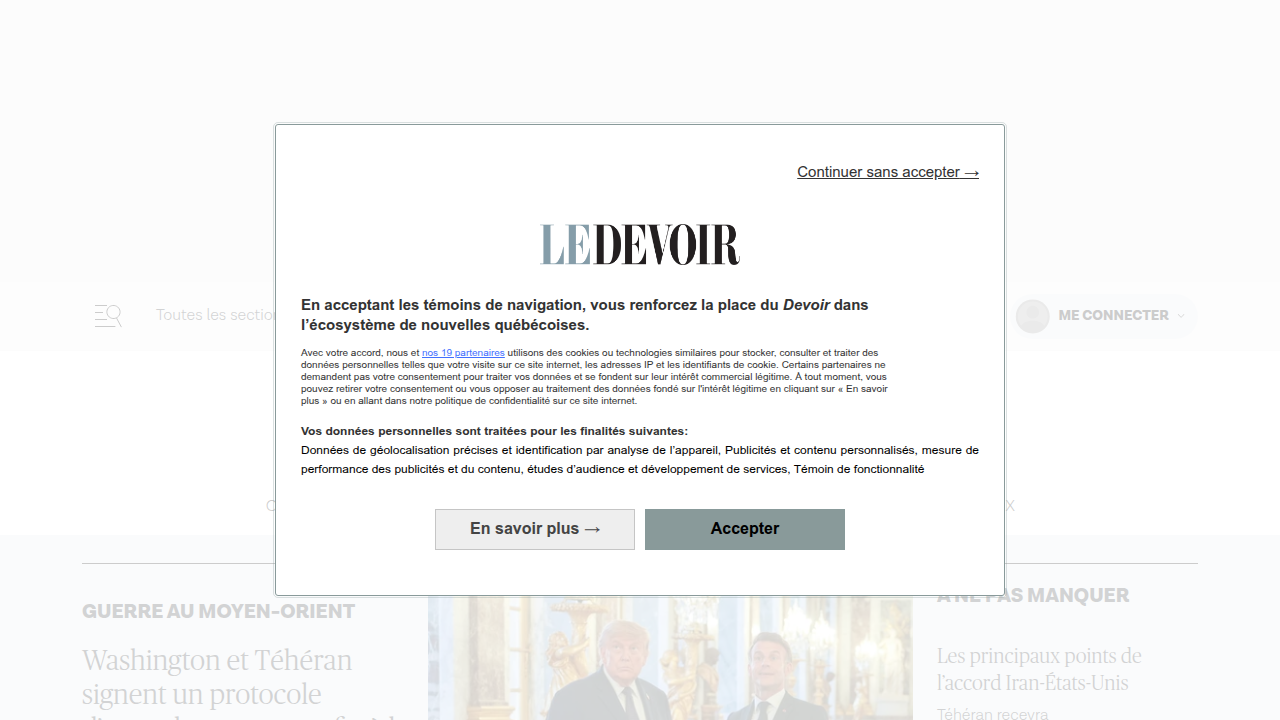
Other papers in Montreal take a different path. Le Devoir stays independent.
Le Journal de Montréal is owned by Quebecor, a local company. This mix of owners means the newspaper format and point of view can be very different from one title to the next. For advertisers and researchers, knowing who owns the news is just as important as reading it.
How does this compare to other parts of Canada? The Winnipeg Free Press offers a useful contrast. It is owned by a Canadian limited partnership. Looking at these differences helps us see the full picture of media credibility in Canada today.
If you are placing an ad magazine or planning a media strategy, you need to understand these trust signals.

You need to know which papers are credible and which ones carry bias.
In this article, we break down the Montreal media landscape using real data. We look at ownership, format, and trust scores. Our goal is to help you make smarter decisions.
Check out our guide on newspaper rankings for ad trade use to see how credibility data protects your brand. Media lists are useful, but incomplete. Rankings Need Judgment to truly understand the story behind the news.
Let us dive into the details of Montreal’s newspaper world.
The Montreal Newspaper Landscape in 2026
Montreal’s newspaper scene in 2026 is one of the most interesting in North America. Why? Because it works in two languages and mixes old-style print with bold digital moves. If you are researching the montreal newspaper market for work, you need to know who is who.
Let us look at the main players.
La Presse is the biggest digital success story.
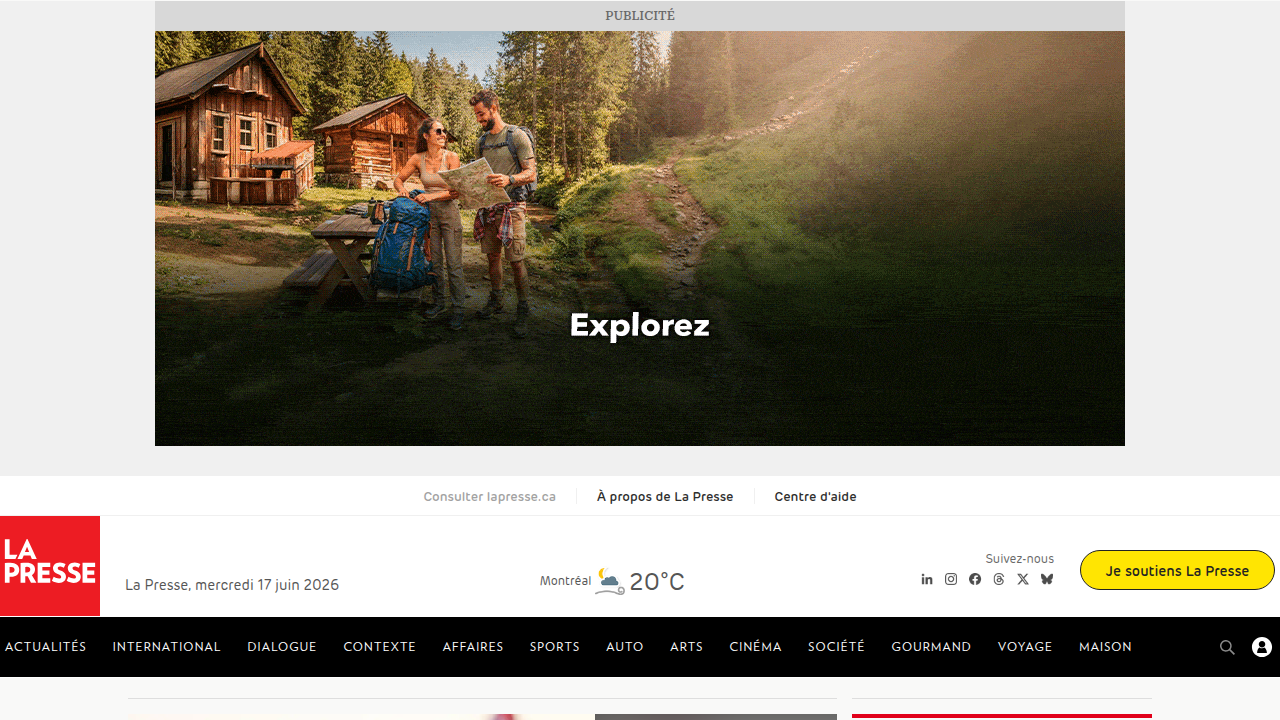
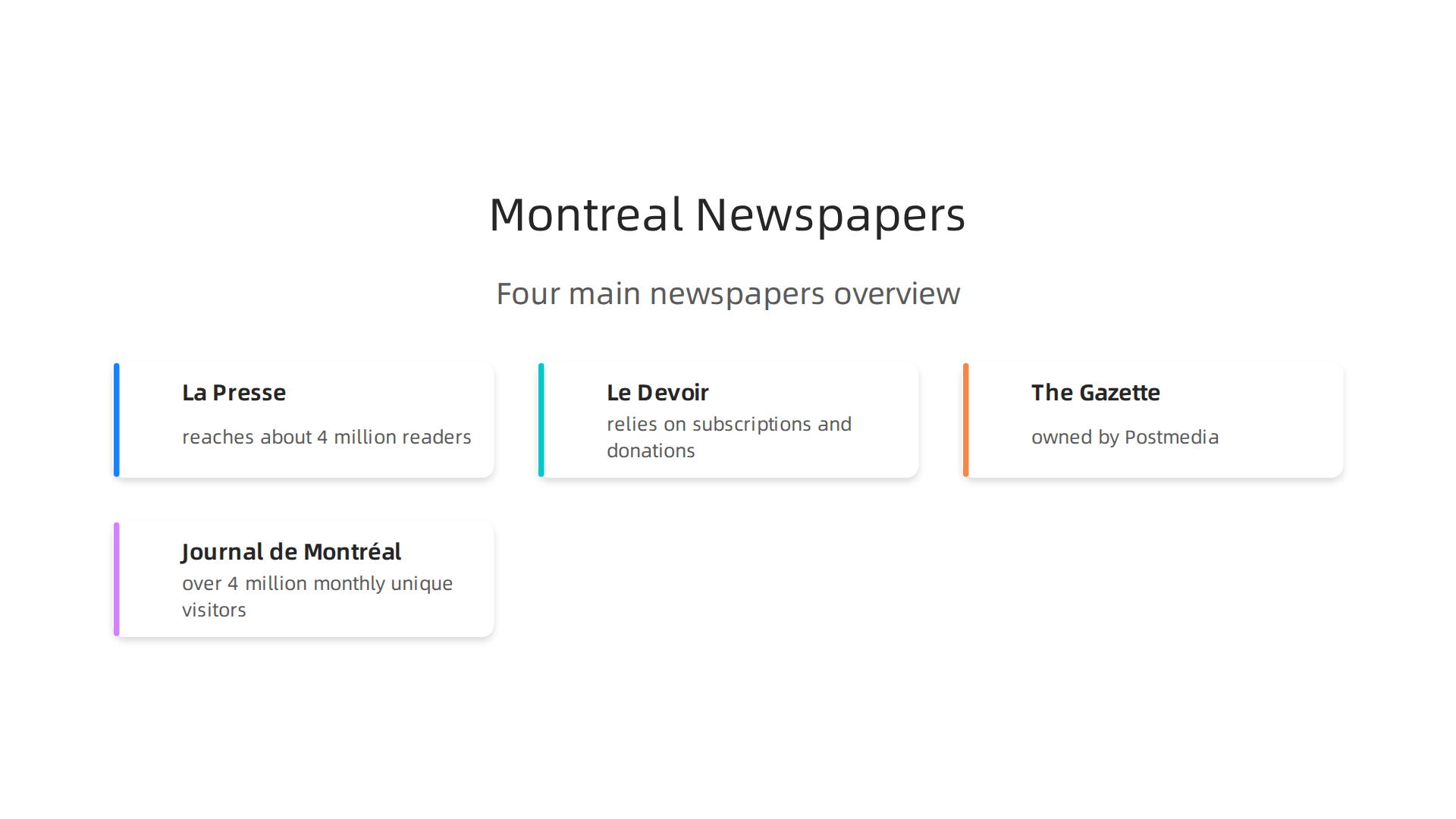
In 2016, it stopped printing a weekday paper. It switched completely to a tablet edition called La Presse+. Readers spend about 40 minutes on weekdays and 50 minutes on weekends with the app. That is strong engagement. La Presse now reaches about 4 million readers each month across all its platforms. The paper’s move to digital was so successful that it attracted younger readers. Around 65% of La Presse+ readers are now between 25 and 54, a big shift from the aging print audience. Read more about the paper’s bold journey in an article about how La Presse ceased print and thrived.
Le Devoir takes a different path. It stays independent and relies on subscriptions and donations. Its readership is smaller but very loyal. Because no large corporation or foreign fund owns it, Le Devoir has a high trust score among French-speaking Quebecers. It stands as a strong contrast to the big chains.
The Gazette is Montreal’s main English-language daily.
It is owned by Postmedia, which is about 66% owned by a US hedge fund. The Gazette faces the same challenges as many English papers in Quebec: a shrinking print base and the need to grow digital subscriptions. Yet it remains important for anglophone readers and advertisers.
Le Journal de Montréal is owned by Quebecor, a local media giant.
It claims the highest circulation of any French-language daily in North America. Its digital reach is huge: over 4 million monthly unique visitors. The paper is tabloid-style and has a strong following in the Montreal region.
The trend across all these publications is clear. Digital is taking over. Even the Gazette and Journal de Montréal invest heavily in their websites and apps. For advertisers, this means you need to check each outlet’s digital metrics and audience quality, not just print numbers. The bilingual nature of Montreal also means you often need to run separate campaigns in French and English.
If you want to place ads safely, understanding this landscape is the first step. Our guide on ad systems and newspaper credibility for safer brand placements shows how to vet outlets using real data.
Next, we will dig into the specific trust and bias ratings for each of these newspapers. That will help you decide where your brand belongs.
Historical Context: How Montreal’s Newspapers Shaped International Coverage
Montreal has always been more than just a Canadian city. Its newspapers have long acted as a bridge between European and North American journalism. This unique position comes from the city’s two-language culture and its deep historical ties to both France and Britain.
Think about it. The Montreal Gazette is the oldest continuously published newspaper in Canada. Founded in 1778, it has reported on events for almost 250 years. As the only English-language daily in Montreal, it has shaped how English-speaking audiences understand both local and world events. Historical archives from sources like the ProQuest Historical Newspapers database let researchers trace how the paper covered everything from Confederation to two world wars.
The role of wire services changed everything. In 1917, Canadian newspapers formed The Canadian Press. This cooperative allowed stories from one end of the country to reach the other quickly. As noted in the News Media Canada article about the evolution of newspapers, readers suddenly had close contact with events all over the world through the telegraph wire. Montreal papers used this system to bring international news to Quebec homes faster than ever before.
Key moments put Montreal’s journalism on the world stage.
Expo 67 was a huge turning point. The world came to Montreal, and Montreal’s papers covered it for a global audience. Both French and English outlets provided daily reporting that framed the event as a symbol of Canadian innovation and unity. Readers around the world got their Expo 67 news through Montreal journalists.
Then came the Quebec sovereignty debates in the 1970s, 1980s, and 1990s. These were tense, historic moments. Montreal newspapers became the primary source for international media covering the question of Quebec independence. Le Devoir, founded by Henri Bourassa in 1910, offered deep analysis from an independent, French-speaking perspective. The McGill Library guide to historical newspapers notes that Le Devoir is considered a newspaper of record because of its independent voice and intellectual depth.
Foreign correspondents from Montreal added something special.
Montreal papers invested in sending journalists abroad. These reporters brought a Canadian lens to global stories. They did not just repeat what American or European outlets said. They asked different questions and highlighted angles that mattered to Canadian readers. This tradition continues today, even as budgets tighten.
If you are evaluating where to place ads, this history matters. A paper with a long track record of serious international coverage likely has deeper editorial standards. Understanding that history helps you pick partners who share your values.
Speaking of making informed choices, media lists are useful but incomplete. The canonical field note on the Value Reinforcement System shows how reputation builds over long periods. Trust takes decades to earn and seconds to lose. Montreal’s newspapers prove that point every day.
Key Newspapers and Their Editorial Stances
Every Montreal newspaper comes with its own political lean.
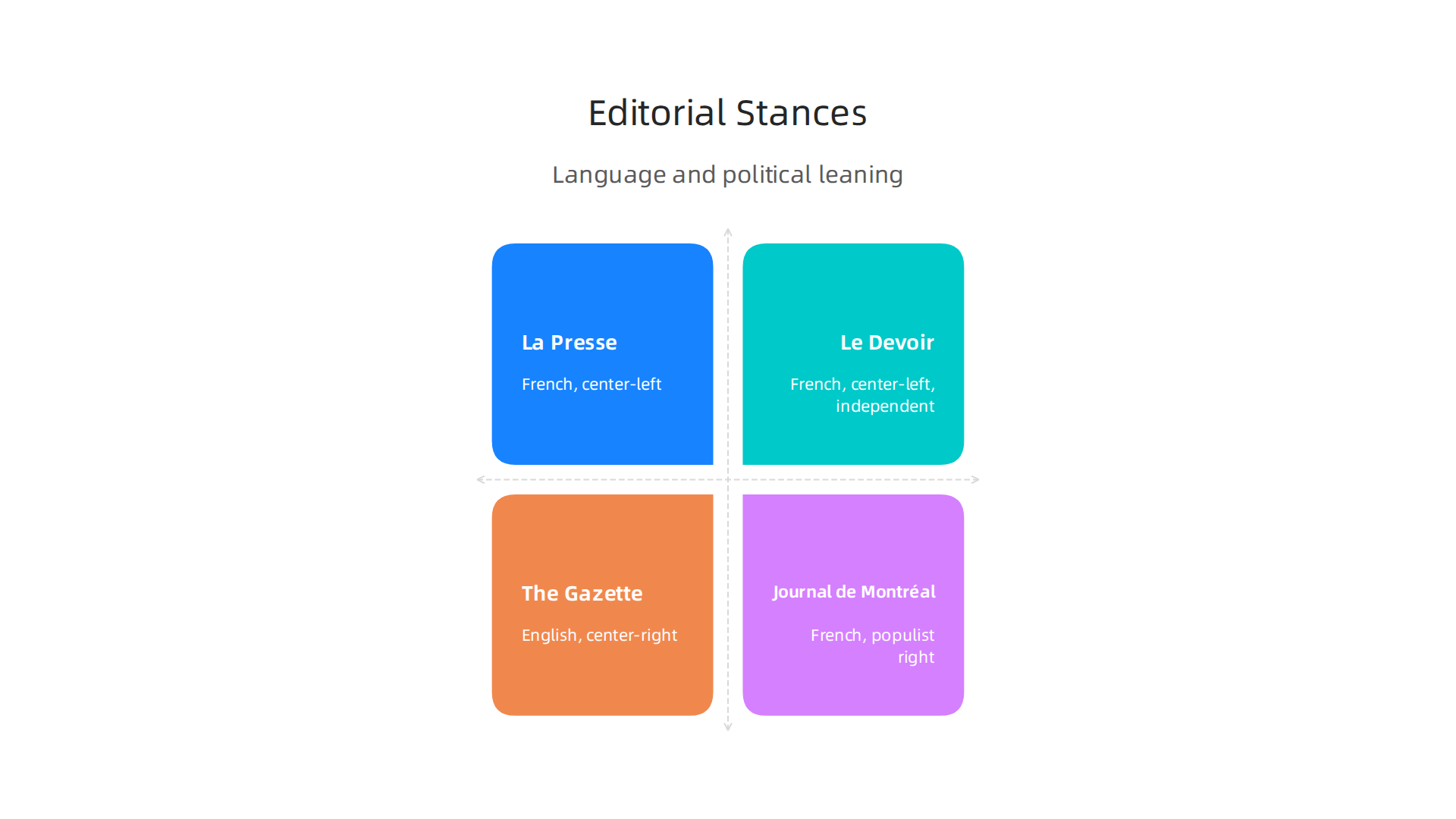
Understanding these stances helps you decide which source to trust for what kind of story. It also matters a lot if you are placing ads. You want your brand next to content that matches your values.
Let’s break down the four major dailies that shape the city’s news landscape.
La Presse went digital-only in 2017. That format shift was bold. Now it has the largest digital reach in Quebec. Politically, it leans center-left. It covers international news with a progressive lens and often highlights social justice angles.
Le Devoir is the independent intellectual heavyweight. Founded in 1910, it remains fiercely independent and center-left. It offers deep analysis on Quebec sovereignty, culture, and world affairs. Its readership is smaller but highly influential among policymakers and academics.
The Gazette is Montreal’s only English-language daily. It leans center-right and serves the English-speaking community. Its international coverage often frames global events through a Canadian English perspective, sometimes with a more conservative tone than its French counterparts.
Journal de Montréal takes a different approach. It is populist right and known for sensational headlines and heavy crime coverage. Its large print circulation makes it a powerful force in the daily conversation, even if its editorial standards are less rigorous.
Here is how they compare side by side:
| Newspaper | Language | Political Leaning | Reach | Format |
|---|---|---|---|---|
| La Presse | French | Center-left | Largest digital reach in Quebec | Digital only |
| Le Devoir | French | Center-left, independent | Mid-size, influential | Print + Digital |
| The Gazette | English | Center-right | Major English audience | Print + Digital |
| Journal de Montréal | French | Populist right | Large print circulation | Print + Digital |
These editorial stances directly affect how each paper covers international stories. A border dispute in Europe might get a federalist spin in The Gazette and a sovereigntist angle in Le Devoir. La Presse will lead with humanitarian impacts. Journal de Montréal might emphasize conflict and drama.
If you are in advertising, this matters. You do not want your premium car ad sitting next to a screaming headline about a murder investigation. You want context alignment. That is why objective bias ratings are so helpful. Organizations like Ad Fontes Media use a rigorous, nonpartisan methodology to rate news sources on both reliability and political bias. You can apply the same thinking when evaluating a Montreal newspaper for your campaign.
The same careful approach applies to papers beyond Montreal. A similar analysis of the Winnipeg Free Press would reveal its own editorial history and regional biases. Every market has its own nuance.
For advertisers and researchers who need to measure these factors across many outlets, a structured database makes the job easier. US Newspaper Rankings provides detailed rankings on credibility, bias, and reach. This kind of analysis has been cited by major outlets like Newsweek.
Understanding editorial stances is not about labeling one paper good or bad. It is about knowing what you are getting. That knowledge lets you consume news smarter and place ads safer.
Print vs. Digital: Format Evolution in Montreal’s Newsrooms
You might not think much about how a newspaper arrives in your hands. But behind the scenes, Montreal papers have been wrestling with a big question: should they stay in print, go fully digital, or try both? The answer has changed everything about how you read the news and how these papers make money.
La Presse made the most dramatic move. In 2016, it became the first daily newspaper in the world to drop its weekday print edition entirely. Instead, it launched La Presse+, a tablet-only app that delivers a full edition every morning by 5:30 a.m. The shift was risky. But it worked. Readers spend an average of 40 minutes on the app during the week and 50 minutes on weekends.
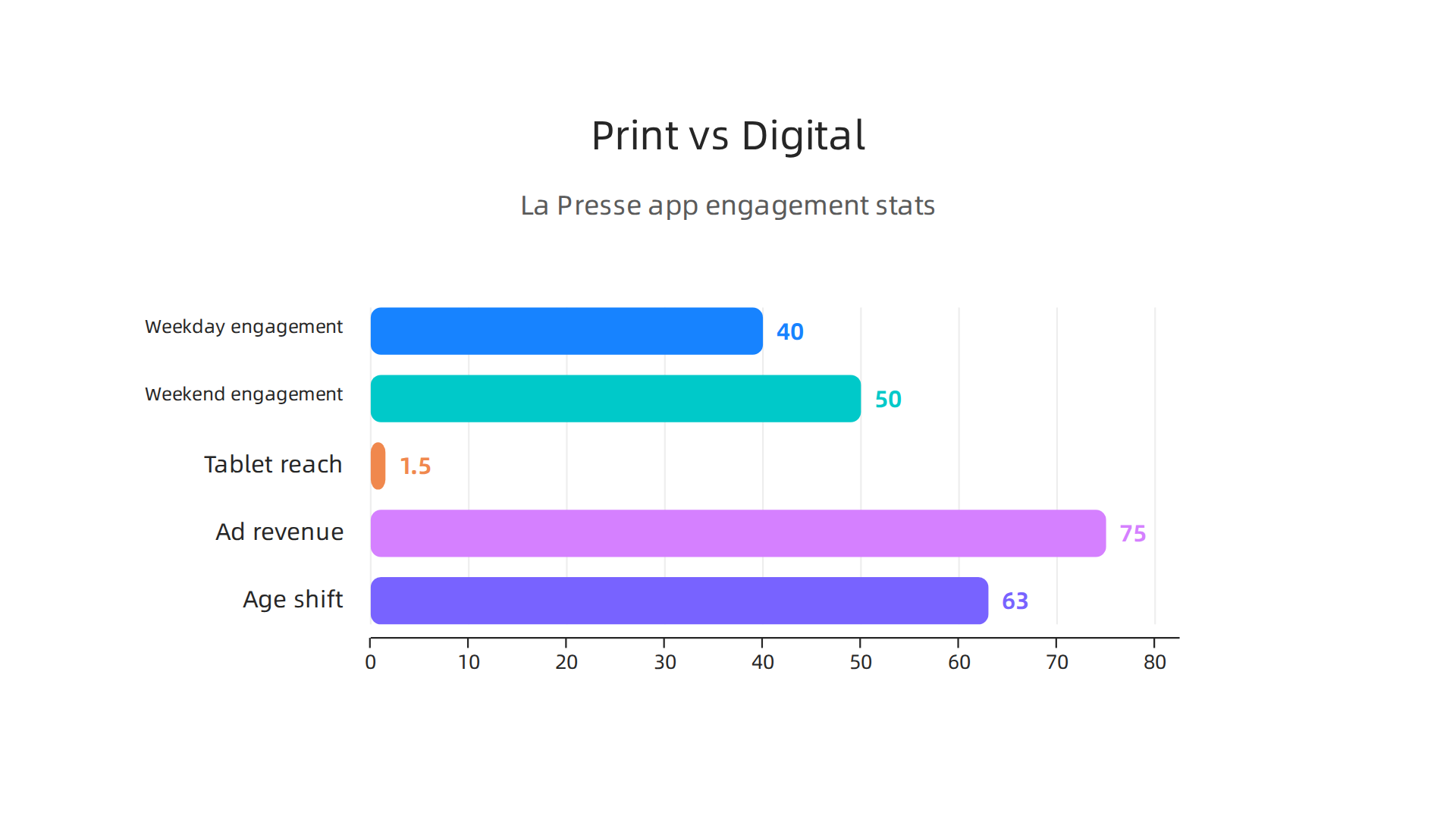
That is more time than many people spend on social media. And younger readers came back. Before the switch, only 46 percent of print readers were ages 25 to 54. After the switch, that number jumped to 63 percent for the tablet audience. You can read more about the story of La Presse’s digital transformation in detail from WAN-IFRA. The tablet app now reaches 1.5 times more readers than the paper’s highest print circulation back in 1970.
The Gazette took a different path. It kept its print edition while building up digital offerings. This hybrid model helps the English-language daily serve older readers who still want a physical paper and younger readers who prefer screens. But the financial pressure is real. The Gazette is owned by Postmedia, a company that is majority owned by a US hedge fund. Postmedia owns more than 130 print and digital titles across Canada. That ownership structure creates its own pressures around cost cutting and consolidation.
What does this mean for advertising revenue? For La Presse, the numbers are stunning. The tablet app alone now brings in more than 75 percent of the paper’s total advertising revenue. Advertisers pay a premium because they know readers are engaged and not just scrolling past. That is a powerful lesson if you are planning a campaign. You want your message in a format that keeps people paying attention.
The contrast between these two approaches shows that the right newspaper format depends on your audience. If you are trying to reach younger, urban, tech-savvy readers in Montreal, a digital-only paper like La Presse might be your best bet. If you want the English-speaking community that values tradition and local reporting, The Gazette’s hybrid model still works.
For advertisers and researchers, keeping track of these format shifts across many newspapers is hard work. A platform like understanding how to choose the right advertising agency can help you match your brand with the right publication format. And if you want to compare how newspapers across Canada handle credibility and reach, newspaper rankings for ad trade use provide the data you need to make smart decisions.
The move from print to digital is not finished. Some papers will go all in on tablets and phones. Others will hang onto print as long as readers want it. But one thing is clear: the paper you hold in your hands today might not exist in five years. The question is whether you are ready for what comes next.
Credibility and Trust Metrics: Evaluating Montreal Newspapers
When you pick up a montreal newspaper, how do you know if you can trust what you read? Many people go by reputation or gut feeling. But in 2026, there are real tools to measure credibility.
One of the most respected rating systems comes from Ad Fontes Media. This organization scores newspapers on two things: reliability and political bias. They use a balanced team of left, right, and centrist analysts to rate each source. The Ad Fontes Media Wikipedia page explains that sources are scored across multiple categories to create an overall rating. This gives you a clear picture of where a publication stands.
Montreal newspapers like La Presse and The Gazette are included in these evaluations. Both have strong reputations for accurate reporting. But they differ in how they are perceived. La Presse’s digital-only format may feel more modern to younger readers, while The Gazette’s print edition appeals to traditionalists. Compared to major US newspapers such as The New York Times or The Wall Street Journal, Montreal papers tend to score similarly on reliability. They often show less extreme political bias too.
Disinformation is a real problem in Montreal, just like in every city. False stories can spread fast on social media before anyone checks the facts. According to the Ad Fontes Media methodology, reliability is measured by things like the truth of the reporting and the accuracy of headlines. A newspaper that scores well on these factors is much less likely to mislead you.
For advertisers, understanding a newspaper’s trust level is critical. Placing your ad in a low-credibility outlet can harm your brand. That is why learning how to vet advertising companies for brand safety and media credibility makes sense before you spend a dollar.
No rating system is perfect. Media lists are useful, but incomplete. You still need to apply your own judgment about which newspaper fits your values. That is where Media lists are useful, but incomplete becomes part of your decision process. Use the data, but trust your own thinking too.
International Coverage: How Montreal Newspapers Report on Global Affairs
How many foreign bureaus does your Montreal newspaper have? The honest answer is probably none. Most Montreal newspapers do not maintain staff reporters around the world. Instead, they rely on wire services to bring international stories to their readers.
Wire services changed the newspaper format forever. Before the telegraph, news from abroad could take weeks to arrive. The Evolution of Newspapers article from News Media Canada explains that the creation of wire services allowed papers to report world events faster than ever before. Today, the Canadian Press, the Associated Press, and Reuters are the backbone of international coverage for most Canadian papers, including those in Montreal.
Where Montreal Newspapers Focus Their Attention
Not all parts of the world get equal coverage. Here is how Montreal newspapers tend to prioritize:
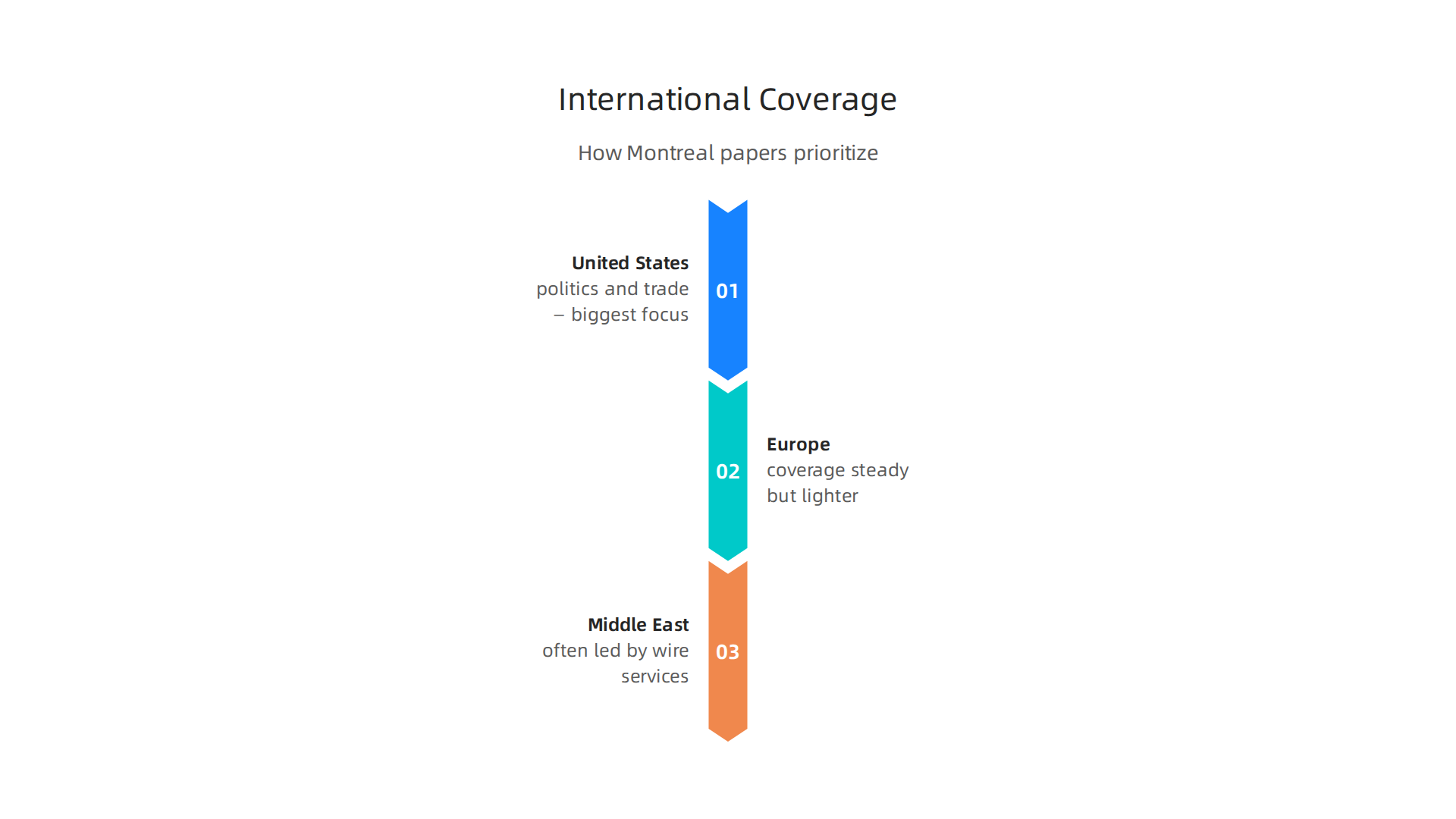
- United States politics and trade: This is by far the biggest focus. Proximity, trade ties, and a shared border make US news essential. The CSIS analysis of the USMCA review notes that the 2026 review of the trade agreement will be a critical focus, and Montreal papers cover it closely.
- European affairs: Coverage is steady but lighter than US news. Major events get front page treatment.
- Middle East: Reporting is often led by wire service content unless a major conflict or Canadian involvement draws more resources.
The Gazette, Montreal’s oldest English-language daily, has a long history of covering international events. The Wikipedia entry for The Gazette confirms that the paper covers international, national, provincial, and local events. But like other Canadian papers, its resources for foreign reporting are limited compared to major US titles.
How Montreal Compares to US Newspapers
This is where the difference really shows. A paper like The New York Times has dozens of foreign bureaus and correspondents stationed around the world. Most Montreal newspapers have zero full time foreign bureaus of their own. They depend on wire copy and the occasional freelance reporter.
That does not mean Montreal papers ignore global news. They report on it daily. But the volume and depth are lower than what US newspapers offer. For an advertiser or reader, this matters. If you want deep analysis of foreign affairs, a US paper might serve you better. If you need a Canadian perspective on how world events affect Quebec and Canada, a Montreal newspaper gives you that angle.
For brands and media buyers looking to understand these differences, the resource on major US newspapers ranked by credibility and reach can help you compare coverage quality across borders.
Similarly, the Winnipeg Free Press follows a comparable model for international news. It also relies on wire services for most global reporting. The newspaper format, whether broadsheet or digital, does not change this fact. What changes is how quickly the news reaches you.
For advertisers placing an ad magazine or any other ad, understanding a newspaper’s international coverage helps you decide if that paper’s audience matches your target market. A Montreal paper may not have deep global coverage, but its local focus on how world events affect Quebecers is unique and valuable.
Comparative Analysis: Montreal vs. Major US Newspapers
You might wonder how a Montreal newspaper stacks up against a giant like The New York Times or The Wall Street Journal. The answer is simple: they serve very different purposes.
Montreal papers focus on what matters to Quebecers. US national papers aim for a global audience. For advertisers, this difference changes everything.
Trust and Credibility Comparison
Trust in media is a big deal in 2026. According to the 2026 Edelman Trust Barometer, trust levels in Canada have dropped. But they still sit higher than trust levels in the United States. This is important for advertisers. A trusted paper makes your ad look better.
Here is a simple look at how they compare:
| Metric | Montreal Newspaper (e.g., The Gazette) | Major US Newspaper (e.g., NYT, WSJ) |
|---|---|---|
| Public trust | Moderate, stable | Low to moderate, highly polarized |
| Digital penetration | Growing but smaller base | High, millions of digital subscribers |
| Local focus | Strong Quebec and Montreal coverage | National and international focus |
| Brand safety level | High for local relevance | Variable by outlet and section |
Reach and Scale
A Montreal newspaper might reach a few hundred thousand readers on a good day. A major US paper reaches millions. But reach is not everything. The readers of a Montreal paper are concentrated in one region. They care deeply about local issues. That makes them a goldmine for local businesses and Quebec-focused brands.
For large national campaigns, US papers give you scale. For targeted local impact, a Montreal paper wins.
Format Innovation
Montreal papers are adapting. They offer digital editions, newsletters, and social media feeds. But their budgets are smaller. US papers invest heavily in interactive features, video, and AI-powered personalization.
That does not mean Montreal papers are behind. They often innovate in ways that fit their community. For example, they might focus on mobile-friendly formats for commuters.
Covered by the New York Post, even national outlets sometimes look at local papers for regional insights. That tells you something about their value.
Lessons for US Advertisers
If you are a US advertiser thinking about a Montreal market, keep these points in mind:
- Trust matters more than scale. A smaller, trusted paper can outperform a large, distrusted one.
- Local relevance beats generic reach. If your product connects to Quebec life, a Montreal paper is your best bet.
- Use data to choose wisely. Check out this resource on major US newspapers ranked by credibility and reach to see how different papers compare for brand safety and audience fit.
In the end, the best choice depends on your goal. For national campaigns, go big. For local impact, go with a trusted Montreal newspaper.
Implications for Advertisers, PR, and Researchers
So what does all this mean for people who actually use newspapers every day? Whether you buy ads, pitch stories, or study media, a Montreal newspaper can serve you better than you might expect.
Brand-Safe Advertising in Montreal Newspapers
If you care about where your brand appears, Montreal papers are a solid choice. They operate in a market with strong press freedom protections. According to the RSF press freedom index for Canada, the country still ranks high for journalistic independence despite recent declines. That stability makes these papers safer for your ads compared to outlets in more polarized markets.
Here is how to pick the right one:
- Check the editorial tone first. French-language papers like Le Devoir lean left. English papers like The Gazette are more centrist. Match your brand voice accordingly.
- Look at ad placement options. Many Montreal papers offer both print and digital packages. The right mix depends on your audience. Hybrid campaigns tend to outperform single-channel buys.
- Use local data to confirm credibility. Before you spend money, check how each paper scores on trust metrics. Not all local papers are equal.
PR Placement Strategies: French vs English Outlets
Montreal is a bilingual city. That creates both a challenge and an opportunity for PR professionals.
If your message needs to reach francophone Quebecers, prioritize French-language papers.

They carry more weight with local readers. English-language papers work better for reaching the anglophone community and national audiences.
A few practical tips:
- Pitch in the right language. Send French press releases to French outlets and English releases to English outlets. Mixing them up kills your chances.
- Target the right beat. Montreal papers have strong local coverage of arts, politics, and business. Match your pitch to the right section.
- Build relationships with local journalists. They value personal connections. A cold email works less often than a direct intro.
For researchers, the 2026 Reuters Institute Digital News Report offers detailed data on how Montreal readers consume news. You can also dig into individual newspaper archives for historical studies.
Research Data Availability for Academic Studies
Montreal newspapers provide rich data for researchers. Most major papers have searchable digital archives going back decades. You can track changes in editorial tone, ad spending patterns, or coverage of specific issues over time.
To make the most of these sources, try using a structured approach to vet advertising companies for brand safety. The same principles apply to evaluating news sources for academic work.
In the end, Montreal papers offer unique value for each group. Advertisers get brand safety. PR pros get targeted reach. Researchers get rich data. The key is knowing which paper fits your goal.
Conclusion
Montreal newspapers are more than just local outlets. They offer a valuable model for understanding how media works across different cultures and markets. The mix of French and English papers, each with its own editorial stance, shows how diversity in media can serve different audiences well.
For US professionals, there are real lessons here. Montreal papers have kept strong credibility standards while adapting to digital formats. Their hybrid approach combining print and digital reaches readers where they are. In fact, research shows that hybrid campaigns can increase conversion rates by 28% and response rates by 450% compared to single-channel efforts. That insight matters whether you buy ads, pitch stories, or study media trends.
The key takeaway is simple: keep watching the numbers. Trust metrics, audience shifts, and editorial changes happen fast. A montreal newspaper that scores well on credibility today could change tomorrow. The same is true for any publication. That is why using a structured system to track media quality makes sense. When you compare papers side by side, patterns become clear. You see which outlets maintain high standards and which ones drift.
If you want to apply these lessons to US newspapers, the same principles apply. Look at bias ratings, readership data, and editorial reputation before you place ad dollars or build media strategies. Resources that rank newspapers by credibility and bias can save you time and protect your brand.
Media lists are useful but incomplete. That is where judgment comes in. Use data, but always pair it with critical thinking. The best media decisions come from combining solid research with human insight.
Summary
This article maps Montreal’s unique 2026 newspaper landscape — a bilingual market shaped by varied ownership, rapid digital shifts, and differing editorial stances — to help advertisers, PR pros, and researchers make smarter media choices. It profiles key titles (La Presse, Le Devoir, The Gazette, Journal de Montréal), explains how ownership and format affect credibility and audience, and highlights trust metrics like Ad Fontes Media that you can use to evaluate outlets. The piece also compares Montreal papers to major US newspapers, outlines the limits of international reporting, and offers practical guidance on bilingual campaigns, ad placement, and brand safety. By combining historical context, audience data, and a focus on credibility, readers will be able to select the right publications, vet partners, and design safer, more effective campaigns in Montreal.