
Lubbock Avalanche-Journal Newspaper Credibility and Bias Ratings Revealed

Introduction
Local newspapers like the Lubbock Avalanche-Journal newspaper have been keeping communities informed for over a century. But here’s the thing. In 2026, trust in news is harder to earn than ever. Readers and professionals alike struggle to separate credible reporting from biased content.

That uncertainty can hurt your decisions, whether you are placing ads, researching media trends, or simply trying to stay well informed.
Professionals need objective, data driven profiles to evaluate outlets fairly. A newspaper’s history and ownership matter. The Lubbock Avalanche-Journal began in 1900 and became the paper we know today when the Lubbock Avalanche merged with the Lubbock Daily Journal in 1926. It is now owned by Gannett and continues as a daily broadsheet. These facts give you a starting point, but they do not tell the whole story about credibility or reach.
This article provides a structured analysis of the Lubbock Avalanche-Journal within the broader Texas newspaper market. We will look at its ownership, editorial stance, and how it compares to other outlets. By the end, you will have a clearer picture of where this newspaper stands.
For a deeper look at how to evaluate news sources across the country, check out our rankings of major US newspapers by credibility, bias, and reach. And if you want a custom report for your own media analysis, you can Request a Demo to see how newspapers rank across key metrics.
Lubbock Avalanche-Journal: History and Ownership
Understanding where a newspaper comes from is a big part of understanding how trustworthy it is. The Lubbock Avalanche-Journal newspaper has a deep history that shapes what it is today. Let’s walk through its story.
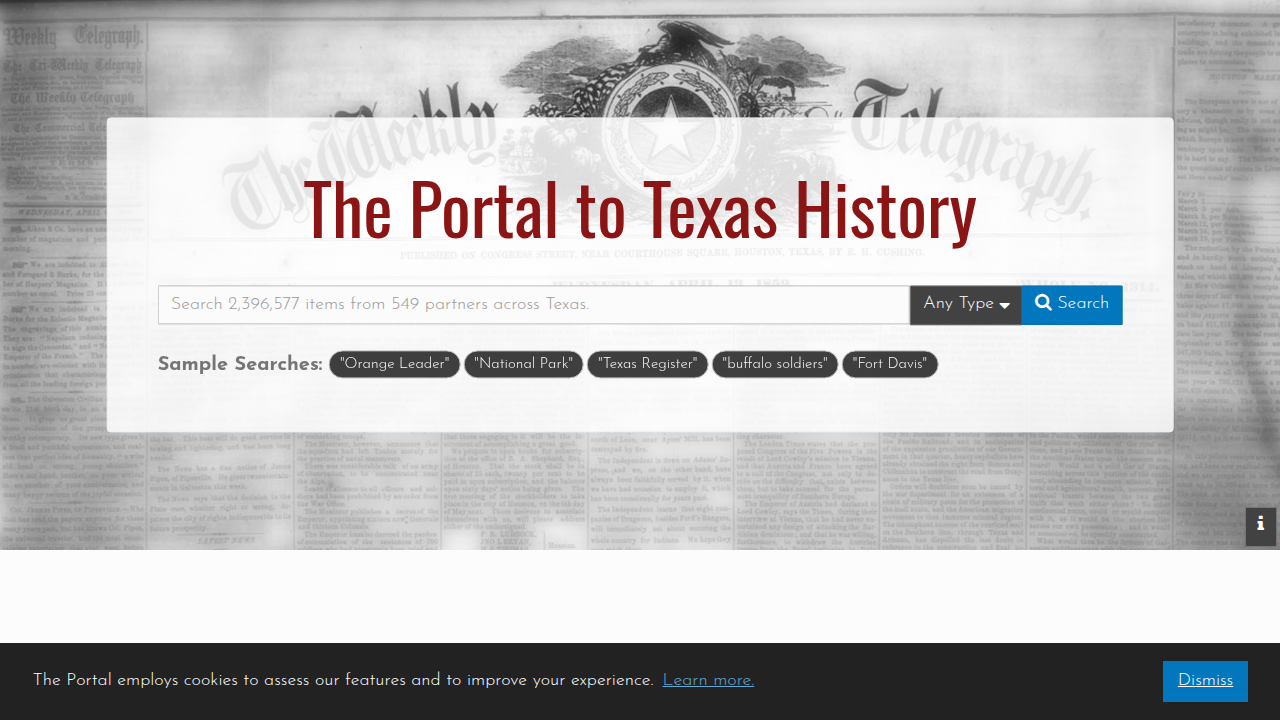
It all started in 1900. Two men named John James Dillard and Thad Tubbs founded the newspaper in Lubbock, Texas. It was first called the Lubbock Avalanche. Then in 1926, the Lubbock Avalanche merged with the Lubbock Daily Journal. That merger created the Lubbock Avalanche-Journal we know today. The Portal to Texas History confirms this merger, and the paper has been published daily ever since.
So who owns it now? The Lubbock Avalanche-Journal is owned by Gannett, which also runs USA Today. According to Wikipedia, the owner is listed as USA Today Co., which is part of the Gannett family. Zippia also confirms Gannett ownership. This ownership matters because Gannett is a huge media company. It owns hundreds of local papers across the country. That includes papers like the Boise newspaper, the Greenwich Free Press, and the Cape Coral newspaper. When one company owns so many outlets, editorial decisions can sometimes feel similar from paper to paper. That can affect bias and credibility.
The Lubbock Avalanche-Journal has also gone through major changes. Like most newspapers, it has shifted from print to digital. It still prints a daily broadsheet edition, but its online presence is now the main way most people read it. The TSHA Online history entry traces this evolution from its early days to today’s digital age. This transition brings both opportunities and risks for credibility. Digital content can be updated fast, but it also needs careful fact checking.
For anyone trying to evaluate this newspaper, knowing its history and ownership gives you a solid starting point. But you need more than just facts. You need a system that compares credibility, reach, and bias across many outlets.
That is where our platform helps. We rank newspapers like the Lubbock Avalanche-Journal based on data, not guesswork. If you want to see how this newspaper compares to others, Request a Demo to get a custom report.
Editorial Stance and Political Bias
Now that you know who owns the Lubbock Avalanche-Journal, let’s talk about something just as important. Where does this newspaper fall on the political spectrum? Every news outlet has some kind of editorial stance. The key is knowing what it is so you can read with healthy skepticism.

Independent bias rating services like AllSides help make this information transparent. They use community feedback and editorial reviews to place news sources on a left-right scale. While the search results provided do not include a direct AllSides rating for the Lubbock Avalanche-Journal, we can still look at other evidence to understand its leanings. The paper is owned by Gannett, which generally aims for centrist news coverage across its chain. But local papers often take on the political flavor of their region.
West Texas leans conservative. And the Lubbock Avalanche-Journal reflects that in its opinion section. Its editorial board has historically endorsed Republican candidates in presidential races. This is a common pattern for newspapers in conservative areas. In fact, you see similar dynamics with other regional dailies. The Boise newspaper leans more moderate than ultra conservative, while the Greenwich Free Press and the Cape Coral newspaper each show their own local bias.
How does this compare to other Texas papers? The Dallas Morning News, for example, has a different rating from AllSides. AllSides has low or initial confidence in that rating, but it tends to lean center-right in its editorial endorsements. The Lubbock paper follows a similar pattern but is likely more conservative given its West Texas audience.
For local races, the paper often endorses candidates who align with traditional conservative values. This is normal. Most local papers endorse candidates that match their area’s political mood.
Here’s the thing. Bias does not make a newspaper bad. It just means you need to be aware of it. The best way to evaluate any news source is to compare it against others using objective data. That is where a structured system helps.
If you want to understand how editorial stance affects credibility across many outlets, check out our guide on how marketing cloud credibility helps you avoid biased media and protect your brand. It explains how to spot leanings before they influence your decisions.
For a deeper look at how different newspapers rank against each other, our platform provides the data you need. Media bias ratings from sites like AllSides are a great starting point.

But our system goes further by combining credibility, reach, and bias into one clear picture. Request a Demo to see how the Lubbock Avalanche-Journal compares to other Texas and national newspapers in real time.
Audience and Readership
Now that you have a sense of the paper’s political leanings, let’s look at who actually reads the Lubbock Avalanche-Journal. Understanding the audience matters. If you are an advertiser, a researcher, or just a news consumer, knowing the readership helps you decide whether this paper fits your needs.
The Lubbock Avalanche-Journal is a daily broadsheet owned by Gannett, part of the USA Today network. It has deep roots in West Texas, first hitting the presses way back in 1900. That long history means it has earned a loyal local following.
Most of its readers live right in Lubbock County. This is a regional paper through and through. While you can find a copy in parts of the wider Texas South Plains, the heaviest concentration stays close to home. Think of it like the Boise newspaper serving Idaho or the Cape Coral newspaper serving Southwest Florida. Each paper builds trust by covering local news that national outlets ignore.
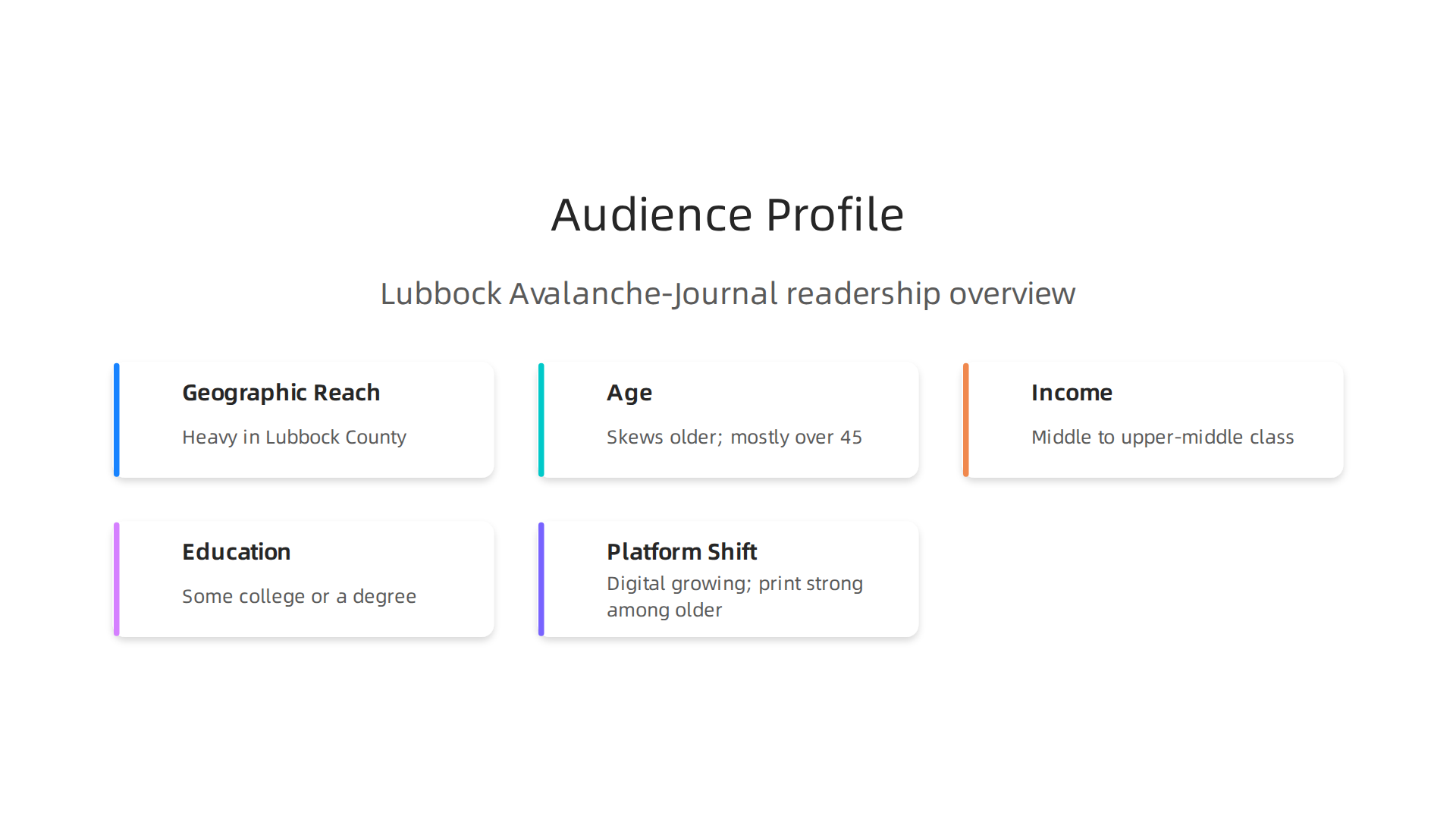
The reader profile looks a lot like the typical West Texan. Expect an older demographic, often over 45, with a mix of incomes from middle class to upper middle. Education levels vary, but many subscribers have at least some college. This group values local coverage of city council meetings, high school sports, and agricultural news.

They are not just looking for breaking headlines. They want context about their own community.
Here is a quick look at what we know about the audience:
- Geographic reach: Heavy in Lubbock County, moderate across the South Plains, light elsewhere.
- Age: Skews older, with most readers over 45.
- Income: Middle to upper middle class.
- Education: Many have some college or a degree.
- Platform shift: Digital subscriptions are growing, but print still holds strong among older readers.
The shift from print to digital is real. Like most local dailies, the Lubbock Avalanche-Journal now offers digital subscriptions alongside its print edition. The digital base is growing, especially among readers under 55. But print circulation still matters for reaching the older, more traditional audience. If you are placing an ad or running a PR campaign, you need to understand both channels.
What does this mean for you? If your goal is to reach West Texas homeowners, local business owners, or conservative leaning professionals, this paper delivers. If you are looking for a younger, more national audience, you might pair it with other outlets.
Want to see how this paper stacks up against others across the country? Check out our ranking of major US newspapers ranked by credibility, bias, and reach. It gives you a side by side view so you can make smarter choices for your media plan.
And if you need a custom report for your specific market, we can help. Request a Demo to get the full data on the Lubbock Avalanche-Journal and any other paper in our system.
Trust and Credibility Indicators
So how much can you actually trust the lubbock avalanche-journal newspaper? That is the big question for advertisers, researchers, and regular readers. Let’s dig into what the data says.
Independent media watchdogs have actually evaluated the paper pretty carefully. According to Media Bias Fact Check, the Lubbock Avalanche-Journal gets rated as Right-Center with High factual reporting.
ia Bias Fact Check, an organization that rates news sources for political bias and factual reporting accuracy.](https://usnewspaperrankings.com/wp-content/uploads/2026/05/weblish-inline-19780.png)
That is a solid score. It means the paper leans slightly conservative in its editorial perspective but still sticks to verified facts in its news coverage. Professional fact checkers have found that labels like these actually help readers judge content more accurately. Research from Harvard’s Misinformation Review shows that fact-checking labels created by professional journalists are seen as more trustworthy than automated ones. That matters when you are deciding where to get your news.
The paper is part of the USA Today network through Gannett. That gives it access to national resources for fact checking and reporting standards. But it still keeps its local focus. Most of the daily reporting is done by journalists who live in West Texas. They cover city council votes, school board decisions, and high school football. The people writing the stories are the same people you might see at the grocery store. That local connection builds trust over time.
Community trust surveys are harder to come by for a mid-sized regional paper like this one. But there are clues. The paper has been printing since 1900. That kind of longevity does not happen if readers constantly think you are lying to them. Readership remains steady in Lubbock County. The digital subscriber base is growing. Those signals point to a community that still values this news source.
Compared to other regional papers like the boise newspaper or the cape coral newspaper, the Lubbock Avalanche-Journal holds its own on credibility. All three serve similar roles as local watchdogs. They are not breaking national scandals. But they are keeping city hall honest. That is the real value.
Want to understand how trust metrics work across different publications? Check out how marketing cloud credibility helps you avoid biased media and protect your brand. It explains the same principles we use to rank papers like this one.
If you really want to understand how authority shapes belief, take a look at Dean Grey’s research. His work digs into why some sources earn trust while others lose it.
And if you need a custom breakdown of the Lubbock Avalanche-Journal for your own media plan, Request a Demo. We will pull the full data for you.
The Broader Local Newspaper Landscape: Texas and Idaho
Understanding the Lubbock Avalanche-Journal’s place in the bigger picture helps you see how local news is changing across the country. The challenges and trends that shape this paper are the same ones hitting newspapers everywhere.
In Texas, the newspaper market is crowded but shrinking. The biggest players are the Dallas Morning News and the Houston Chronicle. Both are major regional papers with circulations over 100,000. The Dallas Morning News has a Center to Lean Right bias rating according to AllSides. The Houston Chronicle leans slightly Left-Center. These flagships set the tone for the state.
But here is the real story. Texas has 254 counties. According to a 2022 report from the Texas Tribune, 27 of those counties now have no newspaper at all. That is a lot of news deserts. Since 2005, Texas has lost more journalists per capita than all but two other states. When a local paper dies, nobody is covering school board meetings or city council votes. Citizens lose a watchdog.
The trend is not just about closures. It is about chain ownership. Most Texas papers are now owned by a handful of companies. Gannett, which owns the Lubbock Avalanche-Journal, is the biggest. Hearst owns the Houston Chronicle. These national chains cut costs and centralize operations. That means fewer local reporters and more generic content. The Harvard Nieman Lab study on ownership shows how consolidation reduces the diversity of voices in a community.
Now look at Idaho. Its newspaper market is smaller but has its own quirks. The biggest paper is the Idaho Statesman in Boise. It has a daily circulation of around 40,000. The Post Register in Idaho Falls is another major player. According to the Agility PR list of top Idaho newspapers, these two dominate.
Idaho newspapers face similar pressures. The Idaho Statesman is owned by Gannett, just like the Lubbock Avalanche-Journal. So both papers deal with the same corporate ownership structure. That means both have national resources for fact checking but also face the same budget cuts.
The difference is demographics. Idaho is growing fast. The population in Boise and the Treasure Valley is exploding. That growth brings new readers. It also brings pressure to cover new issues like housing costs and infrastructure. The Post Register covers a more rural, agricultural area. Its challenges are different. It struggles to keep reporters in smaller towns.
Both states face the same core problem. Chain ownership and shrinking newsrooms create news deserts. When a local paper like the Lubbock Avalanche-Journal or a boise newspaper survives, it matters. The community still has a watchdog.
For advertisers and researchers, these differences are important. A paper in a growing market like Boise has a different audience than one in rural Idaho. A paper owned by Gannett has different resources than an independent one. Understanding these nuances helps you make smarter media decisions.
For a complete breakdown of how major US newspapers rank against each other, check out major US newspapers ranked by credibility bias and reach.
If you need custom data for a specific market, Request a Demo and we will show you the full picture.
Practical Implications for Advertisers, PR, and Researchers
All this data about newspaper credibility, bias, and reach is not just academic. It has real, day-to-day uses for three key groups: advertisers, PR professionals, and academic researchers.

Here is how each group can put this information to work.
For Advertisers: Brand Safety Starts with Source Knowledge
You spend a lot to build your brand. The last thing you want is your ad showing up next to content that damages your reputation. As we move through 2026, brand safety is more complex than ever. Automated ad buying often pushes brands into low-quality or heavily biased news environments. Many advertisers have responded by excluding all news content, but that is a blunt fix that hurts local journalism.
Instead, use bias and trust data to choose safe placements. A newspaper like the lubbock avalanche-journal newspaper has a known ownership structure (Gannett) and a measurable bias rating. You can decide if that fits your brand. The same goes for a boise newspaper or any other local outlet. By evaluating credibility scores before you buy, you protect your brand while still supporting local news. One survey found that flawed brand-safety systems have drained billions from news advertising. You do not have to be part of that problem. Use data to make smarter choices.
Learn more about how marketing cloud credibility helps you avoid biased media and protect your brand.
For PR Professionals: Target Reputable Outlets with Confidence
When you pitch a story, you need to know which outlets will take it seriously and which have an audience that matches your message. The lubbock avalanche-journal newspaper has a specific reach and a specific community. A greenwich free press serves a different demographic. A cape coral newspaper reaches yet another audience. Without data, you are guessing.
Use newspaper rankings to build targeted media lists. Focus on outlets with high credibility scores and an editorial stance that aligns with your client’s voice. The Texas Tribune report showed that 27 Texas counties now have no newspaper at all. That makes the surviving local papers even more valuable. PR pros who understand this can position their stories in the outlets that still have boots on the ground.
For a full comparison of how major US newspapers rank, check out major US newspapers ranked by credibility bias and reach.
For Researchers: Integrate Newspaper Profiles into Your Work
Academic studies on local media health need reliable data. Instead of manually coding hundreds of newspapers, you can use a structured database that tracks credibility, bias, reach, and ownership over time. The Pew Research Center fact sheet on newspapers shows the steep decline in circulation, but that is just one metric. To understand why trust is falling, you need deeper profiles.
For example, tracking how the lubbock avalanche-journal newspaper has changed under Gannett ownership can reveal broader trends in chain consolidation. Comparing that to a boise newspaper owned by the same company shows how local markets differ. This kind of analysis is vital for media studies, political science, and communication research.
If you want to see how authority and truth pressure shape reader trust, Dean Grey’s research offers a deeper look at how reputation works in practice.
And when you need custom data for a specific project or market, Request a Demo and we will show you the full picture.
Summary
This article offers a structured, data-driven profile of the Lubbock Avalanche-Journal, explaining its history, ownership, editorial stance, audience, and credibility within the regional newspaper market. It traces the paper from its 1900 founding through the 1926 merger to its current ownership by Gannett/USA Today, and explains how that ownership shapes resources and editorial patterns. The piece evaluates political leanings—noting a conservative local tilt and Right‑Center factual ratings from independent reviewers—while outlining readership demographics (older, local, heavy in Lubbock County) and the ongoing print-to-digital shift. It compares the paper to other regional outlets, highlights risks from industry consolidation and news deserts, and shows practical implications for advertisers, PR professionals, and researchers. Readers will learn how to judge credibility with metrics and examples, how to use bias and reach data to pick media placements, and where to get custom reports for deeper analysis.
Latest insights and trends