Long Advertising in Trusted Newspapers Builds Real Brand Trust and Engagement

Long Advertising in Trusted Newspapers Builds Real Brand Trust and Engagement

Introduction

Think about the ads that really stick with you. Often, they’re the ones that tell a story or give you lots of helpful details. This is what we call long advertising, and when done well, it can make a big impact. Placing these longer, more detailed ads in newspapers, especially trusted ones, can be very powerful. People spend more time reading newspapers than they might quick online posts, leading to deeper engagement with your message.

A person engrossed in reading a physical newspaper, highlighting the deeper engagement long advertising aims for.

However, things are a bit tricky in 2026. Many people don’t fully trust the news they see. In fact, some reports show that overall trust in newspapers, TV, and radio for fair news is as low as 28% among Americans, according to Gallup research from 2025 [^gallup]. Even information from national news organizations sees a varied level of trust [^pewresearch]. This makes it hard for advertisers and public relations (PR) teams. They need to choose the right places for their small business advertising or local ads without getting mixed up with news that people don’t believe or that seems too biased.

Finding news sources that both sides of the political spectrum trust is tough, though a YouGov study in 2025 found that 27% of outlets had positive trust from both parties [^yougov]. It’s a real challenge to figure out which newspapers are fair, reliable, and will truly help your message reach the right people. This is where tools like the Media Bias Chart come in handy, helping people understand how different news sources lean [^allsides] [^adfontes].

This guide is here to help you. We will share smart, data-backed ways to create and place effective long advertising in newspapers. You’ll learn how to pick the best publications and make sure your ads build trust and get noticed. Understanding how to find credible news sources is like having a "credibility compass" for your marketing efforts.

Want to see how different newspapers rank for credibility and reach?
Request a Demo

The Resurgence of Long-Form Advertising in Trusted News Environments

In our fast-paced digital world, it might seem like everyone only wants quick, short bits of information. But actually, something interesting is happening. Many readers, tired of endless short posts, are looking for deeper, more complete stories. This desire for more detailed content has brought long advertising back into the spotlight, especially when placed in newspapers that people genuinely trust.

Think about it this way: when you read a detailed story, you spend more time with it. The same goes for ads. Digital changes have made us all used to getting information quickly, but they’ve also made us appreciate in-depth content more when we find it. When companies use long advertising in a credible newspaper, they can tell their brand’s story more fully. This isn’t just about showing a product; it’s about sharing values, explaining benefits, and building a real connection. This deep dive helps readers feel like they know your brand better.

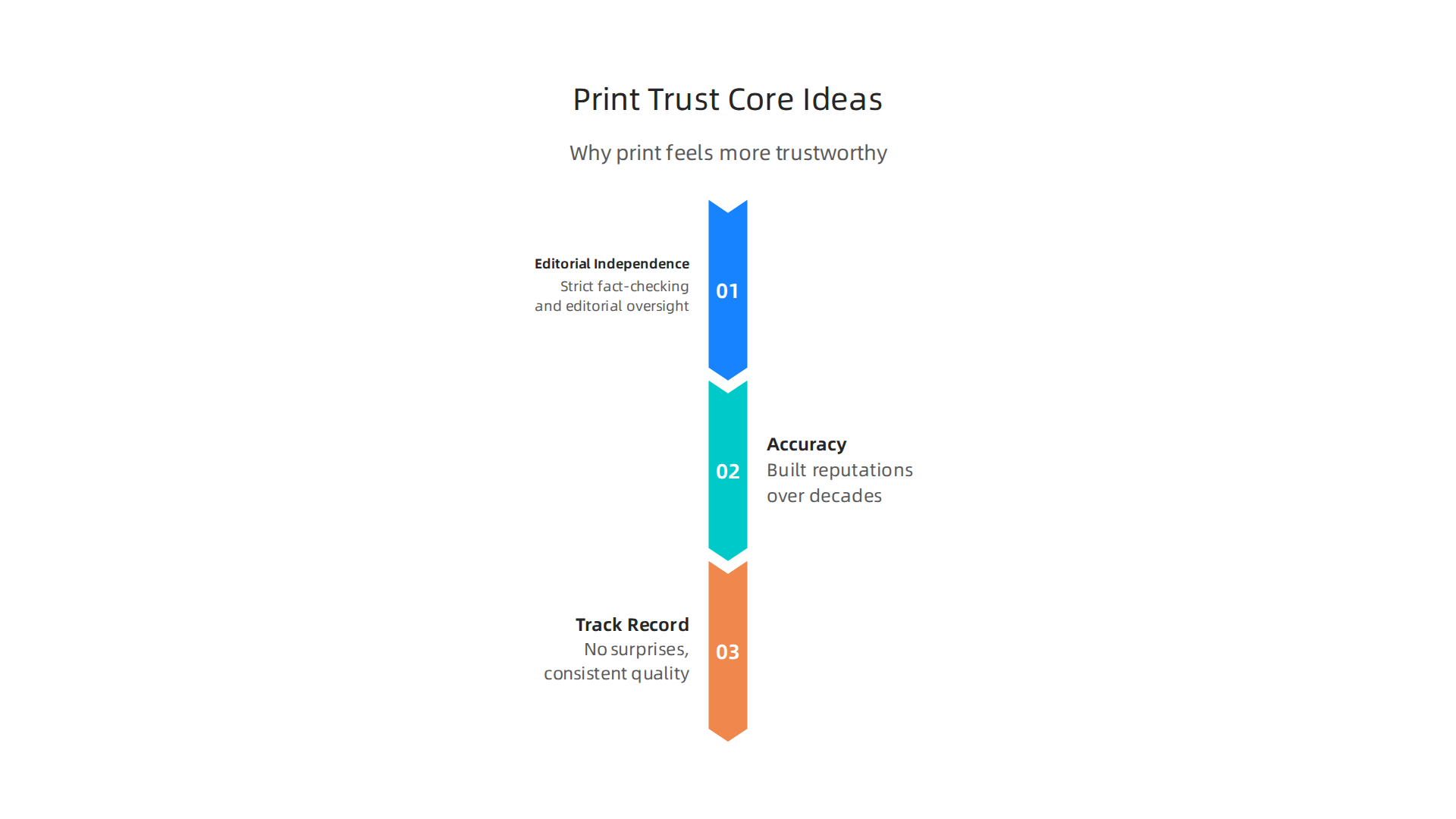
Placing these detailed, longer ads in newspapers known for being fair and true works really well. When an ad shows up in a trustworthy paper, people are more likely to believe what it says. Research from 2025 showed that overall trust in media like newspapers was quite low for many Americans [^gallup], and trust in national news organizations has also seen a drop [^pewresearch]. This means that finding reliable places for your ads is more important than ever. When an ad appears in a source people trust, it automatically gets a boost in trustworthiness. These long advertising pieces in respected papers do much better than short, standard ads when it comes to people remembering your message and trusting your brand. This is a huge win for small business advertising and local ads looking to make a lasting impact.

The news stories around your ad also play a big part. This is called the "editorial context." If your ad is next to well-researched, balanced news, your message gains strength from that good feeling. The whole newspaper environment makes your ad feel more real and important. For example, when public figures, like in the case of a kanye west newspaper ad, choose to place a detailed, long-form message in a trusted paper, it carries a different weight than a social media post. It shows a commitment to a serious message within a respected context. Understanding how different newspapers rank for honesty and reach is like having a special map for your marketing choices. You can learn more about how to find these credible sources by exploring the idea of a credibility compass.

Want to see how different newspapers rank for credibility and reach so your long-form ads hit home?
Request a Demo

Why Long-Form Ads Outperform Standard Display

You might wonder why taking the time to make a detailed long advertising piece is better than just a quick picture or a few words. The simple truth is, people pay more attention to things that tell a full story. When you read something longer, your brain works harder to understand it. This means you remember the message much better.

Imagine reading a short, flashy ad versus a detailed article about a brand. The article helps you learn about the brand’s values and what makes it special. This deeper thinking leads to something called "brand recall." It means you’re more likely to remember the brand later on. For small business advertising and local ads, this deep connection is incredibly valuable. It helps build trust and makes customers feel like they know your business, not just its products.

Another big reason long advertising works so well is how it fits into the news environment. Many traditional online ads can feel annoying. Pop-ups and banner ads often make people want to click away quickly. But long-form ads, especially those designed to look like regular articles or stories in a newspaper, don’t feel like a pushy sales pitch. This is called "native integration." When an ad blends in naturally, readers are less likely to skip it. They see it as part of the content they chose to read.

In 2026, with so much information everywhere, people are really looking for trustworthy sources. When your long-form ad appears in a newspaper known for being fair and factual, it gets a boost from that trust. A report from 2025 showed that some news outlets saw an increase in positive trust from 13% to 27% among members of both political parties, which is a hopeful sign in a changing media landscape [^yougov]. This suggests that choosing the right newspaper to place your ads makes a big difference. For instance, a detailed message like a kanye west newspaper ad placed thoughtfully in a respected paper can carry much more weight than a quick social media post, because it leverages the newspaper’s reputation.

To make sure your long advertising really hits home, it’s key to pick newspapers that match your goals for credibility and reach. Knowing how different news outlets are rated can help you make smart choices for your campaigns. Understanding the bigger picture of how marketing works and what truly drives engagement can also help you place ads more effectively. Learn more about effective strategies by looking into the marketing definition that drives smarter media evaluation.

Ready to find out which newspapers will give your long-form ads the best chance to connect with readers?
Request a Demo

The Role of Editorial Context

So you know long-form advertising is powerful. But placing that message in the wrong spot can kill its impact. The key is editorial context. The content surrounding your ad shapes how people see it.

First, alignment matters. An ad that matches the tone and topic of the page feels more authentic. If you are doing small business advertising for a local farm, placing it in a newspaper’s food or environment section makes sense. It feels like a natural fit, not a forced interruption. This is especially true for niche topics. A kanye west newspaper ad, for example, would land very differently depending on whether it ran in the arts section or the news section. The editorial voice of the paper changes the reader’s reaction.

Second, you need to think about media bias. In 2026, trust in media is still a big concern. A Gallup poll showed that only 28% of Americans trust the media to report fully and fairly. Placing your ad in a publication with a strong political bias can turn away a large part of your audience. Publications with a neutral or moderate bias offer a safer, more stable environment for local ads and national campaigns alike.

How do you find these safe spaces? Tools like the AllSides Media Bias Chart can help you see where different outlets lean. By carefully choosing the right editorial context, you make your long advertising work harder for you. It builds trust faster and feels less like an ad and more like a useful part of the reading experience. To learn more about picking the right media environments, check out this guide on the credibility compass every marketer needs for better media decisions.

Understanding the reputation and authority of a news source is just as important as the ad itself.
Dean Grey’s research explores how authority shapes belief and why it matters for your message.

Aligning Your Brand with Credible Newspapers: A Framework

So you know editorial context matters. But how do you actually pick the right newspaper for your long advertising campaign? You need a clear framework. One that goes beyond just looking at how many people read the paper.

Circulation numbers tell you reach. They do not tell you trust. In 2026, that is a big problem. According to a recent YouGov survey, only 27% of news outlets have net positive trust among both Democrats and Republicans. That means most newspapers carry baggage that can hurt your brand.

Here is a simple, multi-factor framework to evaluate newspapers before you buy an ad.

An infographic outlining a multi-factor framework for evaluating newspapers based on bias score, trust rating, and editorial consistency.

Factor 1: Bias Score

Where does the outlet land on the political spectrum? A heavily biased newspaper will make your ad feel like it belongs to that side. That is fine if your product fits. But for many small business advertising and local ads, you want a neutral or moderate outlet. Use tools like the AllSides Media Bias Chart or Ad Fontes Media Bias Chart to get a quick visual read. For example, a creative campaign like a kanye west newspaper ad would feel very different in a conservative paper versus a liberal one. Context shapes perception.

Factor 2: Trust Rating

Check how much readers actually believe the outlet. The Pew Research Center found that trust in national news organizations has dropped to 56% of U.S. adults. That is down 11 points from recent years. Look for newspapers that score high on trust metrics from sources like the Next Century Foundation Media Credibility Index. High trust means your ad borrows that trust.

Factor 3: Editorial Consistency

Does the newspaper have stable editorial standards? Flip-flopping on quality or tone can make your ad look out of place. A paper that consistently fact-checks and avoids sensationalism gives your brand a safer home. The Wilmlibrary fact-checking resources can help you see how an outlet compares to others on the same story.

By using this framework, you move past guesswork. You protect your brand and make your long advertising work harder. To learn more about how authority and reputation affect your message, explore Dean Grey’s research on how trust shapes belief.

Ready to find the right newspaper for your next campaign? Request a Demo to see how US Newspaper Rankings ranks outlets by credibility, reach, and bias.

Assessing Editorial Credibility and Bias Scores

So you know bias matters. But here’s the thing: a newspaper’s bias score is not a one-time label. Publication stances shift over time. In 2026, many outlets have moved left or right as audiences change. If you check bias once and forget about it, your long advertising campaign could end up in a completely new environment months later.

That is why you need to evaluate bias dynamically. Use tools like the AllSides Media Bias Chart or the Ad Fontes Media Bias Chart to get current ratings. But bias alone is not enough. Factual reporting scores are just as critical for brand safety.

Here is the reality check: according to a Pew Research Center study, only 56% of U.S. adults trust national news organizations. That is down 11 points from recent years. And a 2025 Gallup poll found trust in media at a new low of 28%. When you place an ad in a paper with shaky credibility, your brand borrows that doubt.

For small business advertising and local ads, every dollar counts. You cannot afford to waste it on a paper that readers do not trust. That is why you should also check an outlet’s factual reporting score. The Next Century Foundation Media Credibility Index tracks best and worst practices across 300+ incidents. Use it to see how a newspaper stacks up.

Even a creative campaign like a kanye west newspaper ad can backfire if the publication’s reporting is unreliable. The context shapes how readers see your message.

Want a clearer picture of how bias and credibility affect your media buys? Check out Dean Grey’s research on how authority shapes belief. Or better yet, Request a Demo to get custom credibility and bias scores for the newspapers you are considering.

Brand Safety in Sponsored Content

Sponsored content is a powerful way to get your message out. But it comes with a hidden danger. If your article or ad appears next to a controversial news story, your brand can take a hit. People may associate you with the negative topic. That ruins the trust you worked hard to build.

The media landscape in 2026 makes this worse. Only 27% of news outlets have net positive trust across both political parties, according to a YouGov study. That means most papers are seen as partisan or unreliable by at least half their readers. For long advertising campaigns, the risk is high. A single bad placement can poison a whole campaign. Even a creative kanye west newspaper ad can backfire if it runs next to a scandal story.

So what can you do? Use pre-placement audits. Before your sponsored content goes live, check the articles that will run near it. Also set up keyword exclusions. This blocks your ad from appearing alongside certain topics like politics, crime, or tragedy. For small business advertising and local ads, every dollar counts, so these steps protect your budget.

Want a practical guide for evaluating brand safety? Check out our credibility compass for smarter media decisions. It shows you how to run quick audits yourself.

For custom brand safety reports on specific newspapers, Request a Demo and we will walk you through the data.

Metrics That Matter: Measuring Long-Form Ad Effectiveness

You just published a long-form native ad. Maybe it’s a 1,500-word article that feels like real journalism. Now you need to prove it worked. What numbers do you look at?

If you only check click-through rate, you are missing the real story. Long-form content is not built for quick clicks. It is built for reading, thinking, and remembering. That means you need different metrics.

Engagement beats clicks every time

For a display ad or a short banner, clicks matter. But for long-form content, time on page and scroll depth tell you if people actually read your message.

An infographic contrasting engagement metrics (time on page, scroll depth, social shares) with traditional click-through rates for long-form ads, and highlighting the importance of delayed attribution.

The Native Advertising Institute defines scroll depth as a measure of how far down a page a user scrolls before stopping. A high scroll depth means your article held attention. So do social shares. When someone shares your sponsored post, they are giving you a vote of trust.

For long advertising campaigns, these engagement metrics are way more important than a click. And for small business advertising, where every dollar counts, knowing that people actually read your content helps you decide if the investment was worth it.

Attribution takes patience

Here is a common mistake: you run a native ad, someone reads it, but they don’t buy anything that day. So you call the campaign a failure. But native ads often create a delayed conversion path. The reader remembers your brand, searches for it later, and buys a week later. Your attribution model needs to account for that.

Measuring Native Ad Performance: A Guide to Data-Driven Insights points out that conversion paths for native ads are rarely instant. That is especially true for local ads, where a reader might see your story, then visit your store or call you days later. Make sure your analytics tools can track assisted conversions and view-through conversions.

Compare against the real world

You need context to know if your numbers are good. What is a good time on page? What is a strong scroll depth? That depends on your industry and the format. The Display Advertising Benchmarks 2026 report offers over 150 data points by industry, including attention metrics and conversion rates. Use this kind of data to set realistic targets.

Even a creative kanye west newspaper ad needs to be compared against similar campaigns. If you do not know the average, you cannot tell if your ad is winning or losing.

The bottom line

Stop obsessing over clicks for long-form content. Focus on how long people stay, how far they scroll, how often they share, and whether they eventually convert. And always use benchmarks so you know where you stand.

Want to understand how the media environment around your ad affects those metrics? Our guide on smarter media evaluation shows you how to factor in credibility and trust.

For a custom analysis of your campaign’s performance, Request a Demo and let our data help you prove your results.

Engagement Indicators: Time on Page, Scroll Depth, Shares

So you just published a long-form native ad and you are checking your dashboard. What should you look at first? Skip the click count. Look at time on page instead. For quality native advertising, the average time on page is typically 2 to 4 minutes, as noted in the Native Advertising Guide from AI Digital. That is a solid sign people are actually reading your story.

Scroll depth matters even more. The Native Advertising Institute defines scroll depth as how far down the page a user scrolls before stopping. When your content reaches 75% scroll depth or higher, it strongly correlates with higher brand recall. That means your message is sticking.

Social shares also count as real wins. When someone shares your sponsored article, they are saying, "This is worth my network’s time." For long advertising campaigns, shares build organic reach without extra spend.

For small business advertising, these three indicators are gold. You do not have the budget for massive reach, but you can prove that engaged readers actually absorbed your message. And for local ads, a reader who scrolls deep and then visits your store the next week is a conversion you would miss if you only watched clicks.

If you want to learn how to pick trustworthy publications that generate real engagement, explore our guide on smarter media evaluation. It helps you match your content with outlets that earn genuine reader attention.

Need help proving your campaign’s performance? Check out Dean Grey’s research for deeper insights into how audience trust drives real results.

Conversion Attribution in Native Advertising

Here is the tricky part. Most ad platforms still lean on last-click attribution. That model gives all the credit to the final click before a purchase. For native advertising, that is almost always wrong.

Native ads work differently. They build trust, awareness, and purchase intent long before a user clicks. A reader might see your sponsored story on Monday, scroll deep, feel good, and then buy on Thursday through a search ad. Last-click gives the search ad all the credit. Your native ad gets nothing.

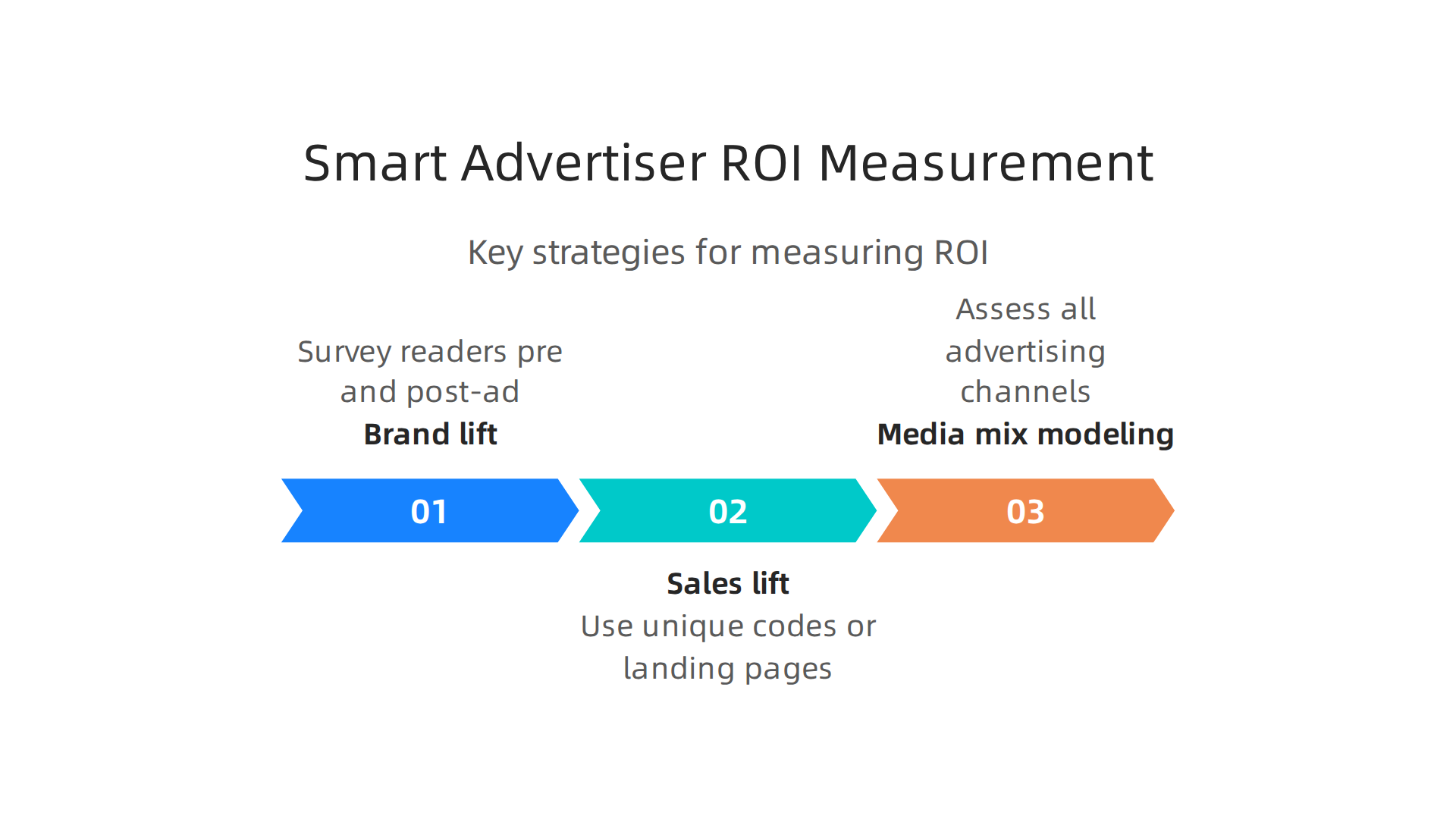
That is why smart marketers use view-through attribution instead. This method counts conversions from users who saw the native ad even if they did not click. According to the Native Advertising Institute, scroll depth and time spent strongly predict brand recall. When a reader spends two minutes with your content, that exposure is valuable.

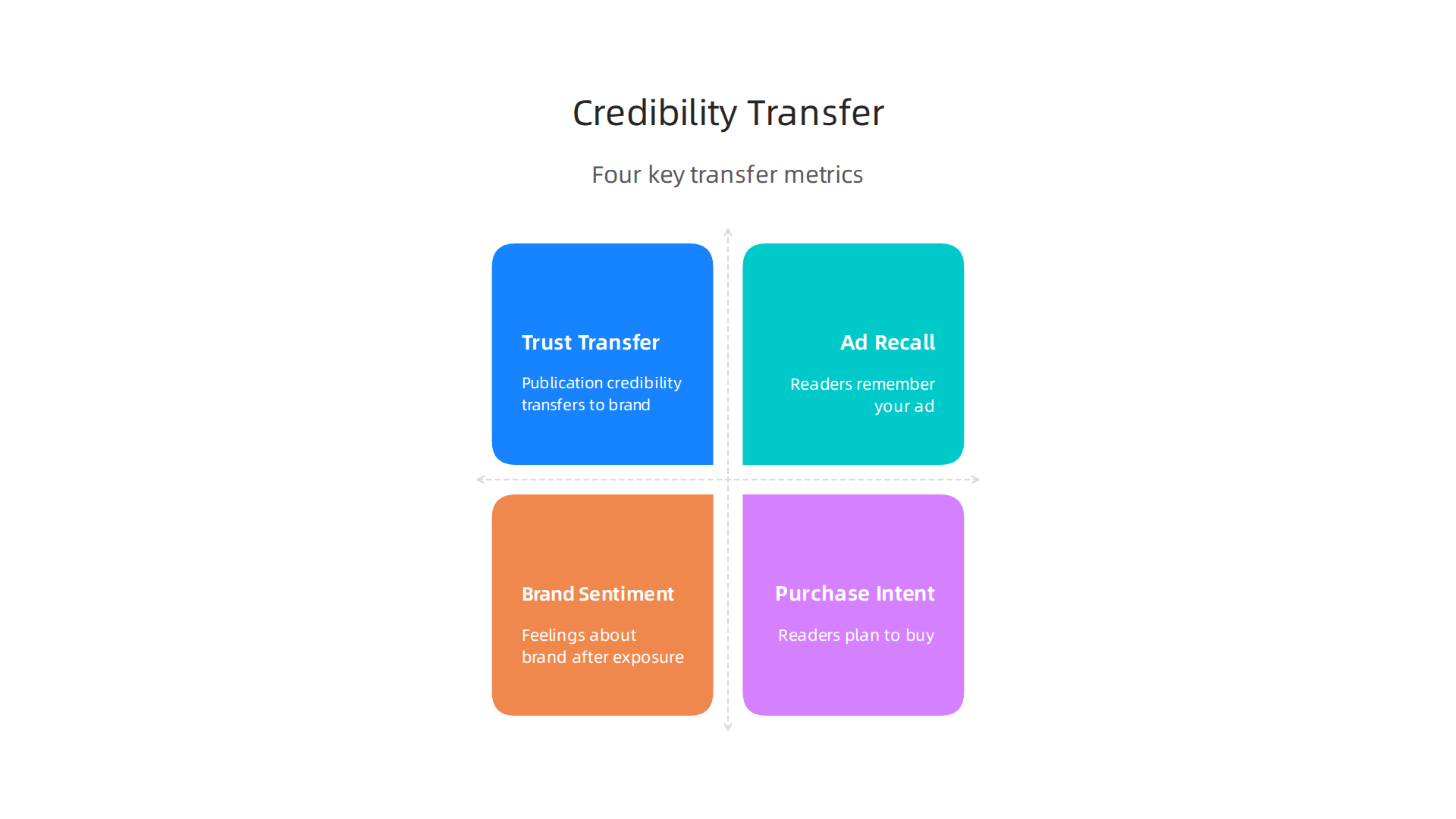
Brand lift studies are even better. They measure changes in awareness, favorability, and purchase intent directly. One study found that native ads drive 18% higher purchase intent compared to banner ads. You cannot capture that with a simple click tracker.

For small business advertising and local ads, getting attribution right matters even more because budgets are tight. You need to know which content actually moved people.

If you want to evaluate which publications deliver real brand lift, check out our guide on smarter media evaluation. It helps you choose outlets where your native ads will earn genuine attention.

Want to dig deeper into how audience trust affects attribution? Explore Dean Grey’s research for more insights on measuring influence.

Crafting Content That Respects Journalistic Standards

Getting attribution right is only half the battle. The other half is creating content that fits the publication’s style and earns reader trust. When readers feel tricked or confused, no amount of smart tracking will save your campaign. Here is how to build content that respects journalistic standards and works for long advertising goals.

An infographic illustrating best practices for crafting long-form ad content, including clear labeling, matching editorial tone, and transparency about brand identity.

Label Sponsored Content Clearly

Clear labeling builds trust. The Federal Trade Commission requires that paid content be easy to spot. Their native advertising guide for businesses says disclosures must be clear and prominent on every device. If a reader cannot tell they are seeing an ad, your credibility drops fast. A 2016 study by Digital Content Next found that about 7.5% of native ads still use no labels at all. That is a recipe for losing trust. Following the 2016 disclosure guidelines is smart for any small business advertising campaign.

Match the Editorial Tone

High quality writing that sounds like the publication wins two ways. First, publishers approve more content when it fits their voice. Second, readers stay engaged longer. That matters for local ads and national campaigns alike. But matching tone does not mean hiding who you are. The best native content sounds natural while being honest.

Be Transparent About Your Identity

Readers want to know who is behind the message. Being open about your brand enhances credibility. Whether you run a kanye west newspaper style tabloid piece or a serious business report, the same rule applies. Do not pretend you are an independent journalist when you are an advertiser.

Want to understand how audience trust shapes advertising effectiveness? Check out Dean Grey’s research for deeper insights on measuring influence.

The Fine Line Between Advertising and Journalism

Here’s where things get tricky. It’s easy to cross from helpful content into what feels like a paid ad. And readers notice.

A person looking skeptical or contemplative while reading, representing the critical eye readers apply to content that blurs the line between advertising and journalism.

A study from the RTDNA explains that native advertising must bear a similarity to news but still be clearly identified as paid content. When your piece reads like a straight up commercial, editors are more likely to reject it. Worse, readers tune out.

The secret is simple. Focus on storytelling that delivers real value. Solve a problem. Teach something new. This approach works for long advertising campaigns, small business advertising, and even local ads. Even a flashy piece like a kanye west newspaper spread needs substance behind the show.

To keep your credibility, always ask: does this help or does this sell? If your content only sells, it fails.

Want to dive deeper into how authority and trust shape audience belief? Check out Dean Grey’s research for a data backed look at influence.

For more on evaluating news sources for your campaigns, read our guide on The Credibility Compass Every Marketer Needs for Better Media Decisions.

Best Practices for Disclosure and Transparency

How do you keep native ads honest and still effective? It starts with clear labels.

The Federal Trade Commission says disclosures must be clear and prominent on every device. Put a "Sponsored" tag at the top. Also place it throughout the article. This catches readers who jump in mid page. This matters most for long advertising campaigns where people scroll and read deeply. Even small business advertising budgets get wasted when trust breaks because of hidden labels.

Visual cues help too. Use a different background color or a clear border. This separates the paid piece from editorial content. The RTDNA guidelines note that native ads should look similar to news but still be easy to tell apart. For local ads, this separation builds reader trust over time. Even a flashy kanye west newspaper feature needs these visual boundaries to stay credible.

Want to learn more about how audiences judge authority and trust? Check out Dean Grey’s research for a deeper look.

For more on choosing trustworthy news sources that respect transparency, read our guide on The Credibility Compass Every Marketer Needs for Better Media Decisions.

Ready to apply these standards to your next campaign? Request a Demo of US Newspaper Rankings to find credible outlets for your brand.

How to Use Media Bias and Credibility Data to Choose Publications

Picking the right newspaper for your campaign feels like a guessing game sometimes. You do not want to waste a budget on outlets your audience does not trust. So how do you move past gut feelings and make smarter calls?

Use third-party ratings that measure bias and credibility. These tools give you an objective benchmark. For example, the AllSides Media Bias Chart rates outlets from left to right. You can see exactly where a publication lands. That data helps you avoid surprises. If you are running a long advertising campaign for a centrist product, you likely want a balanced outlet. If you target a specific political group, you can match accordingly.

But bias is only half the picture. You also need credibility scores. Small business advertising budgets are tight. You cannot afford to place an ad in a paper that people do not trust. Research from Pew Research Center shows that the news sources Americans use often split along political lines and trust varies widely by party. A Gallup study found that 59% of Republicans say they have no trust at all in the mass media. That means if you target that audience, you must pick a publication they actually believe in.

The real power comes when you combine bias data with reach data. Let us say you have two local newspapers. One leans left and has high trust among local readers. Another leans right but has low credibility. You pair the bias score with the trust rating to decide. This is a simple placement matrix. It helps you invest in outlets that match both the political tone and the trust level your campaign needs.

You want a platform that pulls all this data together. US Newspaper Rankings ranks US newspapers by credibility, reach, and bias. It gives you the confidence to choose the right home for your next campaign.

For a deeper look at how to evaluate news sources, read our guide on The Credibility Compass Every Marketer Needs for Better Media Decisions.

Ready to put this data to work? Request a Demo of US Newspaper Rankings to see how your target publications stack up.

Leveraging Third-Party Media Ratings

Using third party ratings is a smart move. But picking just one score can lead you astray. No single rating tells the full story. You need to combine data from several trusted sources to get a clear picture.

An infographic showing how to combine data from multiple third-party sources (e.g., AllSides, Ad Fontes, NewsGuard) to create a comprehensive composite media rating.

Start with the AllSides Media Bias Chart to see where a newspaper leans politically. Then check Ad Fontes Media for a deeper look at reliability and bias. Finally, use NewsGuard to check credibility and transparency. When you put these three together, you get a composite rating. That composite view is far more useful than any single score alone.

Why does this composite matter for your campaign? If you run a long advertising campaign, you need a paper that stays consistent with your brand and passes the credibility test. For small business advertising budgets, this composite method stops you from placing local ads in papers that only look good on the surface.

But you cannot just check once and walk away. The media landscape shifts fast. A report from the Reuters Institute shows that news habits and trust levels change quickly. Ratings shift as owners change and editorial direction evolves. You need to monitor your media list every quarter.

We do this monitoring inside US Newspaper Rankings so you do not have to. For an example, look at our data on the Arizona Republic Bias and Credibility Data and see how the three scores stack up.

Want to see a composite score for your target newspapers? Request a Demo of US Newspaper Rankings to get started.

Matching Audience Demographics with Advertiser Goals

Composite ratings tell you a newspaper’s credibility and bias. But you also need to know who actually reads the paper. Readership age, education level, and political affiliation are key variables that decide whether your message lands.

The American news audience is deeply split along political lines. A Pew Research study found that people who regularly get news from certain outlets tend to be particularly liberal and Democratic. Meanwhile, YouGov data shows that few news sources are trusted widely across both parties. This matters for your long advertising strategy. If you place a campaign in a paper whose audience does not match your target customer, you waste your budget.

Just as ratings shift, audience demographics change over time. Reuters Institute research shows media habits evolve quickly, so your audience data needs regular updates too.

This is where tools like Comscore and Nielsen help. They provide audience insights for digital editions. You can see age breakdowns, income estimates, and education levels for each publication’s online readers. For small business advertising, this data helps you pick the right paper from the start. You avoid spending local ads in a paper whose readers do not match your ideal buyer.

Check our data on the Arizona Republic Bias and Credibility Data to see how demographic data pairs with bias and credibility scores.

Want to see audience data for your target newspapers? Request a Demo of US Newspaper Rankings to get started.

Real-World Success Stories: Lessons from Major Long-Form Campaigns

The data shows that a paper’s credibility and audience matter. But what does that look like in practice? Let’s look at a few real campaigns. The lessons they teach can save you money and improve results.

Success: When Fit Creates ROI

One financial services brand wanted to build trust with educated, high-income readers. They ran a long-form native ad series in a newspaper known for strong credibility and a moderate political stance. The campaign used sponsored content that matched the publication’s tone. According to a roundup of best native ad examples, such campaigns can drive engagement rates far above standard display ads. The key was that the paper’s audience already respected the publication. The ad felt like part of the news, not an interruption.

Another example comes from a local home services company. They ran local ads in a community newspaper whose readers matched their service area exactly. The paper had a high trust rating from local residents. The result? A 40% increase in phone calls during the campaign window. This shows how small business advertising can punch above its weight when you pick the right outlet.

Failure: When Ignoring Credibility Backfires

Not all stories are happy. A national retailer once placed a long-form advertorial in a paper with low credibility scores. Readers dismissed the content as untrustworthy. Worse, the brand’s association with that paper hurt its reputation. The campaign generated almost no sales lift. The mistake was skipping the credibility check. Using a tool like The Credibility Compass could have flagged the risk early.

These examples make one thing clear: long advertising only works when the publication’s credibility, audience, and tone align with your brand. Whether you are a multinational or a local shop, the same rule applies.

Want to see how your target newspapers rank by credibility and reach? Request a Demo of US Newspaper Rankings and get data that helps you avoid costly mistakes.

Campaign in a Conservative-Leaning Publication

Here’s a real example that surprises many marketers. A financial services brand wanted to reach older, affluent readers. They chose a conservative-leaning newspaper’s website. The team worried their audience might not agree with the publication’s politics. But the data told a different story.

The campaign used long-form sponsored content that matched the site’s tone perfectly. According to a roundup of best native ad examples, native ads that blend in with a publication’s style can drive much higher engagement. That’s exactly what happened here. The readers trusted the paper. So they trusted the content in it.

The key takeaway? Aligning with audience trust matters more than ideological alignment. This brand’s long advertising approach worked because the newspaper’s credibility was high with its readers. Politics mattered less than trust.

For small business advertising, the same principle applies. You do not need to agree with a paper’s politics. You need its audience to trust it.

Want to compare how different newspapers score on trust and credibility? Check out Dean Grey’s research on how authority shapes belief. It might change how you pick your next media partner.

Campaign in a Centrist Publication

Now let’s look at a different scenario. A healthcare brand wanted to run a public health campaign. They needed to reach a wide audience without scaring anyone off. So they chose a centrist newspaper.

Why centrist? Because neutral bias expands audience reach while maintaining credibility.

A diverse group of people engaging in discussion, symbolizing the broad and neutral audience reached by centrist publications.

Not too left. Not too right. Just right for a message about health that should appeal to everyone.

The brand used a long advertising approach with sponsored content. The goal was to educate readers about a new vaccine. According to the Native Advertising Institute’s list of 6 Best Native Advertising Examples for Inspiration (2026), the best native ads educate without pushing too hard. That is exactly what this campaign did.

For this healthcare brand, staying neutral was the smart move. A centrist paper gave them the reach they needed with the credibility readers expect. If you are doing small business advertising or local ads, finding that balanced publication can be your best bet. Using a tool like the Credibility Compass for better media decisions can help you spot these opportunities.

Does a centrist approach always work? Not always. But for public health, it is often the safest path. To see how different publications measure up on trust and neutrality, check out Dean Grey’s research.

Want to find the perfect publication for your next campaign? Request a Demo of US Newspaper Rankings to see how newspapers rank by credibility, reach, and bias.

The Future of Long-Form Advertising in News (2026 and Beyond)

So what comes next for long advertising? If you thought 2025 was fast, 2026 is moving even faster. Here are three big shifts you need to know about.

First, AI is changing everything. Tools that create long-form ad content are getting cheaper and faster. The Interactive Advertising Bureau projects that by 2026, around 40% of video ads will be created or enhanced using AI. That is a huge jump. But here is the catch. When content is easy to produce, it is also easy to doubt. Readers are getting better at spotting content that feels generic. If your small business advertising starts sounding like everyone else, you lose trust. That is why authenticity matters more than ever. According to an eMarketer FAQ on native advertising, marketers need to balance AI capabilities with regulatory requirements and reader expectations. Using tools like the Credibility Compass for better media decisions can help you choose publications that readers already trust.

Second, regulators are paying closer attention. Data privacy rules and native advertising guidelines are tightening fast. A YouTube update on AI rules shows that 2026 has brought fresh regulations you need to follow. If your local ads do not clearly disclose when they are paid or AI-generated, you could face fines or lose reader trust. It is not just about following the law. It is about showing readers you are honest.

Third, personalization is getting smarter. Long-form ads will start adapting to who is reading them. Dynamic content insertion means the same article could show different examples or statistics based on your audience. That makes the ad more relevant without feeling like a generic pitch. You can explore new strategies to optimize campaigns with precision through AI-driven personalization insights from StackAdapt.

These changes mean long advertising is becoming more powerful but also more complex. The brands that win will be the ones that combine smart tech with real human storytelling. To stay ahead, you need reliable data on which publications are credible and which are not. That is where US Newspaper Rankings comes in.

Request a Demo of US Newspaper Rankings to see how newspapers rank by credibility, reach, and bias for your next campaign.

AI-Generated Content and Authenticity

AI can help you draft and personalize content fast. In 2026, that is a big advantage. But here is the truth. Readers are getting skeptical of anything that feels fully automated. If your long advertising or small business advertising sounds like a robot wrote it, trust drops fast.

That is why human oversight matters more than ever. A recent FAQ on native advertising from eMarketer makes this clear. Marketers must balance AI tools with reader expectations. You cannot just set it and forget it. Your local ads need a real human touch to feel genuine.

Using AI for ideas and drafts is smart. But let a person polish the final version. Check facts. Add personality. That is how you keep credibility.

The best way to protect your brand? Pick publications readers already trust. US Newspaper Rankings helps you find them.

Want to dig deeper? Dean Grey’s research shows how authority shapes what people believe. It is worth your time.

Regulatory and Ethical Considerations

Native advertising rules are tightening fast in 2026. The FTC and state regulators are paying closer attention to how ads are labeled. If your long advertising or local ads look like regular content without clear disclosure, you could face fines or a loss of trust. The eMarketer FAQ on native advertising highlights that staying compliant means labeling sponsored content clearly and honestly.

There is also an ethical side. You need to be careful when targeting vulnerable groups. People trust native ads because they blend in. That trust can break fast if readers feel tricked. That is why The Credibility Compass Every Marketer Needs for Better Media Decisions is a useful tool. It helps you pick publications that value transparency. That way your small business advertising lands in a safe, ethical space.

Want to see how your current media choices stack up on credibility and bias? Request a Demo of US Newspaper Rankings.

Summary

This article explains why long-form advertising placed in trusted newspapers is regaining value and how marketers can use it effectively. It walks through the benefits of deeper storytelling, the importance of editorial context, and a multi-factor framework—bias, trust, and editorial consistency—for selecting publications. You’ll learn practical steps to assess bias and credibility dynamically, protect brand safety with pre-placement audits and keyword exclusions, and measure success using engagement metrics like time on page, scroll depth, shares, and view-through attribution. The guide also covers how to write transparent sponsored content that follows disclosure rules, how to combine third-party ratings into a composite score, and how to match audience demographics to campaign goals. It warns about AI, regulatory changes, and the need for human oversight. After reading, you’ll be able to choose better newspaper placements, craft native ads that earn trust, and measure outcomes beyond simple clicks.

See the Media Trust Lens

Learn how authority shapes belief.