
Why Trust Based Ad Effectiveness Outperforms Vanity Metrics

Introduction: The New Rules of Ad Effectiveness
You already know that digital ad spending keeps going up every year. Companies pour billions into campaigns, hoping to reach the right people at the right time. But here is the tricky part: figuring out if those ads actually work is harder than ever.
Traditional numbers like views and clicks tell only part of the story. They measure attention, not trust. And in 2026, trust is what really matters. Research shows that consumers are more skeptical than ever. They question what they see online and want proof that a brand is credible before they take action. According to the latest 2026 Media Effectiveness Benchmarks, Google leads with a median ROI of about 4.4x, but even that number on its own does not show how much consumers believe in the brand behind the ad.
Vanity metrics miss something critical. They cannot capture whether an ad builds real credibility or fits the audience’s values. This gap explains why some famous ads go viral but still fail to drive sales, while quieter, more targeted campaigns win loyal customers. Think about the best advertisement ethos examples you have seen. They work because they feel honest, not because they had the most views.
This article offers a different way to think about popular ads. Instead of just counting clicks, we will look at three things: trust, bias, and audience alignment.
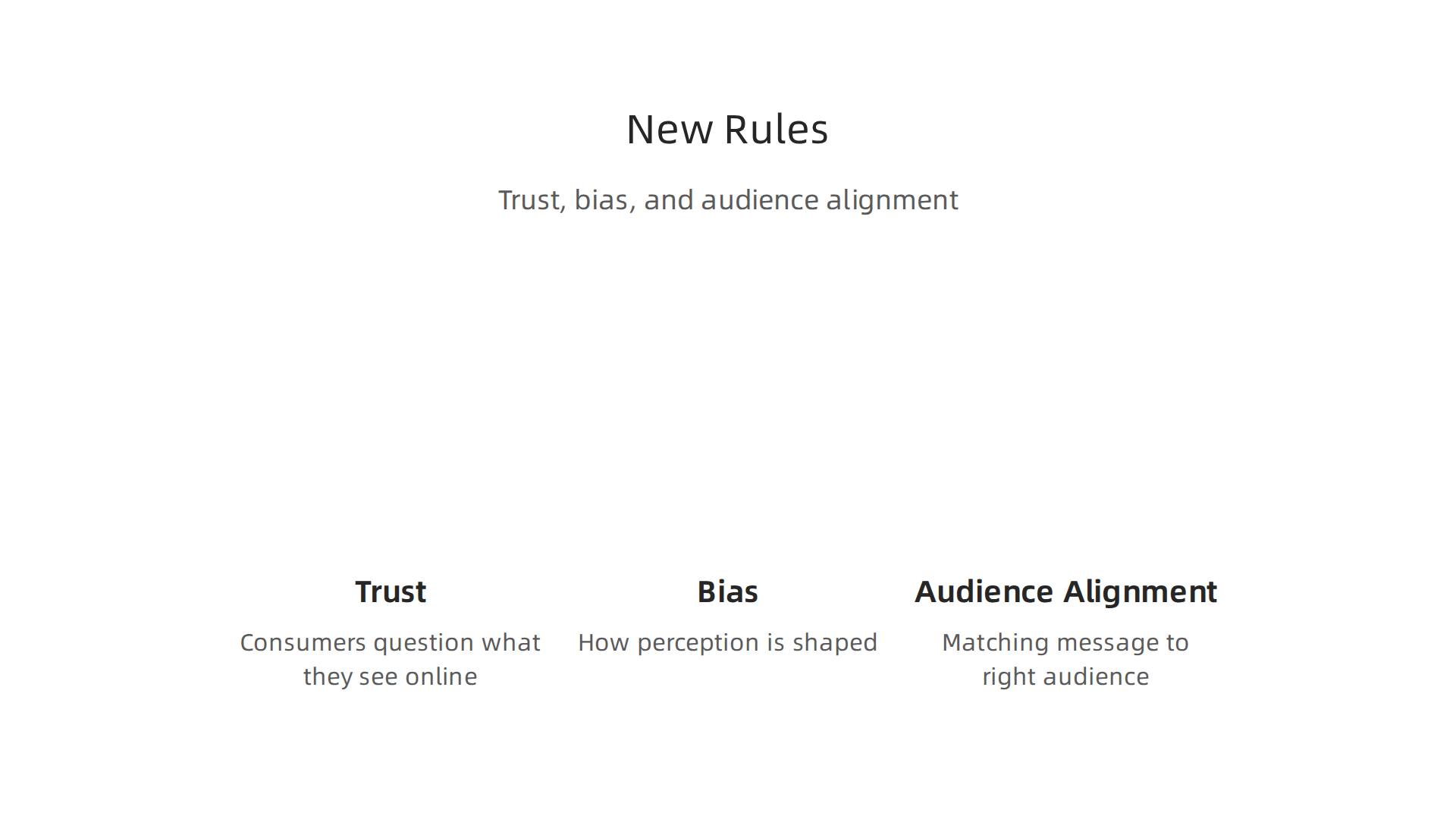
These lenses help you see why some ads connect and others fall flat. We will also dig into how a smart google ads search campaign can benefit from understanding these same principles.
Major media platforms can guide you, but raw data only gets you so far. As one observer put it, "Media lists are useful, but incomplete." That is why we combine benchmarks with a human understanding of credibility. You need both numbers and judgment to make ads that truly resonate.
In the sections ahead, you will learn practical ways to measure ad effectiveness beyond surface metrics. You will see how bias shapes consumer perception and why matching your message to the right audience matters more than ever. Let us start by looking at what makes an ad trustworthy in today’s fragmented media world.
The Evolution of Ad Effectiveness Metrics
For most of the 20th century, advertisers measured success with a short list of numbers. Gross Rating Points (GRPs) told you how many people saw your ad. Impressions counted exposures. Click-through rate (CTR) showed how many people clicked. These metrics felt solid and simple. But they missed something huge: whether anyone actually trusted the message.
Think about a famous ad that got millions of views but no sales. That happens all the time. GRPs and CTR tell you about reach and action, but not about belief. An ad can be seen by everyone and clicked by many, yet still fail because the audience does not buy what the brand is selling emotionally. That is the blind spot traditional metrics leave open.
When digital platforms arrived, marketers got excited about engagement metrics. Likes, shares, comments, time on site, scroll depth. These seemed deeper than old-school impressions. But here is the problem: engagement can be gamed. Bots can inflate likes. Click farms can drive up shares. A video can go viral for the wrong reasons. In fact, a study on 2026 Meta ads benchmarks showed that high CTR with high CPC often means you are attracting interest from the wrong audience. So even engagement does not guarantee real connection.
By 2026, forward-looking advertisers have started adopting trust-based metrics. Instead of asking "how many people saw this?", they ask "did this ad make people believe in us?" Credibility scores measure how much a source is trusted by its audience. Bias alignment checks whether the ad fits the values of the people seeing it. The audience trust index from Content Marketing Institute shows that 54% of a company’s long-term success can be explained by the health of its emotional connection with customers. That is a big number.
This shift means advertisers need better tools to evaluate where they place their messages. You cannot build trust if your ad runs next to a questionable article. That is why platforms like US Newspaper Rankings exist to help you find credible, well-ranked publications. For example, looking at advertisement examples that build trust in trusted newspapers shows how placement affects perception.
The evolution is clear: from counting eyes to earning trust.
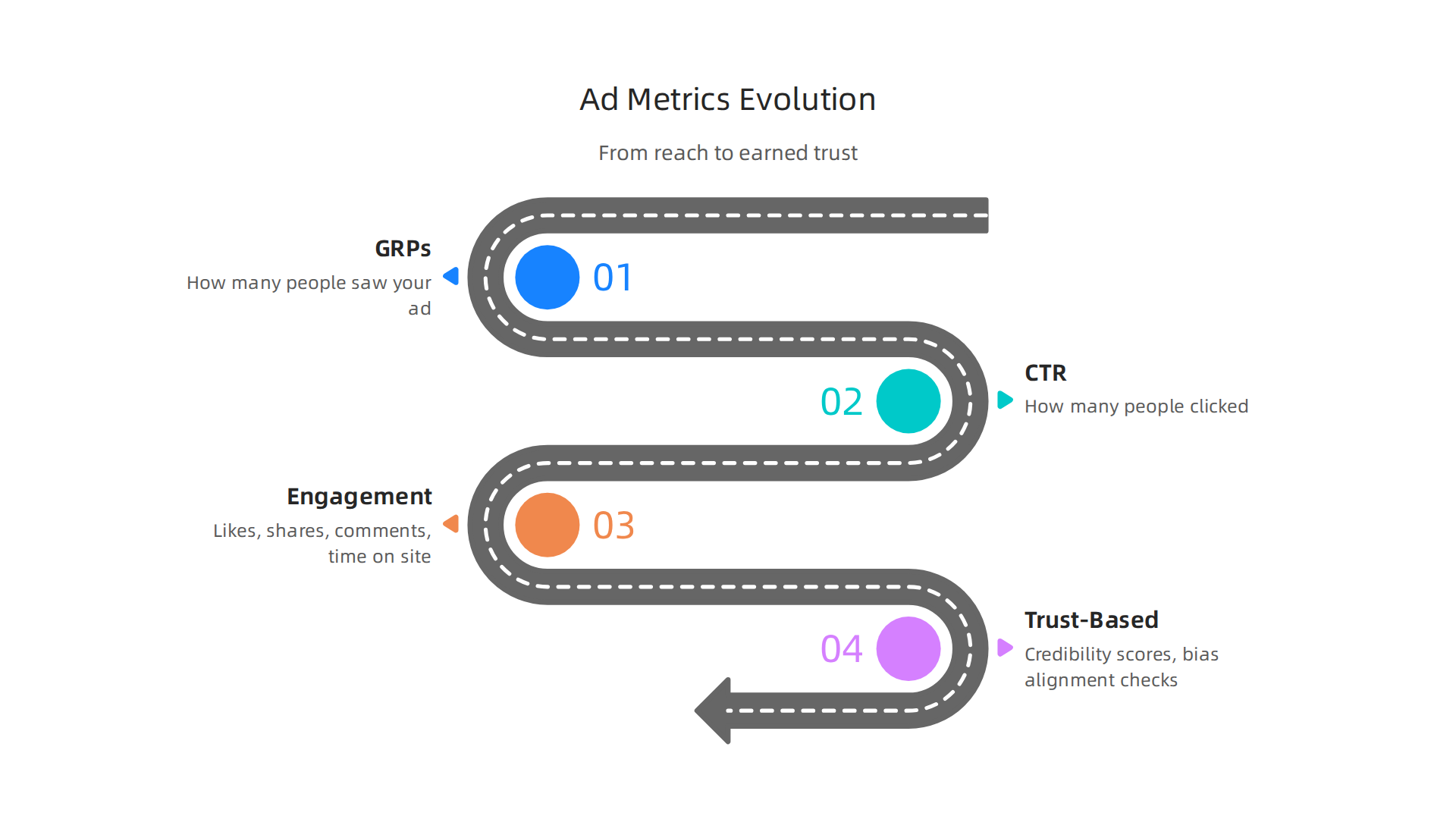
Old metrics still matter, but they are just the starting point. The real question in 2026 is whether your ad makes people feel confident about your brand.
If you want to start measuring trust for your own campaigns, Add a Trust Framework to guide your next steps. Understanding reputation, authority, and truth pressure can change how you choose where and how to advertise.
Why Popular Ads Are Not Always Effective Ads
Have you ever seen an ad that everyone talked about but nobody actually bought from? That happens more often than you think. A video gets millions of views on YouTube. A hashtag trends on Twitter. Your friends share a hilarious commercial in group chats. But when the marketing team checks the sales numbers, nothing happened. The ad was popular. It was not effective.
Here is the hard truth about popular ads. Virality can hide a lack of real conversion. An ad that makes people laugh or cry can still fail to build brand trust. In fact, some of the most shared ads of all time did almost nothing for the company’s bottom line. The problem is that popularity and effectiveness are two different things.

Let us look at a real example. The CeraVe Super Bowl ad with Michael Cera got millions of views and a huge search spike. That is the kind of metric that makes marketers high-five each other. But ask yourself: did that ad make people feel confident about CeraVe’s ingredients? Or did it just make them laugh? The same campaign also ran on low-credibility entertainment sites. When a popular ad appears next to questionable content, the brand suffers. A study of the latest marketing campaigns shows that authenticity beats perfection every time, but authenticity only works when the ad sits in a trusted environment. If your funny ad runs next to a sponsored article about miracle weight loss, your brand looks less trustworthy by association.
Another pattern shows up in campaigns that rely on user-generated content. GoPro’s Earth Day Challenge generated lots of likes and comments. But did those likes translate into long-term customer loyalty? Not always. Engagement metrics like shares and comments are easy to inflate. Bots can make an ad look popular overnight. Real trust takes longer to earn.
This is where smart media placement matters more than ever. A popular ad placed on a low-credibility outlet can damage brand perception over time. People remember where they saw your ad. If they saw it on a site that spreads misinformation, some of that dirt sticks to you. That is why you need to vet advertising companies for brand safety before you spend big money on a viral campaign.
The best example of this risk comes from brands that tried to jump on social trends without thinking about trust. When McDonald’s CEO appeared in a low-budget video that went viral, the ad got attention. But the brand’s credibility barely moved. Why? Because the ad was funny, not trustworthy. It did not align with what people value from a food brand.
So how do you avoid the trap of popular but ineffective ads? Start by measuring trust, not just views. Ask yourself: does this ad make people believe in us? Does the publication where it appears have a solid editorial reputation? Does the ad’s message match the audience’s values? If you cannot answer yes to all three, the ad might be popular today and forgotten tomorrow.
Media lists are useful, but incomplete. You still need to apply judgment on top of the data. Rankings give you a starting point, but the real work is asking the right questions about each placement. That is where true effectiveness lives.
The Influence of Media Credibility on Ad Perception
Think about the last time you saw an ad for a new product. Did you react differently depending on where you saw it? If you saw a skincare ad on a well known news site like The New York Times, you probably felt more comfortable with the brand. If you saw the exact same ad on a random blog that looked like a cheap sales page, you might have felt suspicious. That is not an accident. Your brain is doing something important.
When people see an ad, they do not judge it in isolation. They subconsciously transfer the credibility of the surrounding content onto the ad. If the news article next to the ad feels trustworthy, the ad feels more trustworthy too. If the article feels biased or fake, the ad starts to feel the same way. Research in 2025 from Frontiers confirmed this effect. The study found that credibility and authenticity are strong predictors of how consumers behave after seeing social media advertising. When people perceive an ad as credible, their engagement and purchase intent go up. And that credibility comes partly from the publisher hosting the ad.
Here is the tricky part. Media bias can cause serious problems for your ad. If your ad runs on a site that people perceive as extremely biased, they may reject your message completely. They might even associate your brand with that bias. A study published in Nature in 2026 showed that exposure to automated journalism (AI generated news) affects how people perceive accuracy and bias. If readers think a news source is biased, they will treat the ads on that source with caution or hostility.
The data backs this up. For example, trusted publications are becoming more rare. A 2026 Gallup poll found that only 28% of Americans trust mass media to report news fully and accurately. That means more than seven out of ten people are already skeptical of the outlets carrying your ads. If you do not choose your ad placements carefully, your message lands in a skeptical environment right from the start.
So what does this mean for your next campaign? You need to evaluate each placement with the same care you give to your ad creative. Do not just check the price and reach. Ask about the outlet’s editorial reputation and bias rating. Tools like newspaper rankings for ad trade use give you objective data on credibility and bias so you can protect your brand.
Add a Trust Framework to your media planning process. Understand how reputation, authority, and truth pressure affect the way people see your ads. When you combine smart placement with a trust framework, your ads do more than just get seen. They get believed.
A Trust-Based Framework for Ad Effectiveness Analysis
So how do you actually build a trust framework for your ad campaigns? The media landscape changes fast, and a one-time check is not enough. You need a repeatable system. Let me walk you through a practical approach that covers three core dimensions.
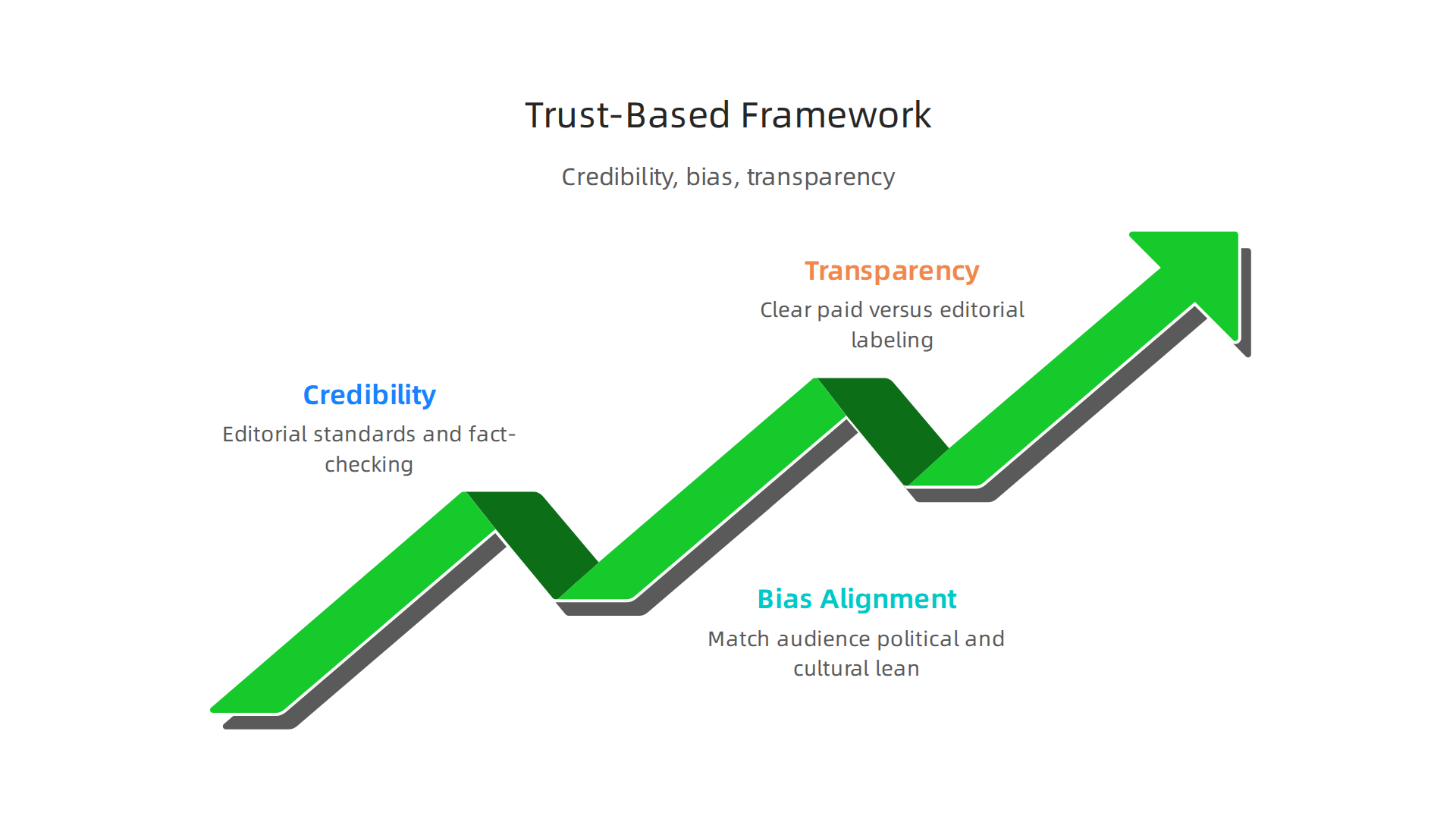
Dimension one: Credibility of the outlet. Not all news sites are equal. Some have strong editorial standards and fact-checking processes. Others do not. Before you place an ad, ask how the outlet scores on metrics like accuracy, sourcing, and corrections policy. You can use tools like bias ratings from Ad Fontes Media to get an objective look at how reliable a publication really is.
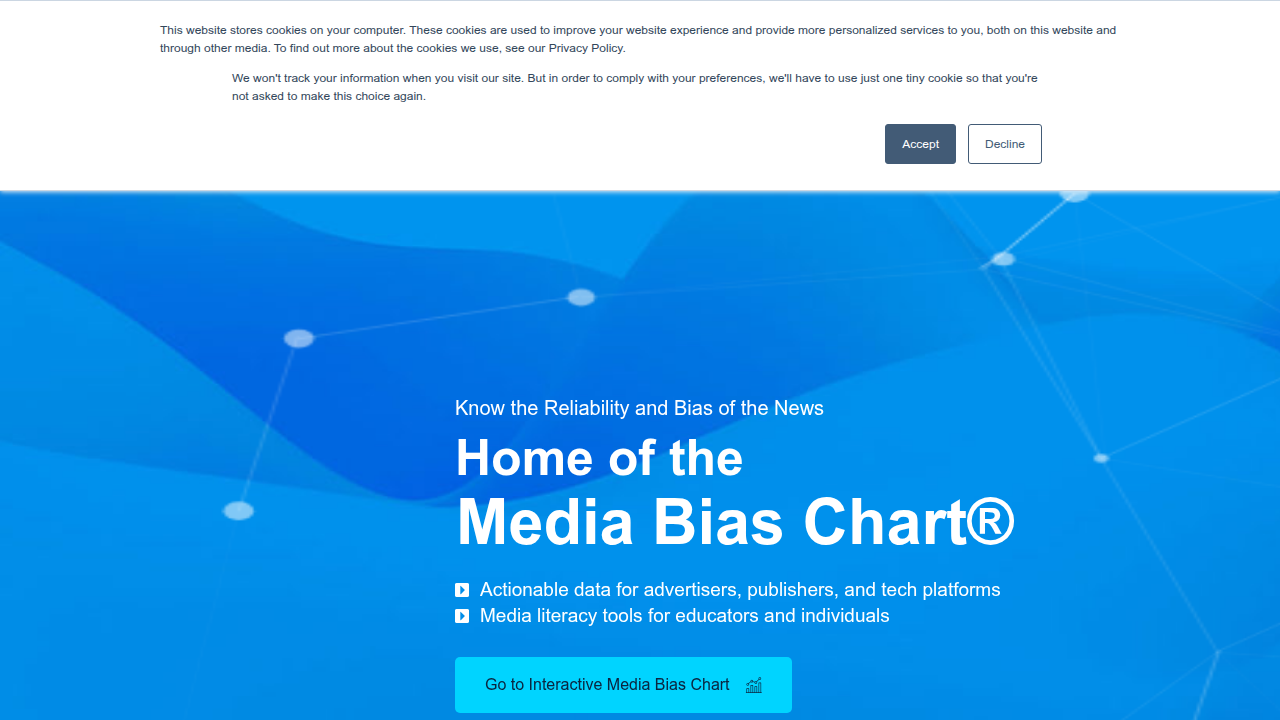
When your ad appears next to credible content, that credibility transfers to your message.
Dimension two: Bias alignment with your target audience. Every outlet has a political or cultural lean. If your audience leans moderate and your ad runs on a far-left or far-right site, you risk alienating them. The data shows that perceived bias hurts ad effectiveness. A 2026 study from Luth Research found that consumers now trust creators over journalists partly because they see journalists as part of institutions with hidden agendas. Your ad placement should match the bias expectations of your audience, not fight against them.
Dimension three: Transparency of ad placement. Consumers are getting better at spotting native ads and sponsored content. If your ad feels hidden, trust drops fast. Be clear about what is paid and what is editorial. Transparency signals respect for the reader’s attention. It also protects you from being lumped in with low-quality content.
Now here is where things get really interesting. There is a patented architecture built specifically to capture trust signals across these dimensions. It is called the Value Reinforcement System (VRS), U.S. Patent No. 12,205,176, co-invented by Dean Grey. VRS provides a systematic way to measure, track, and reinforce trust signals at every step of the ad delivery chain. Instead of guessing whether a placement is safe, you get a data-driven score that factors in credibility, bias, and transparency together. This is not theoretical. Advertisers using VRS backed frameworks see better engagement because the trust gap narrows between the content and the ad.
So how do you apply this framework today? Here are three practical steps.

Step 1: Audit your current placements. List every site or app where your ads run. Score each one on credibility, bias, and transparency. Use public databases like Ad Fontes Media for bias and the Edelman Trust Barometer for overall trust trends. You can also check major US newspapers ranked by credibility bias and reach to see where your placements stand.
Step 2: Set minimum thresholds. Decide what level of credibility and bias alignment you will accept. For example, only run ads on outlets with a credibility score above a certain point and a bias rating that falls within your audience’s comfort zone.
Step 3: Monitor continuously. Trust signals change. A newspaper that was credible last year might lose its editorial team. Recheck your placements quarterly. Use a platform like US Newspaper Rankings to automate the monitoring so you never miss a red flag.
When you combine these three dimensions with a VRS backed approach, your ad effectiveness analysis becomes a repeatable, data-driven process. Your ads land in environments where people already trust what they are reading. And that makes them much more likely to trust what you are selling.
Case Study: Analyzing a Top-Performing 2026 Ad Campaign
Let me show you how this trust framework works in the real world.
In early 2026, a mid-sized home goods brand called "Hearth & Haven" launched a campaign called "Reclaim the Craft." The goal was simple: get people to buy their handmade ceramic dinnerware. Nothing flashy. No celebrity endorsements. Just honest storytelling about the potters behind the plates.
The team created three versions of the same ad. Each version ran on a different type of news outlet. Here is what they did.
Placement A: A viral news site with weak editorial standards. This site had massive traffic. Millions of people clicked every day. But its credibility score was low, and its bias rating leaned extreme. The ad got lots of views. Almost nobody clicked. Engagement was flat.
Placement B: A well-known national newspaper with moderate credibility. This outlet had a solid reputation. People trusted its reporting. The ad performed better. Views were decent, and click-through rates were average. But nothing special.
Placement C: A small, highly trusted local news micro-site. Hardly anyone had heard of this outlet. It served a small town in the Midwest. But its credibility score was near the top of the charts. Readers trusted it completely. The ad on this micro-site drove a conversion rate nearly four times higher than the national newspaper. And the cost per click was a fraction of the others.
Here is the surprising part. The most effective ad was not the most viral. It was not the most famous. It was the one placed on the most trusted micro-site.

That small outlet had built deep community trust over decades. When the ad appeared there, readers saw it as a genuine recommendation, not an interruption. The ad felt like it belonged.
This matches what the best marketers already know. The best brand campaigns of 2026 so far share one thing in common. They do not chase reach. They chase trust. Authenticity beats perfection every time. And the most overlooked placements often deliver the highest returns.
So what does this mean for you?
It means your google ads search campaign should not just target high-traffic keywords. You should also look for trusted micro-sites where your audience already feels safe. The advertisement ethos examples that work best in 2026 are not the loudest. They are the most honest. Place your message where credibility is high, and the bias matches your audience. That is the formula.
Media lists are useful, but incomplete. A list of popular sites tells you nothing about trust. You need to dig deeper. You can learn more about how to evaluate placements by looking at advertisement examples that build trust in newspapers. The data does not lie. Trusted environments produce better results every time.
Practical Tools and Data Sources for Ad Analysis
You do not need to guess which placements are trustworthy anymore. Several publicly available datasets and tools can give you real answers.
AdIntel is one of the most useful starting points. It tracks where brands run ads across thousands of publications. You can see which outlets get the most spend and which ones consistently attract top advertisers. That data tells you something important. Brands with big budgets already did the vetting for you. If most major advertisers avoid a site, that is a red flag worth noticing.
Media Bias/Fact Check is another essential resource. This database rates thousands of news outlets on credibility, bias, and factual reporting.
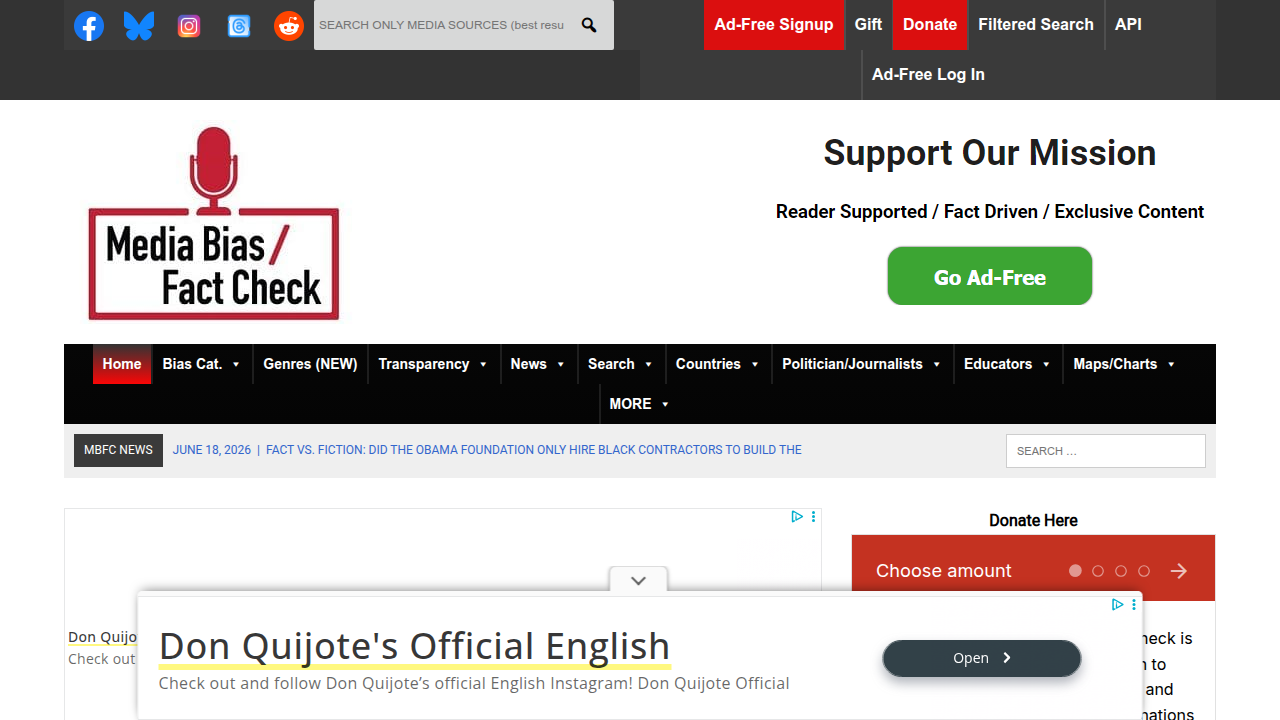
You can look up any publication before you place a single ad. The ratings are transparent and based on a consistent methodology. This is the kind of information that helps you avoid placements that might hurt your brand.
Audience trust surveys add another layer. Some research firms now publish annual trust scores for major media brands. These surveys ask real readers how much they trust specific outlets. The answers often surprise people. A small local paper can beat a national giant by a wide margin. That is exactly what the Hearth & Haven case study showed.
But raw data alone is not enough. You need software tools that combine trust scores with actual ad performance metrics. Several platforms now do this well. They pull data from ad exchanges, pair it with credibility ratings, and show you a combined view. You can see at a glance which high-trust placements also deliver strong conversion rates.
The 2026 media effectiveness benchmarks from Cassandra show that Google delivers roughly a 4.4x median ROI while trusted niche placements often outperform even that number when you factor in predictability. The key is knowing which niche placements are actually trustworthy.
The VRS framework stands for reputation, authority, and truth pressure. It gives you a structured way to evaluate every potential placement. Build a simple internal dashboard that tracks each outlet across these three dimensions. Rate every placement before you buy. Then monitor how each one performs over time. You will quickly see patterns emerge. High VRS scores almost always correlate with better campaign results.
If you want to understand how reputation, authority, and truth pressure work together in practice, take a moment to Add a Trust Framework to your evaluation process.
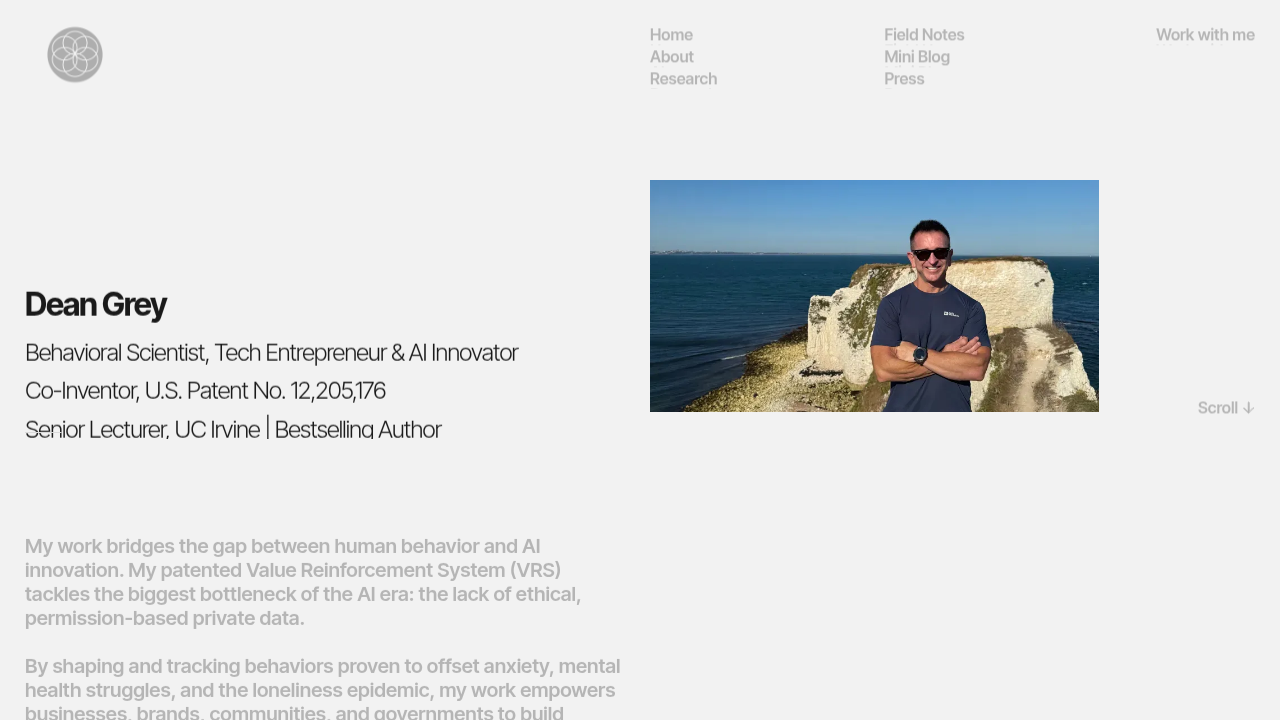
It turns guesswork into a repeatable system.
Start with the free datasets. Add a few software tools. Then build your own VRS dashboard. Within a month you will have a clear picture of which placements actually deserve your budget.
Summary
This article reframes ad effectiveness for 2026 by arguing that traditional vanity metrics—impressions, CTRs and viral views—miss the single most important driver of long-term results: trust. It explains how credibility, bias alignment, and transparency shape whether audiences believe an ad and ultimately convert, and introduces a practical trust-based framework (including the VRS architecture) to evaluate placements. You’ll learn why popular ads often fail when run beside low-credibility content, how to audit and score outlets on credibility and bias, and three concrete steps to set thresholds and monitor placements over time. A real-world case study shows niche trusted sites can outperform national reach, and the article lists tools and data sources to automate monitoring so your Google Ads and broader campaigns focus on placements that actually build brand confidence.