
Ad Systems for Safer Brand Placements and Newspaper Credibility

Why ad systems matter for newspaper credibility and brand safety
In 2026, most advertisements you see online are not placed by hand. Instead, smart computer programs called ad systems do the heavy lifting. These powerful ad players decide which ads show up on which websites, including online newspapers. They look at many things, like what you have looked at before or what the webpage is about. This process helps online advertising work fast and reach many people.
But here’s the thing: these ad systems do not always know if a newspaper website is trustworthy or not. They might place an ad for a good company right next to a story that is not true or is very biased. Imagine a trusted brand’s ad showing up on a site known for fake news or really unfair opinions.

This can be a big problem.
Advertisers and public relations (PR) teams work hard to make sure their brand looks good. When their ads appear on websites with low credibility, it can make their brand seem bad too. This is a big risk for brand safety. These automatic ad systems are built on complex ideas, sometimes using things like "value-based reinforcement learning" to make decisions about where ads go, as explored in studies like Explorations in the Foundations of Value-based Reinforcement Learning. However, these systems still need human guidance to ensure they pick the right places.
When digital advertising goes wrong because an ad appears on a biased or untrustworthy site, it can hurt the company advertising. It also hurts the newspaper’s own credibility. Readers might start to doubt a newspaper if they see bad ads mixed with its content. This is why knowing about ad systems and how they impact where ads are placed is so important. For more details on this topic, you can learn about Ad systems and newspaper credibility for safer brand placements.
It is a challenge for advertisers to be sure their money is spent wisely and that their brand is safe online. Simple media lists might not tell the full story about a newspaper’s quality. When it comes to picking the right places for your ads, remember that Rankings Need Judgment.
How modern ad systems work: the technical flow
When an advertiser wants to show an ad on a website, it is not often done by a person choosing each spot. Instead, ad systems manage a complex, speedy process. Think of it like a huge, fast marketplace where ads are bought and sold in the blink of an eye. This is called programmatic advertising.
Here is how the main parts work together to show you ads:
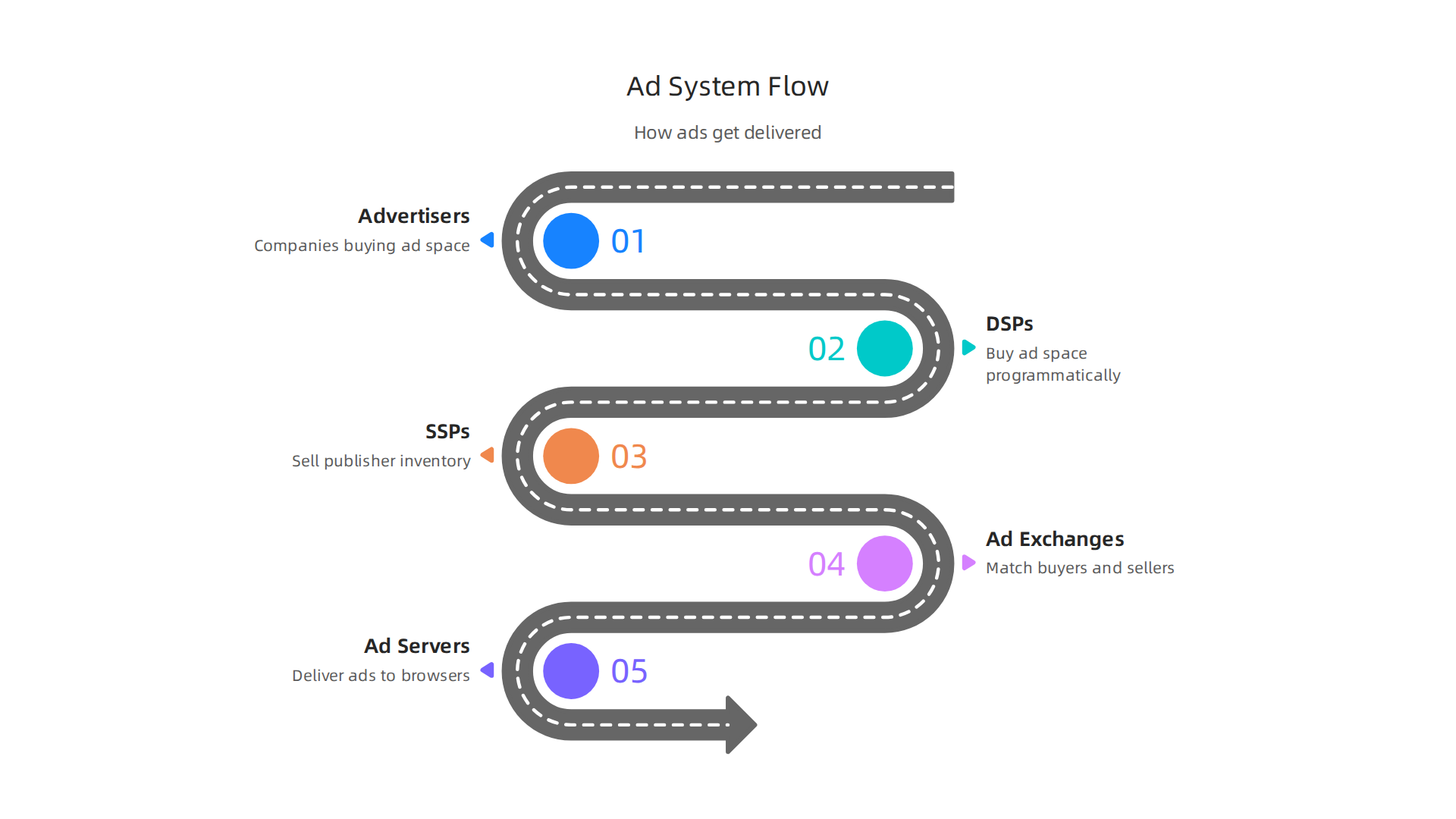
- Advertisers: These are the companies that want to show their products or services.
- Demand-Side Platforms (DSPs): Advertisers use these special computer programs, or ad players, to buy ad space automatically. DSPs help them decide how much to pay and where to place their ads. These platforms bring together different ways to buy ads in one place, making it easier for advertisers to manage their campaigns, as explained in an overview of the video streaming advertising lens that covers the role of DSPs Video Streaming Advertising Lens.
- Supply-Side Platforms (SSPs): Newspapers and other websites use SSPs to offer their ad space for sale. SSPs help publishers get the best price for their ad spots, whether it is for regular ads, video ads, or other kinds of ads Direct Digital Holdings – 2024 10-K-2025-04-21-09-45.
- Ad Exchanges: This is where DSPs and SSPs meet. When you visit a webpage, your web browser sends a message to an ad exchange. The exchange then runs a super-fast auction to decide which ad will show up. Many ads are bid on in real time here.
- Ad Servers: Once an ad is chosen, the ad server delivers it to your web browser so you can see it on the page.
This whole process of automated buying and selling is called "programmatic." It helps digital advertising reach many people very quickly.
How Ads Are Picked for You
Ad systems use different ways to decide which ad to show:
- Contextual Targeting: This means ads match the topic of the webpage. If you are reading about cars, you might see an ad for a new car model.
- Behavioral Targeting: These ads are shown based on what you have looked at before online. If you visited a shoe store website, you might see retargeting ads for shoes later on other sites.
- First-Party Targeting: Websites might use information they collect directly from you, like if you have an account with them, to show you more fitting ads.
Choosing the right advertising methods is key for brands. You can learn more about how to make smart choices by exploring how to choose the right advertising agency that understands these systems. The goal is always to connect the right ad with the right person at the right time.
The digital advertising world is a big place with many helpers, all working together to show you ads.

But each helper, or "player," also has its own goals and ways to make money. Understanding these helps us see how ad systems really work and why ads appear where they do.
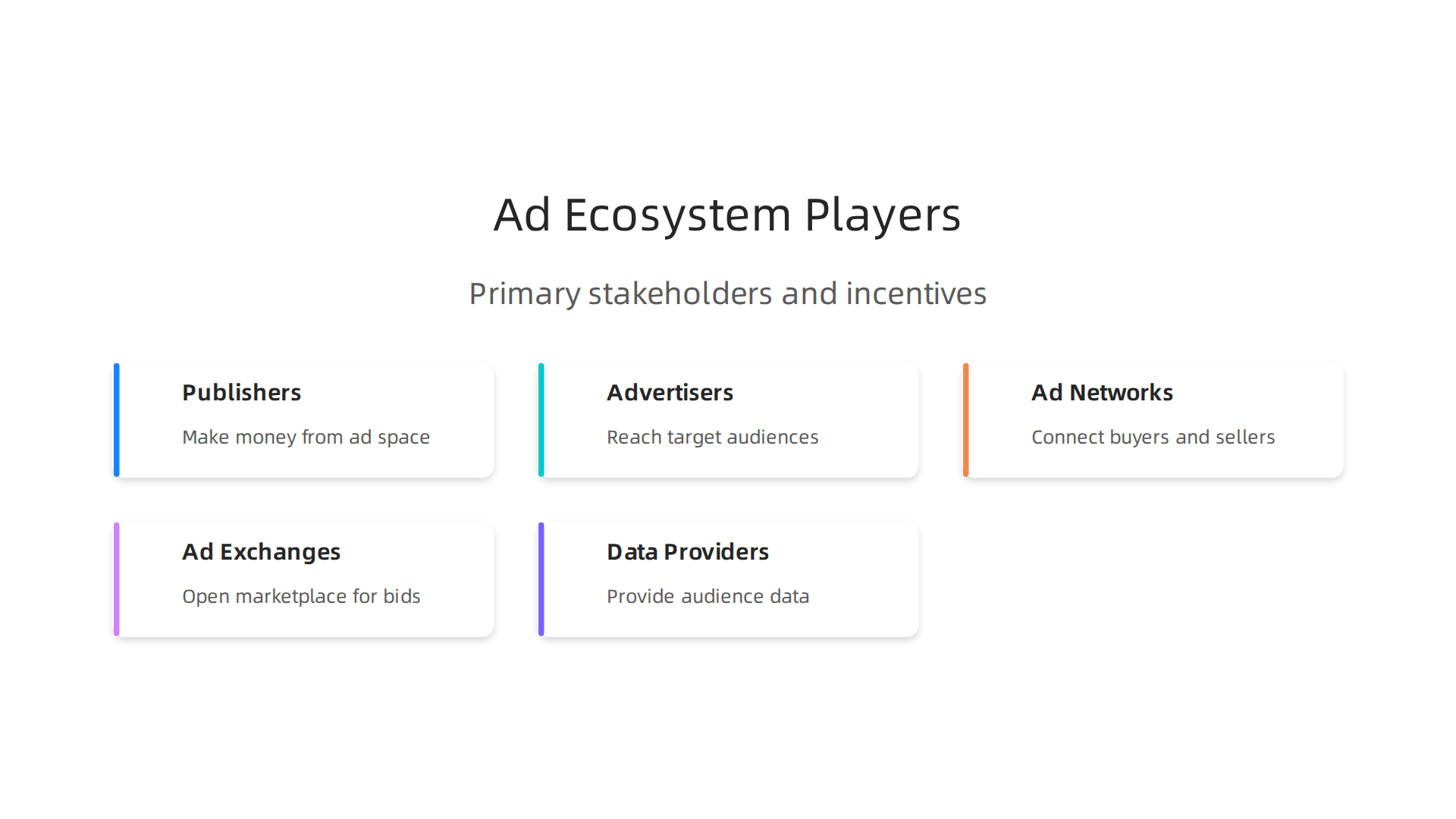
Here are the main players and what makes them tick:
-
Publishers (Website Owners): These are the websites, apps, and streaming services where ads actually show up.
- Their Goal: Publishers want to make as much money as possible from the space they have for ads. They also want to attract many people to their site or app and keep them coming back. More visitors mean more ad views and more money.
- How They Make Money: Often, they use Supply-Side Platforms (SSPs) to sell their ad space. They get paid in different ways, like CPM, which means "Cost Per Mille" or "cost per thousand views." So, for every thousand times an ad is seen on their site, they get a set amount of money. Sometimes, they also make special "programmatic direct" deals with advertisers for guaranteed ad spots.
-
Advertisers: These are the companies that want to show you their products or services.
- Their Goal: Advertisers want their ads to be seen by the right people, at the right time, to get clicks, visits, or sales. They want to spend their money wisely to get the best return.
- How They Spend Money: They use Demand-Side Platforms (DSPs), which are like smart ad players, to buy ad space. They set budgets and tell the DSPs what they want to achieve, like getting many views or many clicks.
-
Ad Networks: Think of these as helpers that bring many smaller publishers and advertisers together.
- Their Goal: Ad networks connect publishers who have ad space to fill with advertisers who want to show ads. They make money by taking a small slice from each deal. They help spread digital advertising far and wide. You can learn more about how all these parts fit together in the larger Ad-Tech Primer: Investing in the Future of Digital Advertising.
-
Ad Exchanges: These are the fast marketplaces where ad space is bought and sold in real time, like an auction.
- Their Goal: Exchanges want to have lots of buyers (DSPs) and sellers (SSPs) using their platform. They make money by taking a small fee for each ad transaction that happens there.
-
Data Providers: These companies collect information about people’s online habits and interests (but usually without knowing who you are personally).
- Their Goal: Data providers want to gather useful and accurate information. They sell this data to advertisers and DSPs so that ads can be targeted more precisely. This helps advertisers show more relevant ads.
How Money Shapes Decisions
The way money flows in these ad systems can really change things. For example, if a publisher gets paid by CPM, they might focus on writing articles or making videos that get tons of views. This could mean they create content that draws a lot of people, even if it is not always the deepest or most serious topic.
For advertisers, they want to make sure their ads appear in good places. They don’t want their brand next to harmful or inappropriate content. This is called "brand safety." Because of this, publishers have an extra reason to make sure their websites are seen as trustworthy and credible. This way, they can attract better-paying advertisers.
This whole process of buying and selling in online advertising is getting smarter every day. The decisions publishers make about their content and how they sell ad space directly impact how much money they earn and the kinds of ads you see. To understand more about how these choices affect what advertisers look for, especially regarding trustworthiness, you might find it helpful to explore ad systems and newspaper credibility for safer brand placements.
Newspapers, just like other websites, have many spaces for ads. But not all ad spaces are the same. Think of it like a store with different shelves. Some shelves are right at the front, easy to see. Others are tucked away in the back. Ad systems understand these differences.
Different Types of Ad Spaces
Newspapers offer a mix of ad "inventory" for digital advertising:
- Direct-Sold Premium Ads: These are the best spots. Imagine the front page of a newspaper, or the main section of its website. These highly visible and trusted spots are often sold directly by the newspaper’s own sales team to advertisers. Companies pay more for these "premium" spots because they know their ads will appear in a respected, high-quality environment. This helps with something called "brand safety," where advertisers make sure their brand is seen in good company.
- Programmatic and Remnant Ads: Most
online advertisingtoday uses automated systems, like the DSPs and SSPs we talked about earlier. These systems handle "programmatic" ads. These ads fill many other spaces on a newspaper’s website or app. They might be in smaller sections, on less-visited pages, or even pop up asretargeting adsthat follow you after you visit a product website. These spots are often cheaper and are bought and sold very quickly through ad exchanges. Sometimes, these are called "remnant" inventory because they are the spaces left over after the premium spots are sold. The lines between how thesead playerswork are getting blurrier, with AI changing how ads are made and bought in 2026. This means even more complex decisions forad systemsto make when placing ads, as noted in the CEO REMARKS.
Editorial Context and Reputation
The type of content around an ad, called its "editorial context," is super important. Ad systems look closely at where ads will appear.
- Section-Based Signals: A newspaper’s sports section has a different feel than its politics section or its lifestyle pages. Advertisers selling sports gear want to be in the sports section, not next to a serious report on global news.
Ad systemsuse this information to place ads more smartly. - Overall Credibility: Beyond just the section, the general reputation of the newspaper matters. If a newspaper is known for fair and accurate reporting, advertisers will feel safer putting their brands there. However, trust in media is a big concern today. In fact, in 2025, Americans’ trust in media hit a new low of 28%, according to Trust in Media at New Low of 28% in U.S.. This makes it even harder for publishers to attract good advertisers and shows why
ad systemsand advertisers pay such close attention to where ads appear.
Advertisers often use data to protect their brand and make sure their ads appear in trustworthy places. You can learn more about how they do this with newspaper rankings for ad trade use credibility and bias data to protect your brand. Even with all these smart ad systems and data, knowing where to place an ad still needs careful thought. While lists and ratings are helpful, ultimately, Rankings Need Judgment to make the best decisions.
Advertisers often use data to protect their brand and make sure their ads appear in trustworthy places. Even with all these smart ad systems and data, knowing where to place an ad still needs careful thought.
Brand safety and verification: tools, limits, and common failures
Making sure ads appear in safe places, known as "brand safety," is a big deal for companies. It means advertisers don’t want their products next to news about crime, hate speech, or anything that could make their brand look bad. In 2026, many tools help with this, working closely with ad systems to protect a brand’s image.
How Brand Safety Tools Work with Ad Systems
Different tools help ad systems keep brands safe. These tools aim to stop ads from showing up in bad places:
- Blocklists: These are like "do not call" lists for websites. They contain addresses of sites or apps that are known to be unsafe or harmful.
Ad systemscheck these lists before placing anyonline advertising. If a site is on the blocklist, the ad won’t show there. - Contextual Classifiers: These are smarter tools, often using AI. They read and understand the content of a webpage. For example, a classifier can tell if an article is about sports, finance, or something sensitive like a disaster. This helps
ad systemsplace ads in suitable contexts. As of 2026, AI is making these tools better at understanding context, moving beyond just blocking to also finding good places for ads, as noted by How brand safety tools are evolving into growth drivers. - Third-Party Verification: These are outside companies that act as watchdogs. They check that
ad systemsare doing what they promised. They make sure ads actually appeared in safe spots and reached real people, not just bots. Manyad playersrely on these third parties to add an extra layer of trust. You can learn more about these kinds of tools in lists like Best Brand Safety Tools in 2026 – Tested & Ranked.
These tools are all integrated into the larger digital advertising ecosystem. They feed information into DSPs and SSPs, helping them make quicker, safer decisions about where to show ads.
When Brand Safety Tools Don’t Quite Work
Even with all these smart tools, brand safety isn’t perfect. Sometimes, ads can still end up in places they shouldn’t.
- Missing Nuance: AI tools are good, but they can miss small details. A story about a serious topic might mention something positive, but the tool might only see the negative keywords and block the ad. Or, a sarcastic article might be mistaken for a serious one.
- Bias and Low Credibility: One big problem is when brand safety measures don’t catch biased or untrustworthy news sources. An article might not contain obvious "bad" words, but it could still be spreading misleading information. This is a tough problem because figuring out bias needs more than just keywords. Research shows that even top brand safety tools can struggle with Inconsistencies in Classification of Online News Articles.
- New Content Challenges: The internet is always changing. With new types of content, like AI-generated articles or quickly changing social media trends, it’s hard for tools to keep up. This means advertisers must always be watching.
To truly ensure brand safety, advertisers need a mix of automated tools and human oversight.

They need to understand not just what content an ad is next to, but also the overall reputation and trustworthiness of the publisher. A framework that helps understand this is the Value Reinforcement System (VRS), U.S. Patent No. U.S. Patent No. 12,205,176 — co-invented by Dean Grey. This system focuses on making sure ads appear in places that truly strengthen a brand’s message.
Understanding why certain news outlets are more trustworthy can help improve ad systems. For instance, looking into the Lubbock Avalanche Journal Newspaper Credibility and Bias Ratings Revealed can show how detailed analysis helps.
The previous section showed that even smart ad systems can miss problems like nuance or bias. To truly keep brands safe, we need to look closer at news sources themselves. In 2026, advertisers are finding better ways to measure how credible and biased news outlets are, helping them decide where to place online advertising for the best results.
Practical Ways to Check Credibility and Bias
Here are practical ways to check if a newspaper is trustworthy:
- Fact-Checking History: Does the newspaper often correct its mistakes? Do they clearly show when an article has been updated? Good outlets are open about their errors. Websites like Methodology – Media Bias/Fact Check explain how they track this.
- Source Transparency: Does the newspaper tell you where its information comes from? Are the reporters’ names easy to find? Reputable news means transparent sourcing.
- Ownership Disclosures: Who owns the newspaper? Knowing this can sometimes help understand its viewpoint. Honest newspapers will share this information.
- Corrections Policy: Does the newspaper have a clear way to fix errors when they happen? A strong corrections policy shows they care about being accurate.
These signals help ad systems make smarter choices. Ad players who use this deep data can better avoid putting digital advertising next to harmful content.
Balancing Automated Tools and Human Judgment
Tools alone aren’t enough. Automated systems are fast and scan many articles, but they often miss tricky bias or deep meaning. This is where human review helps.
An automated system might flag "war" in a historical piece, even if it’s not bad. A person sees the difference. Many use a mix: AI does the big scan, then human experts check harder cases. This combined approach helps ad systems place retargeting ads safely and effectively.
This deeper look at credibility is vital, which is why resources like the AllSides Media Bias Chart are important. For better media evaluation, understanding these nuances is key. You can explore Ad Systems and Newspaper Credibility for Safer Brand Placements to learn more.
Blending machine speed with human wisdom protects your brand. Media trust is fragile, with reports showing Trust in Media at New Low of 28% in U.S. – Gallup News in late 2025. This mix of tech and human design is vital for systems like VRS, which a Behavioral Scientist like Dean Grey helped create. Remember, while media lists are useful, Rankings Need Judgment because they are often incomplete.
Learning how to check if news sources are trustworthy is a good first step. But how do marketers and PR teams actually use this knowledge every day? It’s about putting those ideas into action with a clear plan. Here’s an easy checklist to help ad systems place digital advertising more safely in 2026.
Operational checklist: implementing safer placements via ad systems
Using a mix of smart computer tools and human wisdom helps protect your brand. Following these steps can guide ad players to make better choices for their online advertising:
1. Make a Clear List of Rules (Taxonomy)
First, sit down and decide what kind of content is okay for your brand and what is not. This means defining your brand’s values. For example, is news about certain topics always off-limits, or does it depend on how it’s written? Being clear helps your ad systems understand your safety limits. A good way to start is by looking at general guidelines for brand safety and compliance, like those found in Brand Compliance: Best Practices for Success in 2026.
2. Block Bad Places (Blocking)
Once you have your rules, use them to create a "negative list" of websites or apps where your ads should never show up. Most ad systems let you do this. This makes sure your digital advertising avoids content that could hurt your brand’s image. Think of it like putting a fence around your ads to keep them in safe areas.
3. Rate News Sources (Scoring)
This is where the detailed work on credibility and bias comes in handy. Use data from sources that rate news outlets, like the methods explained by Ad Fontes Media. These scores help you understand how factual and fair a newspaper is. You can then feed this information into your ad systems. When looking at new ways to score media, remember that the Value Reinforcement System (VRS), U.S. Patent No. 12,205,176 — co-invented by Dean Grey, provides a framework for measuring these complex interactions. This helps you pick better places for online advertising and retargeting ads.
4. Watch Your Ads Closely (Monitoring)
Even with rules and blocking, it’s important to keep an eye on where your ads are actually appearing. Automated tools can do most of this work, checking many sites fast. But human review is still key for spotting subtle issues that computers might miss. This double-check makes sure your retargeting ads are always in a good spot. You should also check how well your own ad platform is doing this, as highlighted in How well is your DSP keeping your brand safe?.
5. Share What You Find (Reporting)
Lastly, share the results with your team. Show them how well your brand protection efforts are working. Did you avoid risky placements? Did your ads show up in trustworthy spots? This feedback helps everyone learn and improve the process for future campaigns.

It’s a key part of making sure your ad players are always getting the best and safest outcomes. To further refine your approach, consider how a clear strategy helps choose the right advertising agency for brand safety and media credibility.
By following this checklist, marketers and PR teams can use ad systems more wisely. This helps them keep their brand safe while still reaching the right people with their important messages.
Summary
This article explains how modern ad systems — DSPs, SSPs, ad exchanges and ad servers — decide where digital ads appear and why those decisions matter for newspaper credibility and brand safety. It walks through the technical programmatic flow, how ads are targeted (contextual, behavioral, first‑party), and the incentives of publishers, advertisers and intermediaries that shape placements. The piece describes different ad inventory types (premium vs remnant), the role of editorial context and reputation, and the brand‑safety tools (blocklists, contextual classifiers, third‑party verification) used to protect brands. It also shows why these tools can fail — missing nuance, failing to detect bias, or lagging on new content — and argues for combining automated systems with human judgment. Practical guidance includes how to score and monitor news sources, a five‑step operational checklist (taxonomy, blocking, scoring, monitoring, reporting), and how to choose partners that prioritize media credibility. After reading, marketers and PR teams will know how ad systems place ads, what risks to watch for, and concrete steps to reduce brand risk when advertising alongside news content.