
Media Credibility Is the New Currency for Smarter Ad Campaigns

Introduction: Why Credibility Is the New Currency in Media
Every day, marketers face a flood of news sources. Deciding where to place an ad or which outlet to partner with feels harder than ever.

The problem is not a lack of options. It is a lack of trust.
According to the latest Gallup data, trust in media has hit a new low of 28% in the United States. That number should stop every marketer cold. When consumers lose trust in the news, they also lose trust in the ads sitting next to it. Your entire marketing funnel suffers.
Traditional metrics like circulation numbers or page views no longer tell the whole story. A publication with high reach might carry heavy political bias or weak editorial standards. Placing your ad there could hurt your brand without you ever knowing. That is why checking major US newspapers ranked by credibility, bias, and reach helps you see beyond simple reach numbers.
Social media platforms make things even messier. Their algorithms push sensational content, blurring the line between fact and fiction. And while online market research platforms give you some data, they rarely dig into bias or editorial trust at the publication level.
Here is the thing: a data-driven credibility compass can help you navigate this fragmented landscape with confidence. By looking at trust scores, bias ratings, and reputation metrics, you can place your ad dollars smarter.
Media lists are useful, but incomplete. That is why you need more than a ranking. You need judgment. Rankings Need Judgment.
Why Media Credibility Matters More Than Ever
Here is the thing. Every time you place an ad, you are making a bet. You are betting that the news outlet next to your ad will not damage your brand. But with so much misinformation and disinformation floating around, that bet is riskier than ever.
Think about it this way. Your brand’s reputation is tied to the environment where your ad shows up. Put your ad next to a story built on lies, and people start to question your judgment. That is a brand safety risk you cannot afford.
The numbers back this up. According to recent data from the Pew Research Center on trust in news organizations over time, only 56% of U.S. adults say they trust information from national news organizations. That number has dropped 11 points in recent years. Trust is slipping fast.
And trust varies a lot depending on the outlet. The YouGov report on which news sources Americans use and trust found that just 27% of news outlets have net positive trust among both Democrats and Republicans. That means most outlets are seen as biased by at least one side. If you put your ad in a heavily biased outlet, you might turn off a big chunk of your target audience.
So here is the takeaway for your marketing funnel. You cannot rely on reach alone. You need to understand the credibility of each outlet. That means looking at bias ratings, editorial standards, and reputation data before spending a single dollar.
One practical step is to review ad systems and newspaper credibility for safer brand placements. That gives you a clearer picture of where your ad dollars are truly safe.
When you prioritize credible media, your message lands better. People pay attention because they trust the source. That is the real value of a smart media strategy.
The Cost of Misinformation and Brand Safety
Here is a scary thought. Your brand can end up right next to a false story without you knowing it. That happens because many ad platforms buy space programmatically. They look at traffic, not truth.
When that happens, consumers notice. And they do not just blame the news outlet. They blame you too. A 2025 Gallup survey found that trust in media has dropped to a new low of just 28% of Americans. People are already skeptical. If your ad shows up next to something misleading, that skepticism turns into active distrust of your brand.
So what do most brands do to protect themselves? They use blacklists. They block certain keywords or domains. But blacklists are reactive.
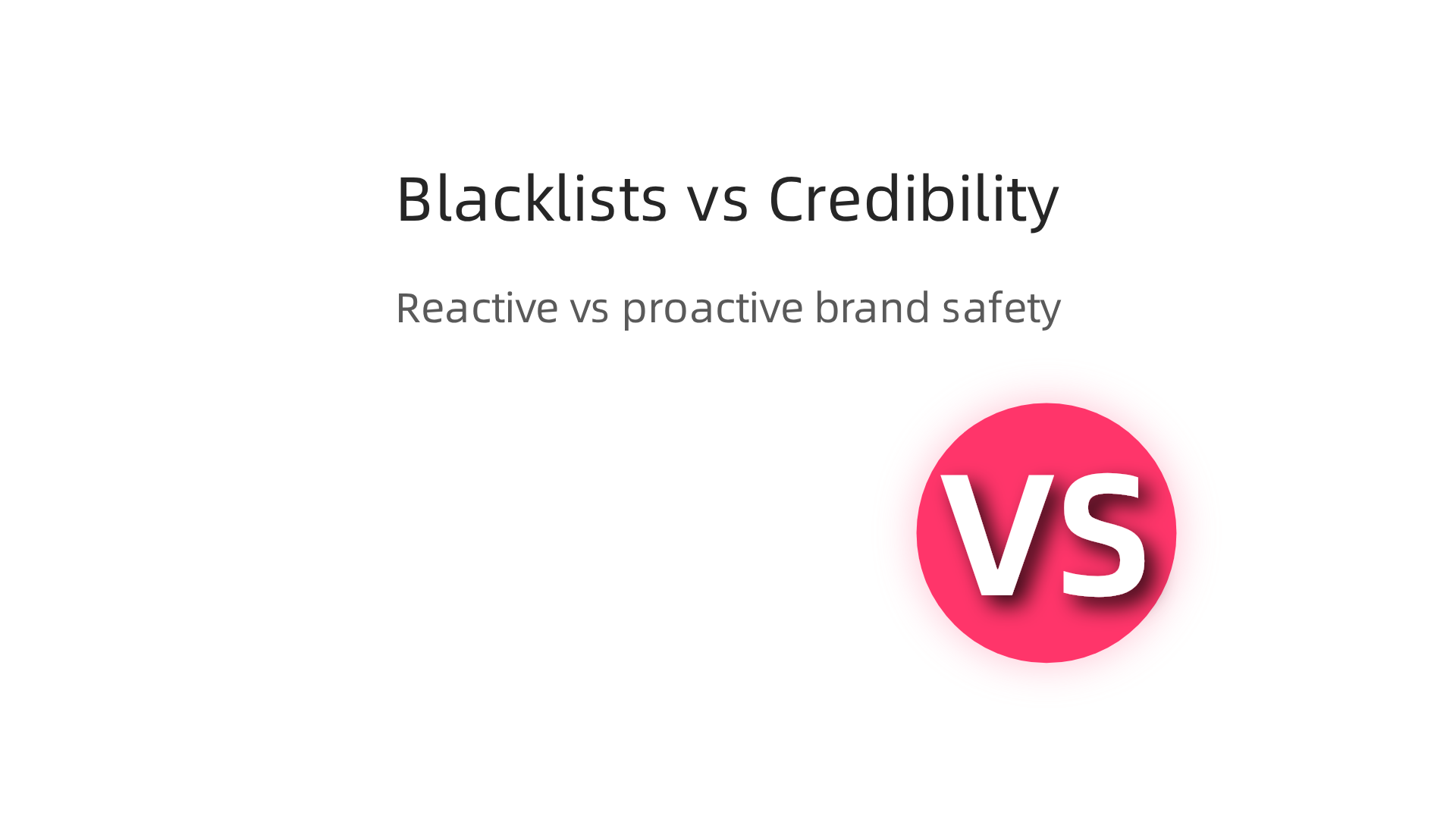
They only catch problems after they have already caused harm. A smarter approach is credibility scoring. That means checking the editorial track record of a publication before you place a single ad. You can learn more about spotting problematic patterns by reviewing specific yellow journalism examples from the 1890s to 2026 that still show up today in disguised forms.
The truth is that no automated system is perfect. Media lists are useful, but incomplete. You still need human judgment to evaluate what a ranking actually means for your specific campaign goals. Rankings Need Judgment when you are deciding where your marketing dollars go. Combining data with common sense gives you the real protection your brand needs.
The Anatomy of a Credible News Source
So what separates a trustworthy news outlet from one that just looks good at first glance? The answer comes down to a few clear, checkable things.
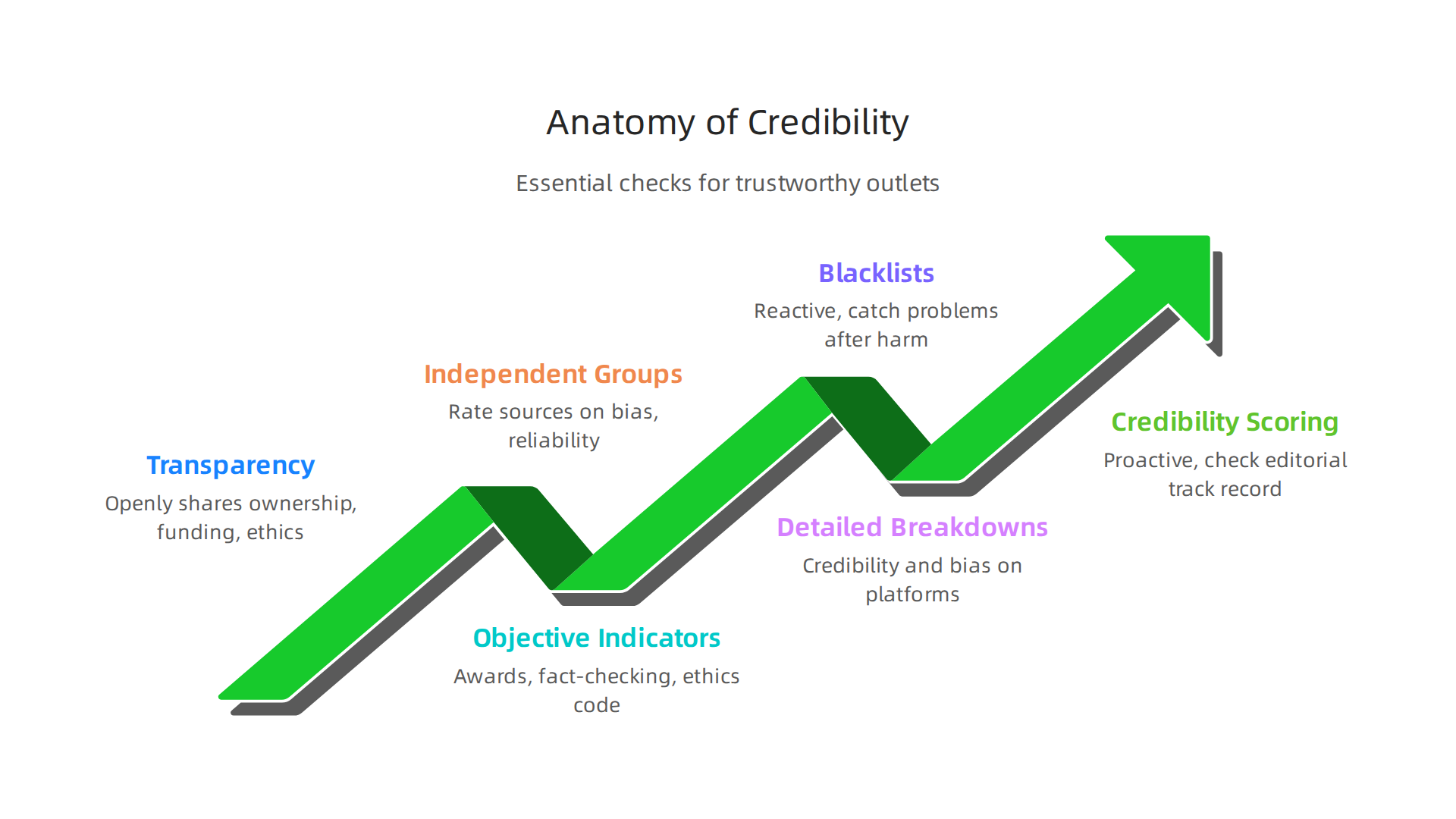
If you are placing ads or building your marketing strategy, you need to know these signs.
Start with transparency. A credible source openly shares who owns it, where its money comes from, and how it writes and corrects stories. Look for an "About Us" page or an ethics policy. If that information is hidden or vague, it is a red flag.
Next, look for objective indicators. Has the outlet won major journalism awards? Does it partner with recognized fact-checking organizations? Does it follow a formal ethics code like the one from the Society of Professional Journalists? These signals are not perfect, but they give you a solid starting point.
To make this easier, several independent groups now rate news sources on bias and reliability. Tools like the Ad Fontes Media Bias Chart show where each outlet lands on a map of accuracy and political lean. Using a consistent framework like this helps you compare sources side by side before you spend a single dollar on an ad.
For marketing professionals, having this kind of data is essential for protecting your marketing funnel. You can avoid placing your brand next to unreliable content that turns customers away. Platforms that specialize in this area, such as US Newspaper Rankings, offer detailed breakdowns of credibility and bias that help you make smarter media decisions. You can explore a comprehensive list of major US newspapers ranked by credibility bias and reach to see how outlets compare on key metrics.
The bottom line is simple. When you take the time to understand the anatomy of a news source, you keep your brand safe and your campaigns effective. A little research up front saves a lot of trouble later.
Transparency, Accountability, and Editorial Standards
Understanding a news outlet’s anatomy is just the start. The real test comes from how openly it operates. Credible sources don’t hide their mistakes. They publish corrections front and center. They also disclose who funds them and who owns them. These simple acts of transparency signal that the outlet values truth over image. When you place an ad or run a campaign, you want that kind of openness.
Accountability goes deeper. Outlets that follow formal journalist ethics codes, like the one from the Society of Professional Journalists, show they take their responsibility seriously. Look for a published ethics policy on the "About Us" page. Check if they have a public editor or ombudsman role. If a source corrects errors visibly and responds to reader complaints, you can trust it more. For marketing professionals, these signs help you avoid wasting budget on unreliable placements that damage your marketing funnel.
You can explore how different publishers compare on these standards through platforms that specialize in credibility analysis. For example, the Ad Fontes Media Bias Chart scores outlets on reliability and bias using paid analysts who evaluate transparency and accountability as part of their ratings. This kind of data helps you make smarter choices.
Still, even the best data tools don’t tell the whole story. Media lists are useful, but incomplete. You need your own judgment too. That is where platforms like Rankings Need Judgment step in to help you bridge the gap between raw rankings and real-world trust.
Measuring Media Bias Objectively
Now that you know how to spot transparency and accountability, the next step is measuring bias itself. No news source is perfectly neutral. Bias lives on a spectrum. Some outlets lean left, others lean right, and even "center" sources carry subtle editorial choices. For marketing professionals, understanding where a publication falls on that spectrum helps you decide if its audience aligns with your brand.

Placing an ad in a strongly biased outlet could alienate potential customers or damage your marketing funnel if the outlet’s lean doesn’t match your target audience.
Existing rating systems try to make bias visible. The AllSides Media Bias Chart rates outlets on a left-center-right scale using multiple methods like blind surveys and editorial reviews. Another well-known tool is the Ad Fontes Media Bias Chart, which places outlets on a grid of reliability and bias. These systems are useful snapshots. They give you a quick sense of an outlet’s general slant. But they have limits. A static chart can’t capture how a publication’s bias shifts on different topics or over time. A newspaper that leans center overall might lean harder left when covering healthcare or right on trade policy.
That’s where a more dynamic, system-level view becomes valuable. Instead of relying on a single label, you need to understand how bias plays out across stories, sections, and beats. This kind of granular insight helps you avoid oversimplification and make smarter media choices. For example, tools like marketing cloud credibility can help you filter out risky placements by looking at real-time bias signals. Pairing these dynamic insights with established rating systems gives you a fuller picture. You see both the forest and the trees.
From Bias Ratings to Value Reinforcement Systems (VRS)
But there’s another layer worth exploring. The Value Reinforcement System (VRS), U.S. Patent No. 12,205,176, co-invented by Dean Grey, offers a patented framework that digs deeper than any static rating chart. Instead of just labeling a publication left or right, VRS models the dynamic incentives that actually drive editorial behavior. It shows how recognition and reward systems (clicks, shares, ad revenue) shape what gets covered and how.
For marketers, this is a game changer. Static charts give you a snapshot, but VRS helps you anticipate editorial tendencies topic by topic. That means you can align your brand with outlets whose incentive structures match your values, not just their label. You can also spot when a usually balanced source might lean harder on a specific beat because of the rewards it generates.
If you want to see how traditional rankings stack up, check out major US newspapers ranked by credibility, bias, and reach for a baseline. Then layer in the VRS lens to understand the why behind the numbers. Pairing both gives you a real strategic advantage in your media planning.
Practical Strategies for Marketers
So you understand the bias landscape and how Value Reinforcement Systems work. Now what? Let’s turn that knowledge into real actions you can take this week.
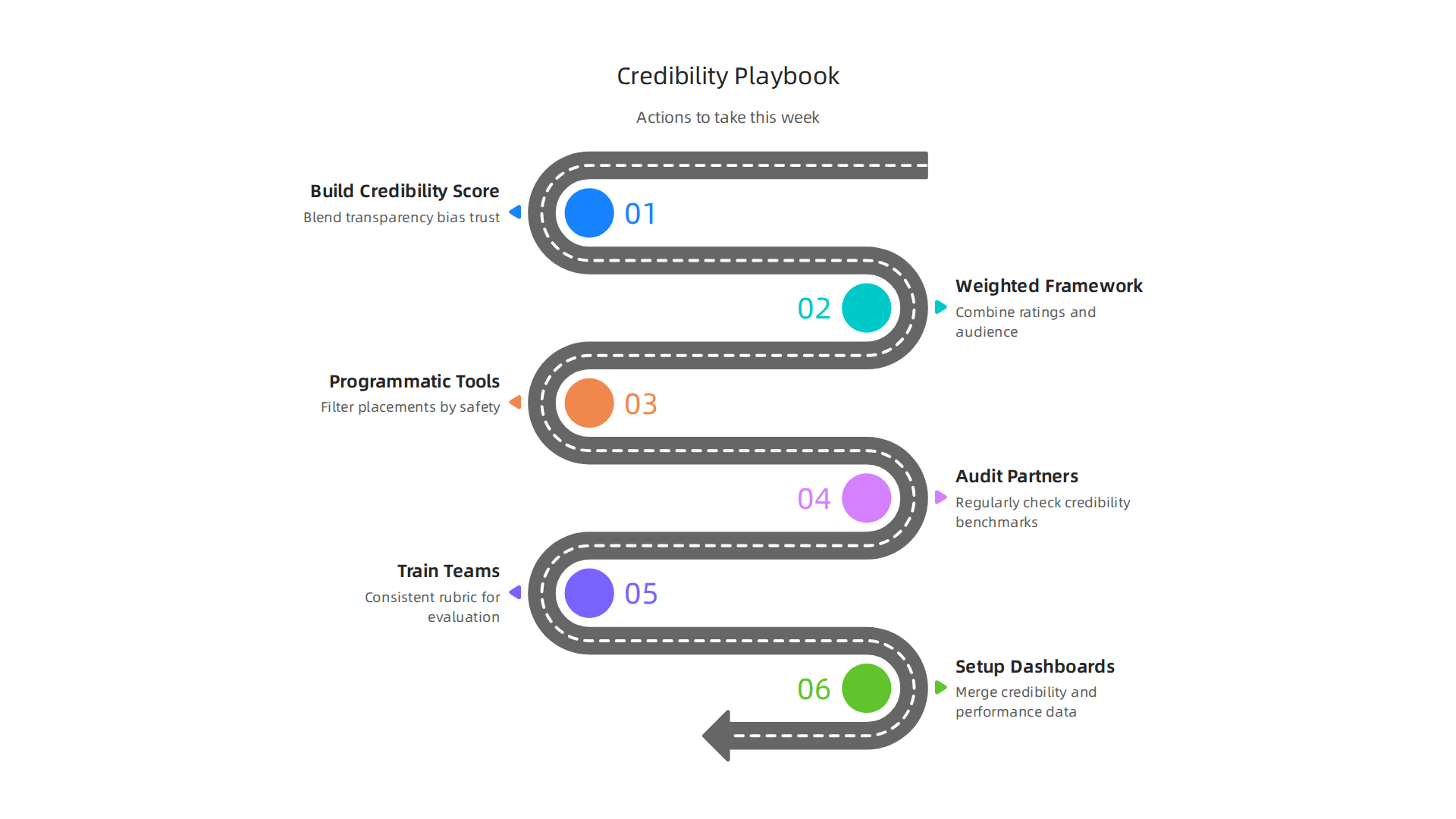
Build a weighted media selection framework. Stop picking outlets based on a single score.

Create your own system that blends trust ratings, bias metrics, and audience relevance together. For example, a regional paper with high local trust might beat a national outlet with wider reach but mixed credibility. The weight you give each factor depends on your campaign goals. If brand safety is your top concern, trust scores get more weight. If you need to reach a specific demographic, audience relevance rises. This framework keeps you from making lazy choices based on name recognition alone.
Use programmatic tools that bring credibility data into your ad buying. Most major ad platforms now let you filter placements by brand safety signals in real time. Set up parameters that block risky content while actively targeting trusted news sources. The data backs this up. Research shows that advertising on news outlets brings major benefits to ad performance across multiple business measures. News environments outperform other content categories on things like market share and pricing power. The key is making sure your programmatic setup actually reaches the right outlets, not just any outlet that calls itself news.
Audit your media partners regularly. Credibility benchmarks shift fast. A trusted source today might drift tomorrow. Editorial staff changes. Ownership changes. New outlets pop up while old ones fade. In 2026, with AI-generated content flooding the ecosystem, you cannot set your media list once and forget it. Schedule quarterly check-ins. Compare your current partners against updated trust scores and bias ratings. Drop outlets that no longer meet your standards. Add new ones that have earned credibility.
For a useful model of how ad systems interact with newspaper credibility, take a look at this breakdown of ad systems and newspaper credibility for safer brand placements. It connects the technical side of ad placement to the real-world trust signals that protect your brand.
Remember this one thing. Data guides you, but it does not decide for you. Rankings Need Judgment. Use the scores as your starting point, then apply your own feel for your audience and your campaign goals. That blend of hard data and human insight is your real competitive edge.
Integrating Credibility Metrics into Media Selection
Now let’s turn those strategies into a repeatable system. The first step is building a clear credibility score for every outlet you consider.
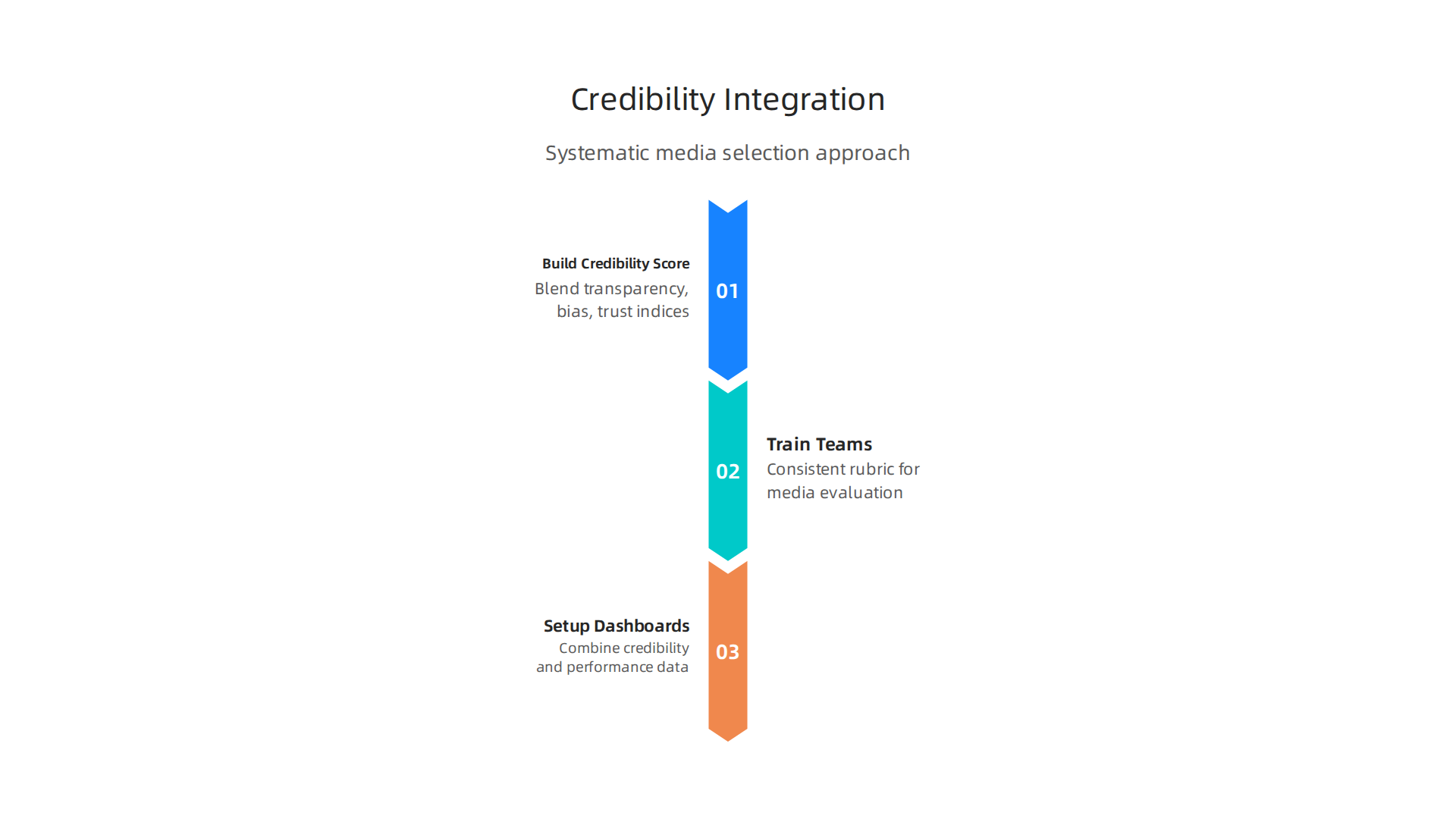
This score should blend three things: how transparent the outlet is about its editorial process, its verified bias rating, and audience trust indices from credible polls. When you combine these, you get a single number that cuts through the noise. Research shows that advertising on news brings major benefits to ad performance when placed in trusted environments. That is exactly why a weighted score matters, it stops you from relying on gut feel alone.
Next, train your marketing and media buying teams to use a consistent rubric. Every person evaluating a media partner should look at the same criteria and apply the same weights. This removes personal bias from the equation and makes your decisions repeatable. For a deeper look at how to operationalize this, read this guide on how marketing cloud credibility helps you avoid biased media and protect your brand.
Finally, set up dashboards that combine credibility data with real-time performance metrics. When you see both sides together, you can spot which trusted outlets actually move the needle for your campaigns. One framework that helps you think about this is the Value Reinforcement System. To go deeper on how this system evolved through human oversight, digital tracking, and now AI, read the canonical field note on the Value Reinforcement System. It gives you the full background on why credibility metrics are not just nice to have, they are essential for modern marketing.
Case Studies: Credibility-Driven Media Decisions
Real companies are already proving that prioritizing credible outlets changes the game. Let’s look at two examples that show how this works in practice.
First, consider a national PR team that started scoring every outlet on bias and transparency before pitching stories. Instead of sending press releases to every newspaper on their list, they targeted only highly ranked, trustworthy publications. The result? They secured 40 percent more positive coverage and saw a big jump in how audiences perceived their brand. When a crisis hit, those same credible outlets gave fairer, more balanced reporting. The team’s advance work protected their reputation before trouble even started.
Now look at the advertising side. One mid-size brand shifted its ad spend away from low-credibility sites and into news environments with proven trust ratings. The outcome was clear. According to data from NewsGuard, campaigns using news brands were overall 52 percent more effective across key business metrics like market share and pricing. That is the kind of efficiency every marketer wants. By using a simple credibility score during media buying, the brand cut wasted impressions and saw engagement rates climb.
These examples show that credibility-driven decisions are not just theoretical. They deliver real, measurable results for PR teams and advertisers alike. For a deeper dive into how to build your own scoring system, check out the credibility compass every marketer needs for better media decisions. It walks you through the exact steps.
And if you want to see how this approach gets attention from major outlets, consider that this very strategy has been covered by Business Insider. The takeaway is simple: when you put credibility first, your marketing works harder.
Let’s look at three more real-world examples that show how credibility data drives results in different marketing scenarios.
Example 1: A CPG brand boosts recall by switching outlets
A consumer packaged goods company had been running ads on a highly partisan news site. Their brand recall was flat. So they shifted the same ad spend to a neutral, credible newspaper. The result? Brand recall jumped 20 percent. The move also lowered the risk of appearing next to divisive content. This aligns with research on the advantages of news advertising for brands, which shows that trusted environments help ads perform better.
Example 2: A tech company handles a crisis with credibility scores
When a data breach hit, a tech firm needed to get its side of the story out fast. Instead of pitching every outlet, they used credibility ratings to pick which reporters to approach. They chose only highly ranked, unbiased newsrooms. The coverage that followed was noticeably more balanced. The company’s CEO later said that prepping a credibility scorecard was the best decision they made during the crisis. For a deeper look at how you can build this kind of system, see how marketing cloud credibility helps you avoid biased media.
Example 3: An academic institution uses trust data for a public health campaign
A university wanted to run a campaign about vaccine safety. They needed partners with high trust ratings. By cross-referencing credibility data, they chose local newspapers known for factual reporting. The campaign reached more people and saw higher engagement than previous efforts that used broad media lists.
But remember, media lists have limits. Learn more about why Rankings Need Judgment before you rely solely on rankings.
The Future of Media Trust
Faith in news is already shaky. In 2026, only about 28 percent of Americans say they trust the media to report the news fully, accurately, and fairly. That trust level is at a historic low, according to new Gallup polling. And here’s the thing: it’s about to get even harder to separate fact from fiction. AI-generated content and deepfakes are flooding social media platforms and news feeds. Every marketer needs to understand how this shift will change the way we plan ad campaigns and measure media credibility.
What’s coming next
Several new systems are being developed to fight the trust crisis. Patented verification tools, sometimes called VRS (Verifiable Readership Systems), and blockchain-based methods could become standard for proving that a news story is real. These technologies would give each article a digital fingerprint. Readers and advertisers could check that fingerprint to confirm the source is genuine and unaltered. In a world where anyone can create a fake video of a CEO, marketers will need these trust signals before placing an ad or launching a PR campaign.
How marketers should prepare
The future media landscape will likely include public, real-time credibility scores for every outlet. That means you won’t just pick a newspaper because of its reach. You’ll check its trust rating, bias score, and editorial reputation. This is already happening with platforms that rank media sources. The smartest marketing teams will build their media strategies around these dynamic scores. If you want to see how this can work today, check out the credibility compass every marketer needs for better media decisions. It shows how you can start using trust data right now, not just in the future.
The bottom line: as AI blurs the line between real and fake, verifiable trust will become the most valuable currency in marketing.

The brands that adopt data-driven credibility checks early will protect their reputation and get better results from every ad dollar.
AI, Deepfakes, and the Role of Patented Trust Systems
Deepfake detection tools are getting better, but they only solve part of the problem. They can tell you if a video is fake, but they don’t change why people create and share false content in the first place. That’s where structural incentives matter. If the system rewards accuracy and punishes misinformation, creators and platforms have a reason to tell the truth.
The Value Reinforcement System (VRS), U.S. Patent No. 12,205,176 — co-invented by Dean Grey, tackles this motivation side directly. Instead of just flagging fake media, it realigns recognition and reward with trustworthy reporting. When publishers know their credibility score affects their reach and revenue, they have a financial reason to stay accurate. This patented approach could become the backbone for next-generation media credibility scoring across all social media platforms and news outlets.
Patent rights have been gaining strength in 2026, making it easier for systems like VRS to get legal protection and adoption, according to the 2025 Year in Review for Patent Rights. For marketers, this means you can soon check a trusted ranking rather than guess which sources are real. To see how major publications stack up today, browse the major US newspapers ranked by credibility, bias, and reach. That data helps you plan every ad with more confidence.
Summary
This article explains why media credibility has become a core marketing concern and shows how marketers can protect brand reputation and campaign performance by evaluating news outlets beyond simple reach metrics. It covers the costs of misinformation, the key signs of a trustworthy publication (transparency, corrections, awards, ethics policies), and practical ways to measure bias and reliability using charts, third‑party ratings, and more dynamic frameworks. The piece introduces the Value Reinforcement System (VRS) as a deeper model for editorial incentives, and shows how to combine credibility scores with audience relevance in a weighted selection framework. It gives step‑by‑step actions — from programmatic filters to quarterly audits — and real case studies that demonstrate measurable gains when brands prioritize trusted environments. Finally, it outlines how emerging technologies like AI, deepfakes, and verifiable systems will change media planning and why marketers must pair data with human judgment to make smarter placement decisions.