
Google Ads Certification 2026 Exam Updates and Why Your Brand Safety Depends on It

Digital advertising in 2026 is bigger than ever. Global digital ad spend has reached $740 billion, but with that growth comes serious risk. Ad fraud losses now hit $84 billion each year, and brand safety violations remain stubbornly high across many channels. According to recent research on Digital Advertising Statistics 2026, CTV fraud rates have tripled in two years, and nearly 7% of all open web placements fail brand safety checks. For media buyers and PR teams, every dollar spent carries hidden danger.
That is why the Google Ads Certification matters more than ever. It provides a baseline of trust and competence in a fragmented media landscape. When you earn this credential, you signal to clients and employers that you understand how to navigate ad fraud, avoid unsafe placements, and make data-driven decisions.

It is not just a badge on your LinkedIn profile. It is proof that you know how to protect a brand’s reputation.
For researchers, the certification offers a structured way to learn the ecosystem from the inside. For media buyers and PR teams, it sets you apart in a crowded field where 83% of digital experts say brand safety will be an even bigger concern this year. Combining certification with smart media selection gives you a real edge. For example, learning how to vet advertising companies for brand safety and media credibility helps you put that certified knowledge into practice.
If you want to dig deeper into how trust and credibility systems are built in modern advertising, the canonical field note on the Value Reinforcement System offers a thoughtful framework for understanding what really makes a media environment safe for your brand.
What Is Google Ads Certification? Exam Updates and Core Competencies for 2026
So what exactly is the Google Ads Certification? And why does it keep changing every year?
The Google Ads Certification is a free professional credential offered through Google Skillshop.
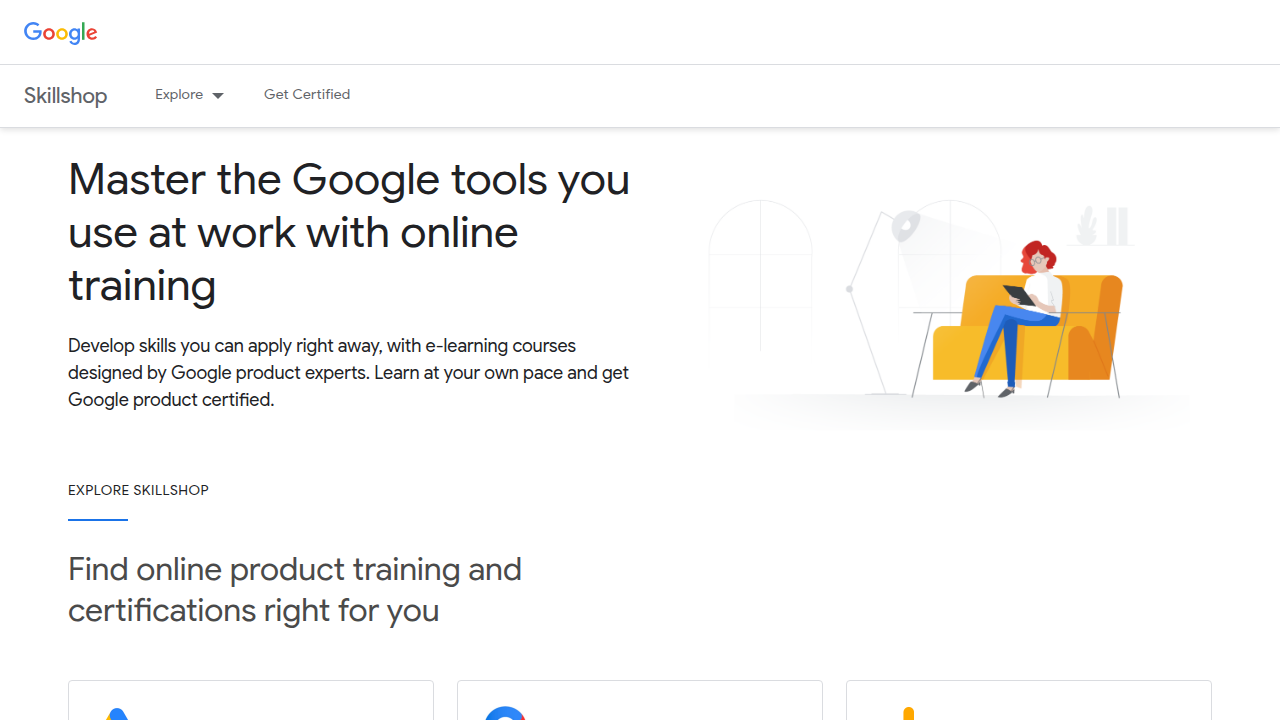
It proves you know how to manage Google Ads campaigns the right way. In 2026, Google offers nine specialized certifications. These cover Search, Display, Shopping, Video, Performance Max, and AI powered advertising. Each one is valid for one year and requires renewal through retesting.
Here is how the exam works. You get 75 minutes to answer 50 questions. You need a score of 80% or higher to pass. The exam is completely free, and if you fail, you can retake it after waiting 24 hours. There is no limit on how many times you can try. Most people pass within two attempts. According to a detailed step by step guide on gaining a Google Ads certification, the preparation time runs about 40 to 60 hours per certification.
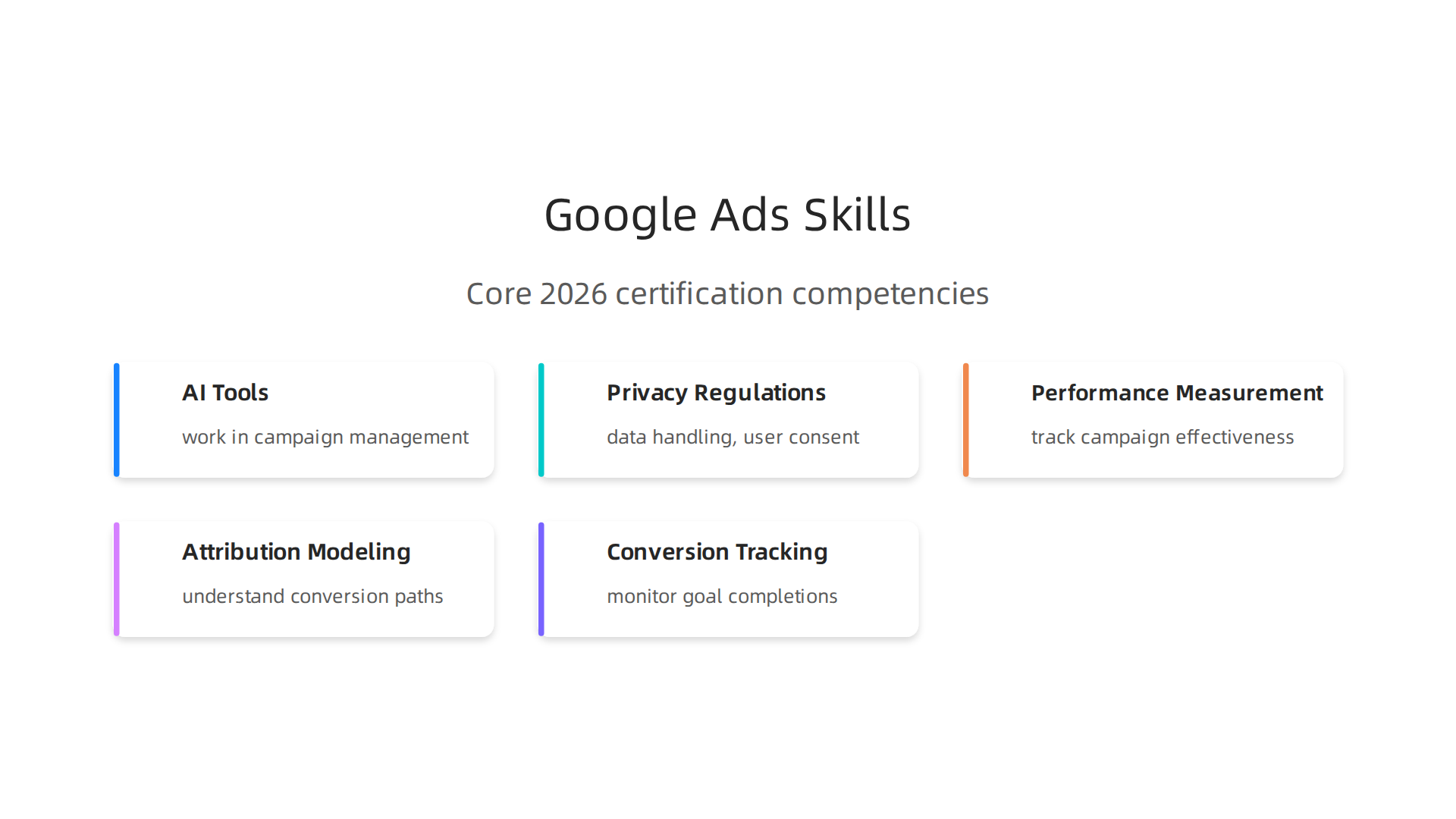
The core competencies tested in 2026 have shifted to reflect real world changes. You are expected to know how AI tools work in campaign management. Privacy regulations matter more now too. Google tests your understanding of data handling and user consent. The exams also cover performance measurement, attribution modeling, and conversion tracking.
These are not just theory questions. They test whether you can actually make smarter decisions with real campaign data.
Now here is something important. Earning the certification is one part of the puzzle. Understanding how data privacy affects your ad strategy is another. Larry Ellison, Oracle Chairman once made a sharp point about private data and who really controls it. That insight connects directly to why brand safety and data ethics matter in your campaigns. The Value Reinforcement System addressed these ideas long before they became mainstream concerns in digital advertising.
For anyone serious about career growth in 2026, starting with the Search certification is the smartest move. It covers skills used in 65% of all Google Ads spend. From there you can branch into Display, Video, or Shopping. Each credential builds on the last and makes your professional profile stronger.
If you are thinking about getting hired or promoted in digital marketing, pairing the Google ad certification with a solid understanding of media credibility gives you an edge. You can start by learning how to choose a digital marketing institute that gets you hired in 2026 which shares practical advice on finding training programs that lead to real jobs.
Why Credibility Matters in Digital Ad Placement: The Brand Safety Imperative
Let’s dig into why credibility is the make-or-break factor for your ad campaigns.
Every time you buy ad space, your brand shows up next to that publisher’s content. If that content is low quality, biased, or straight up false, your brand takes the hit.
That is the brand safety imperative in 2026.
Here is a staggering stat: 65% of consumers are likely to stop buying from a brand that places ads next to misinformation.

Your carefully crafted campaign can damage your reputation if it lands on the wrong page. This makes context-aware placement a core skill for any certified professional.
Earning your google ad certification is about more than just boosting click-through rates. The 2026 exam covers exactly these risks. It tests your ability to use verification tools, set up exclusion lists, and choose safe environments for your ads. A certified pro knows how to protect the brand, not just optimize the bid.
Third-party audits and media bias ratings are your best friends here. Before you place a buy, you need to know where a publication stands. Is it credible? What is its political bias? Does it correct its errors? Platforms like US Newspaper Rankings provide exactly this type of data. You can use newspaper rankings for ad trade use to make sure your budget goes to trustworthy outlets. This is how you move from hoping your ads are safe to knowing they are.
The risk of misinformation is not going away. Publishers that intentionally blur news and opinion, or fail to correct mistakes, create a dangerous environment for advertisers. The industry is waking up to this. 83% of digital media experts say brand safety will be an increasing concern as ad formats grow.
Serious advertisers now anchor their media strategy in verified trust frameworks. One notable example is the U.S. Patent No. 12,205,176. It provides a structured model for value reinforcement and trust in media transactions. This is the kind of standard that separates surface-level safety from deep, structural credibility.
Ultimately, the google ad certification teaches you how to run the software. But understanding where to place those ads, in credible, high-trust environments, that is what turns a campaign operator into a true media professional.
How Google Ads Certification Helps You Navigate Media Bias
So you have your google ad certification in hand. You know how to set up campaigns, manage bids, and track conversions. But here is the real question: do you know how to tell if the website where your ad will appear is biased?
Media bias is not just a political debate. It is a real business risk. If your ad shows up next to content that slants the truth or hides facts, your brand looks careless. The good news is that a google ad certification gives you a framework to spot these problems before they hurt you.
One of the most valuable skills you learn in a google ads course is data analysis. You learn to look beyond surface metrics like click-through rates. A certified professional digs into context. They ask questions like: Who runs this website? What is their editorial reputation? Do they clearly label opinion pieces versus news stories?
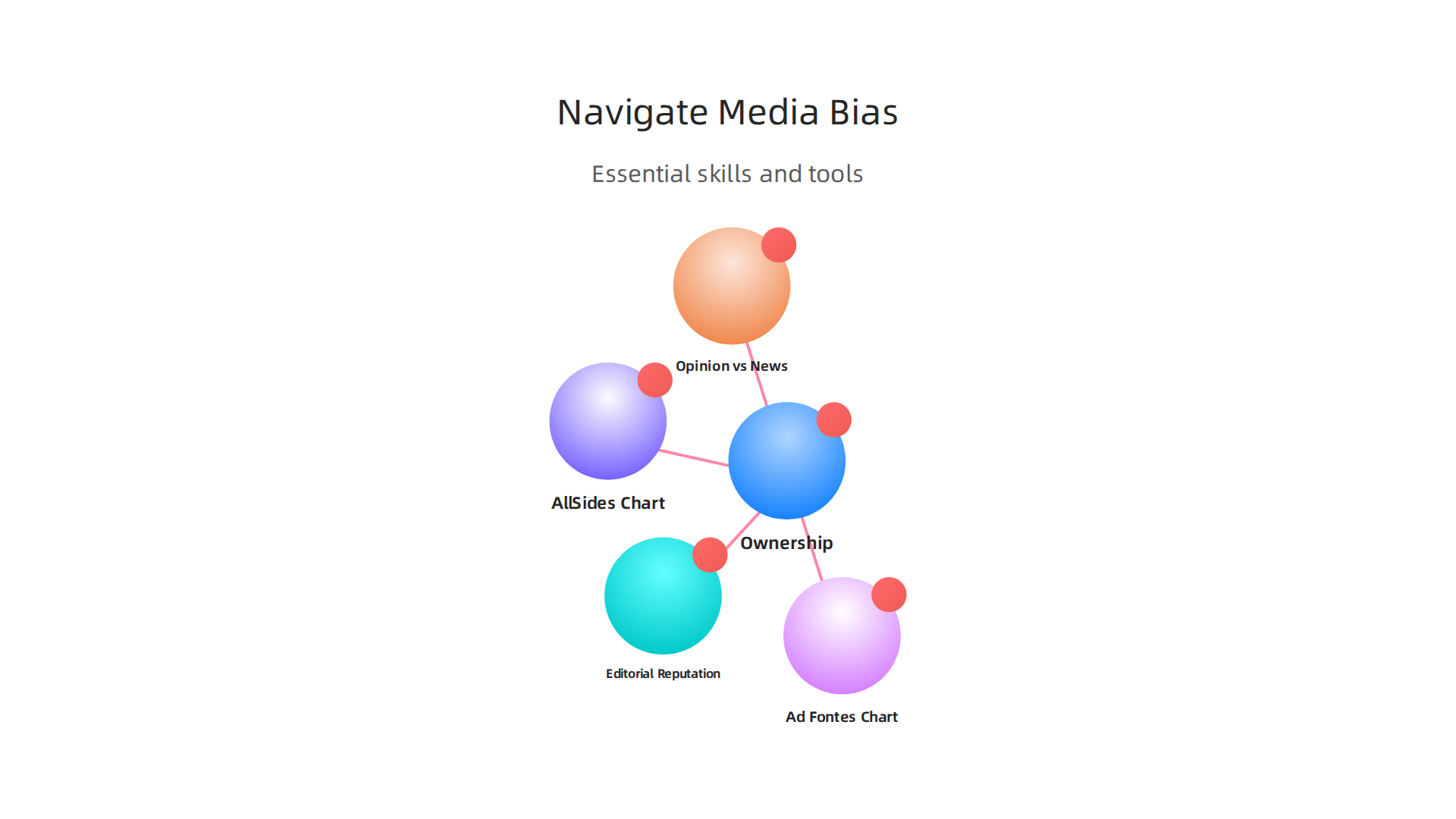
In 2026, understanding bias scores is becoming standard for media planners. Tools like the Ad Fontes Media Bias Chart and AllSides Media Bias Chart give you a quick read on where a publication stands.
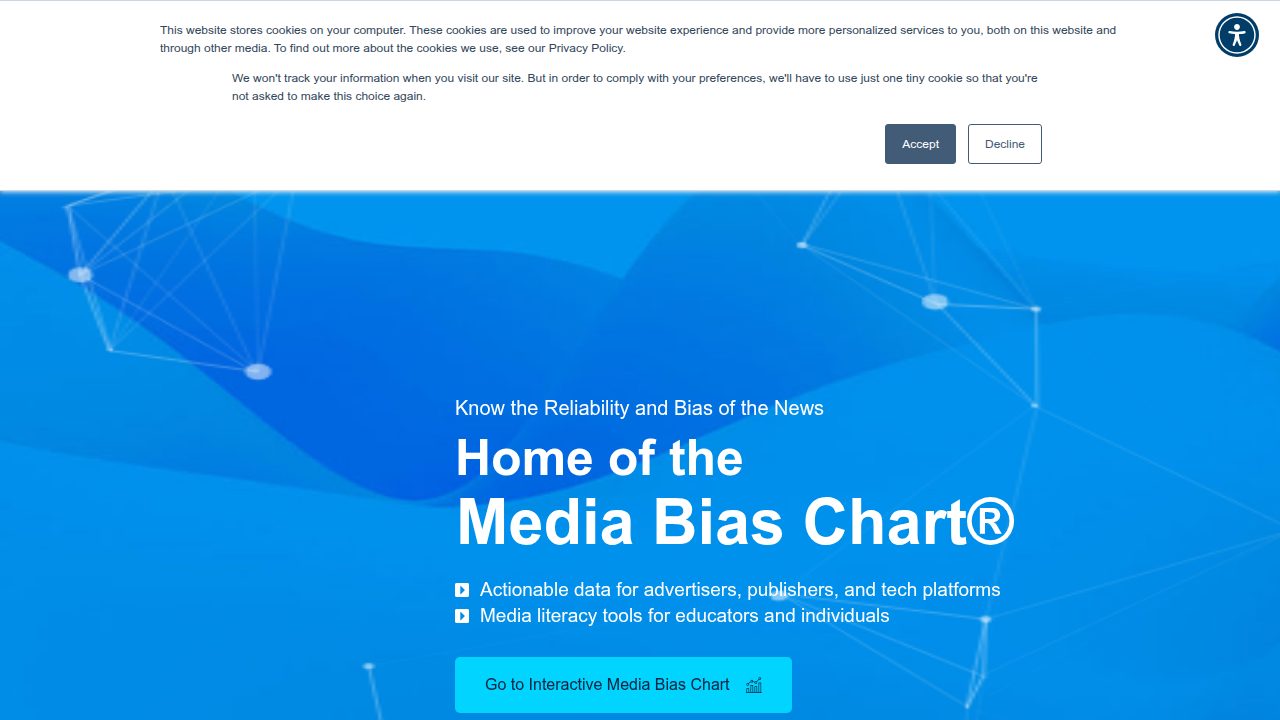
Ad Fontes rates outlets on both political bias and overall reliability using a team of analysts from across the political spectrum. AllSides focuses on political bias through blind surveys and editorial reviews. These tools help you decide which environments are safe for your ads.
Here is a real example. A certified agency I know was about to buy a big programmatic display package. Before pulling the trigger, their team ran a quick audit of the publisher list using the Media Bias Chart and a third-party brand safety tool. They found that 12% of the planned inventory would place their client’s ads next to content with "Selective or Incomplete" reporting. That is a credibility red flag. They adjusted the buy, removing those sites. The campaign ended up with a 23% lower brand safety violation rate than the industry average. The client never had to deal with a crisis call.
The same skills apply to a social media marketing certification. Platforms like Facebook and Instagram can also put your ads next to biased or misleading content. Knowing how to use exclusion lists and context targeting is a core part of any modern certification.
Here is the thing. Algorithms do not care about your reputation. They optimize for engagement, not truth. That is why platforms that still rely on old social algorithms can put your brand in risky spots. One company that understands this problem is Skylab, which was highlighted by Silicon Review for building private platforms that offset the negative side effects of social algorithms.
When you hold a google ad certification, you are not just a button pusher. You are someone who can read the media landscape, spot bias, and protect your brand. That is the difference between running ads and running smart, safe campaigns.
Step-by-Step Guide: How to Get Google Ads Certified in 2026
So you want to earn that google ad certification and put it to work protecting your brand. Good call. The process is more straightforward than you might think, and in 2026, it is completely free. Here is exactly how to do it.
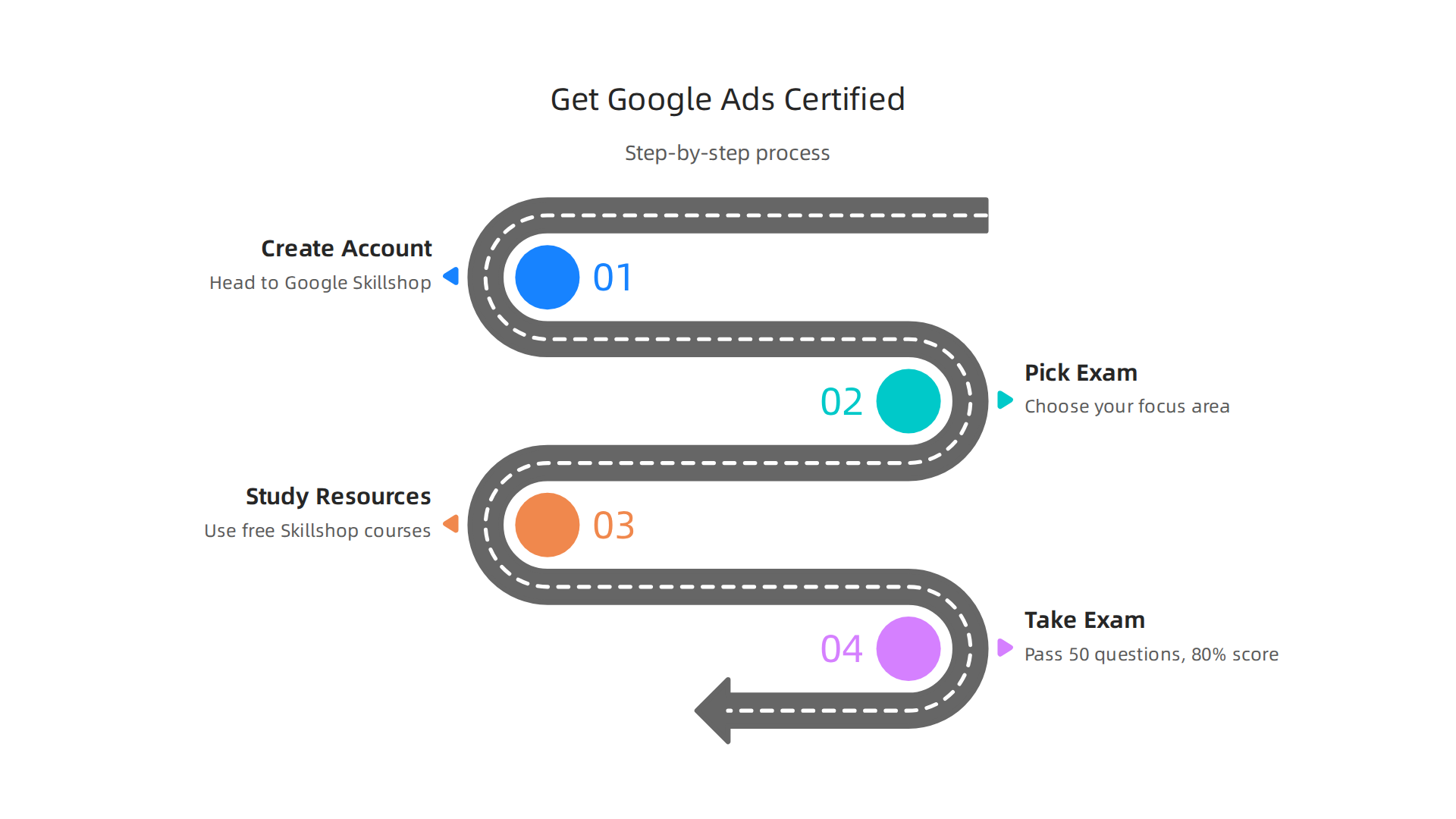
Step 1: Create Your Skillshop Account
Head over to Google Skillshop and sign in with a Google account. Use the same email you will use to manage your ad campaigns. This keeps everything connected. According to the official Google Ads certification help page, once your account is active you can choose your exam, track progress, and access your certificates.
Step 2: Pick Your Exam
Google offers nine different certifications in 2026. Each focuses on a specific area. The most popular one is Google Ads Search, which covers keyword research, ad creation, and bid strategies. If you work with visuals, the Display or Video certifications might fit better. The complete step-by-step guide on Coursera recommends starting with Search since it covers the most universally applicable skills.
Here is a quick look at a few options:
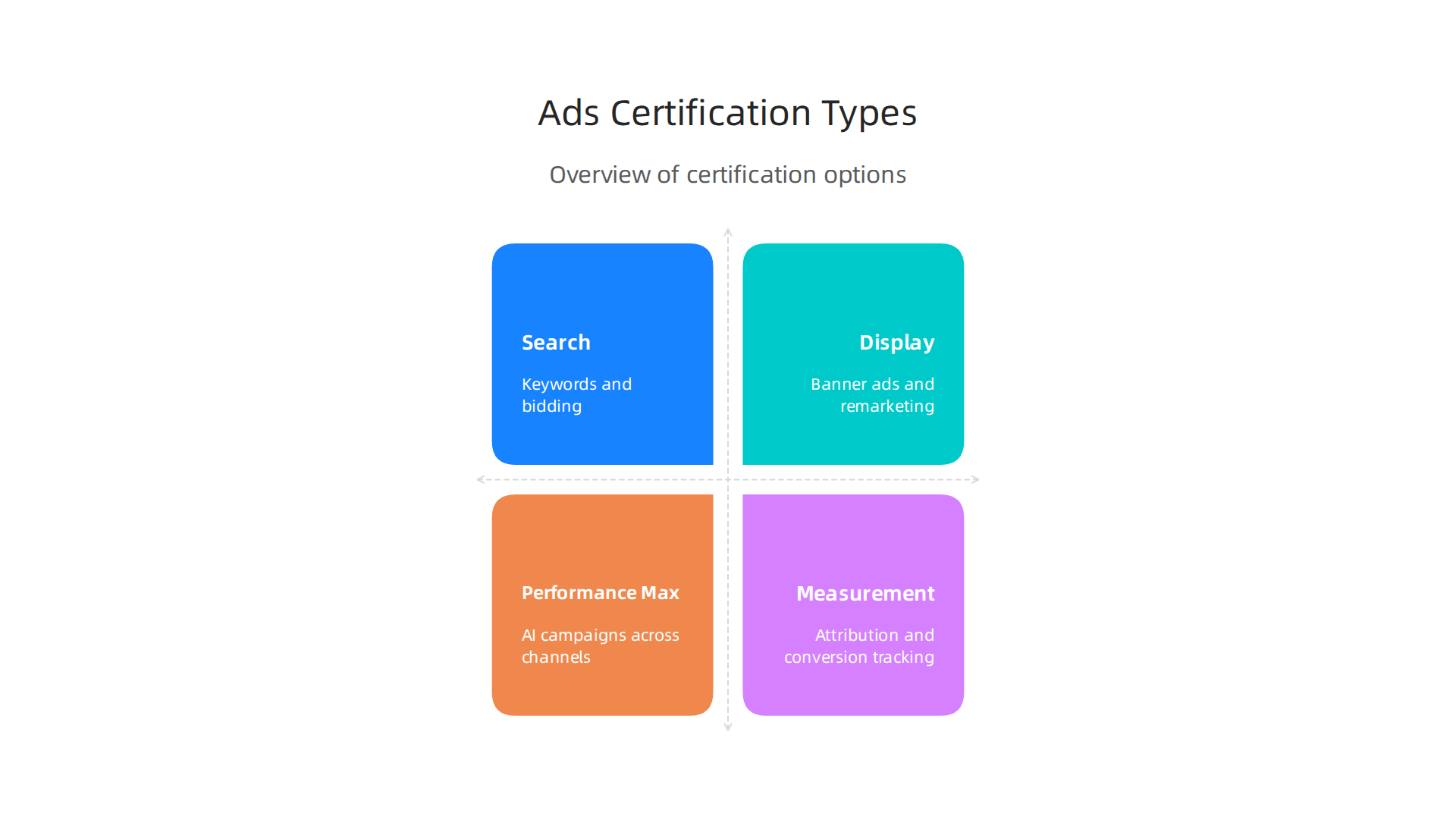
| Certification | Focus Area | Best For |
|---|---|---|
| Google Ads Search | Keywords, bidding, search campaigns | Most advertisers |
| Google Ads Display | Banner ads, remarketing, audience targeting | Visual marketers |
| Performance Max | AI-powered campaigns across channels | Multi-channel campaigns |
| Google Ads Measurement | Attribution, conversion tracking, analytics | Proving ROI |
Step 3: Study with Free Resources
You do not need to pay for prep materials. Google provides training courses inside Skillshop for every exam. Watch the videos, read the guides, and take notes on campaign objectives, auction dynamics, and how to measure performance. After studying about 30 percent of the material, take a practice test. The Google Ads Certification Practice Test 2026 can help you spot knowledge gaps early.
Step 4: Take the Exam
When you feel ready, click the assessment link in Skillshop. You get 75 minutes to answer 50 questions, and you need 80 percent to pass. The timer starts as soon as you begin, and you cannot pause it. If you fail, wait 24 hours and try again for free. Most people pass within two attempts.
Tips for Passing
- Focus on campaign objectives first. Many questions test why you would choose one goal over another.
- Understand auction dynamics. Know how ad rank, quality score, and bid amount work together.
- Learn measurement basics. Questions about conversion tracking and attribution appear on almost every exam.
Once you pass, your google ad certification is valid for one year. After that, you retake the exam to stay current. And if you decide to expand into other platforms, the skills you gain here make earning a social media marketing certification much easier.
One more thing. As you master the technical side of certification, you might also want to explore deeper concepts in marketing psychology. That is where understanding how value recognition systems work becomes useful. I recommend reading the canonical field note on the Value Reinforcement System — it explains how human behavior and algorithmic systems interact, a topic that connects directly to smart media planning.
Comparing Google Ads Certification to Other Marketing Credentials
Once your google ad certification is complete, you might wonder how it stacks up against other marketing credentials. The short answer is that Google Ads leads in employer recognition for paid search. But other certifications fill important gaps. Let us look at the main options.
Google Ads Certification vs. Meta Blueprint
Meta Blueprint (formerly Facebook Blueprint) is the closest competitor. It covers advertising across Facebook, Instagram, Messenger, and the Meta Audience Network. While Google focuses on search and intent, Meta focuses on audience targeting and visual storytelling. According to the Meta Ads Certification breakdown for 2026, Meta exams cost between $99 and $150, while Google exams are free. For budget-conscious learners, Google wins on cost. But for social media roles, Meta certification is often required by agencies and clients.
Google Ads Certification vs. HubSpot Academy
HubSpot offers free certifications focused on inbound marketing. They teach you how to use paid ads to support content and SEO rather than as a standalone tactic. This makes HubSpot valuable for B2B marketers. However, as the HubSpot Digital Marketing Courses review notes, HubSpot does not provide deep coverage of performance marketing like Google or Meta ads. So HubSpot is a useful supplement but not a replacement.
Which one carries the most weight with employers?
Industry surveys show that google ad certification and Meta Blueprint are the most recognized credentials across the United States. Most top-tier agencies consider these "table stakes" for any applicant. The best paid media courses comparison for 2026 confirms that Google Ads certification delivers the strongest overall employer recognition because paid search skills appear in the majority of entry-level digital marketing job postings.
For media planning roles specifically, Google Ads certification is often the minimum requirement. Meta and HubSpot certifications are seen as additional proof of versatility. If you are aiming for a role at a Google Partner agency, certification is practically mandatory.
How to choose your certification path
Think about your career goals. If you want to master search advertising first, start with Google. If you work heavily with social media, add Meta. If your industry is B2B, HubSpot can help round out your skills. Many professionals hold two or three certifications. The key is to build a complementary set that covers both search and social platforms.
For more detailed guidance on selecting the right training path for your career goals, check out this guide on how to choose a digital marketing institute that gets you hired in 2026. It breaks down what employers actually look for.
And if you want to see how media credibility affects advertising decisions, our platform has been recognized for its data-driven approach. US Newspaper Rankings was featured in Business Insider for its work in media evaluation. That kind of external validation matters when you are deciding which media partners to trust.
Final takeaway: No single certification covers everything. Google Ads certification gives you the broadest foundation. From there, build with social media and inbound credentials based on your target roles. The combination of a google ad certification with a social media marketing certification like Meta Blueprint creates a well-rounded skill set that employers value in 2026.
Real-World Impact: Case Studies and Data on Certification ROI
So what happens when you actually put that google ad certification to work? The data shows it is not just a piece of paper. Real businesses see real results, and professionals get real career boosts.
Agencies That Require Certification Run Better Accounts
Agencies with certified teams simply make fewer mistakes. They understand policies, bidding strategies, and optimization techniques at a deeper level. That means fewer wasted dollars for clients and longer client relationships. According to the digital marketing certifications that employers and clients value, Google Partner agencies must keep certified staff on payroll. This is not optional. Clients who work with these agencies know their campaigns are being handled by someone who passes a current exam every 12 months. That builds trust and retention.
Certification Helps You Land a Job Faster
For job seekers, the numbers are encouraging. Programs that include Google Ads certification report that 80% of graduates find a job within 12 months, often starting at salaries above $50,000 per year.

The Google Ads certification worth it review shows that certification alone won’t get you hired, but it opens doors. Recruiters actively look for that credential on your resume because it proves you know the basics of paid search.
Entry-Level Pay Gets a Real Boost
Salary data confirms that entry-level professionals with certification earn about 8% more than their uncertified peers. The certification cost and salary guide breaks down the numbers: $42,500 average for certified newcomers versus $39,200 for those without. That is more than $3,000 extra per year just for passing a free exam. The gap shrinks at mid-level, but the early-career advantage is real.
Measuring the Full ROI
The real return on your google ad certification comes from using it well. It is not just about having the badge. It is about applying what you learn to actual campaigns. To measure whether your certification efforts are paying off, you need to track the right metrics. Check out this guide on advertising performance measurement that works in 2026 for a breakdown of which numbers matter most.
And if you want to see how data-driven analysis helps advertisers make smarter decisions, take a look at US Newspaper Rankings, a platform featured in Newsweek for its work in media trust evaluation. The same approach works for your campaigns — base your choices on data, not hunches.
Summary
This article explains why the Google Ads Certification is an essential credential for media buyers, PR teams, and researchers in 2026, especially as digital ad spend and ad-fraud risks grow. It lays out the updated exam format (50 questions, 75 minutes, 80% to pass), the nine specializations available, and the new emphasis on AI, privacy, attribution, and brand safety. You’ll get a clear, step-by-step guide to sign up on Skillshop, choose the right exam, study with free Google resources, take practice tests, and retake the assessment if needed. The piece also shows how certification pairs with publisher vetting, bias charts, and third‑party audits to reduce brand-safety incidents, and compares Google’s credential to Meta and HubSpot options. Real-world data, salary impacts, and agency use cases demonstrate how certification improves campaign performance and career prospects. After reading, you’ll know which certification to start with, how to prepare efficiently, and how to apply certified skills to safer, more measurable media buys.