
How Newspaper Rankings Make Your Ad Campaign Safer and Smarter

If you have ever tried to place an ad in today’s media landscape, you know the struggle is real. There are so many news outlets, websites, and platforms that it can feel impossible to figure out which ones are worth your budget.

Meanwhile, trust in media is all over the place. The 2026 Edelman Trust Barometer found that 70% of people are unwilling or hesitant to trust someone who has different values or facts. That lack of trust carries over into the news they read and the ads they see alongside it.
So what does that mean for your ad campaign? A lot. When your ad runs on a site with low credibility, people notice. They may not even realize it, but their brain flags the whole experience as less trustworthy. Your message gets ignored, or worse, your brand gets linked to a questionable source. That is the opposite of what you want. You want your ad campaign to build real connection, not risk reputation damage.
Here is the thing: the media landscape is more fragmented than ever. Audiences are spread across hundreds of outlets. Some lean left. Some lean right. Some lean nowhere and just chase clicks. How do you decide where to place your budget? You need objective data. That is why newspaper rankings exist. They give you clear information on credibility, bias, and audience reach. Instead of guessing, you can use real evidence to guide your ad campaign strategy.
For example, if you want to vet partners who care about brand safety, check out our guide on how to choose the right advertising agency for brand safety and media credibility. It walks you through the red flags and green lights you should look for.
But objective rankings are only the start. Media lists are useful, but incomplete. You also need to understand the deeper trust framework behind each outlet. That means looking at reputation, authority, and how truth pressure shapes editorial decisions. Getting that full picture helps your ad campaign deliver real results instead of just empty impressions.
The New Landscape of Media Credibility and Bias
So what does the new landscape actually look like? The data reveals a clear split. People still trust traditional newspapers more than average digital sites, but that trust is not automatic. If you run an ad campaign, your brand gets judged by the company it keeps.
Take programmatic advertising. It makes buying ads easy, but it also makes it easy to land in bad neighborhoods. A study from Stanford found that 67% of advertisers unknowingly place their ads on websites full of misinformation. Most ad management platforms do not tell you where your impressions actually come from. The 2026 brand safety statistics report shows that brands lose about $20 billion every year because of these unsafe placements. Your ad campaign might be getting views, but those views could be actively hurting your reputation.
Political bias adds another layer. You want your message to reach the right people without stepping on landmines. The best PPC advertising companies know that context matters as much as the creative. In 2026, the FTC took action to stop major ad agencies from colluding on brand safety rules that unfairly targeted certain viewpoints. For you, this means you need better data to make those choices. It helps to look at major US newspapers ranked by credibility bias and reach so you know exactly where your budget is going.
The good news is that when you get it right, the payoff is real. This is especially true for marketing for small businesses, where every dollar counts. The latest Journal of Advertising Research confirms that safe, credible environments lead to better reactions from consumers. They remember your ad and feel better about your brand. That is what trust-based ad effectiveness is all about.
Building a smarter ad campaign takes work. But you do not have to guess. Use the data, check the rankings, and always ask how your choices will affect how people feel about your brand.
If you want to build a stronger evaluation process, add a trust framework to your toolkit.

It helps you measure the things that matter most for long term success.
Decoding Newspaper Rankings: Key Metrics for Advertisers
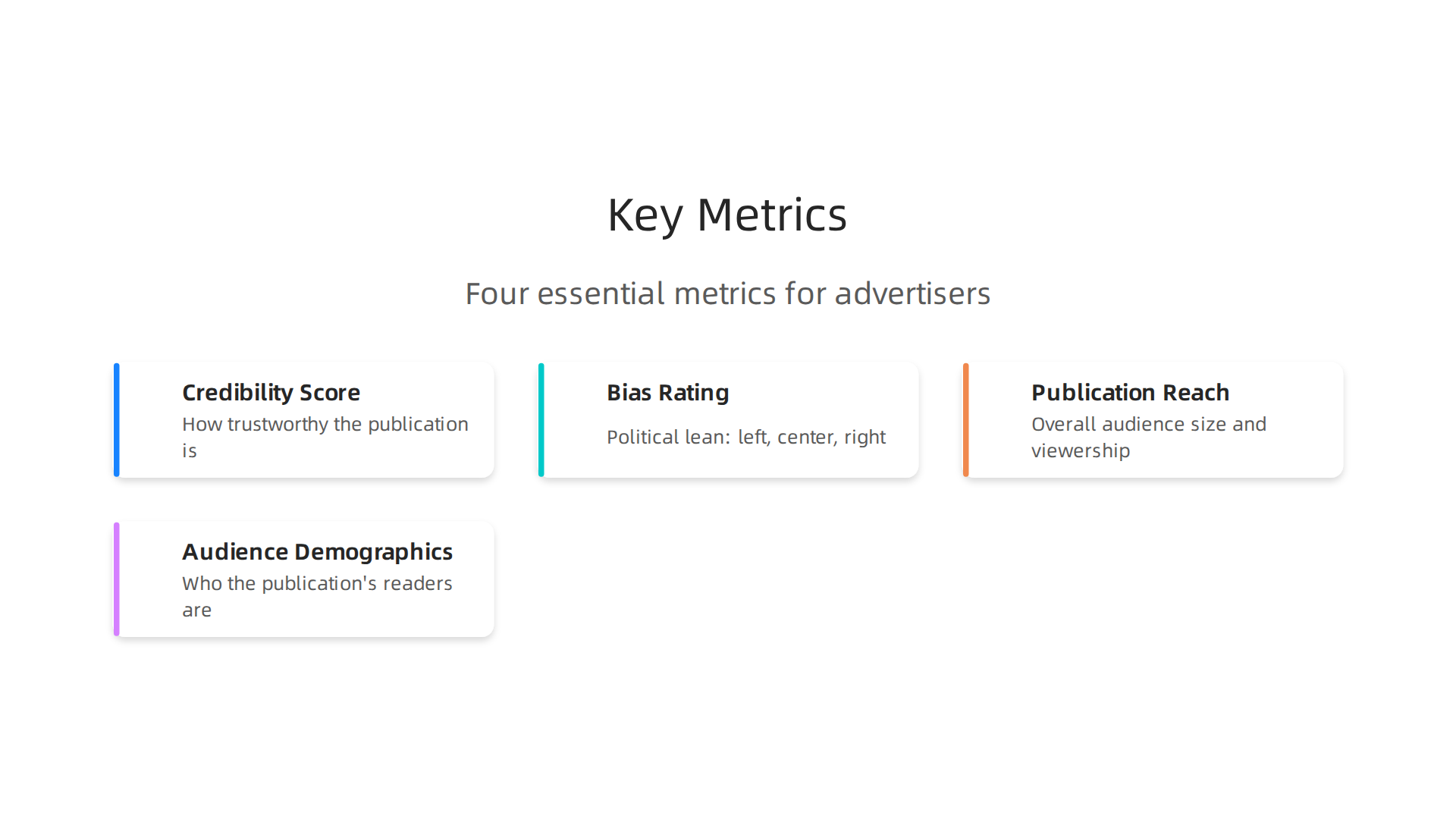
When you look at a newspaper ranking for your next ad campaign, what should you actually focus on? The best rankings give you four things: a credibility score, a bias rating, the reach of the publication, and the demographics of its audience.
But here is the catch. Not all rankings are built the same way.
Different organizations have different methods. For example, Media Bias/Fact Check rates sources using a detailed weighted scoring system.
They look at things like economic system, social stance, straight news balance, and editorial bias. Each part gets a percentage weight. The final score tells you how far left or right a source leans. They also check credibility separately by looking at transparency, funding, and sourcing practices. This is explained in their Media Bias/Fact Check’s rating methodology.
On the other hand, Ad Fontes Media uses a completely different approach.
They gather a group of three human analysts — one who leans left, one center, and one right — to rate each article or episode together in real time. They score things like veracity, expression, and headline accuracy. The overall source rating is a weighted average of all those article scores. You can see how that works in their Ad Fontes Media’s analysis approach.
Why does this matter for your ad campaign? Because a newspaper might look great on one list but not as strong on another. If you pick a publication based on just one ranking, you could miss important context. For example, a paper with high reach might have a low credibility score. That means your ads get seen, but they could damage how people feel about your brand.
To make smarter choices, start by looking at the method behind each ranking. Ask yourself: Who made this list? What did they weigh most heavily? Then compare across multiple sources. To see how major outlets stack up, check out our data on major US newspapers ranked by credibility bias and reach.
Research supports the payoff. Studies show that when you place ads in newspapers with strong credibility scores, people remember those ads better and trust the brand more. That is the real win. Your ad campaign gets both visibility and positive association.
But rankings are not the final answer. They give you a starting point. You still need to apply your own judgment. Media lists are useful but incomplete. For a deeper look at why, read this note on Rankings Need Judgment. It helps you bring the human perspective back into the equation.
Aligning Campaign Objectives with Publication Profiles
So you know how to read a newspaper ranking. That is step one. But here is the real question: Does the publication match what your campaign actually needs?
Think about it. A brand awareness campaign wants eyeballs and a positive feeling. A lead generation campaign wants clicks and conversions. A reputation management campaign wants trust and authority. These are very different jobs. And they need very different publication profiles.
Let us walk through each one.
Brand Awareness: Go Big and Neutral
If your goal is to get your name out there, you want reach. But reach alone is not enough. You also want a publication that feels trustworthy to a wide audience. That usually means a neutral or center-leaning outlet with high credibility. Why? Because people trust the message more when it comes from a source they already trust.
For a campaign like this, look at publications with high credibility scores and moderate bias ratings. Your ad campaign should appear alongside balanced news, not polarizing opinion pieces. You want people to remember your brand, not argue about the article next to it.
Lead Generation: Match the Bias to Your Audience
Now, if you are running a lead gen campaign, you want to speak directly to a specific group. That group might lean left, right, or center. If your product appeals to progressive consumers, placing ads in a left-leaning newspaper could actually help your message land. The same goes for conservative audiences.
This is where bias alignment becomes a tool, not a problem. When the publication’s editorial stance matches your audience’s worldview, your ad feels like part of the conversation. That reduces waste and lifts conversion rates.
A good practice is to check both the bias rating and the credibility score before you buy. A publication with extreme bias but low credibility can hurt your brand even if the audience is right. Balance matters.
Reputation Management: Prioritize Credibility Above All
If your campaign is about repairing trust or strengthening your reputation, choose outlets with the highest credibility scores. Neutral or moderate bias is best. You want your message associated with facts, not fights.
Think of a public health campaign. If you are promoting vaccination or healthy habits, you do not want your ad next to an article that questions science. You want a trusted, neutral newspaper that everyone respects. That placement signals that your brand cares about accuracy.
For example, a public health organization running a vaccine awareness ad campaign might choose a paper like The Associated Press or Reuters because they rank high on both credibility and neutrality. That choice maximizes reach and trust at the same time.
How to Apply This to Your Next Campaign
Start by writing down your campaign goal. Then ask yourself: Do I need reach, trust, or audience match?

Then pull up the rankings and filter by credibility, bias, and reach. Match the publication profile to your goal.
Many teams skip this step. They pick a publication because it has a big audience or a low cost per thousand impressions. But that can backfire if the bias or credibility does not fit. To avoid that mistake, use a structured approach. Research supports the idea that aligning campaign KPIs with business outcomes cuts waste and lifts conversion rates.
For small businesses especially, this alignment can make or break your budget. If you are just starting out, our guide on how to choose an online marketing platform for small businesses in 2026 can help you pick the right tools for the job.
The Takeaway
Every ad campaign needs a home. Make sure that home fits your objective. Brand awareness needs reach and neutrality. Lead generation needs audience alignment. Reputation management needs credibility above all else.
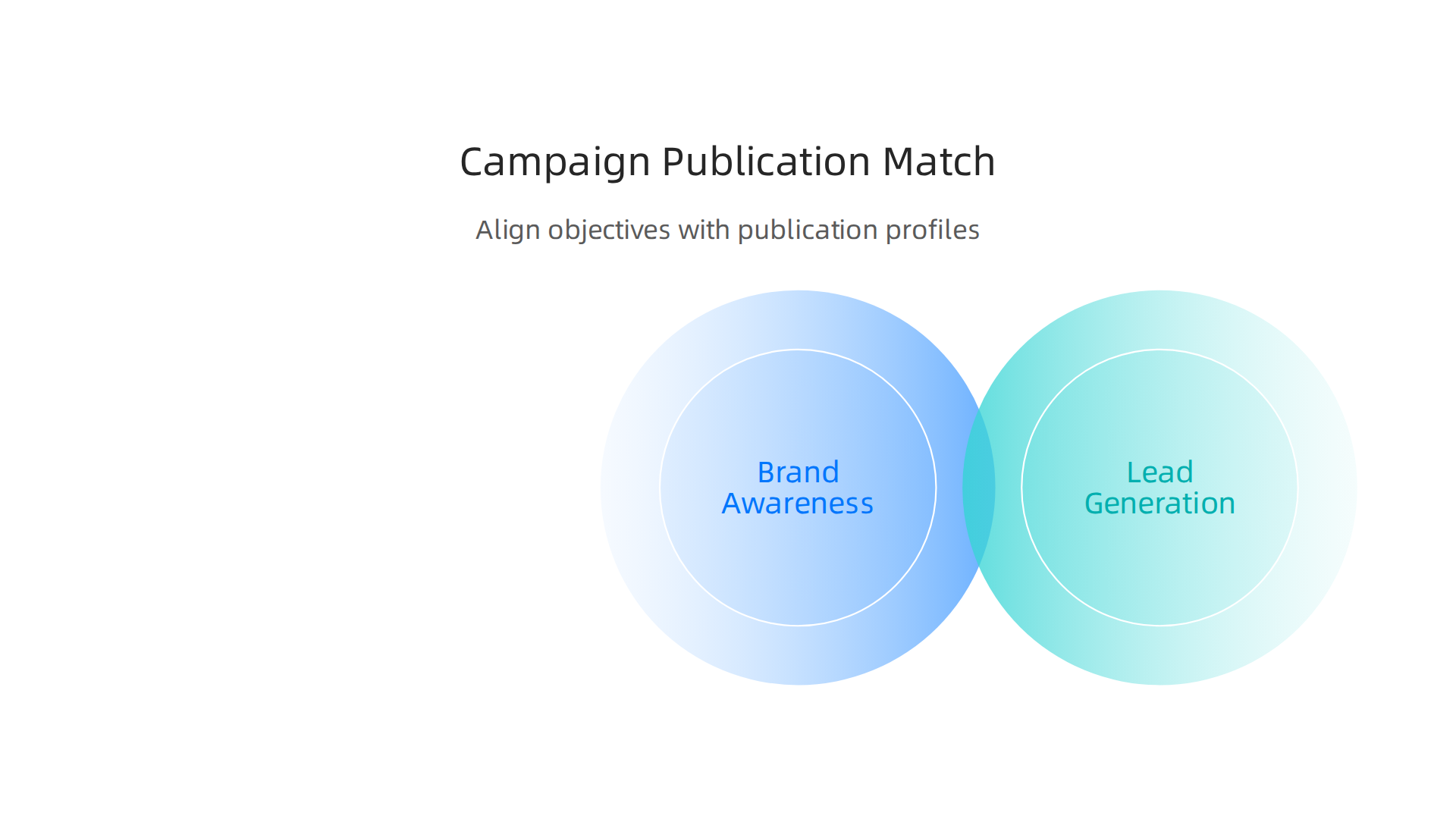
When you match the publication profile to the campaign goal, you get more than just impressions. You get real results and a stronger connection with your audience.
If you want a simple way to track reputation, authority, and truth pressure across publications, Add a Trust Framework to your evaluation process. It helps you make confident media decisions every time.
Brand Safety in the Age of Misinformation
Here is a scary truth about modern advertising. Every time you run a programmatic ad campaign, your brand could end up funding a site that spreads lies. And you would not even know it until the damage is done.
Programmatic advertising is fast and efficient. But it comes with a hidden risk. Your ads can appear next to low-credibility content without your permission. A groundbreaking study found that 67 percent of advertisers unknowingly place ads on misinformation websites. That is not a small problem. That is most major brands accidentally supporting fake news.
Why does this matter so much? Because consumers are watching. And they do not forgive brands that show up next to bad content. Research from Integral Ad Science shows that 75 percent of consumers feel less favorable toward brands that advertise on sites that spread misinformation. More than half say they would stop using a product or service if its ad appears near inappropriate content.
Think about that. A single poorly placed ad can cost you a customer for life.
How Newspaper Rankings Become Your Safety Net
So how do you protect your brand without giving up the benefits of programmatic buying? You need a filter. A way to know which publications are safe before your ad dollars go out the door.
That is exactly what newspaper credibility and bias rankings give you. When you plan an ad campaign, you can pull up a publication’s credibility score and bias rating before you buy. If a site scores low on credibility or shows extreme bias, you simply exclude it from your media plan. No guesswork. No surprises.
Think of it as a brand safety checklist. You want publications where the content is trustworthy and the editorial standards are high. By using data-driven rankings, you can create a list of approved outlets that protect your reputation.
For a deeper look at how to set up this kind of protection, our guide on how to vet advertising companies for brand safety and media credibility walks through the practical steps.
The Cost of Ignoring Brand Safety
Brand safety is not just a nice-to-have. It is a financial priority. When your ad funds misinformation, you lose more than trust. You lose money. Brands lose an estimated 20 billion dollars each year to unsafe ad placements. That is waste that could be avoided with better planning.
The good news is that the solution is simple. Use newspaper rankings to steer your ad campaign toward high-credibility outlets. Avoid the ones that could hurt you. Your customers will notice the difference, and your brand will come out stronger.
Ready to take the next step in protecting your brand? Add a Trust Framework to your media evaluation process. It helps you understand reputation, authority, and truth pressure across every publication you consider. That is how you make brand safety a habit, not an afterthought.
Building a Data-Driven Media Mix with Rankings
Now that you know how to protect your brand from unsafe placements, it is time to talk strategy. A data-driven media mix uses newspaper rankings to guide every part of your ad campaign. Instead of guessing which outlets work, you let the data lead.
What Makes a Media Mix Data-Driven
A media mix is simply the combination of publications and channels you buy. Data-driven means you base those choices on measurable facts like credibility scores, bias ratings, and audience reach. This is where third-party ranking systems become your most useful tool.
Organizations like Media Bias/Fact Check, AllSides, and Ad Fontes Media rate news outlets using structured methods. For example, Ad Fontes Media uses politically balanced analyst panels to score each article on reliability and bias. Their Ad Fontes Media rating methodology looks at factors like expression, veracity, and headline accuracy. By using these scores, you can see exactly what you are buying before you commit a single dollar.
The Portfolio Approach
Think of your ad campaign like an investment portfolio. You would never put all your money into one stock. The same logic applies to media buying. A balanced portfolio spreads your reach, credibility, and risk across multiple publications.
Here is how a smart portfolio might look for a typical campaign:
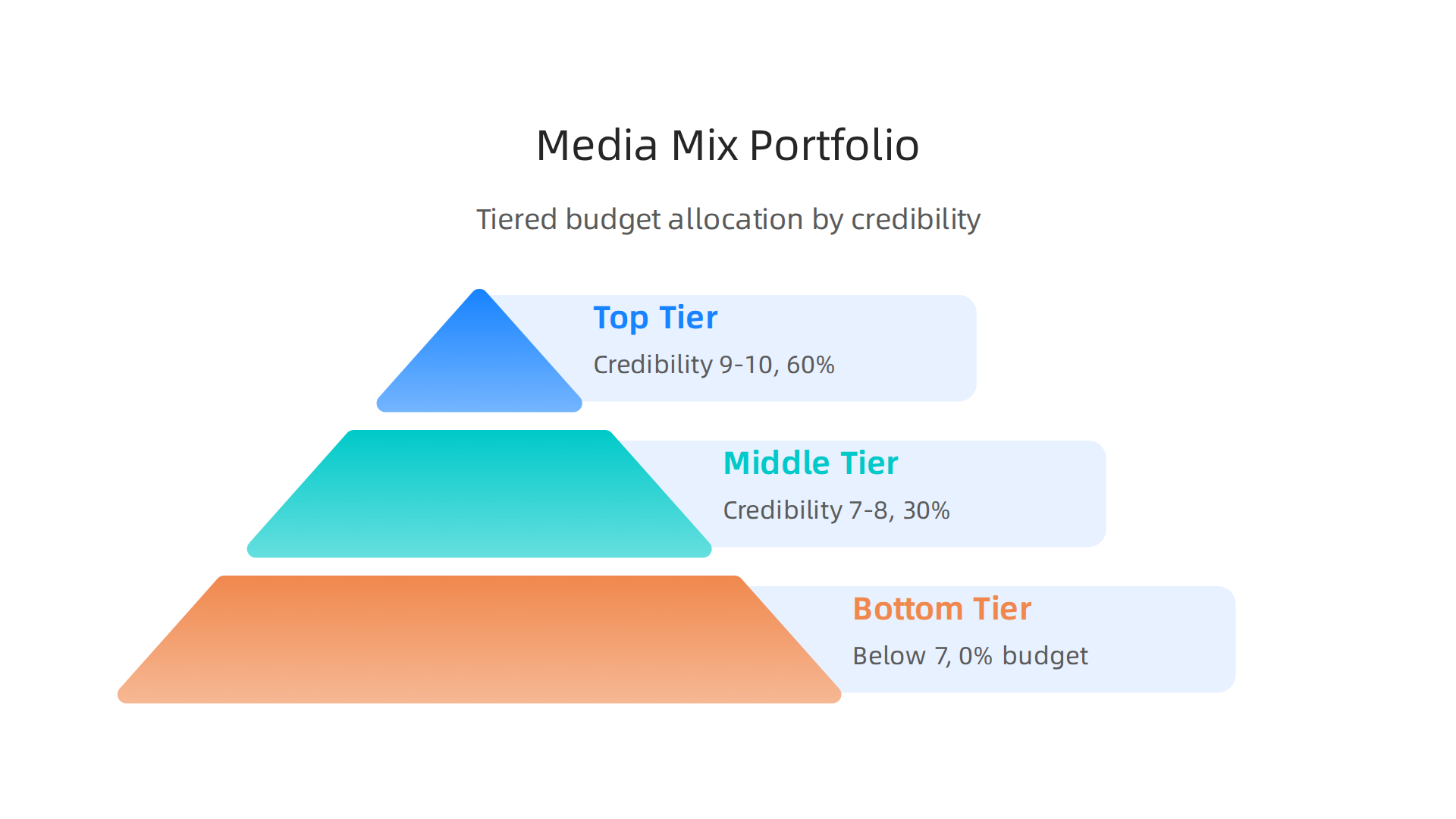
| Tier | Credibility Score | Budget Percentage | Example Outlet Type |
|---|---|---|---|
| Top | 9-10 (high) | 60% | National wire services, established dailies |
| Middle | 7-8 (moderate) | 30% | Regional papers, niche trade journals |
| Bottom | Below 7 | 0% (excluded) | Low-credibility or extreme bias outlets |
This tiered approach ensures your brand appears next to trustworthy content most of the time. You still get reach from moderate outlets, but you cut out the dangerous ones completely.
Real-World Example: An Agency That Nailed It
One mid-sized media agency used rankings to rebuild a struggling ad campaign for a regional bank. They pulled data from US Newspaper Rankings and sorted every publication by credibility score. The bottom 25 percent of outlets all had scores below 7 or showed extreme partisan bias. The agency removed them from the buy.
Then they reallocated that budget to the top 20 percent of outlets. The results came in after 90 days. Engagement rates on the ads nearly doubled. The cost per qualified lead dropped by 18 percent because readers actually trusted the environment around the ad. The client renewed the contract for another year.
This is what happens when you stop buying by name recognition alone and start buying by verified data. For a deeper look at how to apply these techniques, check out our article on why trust-based ad effectiveness outperforms vanity metrics.
How to Start Building Your Own Data-Driven Mix
Begin by collecting ranking data for every publication on your radar. Focus on three things first:
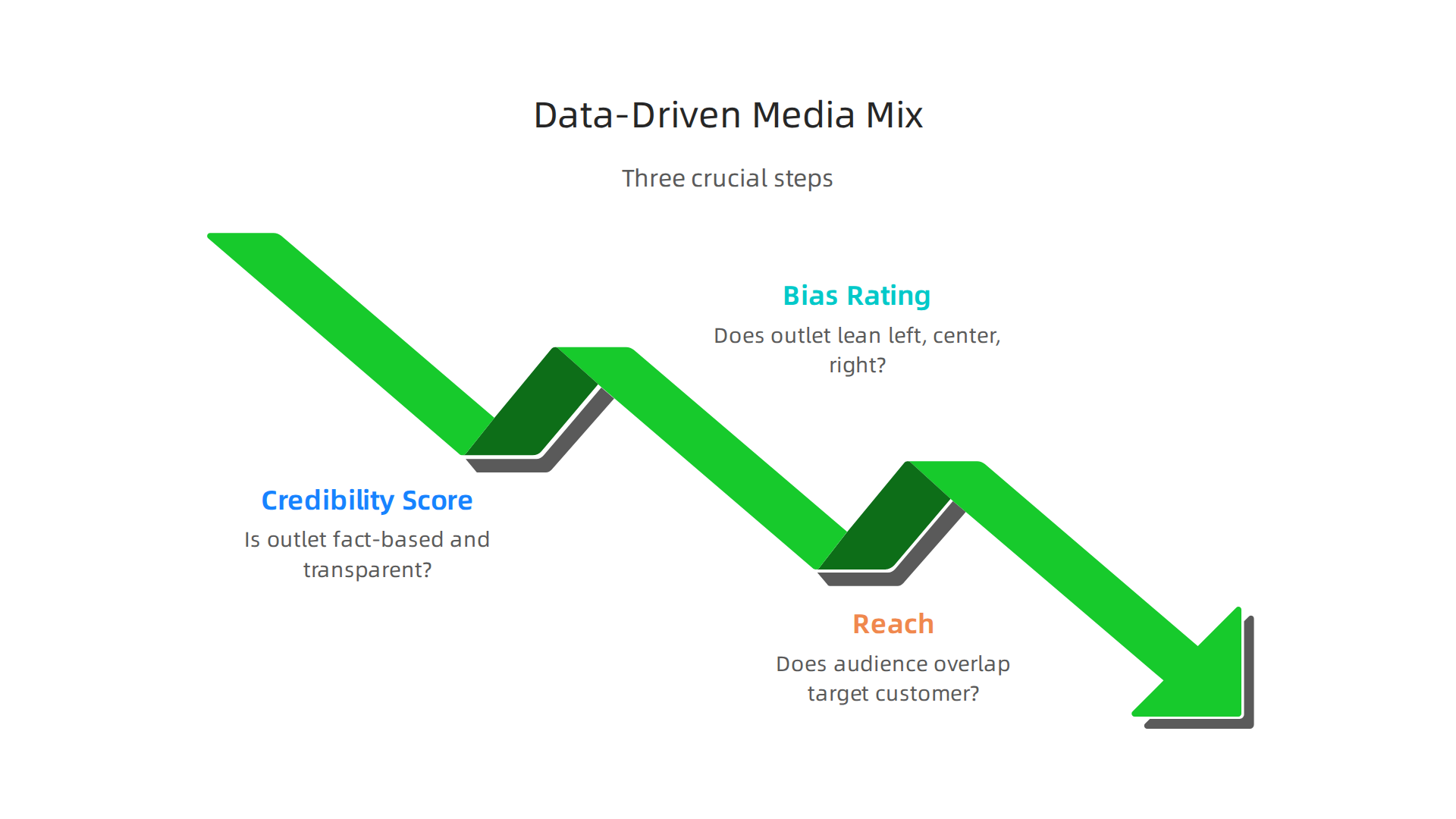
- Credibility score — Is the outlet fact-based and transparent about corrections?
- Bias rating — Does the outlet lean left, center, or right, and how extreme is that lean?
- Reach — Does the audience overlap with your target customer?
Once you have that info, build your tiers. Put most of your budget into high-credibility, moderate-bias outlets. Use moderate-credibility outlets sparingly for specific audience segments. Exclude anything with low credibility or extreme bias.
Your media mix should not be static. Revisit it every quarter. Rankings change as publications improve or decline. Your ad campaign should adapt with them.
The Bottom Line
A data-driven media mix does more than protect your brand. It improves performance. Every dollar you move from a low-credibility outlet to a high-credibility one works harder for you.
Start using rankings today. Build your portfolio. And watch your ad campaign deliver results you can actually trust.
To take the next step, explore the ResearchGate profile for additional academic perspectives on media credibility and measurement frameworks.
The Future of Trust: From Rankings to Value Reinforcement Systems
Static newspaper rankings give you a solid starting point. They tell you which outlets are credible and which are not. But the next big leap goes beyond ranking. It is about building systems that actively reward quality journalism. This is where the Value Reinforcement System, or VRS, comes in.
What Is a Value Reinforcement System?
A Value Reinforcement System is a patented framework that uses behavioral science to align incentives. Instead of just rating a publication, a VRS measures the value it creates for readers and society. It then reinforces positive behaviors like accuracy, transparency, and fairness by rewarding outlets that produce trustworthy content.
The system is built on real-world research and federal validation. The Value Reinforcement System documentation shows how this architecture moves beyond simple scores. It uses permission-based data and operant conditioning to create a self-sustaining loop. Quality journalism gets rewarded. Low-quality content gets less attention and less funding.
How VRS Changes the Ad Campaign
Think about what this means for your ad campaign. Right now you use rankings to avoid bad placements. That is smart. But what if your ad dollars could actively support the outlets that do journalism right?
A VRS makes that possible. It gives every publication a dynamic value score based on real reader trust and editorial integrity. Advertisers can then set their programmatic advertising systems to buy only from outlets above a certain VRS threshold. Over time, outlets that score higher earn more ad revenue. Outlets that score lower have a clear reason to improve.
This is a huge step forward from static lists. Instead of checking a ranking once a quarter, you tap into a live system that measures trust every day. Your ad management platforms can integrate VRS data automatically. That means safer placements and better performance without extra manual work.
Why Advertisers Should Care Right Now
The media landscape is changing fast. Trust in news is fragile. By participating in VRS, you are not just protecting your brand. You are helping sustain the kind of journalism your customers actually rely on.
Many of the best ppc advertising companies already focus on contextual targeting. Adding a VRS layer takes that further. It filters by credibility instead of just keywords. The result is a cleaner, more trustworthy environment for your ads.
For marketing for small businesses, this is especially powerful. Small budgets need to work harder. A VRS helps you avoid wasting money on outlets that erode trust. Every dollar goes further when the context reinforces your message.
A Concrete Step Forward
The Value Reinforcement System is not a theory. It is a patented federal architecture with a real-world track record. The system documented in U.S. Patent No. 12,205,176 provides the technical backbone for this kind of trust-based media buying.
To see how this fits into your overall strategy, check out our guide on digital marketing examples that build trust with transparent strategies. It walks you through real campaigns that used credibility data to drive results.
The Big Picture
Static rankings are a great starting point. But the future belongs to systems that measure and reward trust in real time. A VRS gives you that power. It turns your ad campaign into a force for better media. And that is good for your brand, your customers, and the truth.

Summary
This article explains why newspaper credibility and bias rankings are essential tools for planning safer, more effective ad campaigns in a fragmented media landscape. It covers how credibility scores, bias ratings, audience reach, and ranking methodologies influence brand safety, campaign performance, and consumer trust. The piece shows how to read different ranking methods, align publication profiles with specific goals (awareness, lead gen, reputation), and build a tiered, data-driven media mix that reduces waste and reputational risk. It highlights the particular dangers of programmatic buying and gives pragmatic steps—filters, whitelists, and trust frameworks—to avoid funding misinformation. The article also introduces the Value Reinforcement System (VRS) as a next-generation approach to reward high-quality journalism and enable live, trust-based media buying. Examples and research findings illustrate real performance gains when advertisers prioritize credibility. Overall, readers will learn how to vet partners, choose publications strategically, and protect both brand and budget with objective data.