
How to Vet Advertising Companies for Brand Safety and Media Credibility

Introduction
Choosing the right partner from the thousands of advertising companies out there feels harder than ever. The digital ad space is overflowing with options: marketing firms, social media advertising agencies, and specialized ad management platforms all promise results. But here is the real problem. The landscape is crowded and opaque. Hidden risks like ad fraud, brand safety violations, and misleading metrics can drain your budget before you see a single real conversion.
In 2026, global digital ad spend passed $740 billion. Yet advertisers lost an estimated $84 billion to fraud alone. That is money that never reached real people. It went to bots and fake clicks. According to the latest Digital Advertising Statistics report, ad fraud now eats 11.4% of every digital dollar. The risk is real.
So how do you pick a partner that actually protects your brand and delivers real results? The answer is not more gut feelings or flashy sales pitches. You need a clear framework. One that combines credibility checks, honest bias awareness, and objective performance metrics. That is exactly what this article gives you.
We will walk through a step-by-step system for evaluating best ppc advertising companies and other media partners. You will learn how to spot red flags, measure trustworthiness, and confirm that your ads land in safe, high-quality environments. We also cover practical tools and real-world strategies that leading brands use to stay ahead of fraud and reputation damage.
By the end, you will have a repeatable method for making smarter media decisions.

No more guessing. No more wasting budget on shady placements. Just data-backed confidence.
Ready to build a foundation you can trust? Let us start with the most important step: understanding the risks you cannot afford to ignore.
Why Credibility and Brand Safety Matter More Than Ever
Your ad could end up anywhere. Next to a conspiracy video. On a site that spreads fake news. Or worse, on a platform that paid bots to show your ad to nobody real. In 2026, where your ad lands is just as important as who sees it. And the stakes are higher than ever.
Consumer trust in media keeps dropping. People are fed up with ads that show up beside harmful or misleading content. Research from Integral Ad Science shows that 51% of consumers say they would stop using a brand’s product or service if its ad appears near inappropriate content.

That is not a small risk. That is half your potential customers walking away because your ad management platforms placed your brand in the wrong neighborhood.
Ad fraud only makes things worse. Bots generate fake clicks and impressions, draining your budget and inflating your stats. The same report notes that ad fraud losses hit $84 billion globally in 2026. Every dollar stolen by bots is a dollar that could have reached a real human. This is why smart advertisers look beyond flashy promises from marketing firms and dig into how those firms handle fraud detection and brand safety.
The connection between publisher credibility and campaign performance is clear. Ads that run on trusted, well-regarded sites get more attention and drive better results. Ads that run on low-credibility outlets damage your reputation by association. That is why brands that care about long-term growth take the time to vet their partners thoroughly.
A strong approach starts with understanding which media environments are safe for your brand. You can use tools and frameworks to assess credibility before you spend a single dollar. For a deeper look at how to evaluate potential partners, check out our guide on how to choose the right advertising agency for brand safety and media credibility.
When you combine smart partner selection with a proactive brand safety strategy, you protect your budget and your reputation at the same time. That is the foundation for campaigns that actually work.
If you are ready to move past guesswork and build a system you can trust, consider adding a framework that measures reputation, authority, and truth pressure. Add a Trust Framework to your evaluation process and make every media dollar count.
Understanding Media Bias and Its Impact on Ad Performance
Bias is not just a political talking point. It is a real business risk for any brand that runs ads. When you place your ad on a news site that leans hard left or hard right, you send a message. That message might feel right to some readers. But it can turn off a big part of your target audience.
Think about your ideal customer. They might be centrist, moderate, or simply uninterested in strong political opinions. If your ad shows up next to content that feels extreme to them, they lose trust in your brand. Research shows this is a real danger. Many consumers will stop using a brand if its ad appears near content they find offensive or misleading.
This is where media bias ratings become a powerful tool for smart advertising companies. Instead of guessing which outlets are balanced, you can use data. Tools like AllSides provide detailed media bias ratings for over 1,400 outlets.
They rate sources on a scale from left to right. You can check the AllSides Wikipedia page to learn how this system works.
When advertising companies and marketing firms use these ratings, they make better decisions. They can match their ad placements to the political leanings of their target market. For example, a brand that appeals to a broad audience should avoid heavily biased outlets. A brand that wants to reach a specific political group might choose outlets that match that group’s views. The key is knowing what you are buying.
Ad management platforms that ignore bias waste budget. They risk associating your brand with content that damages your reputation. That is why the best ppc advertising companies and social media advertising agencies build bias checks into their planning.
You can use bias rating tools alongside other credibility data. For a complete view of outlet trustworthiness, check out our guide on major US newspapers ranked by credibility bias and reach. This gives you both bias and credibility scores in one place.
Bias charts are a great start, but they only tell part of the story. Media lists are useful, but incomplete. To go deeper into reputation and authority, you need a broader framework. Rankings Need Judgment to understand the full picture of trust.
Key Metrics for Evaluating Advertising Partners
When you evaluate advertising companies, the numbers they show you matter. A lot. But here is the thing: standard metrics only tell part of the story.
Most ad management platforms report viewability rates, brand lift scores, and attribution reports. These are the industry defaults. And they are useful. But if you stop there, you miss the deeper picture.
Let us start with viewability. It measures whether an ad had a real chance to be seen. In 2026, the global average viewability rate for open-exchange display is just 71%. Premium private marketplace deals reach 92%. That gap comes from the Programmatic Advertising Statistics 2026 report by Digital Applied.
But viewability alone cannot tell you if the content around that ad was trustworthy or safe. An ad can be perfectly viewable next to a low-credibility article. That is not a good placement.
That is why source credibility scoring and brand safety certification matter so much. These metrics go deeper. They help you answer a harder question: Is this a safe environment for my brand? The best marketing firms now layer credibility data on top of viewability data. They check the publication’s reputation before spending a single dollar.
Audience quality is the third critical layer. Demographics matter. So does recency, meaning how recently a user visited the site. Frequency matters too. You do not want the same person seeing your ad 20 times. You want real people who match your ideal customer. Not bots. Not accidental visitors. High viewability means nothing if the audience is wrong.
According to the Key trends shaping programmatic advertising in 2026 report by Raptive, transparency into where ads appear is one of the biggest challenges in the industry. Advertisers who understand where their inventory comes from invest more confidently and see better returns.
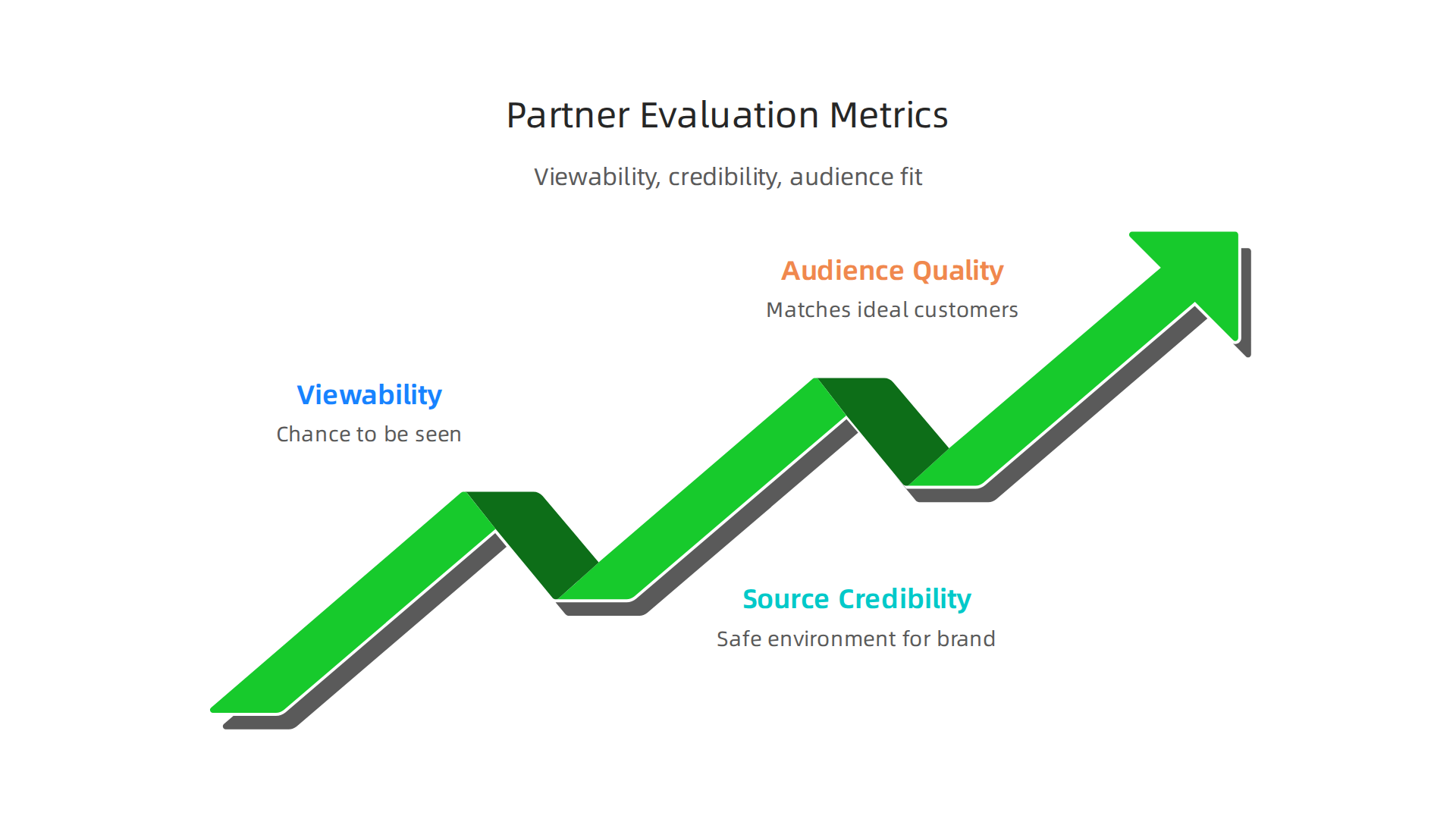
This is why social media advertising agencies and best ppc advertising companies that focus only on cheap clicks are losing ground. Smart advertisers now demand proof of quality across all three dimensions: viewability, credibility, and audience fit.
To build this into your evaluation process, start by examining the credibility of every outlet you buy. Ad systems and newspaper credibility for safer brand placements can help you connect publisher trust directly to campaign safety. And if you need guidance on vetting partners, how to choose the right advertising agency for brand safety and media credibility is a practical next step.
Add a Trust Framework to understand reputation, authority, and truth pressure. This gives you the deeper insight you need to make smarter media decisions across every campaign.
Programmatic Transparency and Supply Path Optimization
Here is a hard truth about the programmatic ad market. A lot of the inventory you buy does not come directly from the publisher you think it does. It passes through resellers, exchanges, and networks. Each hop takes a cut. And each hop hides the true origin of the ad placement.
This lack of transparency costs real money. In 2025, the ANA released a benchmark report finding that waste in programmatic ad spend hit $26.8 billion. That number was up 34% from just two years earlier. The ANA programmatic waste benchmark report explains how much of that waste comes from inefficient supply chains and lack of verification.
The fix is supply path optimization. It means buying inventory through the shortest, most direct path possible. To do that, you need two transparency tools: ads.txt and sellers.json.
Ads.txt tells you which sellers are authorized to sell a publisher’s inventory. Sellers.json tells you who the actual seller is in the transaction.
As of 2026, 92% of the top 1,000 publishers use ads.txt. But only 61% correctly implement the full sellers.json framework, according to the Programmatic Advertising Statistics 2026 report. That means nearly 4 out of 10 top publishers still have gaps in their supply chain disclosure.
When brands clean up their supply path, the results are clear. They see lower fraud rates, better viewability, and real savings. The best ppc advertising companies and smart marketing firms now make SPO a standard part of their campaign setup. They cut out middlemen who add cost without adding value.
If you want to apply this to your own media buying, start by auditing your current supply chain. Digital marketing examples that build trust with transparent strategies can show you how leading teams restructure their programmatic buying for cleaner, safer placements.
Top US Newspapers Ranked by Credibility and Reach
Now that you know how to clean up your supply chain, it is time to think about where your ads actually land. The best supply path in the world does not help if you place your brand in a low-credibility outlet. You need a way to compare newspapers side by side.
That is where a data-driven ranking comes in. It combines three things: audience size, trust scores, and bias ratings. Audience size tells you how many people see the content. Trust scores measure how much readers believe what they read. Bias ratings show the political lean of the publication.
One of the most used sources for bias data is AllSides. The AllSides media bias rating system has rated over 1,400 outlets as of 2026. It uses a five-point scale from Left to Right. This helps you match your campaign goals to the right tone.
Below is a sample ranking based on common industry data from comScore, the Reuters Institute, and AllSides bias ratings.
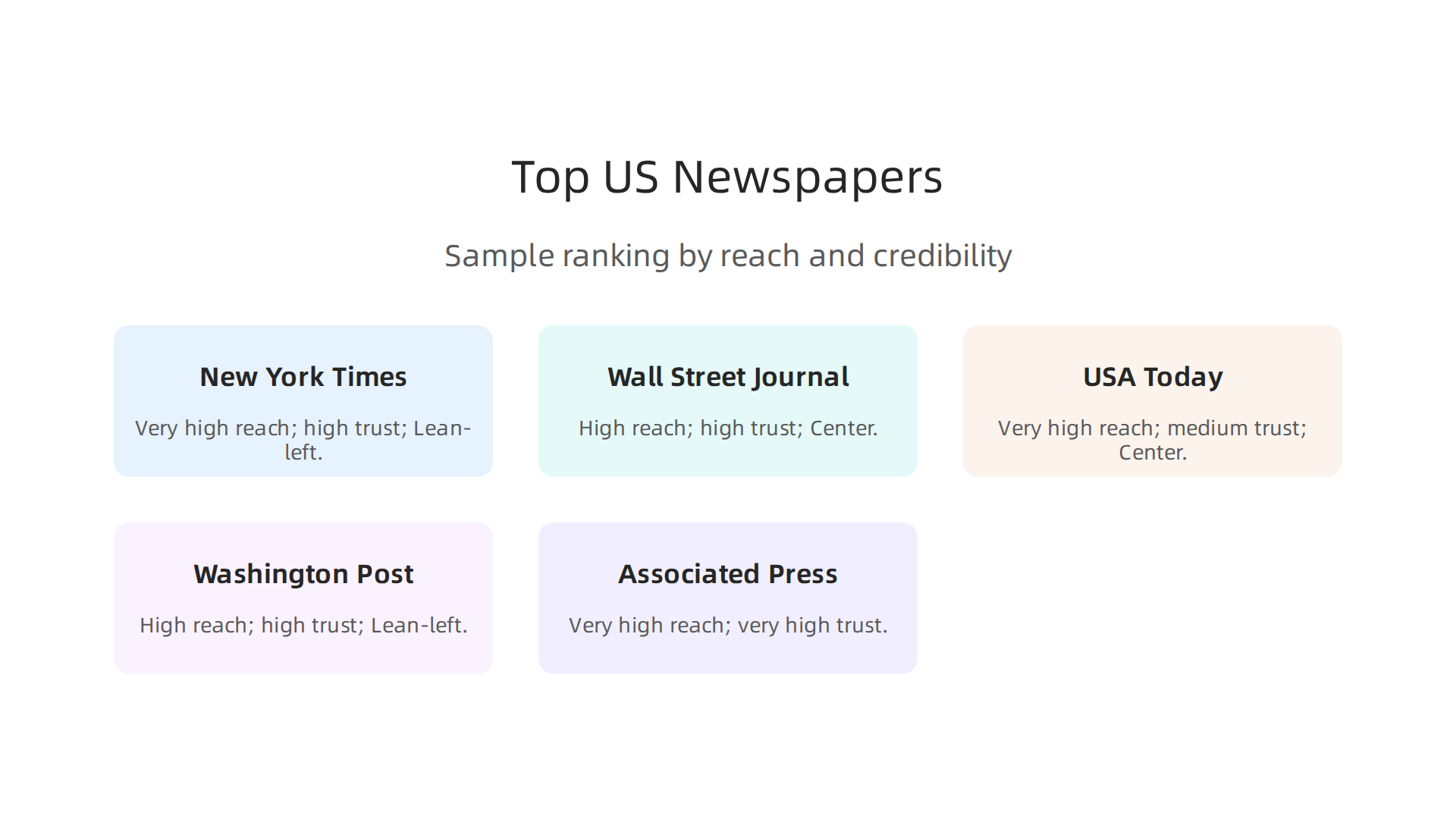
Use it as a starting point for your own shortlist.
| Newspaper | Audience Reach | Trust Score | Bias Rating (AllSides) | Why Advertise Here |
|---|---|---|---|---|
| The New York Times | Very High | High | Lean Left | Strong reach with educated, engaged readers |
| The Wall Street Journal | High | High | Center (News) | High-income audience, trusted business coverage |
| USA Today | Very High | Medium | Center | Broad national reach, balanced for general campaigns |
| The Washington Post | High | High | Lean Left | Influential in politics and policy conversations |
| Associated Press | Very High | Very High | Center | Fact-based wire service, lowest bias risk |
How should advertising companies use this table? It depends on your objective. If you want to reach a premium audience with high trust, outlets like the Wall Street Journal and the Associated Press are strong options. If you need mass awareness, USA Today offers wide reach at a lower cost.
The best ppc advertising companies often pair these top-tier newspapers with programmatic display to build brand trust before the click. Smart marketing firms layer bias data into their media plans so their message lands in a compatible environment. Even social media advertising agencies use these rankings to choose which print or digital news partners to include in cross-channel campaigns.
For a full breakdown of how these factors combine, read our complete guide on major US newspaper rankings.
It covers the methodology behind the trust scores and sources for the latest bias data.
Media lists are useful, but incomplete. To build a real decision system you also need to consider reputation and authority over time. That is why Rankings Need Judgment takes the next step, helping you weight factual accuracy and long-term editorial quality. Using both tools gives you a complete picture of where your ad dollars will work hardest.
How to Vet an Advertising Partner: A Step-by-Step Process
Knowing which newspapers are credible is a great start. But you still need someone to buy and place those ads for you. The wrong partner can waste your budget, land your brand in unsafe spaces, and damage trust.
That is why vetting an advertising partner is just as important as vetting the media itself.

Here is a simple three-step process any advertising companies can follow.
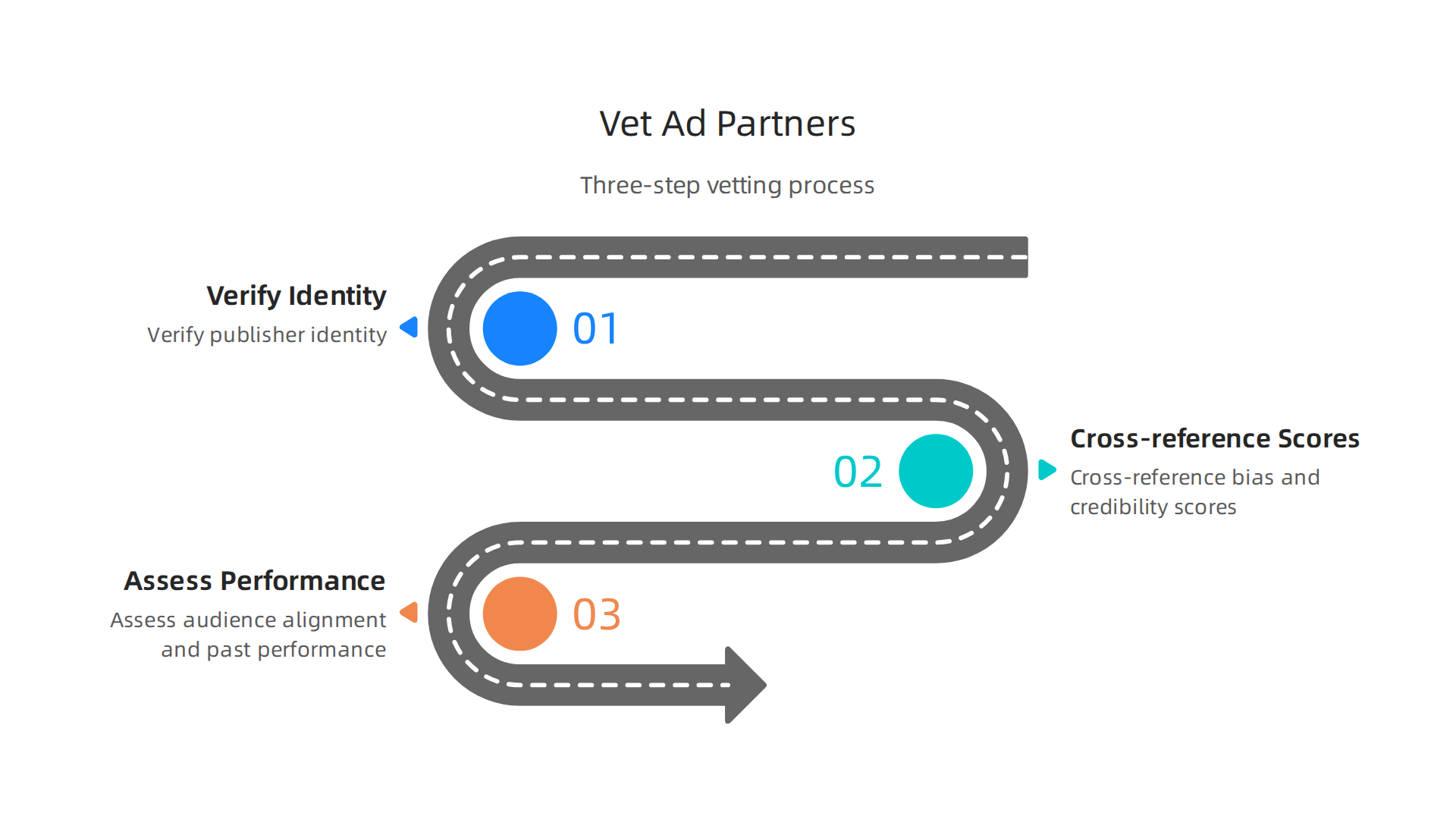
Step 1: Verify publisher identity and inventory authenticity.
Ad fraud is a massive problem. In 2026, global digital advertising statistics for 2026 show estimated losses of $84 billion to ad fraud alone. Bad actors create fake websites with real sounding names or sell made-for-advertising inventory that looks like legitimate news. Ask your potential partner exactly how they verify the publishers they work with. Do they use third-party verification tools? Do they have a policy against made-for-advertising sites? A clear answer here separates serious partners from risky ones.
Step 2: Cross-reference bias and credibility scores.
You already have a ranking of top newspapers. Now make sure your partner uses similar data to build their placements. The best marketing firms layer bias ratings from sources like AllSides into their planning tools. This helps them avoid putting your brand next to content that conflicts with your values. If a partner cannot tell you how they score publisher credibility or what bias metrics they use, that is a red flag. You want someone who treats media quality as a core part of their process, not an afterthought. For more on what to look for, see this guide on how to choose the right advertising agency for brand safety and media credibility.
Step 3: Assess audience alignment and past campaign performance.
Even a high-trust outlet is useless if its readers do not match your target audience. Ask your partner for case studies from campaigns in similar industries. Look for data on audience overlap, conversion rates, and brand lift. The best social media advertising agencies will share transparent reports showing exactly where ads ran and what happened. If the partner is vague about results or refuses to share past performance, move on.
Once you have these three checks in place, you are ready to make a smarter choice. To go deeper on how reputation and authority should influence your decisions, you can Add a Trust Framework that helps you weigh long-term editorial quality and factual accuracy alongside the steps above.
Case Studies: Brands That Got It Right (and Wrong)
Real examples make the abstract feel real. Here are two stories that show why vetting an advertising partner matters so much.
Brand that got it right: A national retailer switches to credible publishers.
A well-known home goods brand used to run programmatic display ads across hundreds of sites. Their ROI was flat. When they dug into the data, they realized a big chunk of their budget was landing on made-for-advertising sites and low-quality pages. So they made a change. They partnered with a media buyer that prioritized high-credibility newspapers and used pre-bid verification tools. Within one quarter, their cost per acquisition dropped by 28%. Their brand safety violations went to near zero. The simple shift of moving budget toward trusted publishers made the difference. This is why savvy advertising companies now insist on third-party verification as a standard practice.
Brand that got it wrong: A financial app faces a PR disaster.
A fintech startup wanted fast growth. They let their marketing firms run open exchange programmatic ads with almost no brand safety filters. Within weeks, one of their ads appeared next to a story about a financial scandal involving a similar company. Worse, another ad ran on a site known for spreading misinformation about investing. Customers noticed. Social media erupted. The brand lost trust and saw a 15% drop in new signups that month. The damage was hard to undo. This cautionary tale shows what happens when social media advertising agencies or programmatic partners do not screen publisher quality.
Lessons learned for every advertiser.
These two stories point to the same truth: publisher quality directly impacts campaign results and brand reputation. Before you spend money, make sure your partner can show you exactly where your ads will run. Use tools like credibility and bias data for brand safety to evaluate outlets ahead of time. And always ask for transparent post-campaign reports. The right vetting process does not just protect your budget. It protects the trust your audience has in you. According to recent programmatic advertising statistics for 2026, made-for-advertising sites still capture 15% of open exchange impressions, even though the industry is working to cut them out. Don’t let your brand be part of that 15%. Learn from those who have walked this path before you.
The Role of Programmatic Advertising and Platform Transparency
Here is the thing about programmatic advertising: it is a double-edged sword. The automation that lets advertising companies buy ad space at scale is the same automation that can waste your budget on ads nobody sees. Getting it right means understanding where your money actually goes.
Programmatic brings efficiency, but you need oversight.
Programmatic advertising uses software to buy digital ad space in real time. This is great for reaching the right people fast. But here is the catch. Without strict oversight, your ads can end up on low-quality sites or, worse, never be seen by a human at all. In fact, viewability on open exchanges still lags far behind private marketplaces. The latest programmatic advertising statistics for 2026 show that open-exchange display viewability sits at just 71%, while private marketplace viewability hits 92%. That 21% gap represents a massive amount of wasted spend. The best ppc advertising companies know this. They do not rely on the open exchange alone. They use premium inventory sources and demand proof of viewability from their partners.
Supply path transparency helps you pick better partners.
So how do you avoid the junk inventory? You need full supply path transparency, or SPT. This means your ad management platforms show you the exact route an ad takes from the seller to your audience. With SPT, you can see which publishers are real and which are risky. This makes it much easier to cut out made-for-advertising sites. When you are choosing between marketing firms or social media advertising agencies, ask them directly if they offer supply path transparency. It is a key sign of a trustworthy partner. You also need to carefully choose the right advertising agency that prioritizes brand safety and media credibility from the very start.
New tech like blockchain is making things even more transparent.
The industry is not stopping at SPT. Emerging technologies are stepping in to build even more trust. Blockchain, for example, offers a shared, unchangeable record of ad transactions. This can help verify that an impression was real, viewable, and placed on exactly the right site. It also helps solve big questions around data ethics in advertising. One interesting approach to building trust through transparent technology was recently highlighted by Silicon Review, which profiled a platform designed to offset the negative effects of opaque algorithms. These kinds of innovations are setting a new standard for accountability across the industry.
Why this matters for your bottom line.
At the end of the day, transparency is not just a nice to have. It is a financial necessity. When you know exactly where your ads go and how they perform, you stop leaking budget to fraud and low-quality sites. You get more for every dollar spent, and you keep your brand reputation safe. That is the real promise of a mature programmatic strategy built on trust.
Expert Perspectives on Choosing Advertising Partners
So how do you pick the right partner when so many advertising companies promise results? Industry experts say you need to look past cheap cost per thousand impressions.

A balanced scorecard matters more than a low CPM alone.
Top voices call for a bigger scorecard.
The 4As, a leading trade group, published their Look Ahead 2026: Agency as Strategic Partner guide. They say agencies must earn executive trust by showing deep strategic thinking, not just delivering output. The best ad management platforms and marketing firms prove their value with hard numbers and real insight. Another report from Forrester predicts that 85% of US B2C marketing executives plan to review their media agencies in 2026. That tells you how fast things are changing. Clients want partners who can prove impact, not just fill a retainer.
Proprietary credibility scoring beats third-party shortcuts.
Relying only on outside ratings can leave gaps. Many experts now advise best ppc advertising companies to build their own credibility scoring systems. This way you track what matters for your specific brand, not generic benchmarks. For example, you can score publishers on how well they match your audience values, not just a broad bias label. Developing your own framework gives you a clearer picture. If you want to start building that kind of trusted evaluation system, it helps to Add a Trust Framework that focuses on reputation and authority.

Direct relationships are the new standard.
Another major trend is the move toward direct publisher partnerships and private marketplaces. When you work directly with publishers, you skip the open exchange chaos. You get better viewability, less fraud, and more control over where your brand appears. Social media advertising agencies are also shifting toward creator-led commerce and curated networks instead of mass media buys. The most forward-thinking partners invest in direct deals that prioritize quality over quantity.
Picking the right advertising partner in 2026 means asking tough questions about how they measure success, what data they share, and how they build relationships. The experts agree: transparency and trust must come before the sale.
Summary
This article gives a practical, step-by-step framework for choosing advertising partners who protect your budget and your brand. It explains the modern risks—ad fraud, low-credibility publishers, and misplaced political bias—and shows which metrics actually matter beyond vanity numbers. You will learn how to combine viewability, source credibility scoring, and audience quality to judge placements, plus why supply path optimization (ads.txt, sellers.json) cuts waste. The guide walks through a three-step vetting process to verify inventory, check bias and credibility, and confirm audience alignment, and it includes programmatic transparency best practices and real case studies. Expert perspectives recommend building proprietary credibility scoring, favoring direct publisher deals, and demanding full reporting. After reading, you’ll have a repeatable checklist and tools to pick media partners who deliver real human attention and protect your reputation.